climate summit calls
|

Climate summit calls for stronger action to curb global warming

Countries must urgently scale up their commitments to keep temperature rises within 1.5 degrees Celsius to limit the impacts of extreme weather, a statement from a conference leading up to the UN’s COP31 summit said.

The ministerial meeting, being held in Fiji and Tuvalu, said on Tuesday, October 6, that “deep, rapid and sustained emissions reductions are required to minimise the magnitude and duration of overshoot” of the target.

“As global temperature increases approach 1.5C and we face strong El Nino conditions, we reiterate that every fraction of a degree of warming accelerates the impacts of climate change and increases the risk of irreversible loss and damage for climate vulnerable communities,” the statement said.

Some Pacific nations face an existential threat from rising sea levels driven by climate change.

Tuvalu’s sea levels have risen about 15 cm (6 inches) in the three decades to 2023, according to NASA researchers, twice as fast as the global average.

Under the 2015 Paris Agreement, governments committed to limit global warming to 1.5 degrees above the 1850-1900 pre-industrial period, a threshold the UN’s environmental body warned last month the world would exceed “within a few years.”

The pre-COP31 conference also reaffirmed the importance of continuing sovereignty and the rights of states to maintain maritime zones under international law, even as climate-related sea-level rise threatens to reshape coastlines in the Pacific.

Pre-COP events, preparatory meetings leading up to the United Nations COP31 climate forum in Turkey in November, are typically technocratic meetings of climate negotiators.

Australia and Pacific partners are working together through the COP31 Pacific Partnership to ensure Pacific voices and solutions are at the center of global climate action, while also seeking to strengthen regional ties ahead of the main summit. – Rappler.com
Similar Posts

  • | | |

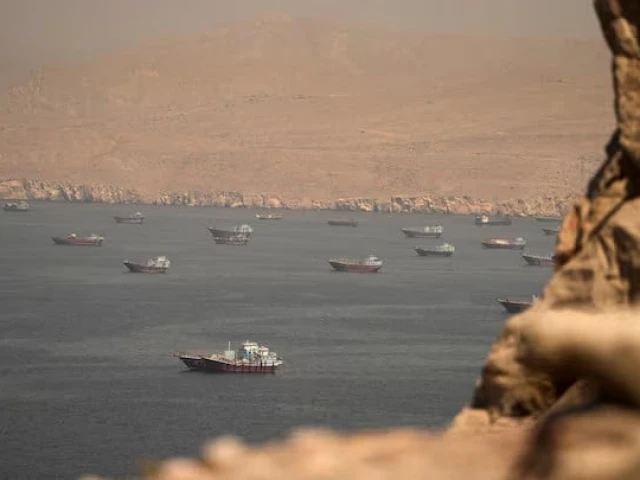
    Iran and Oman discuss temporary shipping corridor …

    Iran and Oman are discussing a proposal to establish a temporary joint shipping corridor through the Strait of Hormuz one of the world’s most important routes for oil and gas shipments. The proposal was discussed during a meeting in Tehran between Omani Foreign Minister Badr Al-Busaidi and Iranian Foreign Minister Abbas Araghchi. A joint statement described their talks as constructive and said both sides discussed developments surrounding the strategic waterway. The discussions come as tensions remain high between Iran and the United States. US President Donald Trump said Tuesday that mines had been removed or destroyed in international waters around the Strait of Hormuz. He warned that any vessel found placing new mines would face immediate military action. Trump also said the United States was closely monitoring the waterway and maintained a zero-tolerance policy toward further mine placement. The Strait of Hormuz is a crucial global energy route with roughly one-fifth of the world’s crude oil and liquefied natural gas flows passing through it before the conflict. Shipping activity has fallen sharply during the current crisis, with only two commodity vessels reportedly using the waterway on Monday. Iran has also communicated its position on the strait through Pakistan. Iranian officials reportedly want provisions of an earlier Islamabad memorandum to be implemented including arrangements requiring safe passage for commercial shipping and consultation with Oman over the waterway’s future management. Meanwhile, Washington has expanded economic pressure on Tehran. US Treasury Secretary Scott Bessent announced additional sanctions targeting Iranian individuals entities and vessels warning that countries continuing to support Iran’s economy could face consequences. China has criticized the new US measures saying unilateral sanctions could disrupt global economic and financial stability. Beijing is a major buyer of Iranian oil and has urged Washington and Tehran to return to negotiations. The United States has also warned that military action against Iran remains possible. Defence Secretary Pete Hegseth said Washington would use military force if necessary and did not rule out further strikes around Iran or the Strait of Hormuz. Iran, meanwhile, has promised to respond to the expanded sanctions and warned that threats to its infrastructure could trigger attacks against US interests and regional energy routes. The diplomatic discussions involving Iran, Oman and Pakistan could therefore become important for restoring commercial shipping through the Strait of Hormuz. However, continued military threats, sanctions and tensions between Tehran and Washington remain major obstacles to a lasting agreement.

  • | |

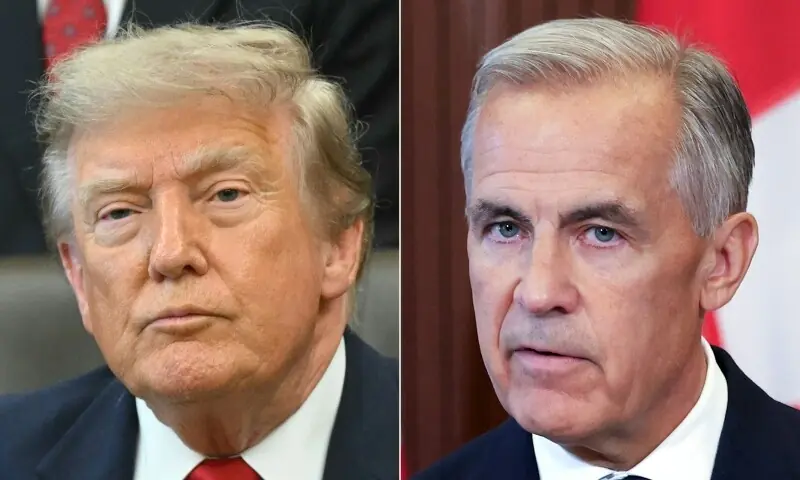
    Trump hits back at Canada as tariff war escalates

    WASHINGTON: US President Donald Trump has lashed out at Canada after Prime Minister Mark Carney announced retaliatory tariffs on American goods, deepening a trade dispute that threatens to further strain economic ties between the two neighbouring countries. Trump responded sharply on Sunday after Canada confirmed that new tariffs targeting US products would take effect on September 8. “Canada wants the benefits of being a state, without being one!!!” Trump said in a post on Truth Social, while also accusing Canada of imposing heavy tariffs on American farmers for years. The latest escalation follows the introduction of new US tariffs covering around $20 billion worth of Canadian goods. The measures, which took effect on Saturday, impose tariffs of up to 50 per cent and affect products ranging from hockey sticks and cement to other Canadian exports. Carney announced Canada’s response a day earlier, saying Ottawa would impose new tariffs particularly targeting American steel and dairy products. The Canadian prime minister described the situation in unusually forceful terms, saying the country had effectively been “attacked” and was responding accordingly. The confrontation follows the collapse of recent trade negotiations between Washington and Ottawa. Earlier discussions had appeared more constructive, with Trump saying he believed the United States could reach an agreement with Canada and pointing to his positive relationship with Carney. But Carney said the latest US demands had crossed a line. According to the Canadian leader, Washington proposed terms that were “uneconomic” and “unfair” while undermining the benefits Canada expected from a potential agreement. Ottawa ultimately rejected the proposal. US Trade Representative Jamieson Greer offered a different account of the negotiations. He told The New York Times that Washington had offered to reduce tariffs on Canadian steel, aluminium and automobiles while also removing a recently imposed tariff on Canadian lumber. Greer said the proposed measures would have provided Canada with exceptionally favourable treatment compared with other US trading partners. However, the offer failed to produce a breakthrough. Greer also told Fox News that Washington was preparing measures in response to Canada’s retaliation, signalling that the dispute could escalate further rather than return immediately to the negotiating table. A senior US official described the latest talks as candid but not acrimonious, suggesting that despite the increasingly hostile public statements, both sides had maintained communication during negotiations. The economic stakes are significant. The United States and Canada share one of the world’s largest trading relationships, with businesses and consumers on both sides relying heavily on cross-border commerce. The latest tariffs could therefore raise costs for companies, disrupt supply chains and put additional pressure on industries already facing uncertainty. With Canadian counter-tariffs scheduled to take effect in September, attention will now turn to whether Washington and Ottawa can find a compromise before the measures trigger a wider trade confrontation.

  • |

    Netanyahu accuses New York Mayor Mamdani of ‘fomenting hate’ and rejects ICC war crimes charges

    Israeli Prime Minister Benjamin Netanyahu has strongly criticised New York City Mayor Zohran Mamdani, accusing him of “fomenting hate” and attempting to divide the city’s population. The sharp exchange follows comments by Mamdani asserting that Netanyahu is unwelcome in New York City due to ongoing International Criminal Court (ICC) war crimes charges linked to the war in Gaza, and urging federal authorities to execute the court’s arrest warrant when the prime minister attends the United Nations General Assembly in September. Appearing on Fox News Channel, Netanyahu dismissed the ICC charges as “bogus” and claimed the allegations were designed to divert attention from internal misconduct within the prosecutor’s office. He expressed concern over eroding bipartisan support for Israel within the United States, warning that political rhetoric from progressive Democrats risks fueling rising anti-Semitism in major American cities. Despite the mayor’s stance, US President Donald Trump has publicly assured Netanyahu that he will face no risk of arrest during his visits to the United States.

  • |

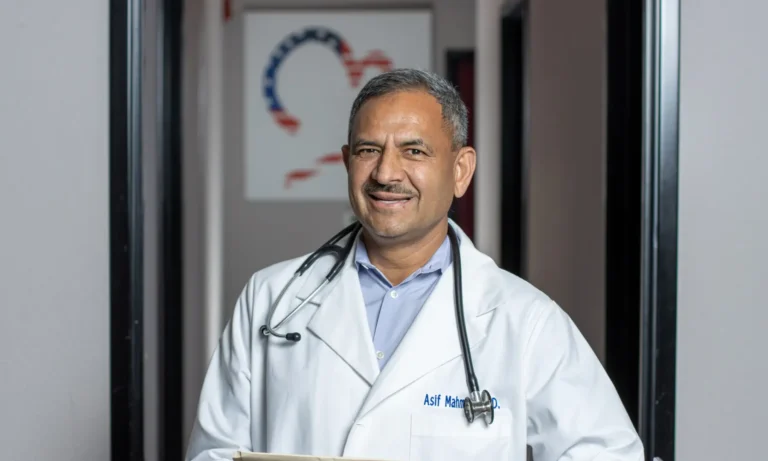
    Pakistani American Dr Asif Mahmood elected chair of US religious freedom commission

    Pakistani American physician and human rights advocate Dr Asif Mahmood has been unanimously elected as chair of the US Commission on International Religious Freedom, becoming the first South Asian to lead the independent bipartisan body. Dr Mahmood, who previously served as the commission’s vice chair, described his election as a great honour and reflected on his journey from a small village in Pakistan to leading one of the world’s leading organisations focused on protecting freedom of religion and belief. In his acceptance remarks, he said he remains committed to defending the rights of people from all religious backgrounds as well as those who do not follow any faith. He expressed hope for a world where religious freedom, human dignity and peaceful coexistence are respected and protected. His appointment follows his reappointment to the commission for a second term in May 2026, extending his service until 2028. Earlier this year, he noted that he was the first Pakistani, the first Muslim and the first Asian American to serve consecutive terms on the commission. The US Commission on International Religious Freedom was established in 1998 under legislation signed by former President Bill Clinton. It serves as an independent advisory body that monitors religious freedom around the world and provides policy recommendations to the White House, the US State Department and Congress. The commission is made up of nine members appointed by the US president and congressional leaders from both major political parties. Dr Mahmood was reappointed by House Minority Leader Hakeem Jeffries and now succeeds former congresswoman Vicky Hartzler as chair. Political observers have described his election as significant because of his Democratic Party affiliation despite receiving his latest appointment during the Trump administration. His leadership is expected to draw international attention, particularly because of his work on religious freedom issues in South Asia. Dr Mahmood has played a leading role in preparing reports examining allegations of religious freedom violations in India. He has publicly called for greater international scrutiny of the treatment of religious minorities and urged the United States to consider stronger measures in response to concerns raised by the commission. The commission has also recommended that US officials seek independent assessments of religious freedom conditions in India and consider targeted measures against individuals or organisations found responsible for serious violations. Those recommendations have generated considerable debate and have been strongly rejected by Indian authorities in the past. Beyond his work on religious freedom, Dr Mahmood has remained active in public service and politics. In 2022, he contested California’s 40th Congressional District as the Democratic candidate but was defeated by Republican incumbent Young Kim. Earlier, he also ran for California Insurance Commissioner and received hundreds of thousands of votes. A native of Kharian in Pakistan’s Punjab province, Dr Mahmood completed his medical education at Sindh Medical College before moving to the United States. He later completed his medical training at the University of Kentucky Medical Center and pursued a fellowship in pulmonary medicine at Harlem Hospital, which is affiliated with Columbia University. He currently serves on the Medical Board of California after being appointed by Governor Gavin Newsom in 2023. Over the years, he has also worked with several humanitarian and community organisations and has received recognition for providing free medical care to patients who could not afford treatment. His election as chair marks another milestone in a career that combines medicine, public service and advocacy for human rights.

  • |

    Former Chinese premier Zhu Rongji dies at 97

    BEIJING: Former Chinese Premier Zhu Rongji, a key figure in the country’s economic transformation during the 1990s, has died at the age of 97. Zhu was known for his direct speaking style and his strong support for economic reform. His tenure was marked by major changes aimed at restructuring China’s state-dominated economy and opening it further to global markets. He served as China’s vice premier from 1991 to 1998 before becoming premier, a position he held until early 2003. Zhu’s political career began decades earlier. He graduated from Tsinghua University and joined the Communist Party in 1949. During the Cultural Revolution, he was sent to work in the countryside and experienced a period of political hardship. He was later rehabilitated and gradually returned to senior government positions. In 1987, Zhu became mayor of Shanghai. During his tenure, he helped guide the city through early economic reforms and development that eventually contributed to its emergence as a major international financial centre. He moved to Beijing in 1991 after joining the central government. As vice premier and later premier, Zhu became closely associated with efforts to tackle economic overheating, inflation and financial instability. His government introduced wide-ranging reforms to state-owned enterprises. Many inefficient state companies were closed, restructured or privatised, while large numbers of workers were laid off. Zhu also strengthened the central government’s control over taxation and introduced reforms that encouraged private home ownership. Those changes played a major role in reshaping China’s housing market. One of his most significant achievements was helping China secure membership of the World Trade Organization in 2001, following years of difficult negotiations. China formally joined the organisation in December that year. The WTO accession accelerated China’s integration into the global economy and helped expand international trade and investment. However, Zhu’s reform programme also had critics. Some observers argued that changes to agricultural policy, tax arrangements and state-owned enterprises created difficulties that later governments had to address. Despite those criticisms, Zhu remained widely regarded as one of the most influential economic reformers in modern Chinese history. His reputation for blunt remarks became particularly prominent after a collection of his speeches was published in 2011. The books contained unusually candid assessments of corruption, government debt, banking problems and weaknesses in public administration. The speeches attracted significant public attention because they addressed many of the economic and social challenges facing China at the time. Zhu warned about corruption, inequality and problems created by local officials. His comments continued to attract interest among reform-minded officials, academics and members of the public long after he left office. His death marks the passing of a leader who played a central role in one of the most consequential periods of China’s economic development. Zhu’s legacy is closely linked to the difficult reforms of the 1990s, when China moved towards a more market-oriented economy while maintaining the political control of the Communist Party.

  • |

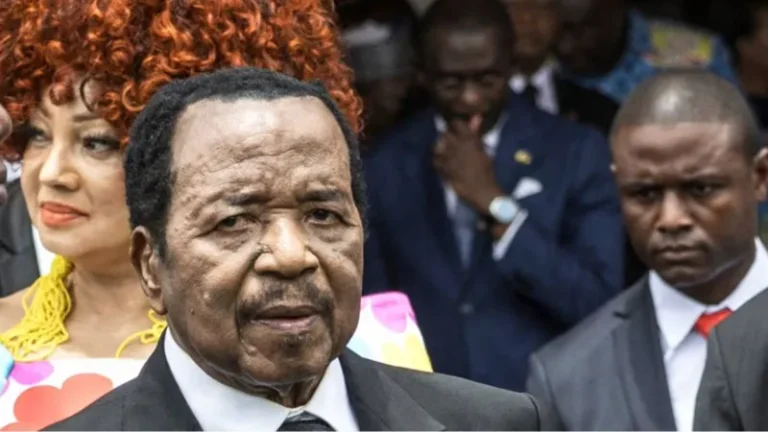
    Cameroonian President Paul Biya reshuffles military leadership amidst prolonged absence in Switzerland

    Cameroon’s 93-year-old President, Paul Biya, the world’s oldest sitting head of state, has enacted a strategic reshuffle of the country’s military leadership from abroad, issuing decrees to promote senior officers and appoint new commanders while remaining in Geneva, Switzerland. Among the key appointments, Biya promoted five colonels to the rank of brigadier general. Notably, Brigadier General Raymond Jean Charles Beko’o Abondo was reappointed to lead the elite Presidential Guard, an essential security unit responsible for the president’s personal protection that he has commanded since 2013. The administrative shifts coincide with growing domestic anxiety regarding Biya’s absence from Cameroon, which has extended to nearly two months following his departure on 7 June for what officials termed a “brief private stay”. Opponents and civil society groups have voiced concern over an institutional vacuum, noting that a newly created vice-presidential seat remains vacant and a promised cabinet overhaul has yet to materialise. Government representatives, including Communication Minister René Emmanuel Sadi, dismissed claims of administrative paralysis or health crises, maintaining that the president remains fully operational and continues to sign official decrees and financial agreements from abroad.

Leave a Reply

Your email address will not be published. Required fields are marked *