iran shifting tactics
|

Iran shifting tactics to step up attacks on shipping before US vote, officials say

Iran is deploying new tactics to target ships sailing through the Strait of Hormuz as it seeks to keep oil prices high and influence the US midterm elections, two senior Iranian officials told Reuters.

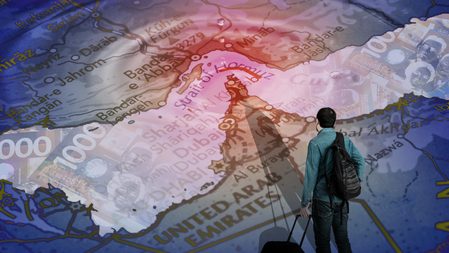
Tehran has tried to exert control over the Strait of Hormuz since the US and Israel launched strikes against Iran on February 28. It has restricted passage through the waterway, which carried about a fifth of global oil and liquefied natural gas trade before the war, in an effort to gain leverage over Washington.

Its threats and attacks have severely curtailed traffic through the strait, driving up oil prices, though some oil has continued to transit.
Must Read

Iran says US response to its proposal to reopen Hormuz ‘insufficient’


Iran says US response to its proposal to reopen Hormuz ‘insufficient’

The two officials declined to provide details of the new strategy, but one said that Iran had started using different offensive tactics against vessels it considered in violation of its restrictions about 10 days ago, adding that this had led to an increase in attacks on such ships.

The strategy included a change in the type as well as the pace of attacks, with one goal being to influence the outcome of the US vote, they said.

“The aim is to frustrate efforts by the United States and its allies to bring down global oil prices,” one of the two officials said.

The decision to adopt the new strategy had been taken at the highest levels of Iran’s leadership and was fully coordinated across the country’s ruling system, the officials said.

Iran using spotters

A US military official, speaking on condition of anonymity, confirmed that Iran had changed tactics in one significant way: after the US destroyed much of Iran’s radar capabilities, Iran’s Islamic Revolutionary Guard Corps (IRGC) had started using unarmed spotters in small boats to identify potential targets, including US naval vessels, the official said.

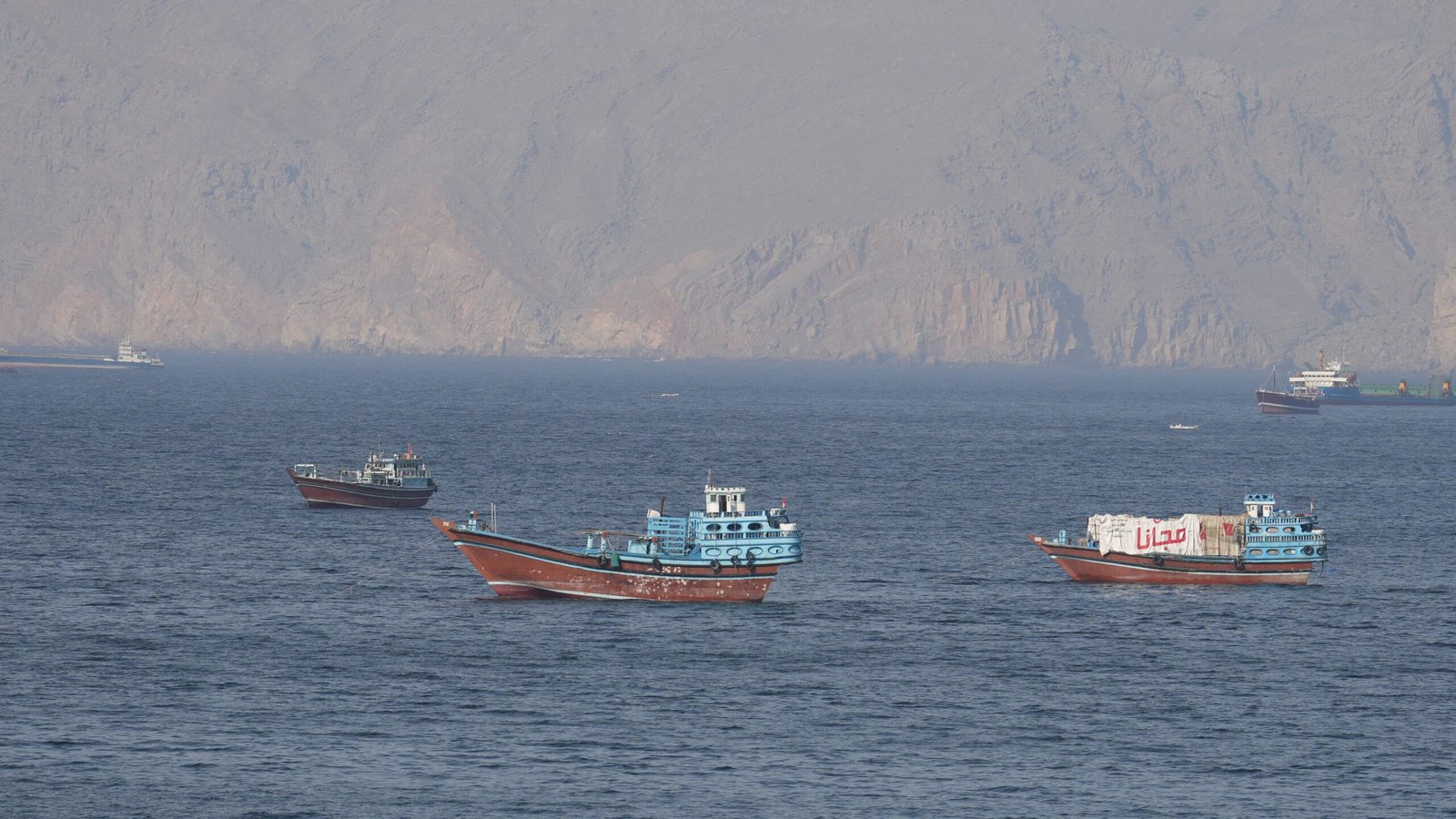
Last week, in a previously unreported incident, the US military determined that Iranian spotters were operating from a dhow, calling in targets to the IRGC, the official said. US forces confronted the vessel, told its occupants to abandon ship and then destroyed it. There were no casualties, the US official said.

Unwilling to risk its remaining fast boats, Iran had been unable to prevent a ramp-up in oil exports through the strait, the official said, particularly after US strikes devastated its navy.

The war — and its $3 billion monthly price tag — has become a key issue on the US campaign trail for November’s midterm elections, which will decide control of Congress.

US President Donald Trump has been weighing next steps against Iran, but has said he will not attack again before the vote.

The US has meanwhile been pressing its own naval blockade of Iranian ports and extending sanctions as it tries to pile economic pressure on Tehran to reach a deal to end the conflict.

The standoff over Hormuz has left global energy markets exposed to further disruption, with the threat of attacks and high shipping and insurance costs complicating efforts to restore normal traffic.
Must Read

The Middle East crisis: From the Strait of Hormuz to your dining table


The Middle East crisis: From the Strait of Hormuz to your dining table

In recent days, attacks on commercial ships still sailing through the strait have surged to their highest level since the war began, according to independent data.

There have been at least five incidents in the past 48 hours involving tankers and other commercial ships around the Hormuz area, including drone strikes, according to data analysis from maritime security sources and incidents reported to British navy-affiliated agency United Kingdom Maritime Trade Operations (UKMTO).

That approximately mirrored the rate of attacks on October 3-5, pointing to a new escalation, according to data from the UN shipping agency, the International Maritime Organization.

“There is a tempo increase in strikes, which looks deliberate,” one maritime security source said.

Attacks over an expanded area

As part of the new strategy, Tehran will also expand the geographical scope of its operations beyond the Strait of Hormuz to the Gulf of Oman and waters further afield, the officials said.

Analysis by maritime security sources based on attacks reported to UKMTO and maritime security companies in the region suggest this may already be happening. They show Iran targeting ships in areas beyond the Strait of Hormuz, including waters off the coast of Qatar and the United Arab Emirates, in recent days.

The second Iranian official added that Tehran would not allow Trump to bring down oil prices before the November elections.

“Just when they think they are getting close to the point where prices will fall, we will push them away from it. This is a game of chess,” the second official said.

“Such vessels would be safe nowhere, even outside the Strait of Hormuz.”

The Pentagon and Iran’s Foreign Ministry did not immediately respond to requests for comment.

Complete closure of Hormuz soon, says Iranian official

Both Iranian officials said Tehran is moving toward a situation in which no vessel violating its restrictions would be able to pass through the strait. “It will be complete closure soon,” one of the officials said.

In its latest report on Sunday, the US Navy-led Joint Maritime Information Center (JMIC) said the threat to merchant shipping in the Strait of Hormuz remained “severe”, the second-highest level.

“IRGC attacks, attempted attacks, and/or harassment activity persisted including UAV overflight, targeted surveillance of merchant shipping, and occasional VHF hailing,” JMIC said. – Rappler.com

Must Read

Gasoline prices up again, diesel prices down on October 13


Gasoline prices up again, diesel prices down on October 13

Similar Posts

  • |

    Lt Gen (R) Abdul Qayyum calls for global peace through dialogue; FIRD Chairman Toaha Qureshi backs strong armed forces

    LONDON:  Senator Lt Gen (R) Abdul Qayyum (HI(M)), President of the Pakistan Ex-Servicemen Society, called for greater respect for international law, dialogue under the umbrella of the United Nations and enhanced cooperation among Muslim countries to address global security challenges, while Forum for International Relations Development (FIRD) Chairman Toaha Qureshi reaffirmed support for Pakistan’s armed forces, saying they remained the country’s defenders and that the Field Marshal had enhanced Pakistan’s reputation on the global stage. Addressing the Second International Conference on Global Peace, organised by FIRD in London, Senator Abdul Qayyum said lasting peace could only be achieved through diplomacy and adherence to international law. “Respect for international law and pursuing dialogue as a strategy for peace under the umbrella of the United Nations can help resolve even the most complex global challenges. Destructive wars can only lead to catastrophic consequences and bring suffering to humanity as a whole,” he said. During his address, the senator argued that the post-Cold War unipolar world had witnessed repeated violations of international law and human rights, weakening the effectiveness of institutions such as the United Nations and the International Court of Justice. Discussing global security, he said colonialism had evolved into neo-colonialism in the modern era and referred to the establishment of US military bases around the world. He also cited recent developments in the Middle East, saying they had highlighted the importance of national self-reliance in defence and strategic planning. Senator Abdul Qayyum said vulnerable states increasingly needed to strengthen their own defence capabilities while developing strategic partnerships through mutual defence agreements. Referring to recent tensions involving Iran, Israel and the United States, he said the evolving regional security environment had prompted Gulf countries to reassess their strategic priorities and seek greater autonomy. He said Pakistan, with its strategic geographical location and strong defence capability, could play a constructive role in promoting closer cooperation among Muslim-majority countries. He added that greater unity among Muslim states, beyond sectarian divisions, could strengthen regional stability and collective security. The senator warned that unilateral actions and disregard for international law risked pushing the world towards another major global conflict. Referring to former US President Richard Nixon’s geopolitical doctrine, he said pragmatic diplomacy, a balance of power and economic stability remained essential foundations for international peace. Addressing interfaith harmony, Senator Abdul Qayyum said dialogue and mutual respect remained essential to strengthening relations between different faith communities. He expressed concern over the rise of Islamophobia and called for greater engagement, education and cooperation to counter prejudice and promote peaceful coexistence. Speaking at the conference, FIRD Chairman Toaha Qureshi said Pakistan’s armed forces were the guardians of the country’s sovereignty and deserved the nation’s continued support. “Pakistan’s armed forces are the protectors of the country. We need strong armed forces, and it is necessary that we continue to support this institution,” he said. Qureshi added that Pakistan’s Field Marshal had earned the country greater international recognition and enhanced its standing through his leadership. The conference also heard from educationist and businessman Mian Muhammad Jehangir, who stressed the importance of meaningful education in shaping future generations and driving national development. He said Pakistan’s youth possessed immense talent and potential, adding that investment in quality education, skills development and character-building was essential for the country’s progress. He praised the achievements, resilience and capabilities of Pakistan’s young people, expressing confidence that they would play a pivotal role in building a stronger, more prosperous and globally competitive nation.

  • | |

    Türkiye condemns Black Sea drone strikes on cargo…

    ISTANBUL: Türkiye has strongly condemned drone attacks on two commercial cargo vessels in the Black Sea, warning that continued assaults on civilian shipping could jeopardize international maritime trade and global food security. According to international media reports, the vessels were attacked shortly after departing Russia’s Black Sea port of Novorossiysk. Türkiye’s Foreign Ministry confirmed that several crew members were injured in the incidents and said their condition is being closely monitored. In a statement, the ministry expressed deep concern over the escalating tensions between Russia and Ukraine in the Black Sea, noting that repeated warnings about the risks to civilian navigation have gone unheeded. It stressed that disruptions to commercial shipping could have serious consequences for global trade routes and food supply chains. Ankara urged all parties involved in the conflict to take immediate and effective measures to safeguard freedom of navigation and ensure the safety of commercial vessels operating in the region. Reports identified the targeted ships as Yasir and Nadezhda, sailing under the flags of Panama and Cameroon, respectively. Although registered abroad, both vessels are reportedly owned by Turkish companies. The attacks come amid a steady rise in hostilities across the Black Sea, where commercial shipping has increasingly been caught in the crossfire of the Russia-Ukraine conflict. In late June, an attack near Crimea on a Turkish fishing boat left one person dead and four others injured, while another Turkish cargo ship was reportedly struck by a drone at the end of May. Meanwhile, separate security incidents have further heightened regional tensions. In the Russian-controlled Crimean city of Sevastopol, four people, including a soldier, were killed after a serviceman allegedly opened fire on both military personnel and civilians before being taken into custody. Authorities have launched an investigation into the motive behind the shooting. Elsewhere, Russian officials reported that a Ukrainian drone strike on the industrial area of Novoselki near Moscow killed five people and injured ten others. The attack also triggered multiple fires across the industrial zone. Analysts say the intensifying military activity in the Black Sea is increasing the risks to international commerce, energy transportation, and global food supplies, while further complicating efforts to ease the conflict between Russia and Ukraine.

  • | | |

    Israeli strikes kill 11 in southern Lebanon, Hezbo…

    BEIRUT: Southern Lebanon has been plunged into renewed uncertainty after Israeli airstrikes killed at least 11 people, including three children, and injured 19 others, in the deadliest such escalation since the June ceasefire between Israel and Hezbollah. The strikes hit the towns of Ansar and Deir al-Zahrani on Saturday, according to Lebanese authorities. In Ansar, an airstrike on a residential home killed seven people, while another attack in Deir al-Zahrani killed four and wounded several others. Rescue workers and local residents rushed to the damaged sites, searching through rubble for survivors and recovering bodies. Lebanon’s Health Ministry confirmed the casualty figures, while reports said women and children were among those killed. The attacks have raised fresh concerns about the durability of the ceasefire and the possibility of another escalation along the Israel-Lebanon border. Israel said its military operations targeted Hezbollah infrastructure and were carried out in response to attacks that had seriously wounded three Israeli soldiers. The Israeli military also said a senior Hezbollah commander was among those targeted. Israeli officials maintained that Hezbollah activity in the area posed a continuing threat. Lebanese leaders strongly condemned the strikes. President Joseph Aoun described the attacks as a dangerous message at a time when Lebanon and Israel are preparing for another round of US-backed direct negotiations. He warned that repeated violations of the ceasefire could undermine diplomatic efforts aimed at restoring stability. Prime Minister Nawaf Salam also denounced the attacks, stressing that the women and children killed in Ansar were not military targets. He called on Israel to halt what he described as dangerous escalation. The strikes have also put Hezbollah’s position under renewed scrutiny. The group condemned the Israeli attacks and vowed to deliver an “appropriate response”, warning that continued violations could not go unanswered. Hezbollah also criticised the Lebanese government’s negotiations with Israel and called for a tougher position. The latest violence comes as Lebanon faces a delicate political and security challenge. A US-backed framework announced in June was intended to reduce hostilities, address Hezbollah’s weapons and facilitate an Israeli withdrawal from parts of southern Lebanon. Instead, continued attacks and retaliatory actions have kept the region on edge. For residents of southern Lebanon, the latest strikes have brought back memories of prolonged conflict. With civilians once again caught between military operations and political disputes, fears are growing that the fragile ceasefire could give way to a much wider confrontation. The coming days may prove critical. Any Hezbollah retaliation could trigger further Israeli military action, while continued diplomatic efforts face the difficult task of preventing the latest bloodshed from becoming the beginning of another cycle of violence.

  • |

    Finland restricts sea traffic near Russia

    Finland has temporarily closed part of its airspace and restricted maritime traffic along its southern coast near the Russian border due to concerns over possible stray drones. The Finnish military announced the measures on Tuesday. Officials said the restrictions were introduced to ensure authorities can respond safely if drones enter the area. A military spokesperson said the measures would allow authorities to take necessary countermeasures while protecting people in the affected areas. The military did not disclose the source of information about the possible drone activity. The spokesperson said details could not be shared because they were related to ongoing operational matters. The move comes amid growing concerns among NATO countries that the war in Ukraine could spill across alliance borders. Ukrainian drones targeting Russian positions have reportedly entered the airspace of Finland, Estonia, Latvia and Lithuania this year. Ukraine has increased its use of long-range drones against targets inside Russia. Kyiv and several NATO members have blamed Russian electronic interference for causing some Ukrainian drones to deviate from their intended routes and enter NATO airspace. Moscow, however, has accused Ukraine of deliberately directing drones across international borders. Finland’s latest restrictions highlight the security concerns facing NATO’s northern members as drone warfare continues to expand in the region. Authorities are expected to continue monitoring the situation closely and adjust the restrictions depending on the potential threat.

  • | |

    Apple briefly crosses $5 trillion market value

    Apple has become the second company in history to reach a market valuation of $5 trillion. The technology giant briefly crossed the landmark during trading on Tuesday. Its shares rose as much as 1.8% to a record intraday price of $342.89. The rise pushed Apple’s market capitalisation above the $5 trillion mark. The stock later gave up some of its gains, but the milestone marked another major achievement for the iPhone maker. The surge also helped Apple reclaim its position as the world’s most valuable publicly traded company. It moved ahead of chipmaker Nvidia in market value. The latest rally reflects continued investor confidence in Apple. The company has taken a different approach to the growing artificial intelligence race. Apple has focused on partnerships and external infrastructure instead of making huge investments in its own data centres. This strategy has helped the company control capital spending while expanding its AI capabilities. Several major technology companies have committed billions of dollars to AI infrastructure. Apple has sought to avoid some of those heavy costs. The company has instead worked with external partners to support its AI-related services. Its collaboration with Google is among the initiatives aimed at strengthening features such as the upgraded Siri assistant. Apple’s approach has helped reduce pressure on its cash flow. It has also reassured investors as the company works to expand its presence in artificial intelligence. The $5 trillion milestone comes as Apple continues to focus on its hardware and services businesses. The company is also looking for new ways to encourage customers to upgrade their devices. As part of that effort, Apple has introduced a new device-leasing programme in the United States in partnership with Klarna. Under the programme, customers can lease iPhones for payments starting at $17.99 per month. The initiative is designed to make new devices more affordable and encourage consumers to upgrade their existing phones. Apple’s latest market milestone highlights the scale of investor expectations surrounding the company. It also shows the continued strength of its brand and business model in an increasingly competitive technology sector.

  • |

    Zelensky alleges Russia shared satellite intelligence with Iran to target US bases

    Ukrainian President Volodymyr Zelensky has accused Russia of helping Iran identify US military positions in the Gulf by providing satellite intelligence, adding another layer of tension to the already strained relationship between Moscow, Tehran, and Kyiv. His remarks come as Ukraine and Iran exchange fresh accusations following an attack on an Iranian vessel in the Caspian Sea. In a statement shared on social media, Zelensky claimed that Ukraine had observed increased Russian satellite monitoring of Gulf countries and American military installations since the beginning of July. According to him, the satellite images were later used by Iran, with a noticeable connection between the timing of the surveillance and Iranian attacks. He alleged that the imagery was gathered before strikes to assist with planning and then again afterward to evaluate the extent of the damage. While Zelensky did not release evidence to support the claim, he insisted the pattern was clear and significant. The allegations surfaced shortly after Ukraine announced a series of long range military operations in the Caspian Sea. Zelensky said Ukrainian forces had successfully struck vessels carrying military cargo linked to Iran as well as a warship. Ukrainian intelligence later stated that drones had targeted sanctioned cargo ships allegedly involved in transporting military equipment between Iran and Russia. The operation marked one of Kyiv’s most direct actions against assets connected to Tehran and reflected Ukraine’s growing willingness to challenge countries it believes are supporting Russia’s war effort. Iran reacted strongly to the reported strikes. The Iranian Foreign Ministry summoned Ukraine’s senior diplomat in Tehran to protest what it described as a hostile and unlawful attack. Iranian officials said one sailor was killed and several others were injured when a commercial vessel exploded following the strike. The ministry rejected any suggestion that Iran had played a role in the war between Russia and Ukraine and insisted the country had remained outside the conflict. Iranian Foreign Minister Abbas Araghchi also condemned the attack, describing it as a serious violation of the United Nations Charter. He claimed the operation had been carried out to advance Israeli interests and accused Kyiv of trying to draw Europe deeper into the regional conflict. Araghchi said he had discussed the matter with European Union foreign policy chief Kaja Kallas and Russian Foreign Minister Sergei Lavrov, warning that Iran would not allow the incident to pass without a response. Zelensky’s latest accusations regarding Russian support for Iran are not entirely new. Earlier reports citing US officials claimed that Moscow had shared intelligence with Tehran about American military positions in the Middle East during the recent conflict involving Iran and the United States. Those reports also suggested that China could have played a supporting role, although no public evidence has confirmed those claims. The issue has also created mixed messages within the US government. During a congressional hearing, US Defence Secretary Pete Hegseth acknowledged that Russia and China were helping Iran in different ways. He said there was clear cooperation among American rivals but declined to discuss the full extent of that support, arguing that the details should remain classified for security reasons. Only days later, however, President Donald Trump publicly disagreed with that assessment. Writing on his Truth Social platform, Trump said he did not believe Russia or China had assisted Iran. He stated that both Russian President Vladimir Putin and Chinese President Xi Jinping had assured him they were not involved in supporting Iranian military operations. Despite those conflicting views, Zelensky maintained that Russian satellite activity offered direct evidence of cooperation. He specifically pointed to satellite surveillance conducted on July 19 and 20, claiming Russian satellites closely monitored four air bases used by the United States in Bahrain, Jordan, and Kuwait. According to the Ukrainian leader, the timing of those observations raised serious concerns about Russia’s role in helping Iran monitor American military assets in the region.

Leave a Reply

Your email address will not be published. Required fields are marked *