Israeli strikes kill 11 in southern Lebanon, Hezbo…
BEIRUT: Southern Lebanon has been plunged into renewed uncertainty after Israeli airstrikes killed at least 11 people, including three children, and injured 19 others, in the deadliest such escalation since the June ceasefire between Israel and Hezbollah.
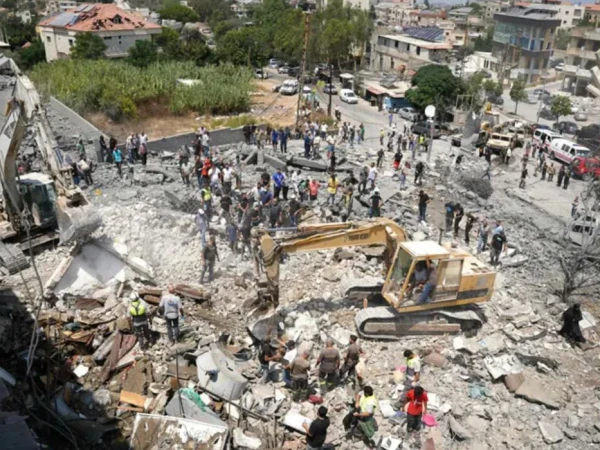
The strikes hit the towns of Ansar and Deir al-Zahrani on Saturday, according to Lebanese authorities. In Ansar, an airstrike on a residential home killed seven people, while another attack in Deir al-Zahrani killed four and wounded several others. Rescue workers and local residents rushed to the damaged sites, searching through rubble for survivors and recovering bodies.
Lebanon’s Health Ministry confirmed the casualty figures, while reports said women and children were among those killed. The attacks have raised fresh concerns about the durability of the ceasefire and the possibility of another escalation along the Israel-Lebanon border.
Israel said its military operations targeted Hezbollah infrastructure and were carried out in response to attacks that had seriously wounded three Israeli soldiers. The Israeli military also said a senior Hezbollah commander was among those targeted. Israeli officials maintained that Hezbollah activity in the area posed a continuing threat.
Lebanese leaders strongly condemned the strikes. President Joseph Aoun described the attacks as a dangerous message at a time when Lebanon and Israel are preparing for another round of US-backed direct negotiations. He warned that repeated violations of the ceasefire could undermine diplomatic efforts aimed at restoring stability.
Prime Minister Nawaf Salam also denounced the attacks, stressing that the women and children killed in Ansar were not military targets. He called on Israel to halt what he described as dangerous escalation.
The strikes have also put Hezbollah’s position under renewed scrutiny. The group condemned the Israeli attacks and vowed to deliver an “appropriate response”, warning that continued violations could not go unanswered. Hezbollah also criticised the Lebanese government’s negotiations with Israel and called for a tougher position.
The latest violence comes as Lebanon faces a delicate political and security challenge. A US-backed framework announced in June was intended to reduce hostilities, address Hezbollah’s weapons and facilitate an Israeli withdrawal from parts of southern Lebanon.
Instead, continued attacks and retaliatory actions have kept the region on edge.
For residents of southern Lebanon, the latest strikes have brought back memories of prolonged conflict. With civilians once again caught between military operations and political disputes, fears are growing that the fragile ceasefire could give way to a much wider confrontation.
The coming days may prove critical. Any Hezbollah retaliation could trigger further Israeli military action, while continued diplomatic efforts face the difficult task of preventing the latest bloodshed from becoming the beginning of another cycle of violence.