Philippines, Canada wrap up talks for free trade deal
MANILA, Philippines – The Philippines and Canada have concluded negotiations for a free trade agreement (FTA), the two countries announced on Saturday, November 14, ahead of the 49th Association of Southeast Asian Nations (ASEAN) Summit in Manila.
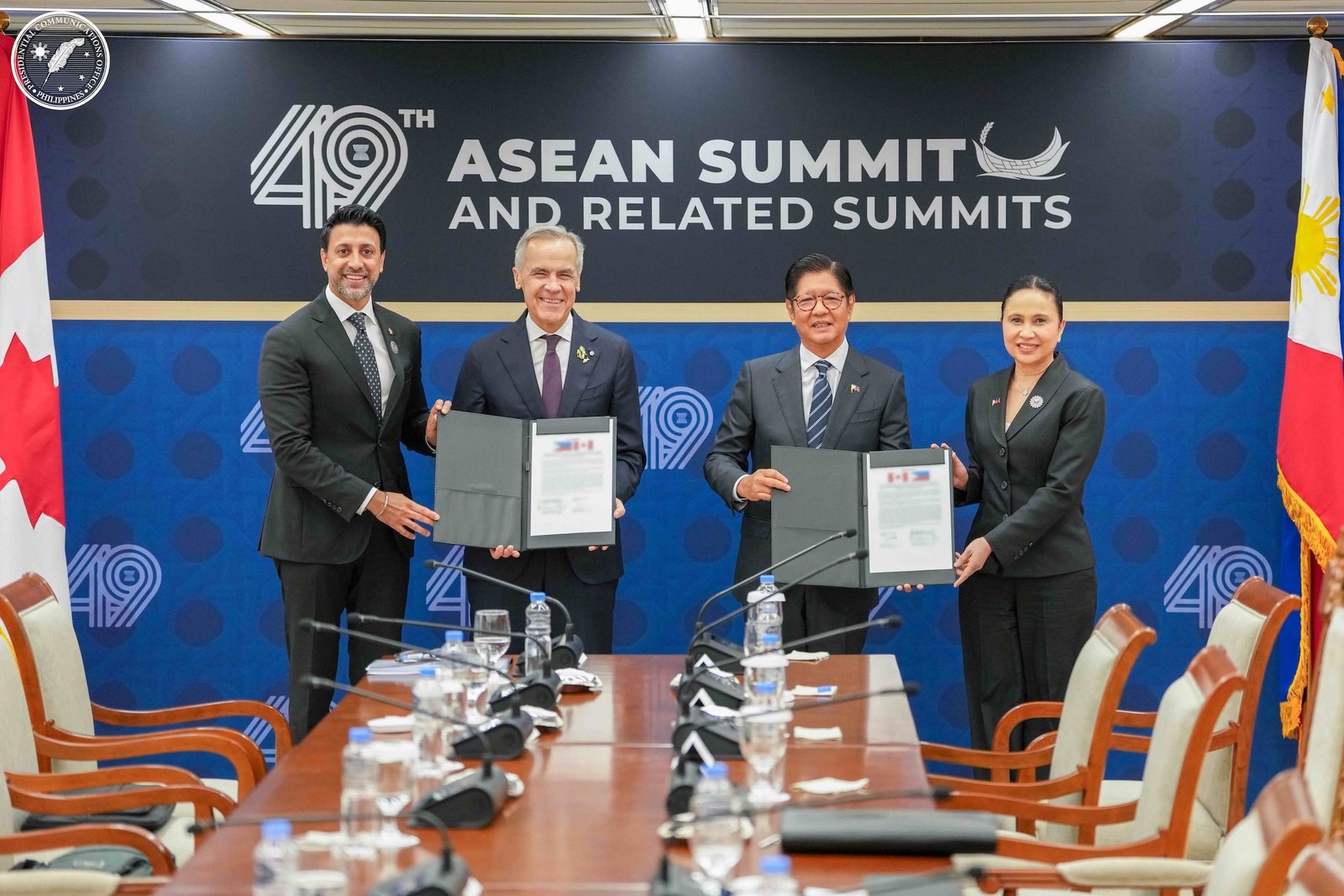
“The Philippines and Canada are pleased to announce the conclusion of negotiations of the Philippines-Canada FTA through a joint statement signed by the secretary of trade and industry of the Philippines and the minister of the international trade of Canada,” said Philippine Trade Secretary Cristina Aldeguer-Roque.
Canadian Prime Minister Mark Carney witnessed the signing of the joint statement alongside Philippine President Ferdinand Marcos Jr. on Saturday. Carney is also joining the summit as a guest of ASEAN chair Marcos.
Roque said the two countries will work towards the signing of the FTA in 2027.
“The joint statement also represents both countries’ commitment to expeditiously facilitate the implementation of the agreement and ensure that the resulting opportunities and benefits will directly impact the Filipino and Canadian peoples,” she said.
The Philippines said the deal with Canada covers goods, services, investment, digital trade, and small and medium-sized enterprises.
It could “help local businesses reach more buyers, expand their customer base, and create more opportunities for Filipino workers, including those providing services online,” according to the Presidential Communications Office.
“The Philippines has an economy of $680 billion and a market of more than 110 million people, and it is one of the fastest-growing economies in Asia,” read a part of the Canadian prime minister’s news release.
“Once in force, this agreement could increase exports up to three times by 2035, and provide Canadian businesses the access and certainty they need to compete and win in this market, particularly in agriculture and forest products.”
Standing together
Official talks for the FTA between Canada and the Philippines started only in October 2025 or just shortly before a different bilateral agreement on military ties was signed.
The pace and level of bilateral engagement between Canada and the Philippines has grown dramatically under Marcos. In July 2026, the two countries agreed to elevate ties to a strategic partnership, a status that reflects increased ties in both security through their Status of the Visiting Forces Agreement and economically through the FTA.
Marcos cited the “strong” people-to-people ties between the two countries as a “vital foundation” of the partnership.
Nearly 1 million people of Filipino descent are in Canada, making it among the countries with the largest Filipino diaspora in the world.
“It really provided an example for other countries around the world that it is possible for like-minded countries to stand together,” Carney told Marcos in their bilateral meeting.
Canada also announced that it concluded the negotiations for the FTA between ASEAN and Ottawa, amid its bid for trade diversification.
Both Carney and Marcos have argued for the importance of middle powers to come together amid shifts in the global order and threats to both global and regional security.
Carney’s speech in Davos in January 2026 was spurred by United States President Donald Trump’s unilateral tariffs across the world, including on traditional partners like Canada and the Philippines. Bilateral ties between Canada and the US have continued to sour over Trump’s trade policies.
For the Philippines, the threat is from its superpower neighbor China, which claims most of the South China Sea including the Philippines’ exclusive economic zone in the West Philippine Sea. Marcos made that pitch during the May 2024 Shangri-La Dialogue in Singapore.
Areas of cooperation
According to Canada, Carney announced $26 million in investments to “support closer ties between Canada and the Philippines in nuclear security and safety, climate-resilient agriculture, community resilience, and food security and infrastructure, including in the G7-supported Luzon Economic Corridor.”
The two leaders also reaffirmed their commitment to “stronger defense, security, and maritime cooperation, as well as promoting peace, stability, and a rules-based order in the Indo-Pacific,” according to Malacañang.
Further details came from the Canadian side. It announced closer cooperation between the armed forces of the Philippines and Canada, the launch of a new cybersecurity dialogue, and steps toward agreements on customs cooperation and the protection of sensitive information.
Canada will also extend the Dark Vessel Detection program until 2023 to continue combatting illegal, unreported, and unregulated fishing activities. – Rappler.com