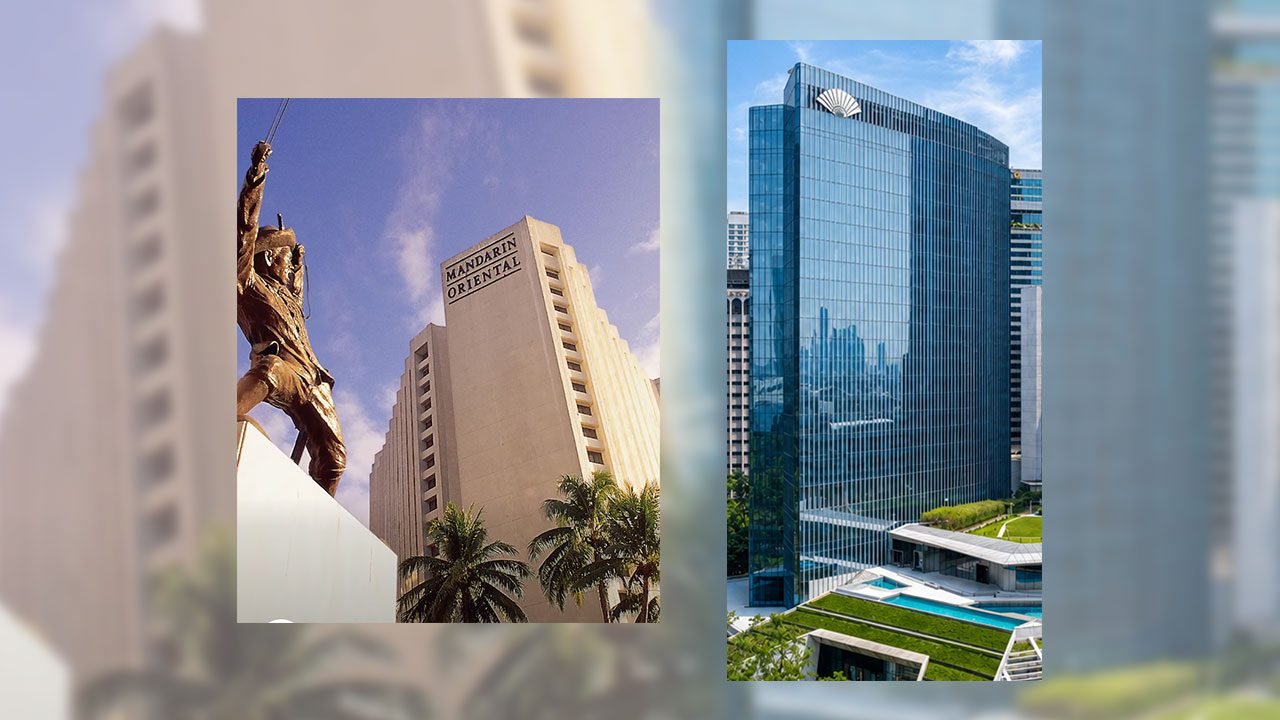
mandarin oriental reborn
| |

Mandarin Oriental is reborn, 12 years and a pandemic later

MANILA, Philippines – When the last guests checked out of the Mandarin Oriental in September 2014, the hotel promised to be back in six years. 

Makati would have to wait twice as long – with a pandemic in between that set back its original 2020 opening date – but the day has finally arrived.

On Thursday, November 26, Ayala Land opens the new Mandarin Oriental at Ayala Triangle, making good on a promise made more than a decade ago.

The original Mandarin opened on Makati Avenue in 1976, just in time for the annual meetings of the International Monetary Fund and the World Bank. Designed by National Artist for Architecture Leandro Locsin, it was among the first Mandarin Oriental hotels outside Hong Kong, arriving at a time when Makati was not yet the skyscraper-lined business district it is today.

That iconic structure has since been demolished, and in its place rises Park Central Towers, another Ayala Land development, billed as an ultra-luxury residential twin tower. (READ: Luxury condo resilience: Half of Ayala’s Laurean buyers staying despite pause)

Still, its successor, built just across the street, keeps a connection to the old Mandarin. American architectural firm Skidmore, Owings & Merrill designed the new hotel in collaboration with Leandro V. Locsin Partners, the practice founded by the late architect. 

NEW Mandarin Hotel
REINVENTION. The 275-room Mandarin Hotel in Ayala Triangle, Makati City is owned by Ayala Land Hospitality and managed by Mandarin Oriental Hotel Group. Ayala Land handout

The new Mandarin is considerably smaller, at 275 rooms compared with its predecessor’s 413. That was part of the plan from the beginning, when Ayala Land first announced the project in June 2014.

The return of the Mandarin is also part of Ayala Land’s continuing reinvention of Ayala Triangle. Once part of Nielson Airport, the property went on to first house the Makati Stock Exchange and has today evolved into a hub anchored by Ayala Triangle Gardens Towers, with upscale restaurants and landscaped gardens – and finally, a luxury hotel to round it all out.

With the Mandarin, Ayala Land is also making a wager on the Philippines’ place in Asia’s luxury tourism market. The company believes Filipino culture and creativity can be a selling point in their own right, rather than looking to Singapore, Hong Kong, or Bangkok for a blueprint.

Filipino art, craftsmanship, and design feature prominently throughout the property. Ayala Land said it was designed around the idea that “the Philippines need not imitate other luxury destinations to compete with them.”

In the first nine months of 2026, Ayala Land’s leasing and hospitality revenues grew 8% year-on-year to P37.8 billion. Recurring-income businesses also now account for a greater part of the company’s earnings before interest, taxes, depreciation, and amortization (EBITDA), standing at 55% and up from 44% in the same period last year. – Rappler.com

Must Read

Welcome to the ‘United States of Makati,’ where family income is PH’s highest – and most unequal


Welcome to the ‘United States of Makati,’ where family income is PH’s highest – and most unequal

Must Read

The renovation is done. Now Ayala is changing the shops inside its malls.


The renovation is done. Now Ayala is changing the shops inside its malls.

Similar Posts

  • | | | |

    Oil slips as higher supplies ease market fears

    Global oil prices declined on Friday as increased crude shipments through key maritime routes helped calm supply concerns, despite continued geopolitical tensions in the Middle East and limited progress in diplomatic talks between the United States and Iran. Brent crude futures dropped by $1.03, or 1.2%, to trade at $88 per barrel, while US West Texas Intermediate (WTI) crude fell $1.50, or 1.8%, to $82.09 per barrel. Even with the daily decline, both international benchmarks remained on track to post monthly gains of around 20%. Market analysts said the fall in prices was mainly driven by improving oil flows through the Strait of Hormuz, one of the world’s most important energy shipping routes. The increase in exports helped offset fears that the ongoing regional conflict could lead to major supply disruptions. The Strait of Hormuz normally carries nearly one-fifth of the world’s crude oil and liquefied natural gas shipments. The route has remained under close watch since tensions escalated following the conflict involving the United States, Israel and Iran. At the same time, Saudi Arabia is working with regional partners to strengthen maritime security in strategic waterways, including the Bab el-Mandeb Strait, the Red Sea and the Gulf of Aden. These routes play a vital role in global energy transportation. According to Saudi officials, 14 countries have expressed support for the proposed multinational maritime defence initiative, aimed at improving the safety of commercial shipping in the region. Meanwhile, the security situation remains uncertain after Yemen’s Houthi movement announced a naval blockade targeting Saudi Arabia, raising fresh concerns over the safety of Red Sea shipping lanes, which serve as an alternative route for oil exports. Although oil tankers continue to pass through both the Strait of Hormuz and the Red Sea, traders say higher security risks have pushed up shipping costs and insurance premiums. These additional expenses continue to keep a geopolitical risk premium built into global oil prices.

  • | |

    Pakistan seeks $10b in US backstop facility

    Pakistan has formally requested a 10 billion dollar exchange stabilisation facility from the United States to boost its foreign exchange reserves and stabilise its economy, according to a source familiar with the development. The request, addressed to US Treasury Secretary Scott Bessent, seeks a Bilateral Exchange Stabilisation Support Facility with a maturity period of up to five years. This move follows Pakistan’s involvement in facilitating negotiations regarding the Iran war, an effort that elevated the country’s diplomatic standing and fueled expectations of economic support from Washington and international partners. If approved, the 10 billion dollar facility would help replenish Pakistan’s central bank reserves, reduce downward pressure on the rupee, and decrease dependency on multilateral lenders. It would also provide financial flexibility as Islamabad continues implementing strict fiscal and monetary measures mandated under its 7 billion dollar International Monetary Fund programme. These IMF-guided measures have required politically challenging tax hikes, spending cuts, and structural reforms to ensure fiscal discipline. Neither the Pakistani Ministry of Finance nor the US Treasury immediately responded to requests for comment regarding the proposal. US Exchange Stabilisation Facilities, typically administered through the Exchange Stabilisation Fund, are rare financial mechanisms that provide foreign governments with dollars, currency swaps, or guarantees. These backstops differ from the Federal Reserve’s permanent standing swap lines with major foreign central banks. A 2025 financial package provided to Argentina represented the first new exchange stabilisation facility granted to a foreign government since Uruguay in 2002, alongside Mexico’s long-standing swap agreement dating back to the 1940s. Pakistan narrowly avoided a debt default in 2023 by securing a 3 billion dollar IMF standby arrangement, which was later succeeded by the current 7 billion dollar Extended Fund Facility. However, its foreign reserves remain heavily dependent on official loans, debt rollovers, and financial deposits from bilateral partners like Saudi Arabia and China. This reliance leaves the country vulnerable to delays in IMF disbursements and shifts in bilateral support, as demonstrated in April when Pakistan repaid approximately 3.5 billion dollars to the United Arab Emirates, representing a fifth of its reserves, while receiving 3 billion dollars in fresh backing from Saudi Arabia. Despite these vulnerabilities, Pakistan’s central bank projected in January that its foreign exchange reserves could approach their 2021 historical high, reaching 20 billion dollars by the close of 2026. In April, rating agency Fitch noted that compliance with the IMF programme has enhanced Pakistan’s funding capacity, while rebuilt foreign exchange buffers offer a cushion against economic shocks stemming from Middle East instability. However, Fitch cautioned that escalating global energy costs and potential supply disruptions could rapidly erode these reserve buffers. Furthermore, foreign direct investment in Pakistan remains constrained due to recurring external account crises, policy shifts, security concerns, historical restrictions on profit repatriation, and a narrow export base. The nation’s credit rating remains firmly in speculative-grade territory, limiting access to international capital markets and keeping borrowing costs high. To navigate these economic pressures, Islamabad has sought deeper engagement with the Trump administration through various commercial and investment initiatives. These efforts include signing a stablecoin agreement for cross-border transactions with an affiliate of World Liberty Financial, advancing a memorandum of understanding to redevelop the Pakistan International Airlines-owned Roosevelt Hotel in New York with the US government, and encouraging US investment in the domestic mining sector, where the US Export-Import Bank announced 1.2 billion dollars in financing for the Reko Diq project.

  • | | | |

    [Good Business] Kasangkapwa in the advent of agentic AI

    I require my students to use AI, and some have called this out in my teaching evaluations. My defense is that they will compete with and alongside these systems the moment they graduate, and exposure under supervision beats discovery under pressure.

Leave a Reply

Your email address will not be published. Required fields are marked *