meralco rates dip
| |

Meralco rates dip slightly in September despite higher generation costs

MANILA, Philippines – Meralco customers will see another slight reduction in electricity rates in September, although an increase in generation costs limits the savings for households.

The Manila Electric Company (Meralco) said on Friday, September 11, that its overall rate for a typical residential customer will decline by P0.0409 per kilowatt-hour (kWh), to P14.7424 per kWh from P14.7833 in August.

For a household consuming 200 kWh, that translates to savings of about P8 on the monthly electricity bill.

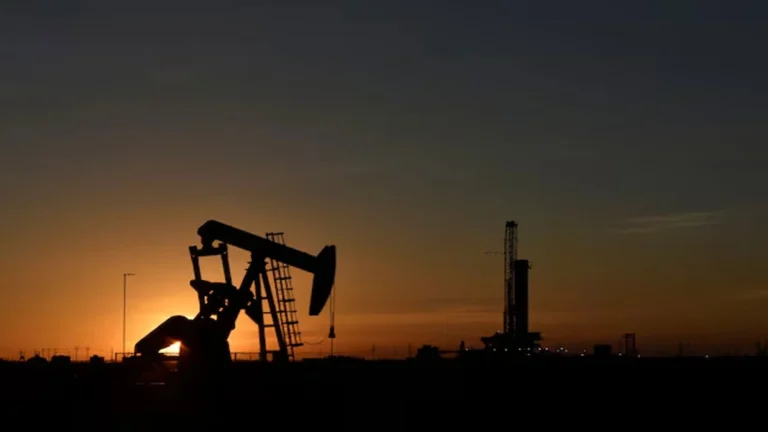
The decrease came despite the generation charge rising by P0.4232 per kWh, which Meralco attributed mainly to the weaker peso and higher fuel costs amid renewed conflict in the Middle East. (READ: Cheaper PH electricity? Go beyond system loss; fix costly power contracts)

Those increases were more than offset by cheaper ancillary services and lower taxes. Ancillary service charges collected by the National Grid Corporation of the Philippines fell by P0.3344 per kWh as Reserve Market charges declined, while taxes and other charges dropped by a net P0.1657 per kWh.

Meralco said lower taxes were partly due to the completion of the Malampaya gas facility’s maintenance shutdown, allowing First Gas and Prime CoreGen plants to again use more indigenous natural gas, which is exempt from value-added tax. (READ: VAT on system loss may be removed by November – ERC)

The utility is also continuing two previously approved refunds equivalent to a combined P1.0139 per kWh for residential customers. These refunds were already reflected in August bills.

September marks the second consecutive monthly rate reduction after Meralco cut its rate by P0.0428 per kWh in August. – Rappler.com

Must Read

[READOUT] The race to deliver cheaper power


[READOUT] The race to deliver cheaper power

Similar Posts

  • |

    Oil prices climb on fears of prolonged Middle East supply disruptions

    LONDON: Global oil prices moved higher on Friday and remained on course for weekly gains as fresh threats from the United States to maintain an indefinite naval blockade of Iran heightened concerns over the security of crude shipments from the Middle East. Brent crude futures gained $1.43, or 1.64%, to reach $88.50 a barrel by 0810 GMT. US West Texas Intermediate (WTI) crude also advanced, rising $1.56, or 1.92%, to $82.81 a barrel. The latest rally reflected growing market anxiety that the conflict in the region could persist for an extended period, potentially placing further pressure on one of the world’s most important oil supply routes. Bjarne Schieldrop, chief analyst at SEB Research, said the prospect of prolonged US pressure on Iran had increased uncertainty in the oil market. He noted that the latest developments offered little indication of a quick return to normal conditions in the region. US pressure raises supply concerns Oil markets reacted strongly after the United States warned on Thursday that its naval blockade of Iran could continue indefinitely while Washington considers additional economic measures against Tehran. US Treasury Secretary Scott Bessent said the administration was preparing further measures aimed at increasing economic pressure on Iran, signalling that Washington could take steps beyond those already announced. The comments added to concerns that tensions between the United States and Iran could remain elevated, making it more difficult for shipping and energy companies to operate normally in the region. Schieldrop said expectations for a rapid restoration of regular shipping through the Strait of Hormuz had weakened significantly as a result of the latest developments. The waterway is particularly important to global energy markets. Before the current conflict began in late February, roughly one-fifth of the world’s daily oil and liquefied natural gas supplies passed through the Strait of Hormuz. Any prolonged disruption could therefore have consequences far beyond the Middle East, potentially affecting crude availability, transportation costs and fuel prices in major consuming markets. Strait of Hormuz traffic under pressure Shipping activity through the strategic waterway declined below the monthly average toward the end of the week as tensions increased and both sides issued competing claims regarding control of the passage. The situation escalated further on Thursday when two vessels belonging to Abu Dhabi National Oil Company were attacked while travelling through the strait, according to the UAE’s state news agency WAM. The UAE government condemned the incident and attributed the attack to Iran, adding another layer of uncertainty for commercial shipping operators using the vital route. Market participants are closely monitoring developments in the strait because even a partial disruption could force vessels to take longer and more expensive alternative routes. Demand outlook limits oil gains Despite the immediate supply concerns, expectations of weaker global oil demand growth are acting as a counterweight to the price rally. Recent forecasts from the Organisation of the Petroleum Exporting Countries (OPEC) and the International Energy Agency (IEA) have pointed towards slower growth in oil consumption, suggesting that demand may not be strong enough to absorb a prolonged increase in prices without affecting economic activity. US inventory data also provided a bearish signal. American crude stockpiles recorded their biggest weekly increase in more than three and a half years, indicating that supplies in the world’s largest oil-consuming economy remain relatively comfortable. Norbert Rucker, head of economics and next-generation research at Julius Baer, said recent reports from the IEA and US Energy Information Administration showed that oil storage levels were holding up better than markets had initially feared. According to Rucker, stronger-than-expected inventories could eventually put downward pressure on crude prices if geopolitical risks ease. For now, however, the possibility of further escalation between Washington and Tehran is keeping traders focused on supply risks. The market is expected to remain highly sensitive to developments surrounding the Strait of Hormuz, particularly any signs of prolonged restrictions on tanker movements. Analysts said the direction of oil prices in the coming sessions would depend on whether geopolitical tensions intensify further or whether diplomatic efforts succeed in restoring more predictable shipping and energy flows from the region.

  • | | |

    SM’s Gen Z council decrees: More pickleball, running hubs, and an Aura library

    ‘We really took the young ones, the officers who are Gen Zs, to do all the insighting for us,’ says the mall’s marketing chief of its ‘Gen Z Council,’ which is helping bring everything from pickleball courts to a library into SM malls

  • | | | |

    PM Shehbaz directs timely implementation of privat…

    Prime Minister Shehbaz Sharif has directed all relevant ministries and institutions to ensure the timely implementation of targets and deadlines under the government’s privatisation programme, stressing the need for close coordination to complete the process according to schedule. The directives were issued during a meeting held to review progress on the privatisation of state-owned enterprises. The meeting was informed that a total of 27 public sector organisations have been included in the government’s privatisation agenda, which is being carried out in three phases. During the briefing, officials updated the prime minister on the progress of the privatisation of Islamabad, Lahore and Karachi airports, as well as several major public sector entities. The meeting also reviewed the privatisation process of electricity distribution companies, including the Islamabad Electric Supply Company (IESCO), Faisalabad Electric Supply Company (FESCO), and Gujranwala Electric Power Company (GEPCO). Officials informed the prime minister that Expressions of Interest (EOIs) have already been invited for all three companies. The deadline for investors to submit documents for FESCO has been set for August 7, while submissions for GEPCO will close on August 21. The deadline for IESCO is September 7, 2026. The briefing noted that several international companies have expressed interest in acquiring the power distribution companies. Officials added that roadshows and engagement sessions with potential investors are continuing to attract further investment. Prime Minister Shehbaz also reviewed the proposed privatisation of the Zarai Taraqiati Bank Limited (ZTBL) and directed authorities to design the transaction in a way that preserves the bank’s vital role in supporting Pakistan’s agricultural sector. He emphasised that the bank should continue providing agricultural loans and financial services to farmers even after privatisation. The prime minister said farmers’ access to financial resources is essential for increasing crop yields and improving agricultural productivity. He further stated that agriculture remains a key pillar of Pakistan’s economy and plays a critical role in ensuring food security. Therefore, any privatisation model should safeguard the sector’s long-term interests while maintaining uninterrupted financial support for farmers.

  • | | |

    SBP to study daily fuel price impact on inflation

    ISLAMABAD: The federal government has directed the State Bank of Pakistan (SBP) to conduct a comprehensive study on how the daily revision of petroleum prices affects inflation, as authorities seek new measures to protect consumers from rising living costs and volatile global energy markets. The decision was taken during a meeting of the National Price Monitoring Committee (NPMC), which reviewed the country’s inflation outlook and discussed ways to minimise the impact of fluctuating fuel prices on households and businesses. According to officials, the SBP has been asked to prepare a detailed action plan within 15 days to evaluate the inflationary effects of daily adjustments in petrol and high-speed diesel (HSD) prices, following international best practices. The central bank is expected to recommend policy options that could help maintain price stability while supporting economic growth. The committee was informed that the SBP’s primary responsibility is to ensure price stability through effective monetary policy, including the use of interest rates to manage inflation expectations and regulate money supply. Alongside the SBP study, the NPMC instructed provincial governments, Azad Jammu and Kashmir, Gilgit-Baltistan and the Islamabad Capital Territory to strengthen market monitoring and prevent unjustified increases in the prices of essential commodities whenever fuel prices are revised. The committee also expressed concern over excessive pricing of liquefied petroleum gas (LPG), noting that consumers in many areas were paying significantly more than the official rates notified by the Oil and Gas Regulatory Authority (OGRA). Authorities have been directed to intensify monitoring and narrow the gap between notified and market prices. Officials said the recent regional conflict involving Iran had disrupted energy markets, contributing to higher LPG prices despite regulatory efforts. The meeting also focused on the prices of key food items, including tomatoes, chicken, wheat flour and edible oil. Representatives from the Ministry of National Food Security attributed the surge in tomato prices to seasonal shortages, explaining that Pakistan was importing tomatoes from Iran and Afghanistan to meet domestic demand. However, following the closure of the Afghanistan border, officials said additional tomato imports would now be sourced from Romania to prevent supply shortages and stabilise prices. To improve food quality and consumer protection, the Ministry of Science and Technology will work with the Pakistan Bureau of Statistics (PBS) and provincial authorities to develop testing standards for loose milk, dairy products, edible oil and ghee. Accredited laboratories will conduct regular testing, with quarterly reports submitted to the NPMC. The committee also urged authorities to reduce wholesale and retail price disparities across different cities, improve the supply chain for essential goods and work more closely with the private sector to arrange timely imports before seasonal shortages trigger sharp price increases. Officials expressed hope that stronger coordination, tighter market oversight and evidence-based policymaking would help ease inflationary pressures and provide greater stability for consumers in the coming months.

Leave a Reply

Your email address will not be published. Required fields are marked *