liberty flour mills
|

Liberty Flour Mills files cyber libel complaint vs former execs as family feud deepens

MANILA, Philippines – The bitter corporate feud at Liberty Flour Mills (LFM) may soon spill into the courtroom, with the listed flour miller filing a cyber libel complaint against two former executives over news reports that aired allegations of corporate abuse and conflicts of interest at the company.

LFM disclosed to the Philippine Stock Exchange that on Tuesday, August 11, it filed a complaint-affidavit before the Office of the City Prosecutor of Makati against former president Sandra Judy Uy, former vice president and assistant treasurer Stella Marie Jill Uy, and other unnamed individuals. The complaint was filed by LFM through corporate secretary William Ang.

The filing does not mean criminal charges have already been brought before a court. Prosecutors will first have to determine whether there is sufficient basis to proceed with a cyber libel case.

The complaint concerns three articles published by InsiderPH, Manila Bulletin, and Daily Tribune in September 2025, at the height of the internal dispute between Sandra and Stella’s camp and LFM’s current leadership, headed by chairman and president John Carlos Uy, Sandra’s uncle.

Those stories reported on Sandra and Stella’s request for the Securities and Exchange Commission (SEC) to investigate LFM’s dealings with Parity Values Incorporated (PVI), its largest distributor and biggest shareholder.

Among the issues alleged were PVI’s roughly P805 million in receivables owed to LFM, unusually long payment terms, and overlapping officers and directors between the two companies. Sandra and Stella had asked regulators to examine whether the arrangement created conflicts of interest and whether the board’s handling of the receivables amounted to corporate abuse.

Must Read

Liberty Flour Mills at the crossroads: Internal feud, falling profits amid turmoil in milling business


Liberty Flour Mills at the crossroads: Internal feud, falling profits amid turmoil in milling business

LFM, however, said in its latest disclosure that the three articles contained defamatory imputations and falsely portrayed the company, PVI, and certain individuals as involved in illegal, criminal, or fraudulent acts. It said their publication appeared to be an “orchestrated scheme calculated to malign and discredit” the company and individuals.

The development further escalates a feud that has already spilled into regulatory proceedings and competing allegations of corporate mismanagement.

LFM has also reportedly been weighing more fundamental changes to the business, including a possible sale or separation of its flour milling operations.

LFM said it would provide further disclosures as the cyber libel complaint progresses. – Rappler.com

Must Read

Yuchengco tells SEC’s Lim: Fresh PSE blood is shareholders’ call


Yuchengco tells SEC’s Lim: Fresh PSE blood is shareholders’ call

Similar Posts

  • | | |

    FBR starts fiscal year strong with rs810 billion t…

    ISLAMABAD: Pakistan’s Federal Board of Revenue (FBR) kicked off the new fiscal year on a positive note by surpassing its July tax collection target, although a shortfall in income tax receipts and the government’s decision to reject a key enforcement proposal highlighted the challenges that lie ahead. According to provisional figures, the FBR collected Rs810 billion in July, exceeding its monthly target by Rs30 billion. The collection also marked a 7% increase compared to Rs757 billion collected during the same month last year. The strong performance was largely driven by robust sales tax collections, which reached Rs358 billion, surpassing the target by Rs53 billion and recording an 18% year-on-year increase. A significant 78% of total sales tax, amounting to Rs275 billion, was collected at the import stage, where tax compliance is generally higher. However, income tax collection remained below expectations. The FBR collected more than Rs300 billion in income tax, falling Rs23 billion short of the target. Analysts attributed the shortfall to advance tax collections made in June to meet last fiscal year’s revised revenue goals, along with reduced withholding tax rates for salaried individuals and property transactions introduced in the latest federal budget. Meanwhile, customs duty collection stood at Rs105 billion, matching the target, while federal excise duty generated Rs48 billion, slightly exceeding expectations. The July performance marks the beginning of a crucial fiscal year in which the government has committed to collecting Rs15.263 trillion in taxes under an agreement with the International Monetary Fund (IMF). Meeting the annual target is considered essential for securing future IMF loan disbursements and creating fiscal space for development, defence and water resource projects. The FBR also reported encouraging progress in tax compliance, receiving around 227,000 income tax returns during July after updated tax return forms became available. Additionally, the authority issued Rs98 billion in tax refunds, approximately Rs13 billion more than in the same period last year. Despite the positive revenue performance, the federal cabinet declined an FBR proposal to activate restrictions on high-value purchases by individuals with insufficient declared assets. Had the proposal been approved, it would have limited the purchase of luxury vehicles, expensive properties, large stock investments and major cash withdrawals by non-compliant taxpayers. Economic observers say the government’s ability to sustain monthly revenue growth will be closely watched, as consistent tax collection remains critical to maintaining fiscal stability and meeting commitments under Pakistan’s economic reform programme.

  • |

    Pakistan refineries ready to sign long-delayed upgrade agreements 

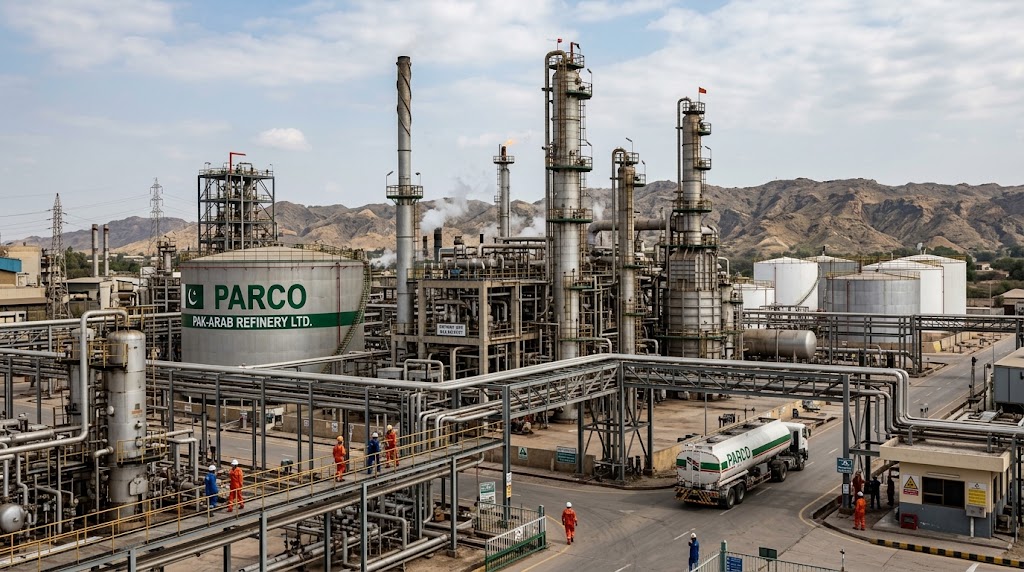
    Pakistan’s oil refineries have agreed to move ahead with long-delayed agreements for upgrading their ageing plants, even as they continue to raise objections over a new financial penalty linked to the petroleum policy. Under the revised arrangement, refineries will be required to surrender 2.5 percent of the deemed duty retained on diesel for the period of delay. Industry representatives have termed the condition unfair, arguing that the delays were largely beyond their control and should not result in a financial burden on the refineries. Despite the disagreement over the penalty, refinery companies have indicated that they do not intend to hold up the signing of the agreements and are prepared to proceed with the modernization programme. The government’s Brownfield Refinery Policy, originally approved in August 2023, was introduced to encourage investment in the modernization and expansion of Pakistan’s existing refining capacity. The policy has subsequently been amended twice in an effort to address implementation issues and facilitate investment in the sector. Petroleum Minister Ali Pervaiz Malik has indicated that the long-pending agreements will be finalized shortly, while officials in the Petroleum Division are expecting the documents to be signed by the end of August. Agreements to Be Signed With ISGS A key change under the revised mechanism is that the upgrade agreements will now be executed with Interstate Gas Systems (ISGS), which operates under the Petroleum Division. Previously, the agreements were expected to be concluded through the Oil and Gas Regulatory Authority (Ogra). The change in the implementing entity is part of the government’s efforts to move the refinery-upgrade programme forward after delays in finalizing the contractual framework. Industry representatives, however, have maintained that refinery companies had already taken substantial steps to comply with the earlier arrangements and should not be penalized for delays that occurred afterward. Refineries Object to 2.5% Penalty Adil Khattak, Chief Executive Officer of Attock Refinery Limited and Chairperson of the Energy Committee of the Overseas Investors Chamber of Commerce and Industry, said Attock Refinery and National Refinery had completed several important formalities ahead of the previous deadline of October 22, 2024. According to Khattak, the companies had initialed agreements with Ogra, secured approval from their respective boards and arranged Rs1 billion bank guarantees each as part of the requirements. He said the companies were nevertheless being asked under the revised arrangement to surrender 2.5 percent of the deemed duty retained on diesel for the period between the previous deadline and the signing of the new agreements. The financial implications could be substantial. Khattak said Attock Refinery alone could face a penalty of around Rs7.5 million for every day of delay, increasing the industry’s concerns over the cost of the prolonged implementation process. Refineries argue that imposing the financial charge is inappropriate because they had already completed the required formalities within the earlier timeframe and were not responsible for subsequent delays in finalizing the agreements. Draft Agreements Circulated The Petroleum Division has now circulated draft upgrade agreements among the refineries, marking another step towards implementation of the long-delayed modernization programme. Officials are expected to hold further consultations with the Ministry of Finance, Controller of Accounts and ISGS before the agreements are finalized. Although refinery companies have reservations about the penalty clause, industry representatives have indicated that the disagreement will not prevent them from signing the agreements. The refineries are instead seeking a resolution of the financial issue separately while allowing the broader modernization programme to proceed. Upgrade Seen as Critical for Energy Security The modernization of Pakistan’s refining sector has gained greater importance as the country remains heavily dependent on imported petroleum products to meet domestic demand. Khattak estimated that delays in upgrading local refineries are costing Pakistan approximately $1.5 billion annually through additional fuel imports and the resulting foreign exchange outflows. Industry officials argue that upgrading domestic plants would allow refineries to produce a greater proportion of higher-value petroleum products while reducing dependence on imports. The issue has also acquired greater significance amid repeated disruptions and uncertainty in international energy markets. Greater domestic refining capacity and improved processing technology could provide Pakistan with an additional buffer against external supply shocks and volatile global fuel prices. Attock Refinery Moves Toward Financing Attock Refinery has already made considerable progress on the technical side of its proposed modernization project. The company has largely completed its front-end engineering and design work and has begun discussions with banks to arrange financing for the planned investment. The next stage will depend on the finalization of the government agreement and the completion of financing arrangements. For Pakistan, the successful implementation of the brownfield refinery upgrade programme could help improve domestic fuel production, reduce import dependence and ease pressure on foreign exchange reserves. However, industry stakeholders say timely decisions on the remaining contractual and financial issues will be essential if the government wants to avoid further delays in a programme that was originally launched several years ago.

  • |

    Pakistan targets 90% clean electricity by 2035, says Awais Leghari

    Federal Minister for Power Awais Leghari outlined Pakistan’s long-term strategy to transform its electricity sector, setting an ambitious target of raising the share of clean energy in the national power mix to 90 percent by 2035. The announcement came during the Solar, Storage and Flexibility 2026 Conference, where the minister also highlighted key policy hurdles, including restrictions under Pakistan’s International Monetary Fund (IMF) programme that are delaying the introduction of a market-based electricity pricing mechanism. Speaking at the conference on Tuesday, Leghari said the government was pursuing a major shift in energy policy by moving away from a traditional generation-focused model towards a system centred on grid flexibility, energy security, battery storage and domestic manufacturing. He said the new approach is designed to reduce Pakistan’s dependence on imported fuels, shield consumers from volatile global energy prices and maximise the benefits of the country’s rapidly expanding solar sector. The minister said Pakistan has witnessed remarkable growth in rooftop solar installations, with nearly 38 gigawatts of distributed solar capacity now installed through private consumer investment. He described the rapid adoption of rooftop solar as one of the country’s biggest energy success stories but cautioned that it has also created new challenges for the national power system. According to Leghari, Pakistan generates significant amounts of electricity from solar energy during daylight hours, yet the absence of sufficient battery storage infrastructure prevents that surplus electricity from being utilised during evening peak demand. He stressed that without modern storage systems, the country would continue to struggle with balancing electricity supply and demand despite having abundant renewable energy resources. Referring to disruptions in Re-gasified Liquefied Natural Gas (RLNG) supplies earlier this year, the minister said the episode exposed Pakistan’s continued dependence on imported fuels. He noted that the interruption in fuel supplies led to electricity shortages and load shedding even though ample solar power was available during the daytime, highlighting the urgent need for large-scale energy storage. “Battery storage is no longer an optional technology—it has become a strategic national asset that is essential for ensuring Pakistan’s energy sovereignty,” Leghari said. He noted that clean energy sources, including hydropower, nuclear, wind and solar, currently contribute approximately 55 percent of Pakistan’s total electricity generation. However, he warned that achieving the government’s renewable energy targets would require significant investment in battery storage systems, transmission infrastructure and power market reforms. The minister emphasised that expanding renewable generation alone would not be sufficient unless supported by a modern electricity network capable of storing and transmitting clean energy efficiently. To support the country’s long-term energy transition, Leghari announced a three-point strategy. The plan includes expanding battery energy storage systems across the national grid, encouraging local battery manufacturing and assembly to reduce reliance on imports while creating employment opportunities, and introducing regulatory reforms aimed at providing long-term certainty and confidence for domestic and foreign investors. During a question-and-answer session following his address, the minister also disclosed that Pakistan’s commitments under the IMF programme currently limit the government’s ability to introduce a fully flexible, market-based electricity tariff system. He explained that the government has been in discussions with the IMF for several months regarding the introduction of a time-of-use tariff, under which electricity prices would vary according to the actual cost of power generation at different hours of the day. Such a system, he said, would encourage consumers to shift electricity consumption to off-peak periods, reduce pressure on the national grid and help integrate renewable energy more efficiently.

  • Chiang Rai Leaders Back New Festival Tourism Project to Bring Visitors

    CHIANG RAI – Provincial Administration in Chiang Rai took a big step to boost local travel on July 8, 2026. Deputy Governor Norasak Suksomboon welcomed a team of researchers to the City Hall. The experts came from Thammasat University’s Lampang Center to discuss a major new plan. They met to talk about a project that […]

  • Thailand Relaunches Gasohol E20 to Fight Rising Energy Costs

    BANGKOK – Energy authorities in Thailand are aggressively relaunching Gasohol E20 in the third quarter of 2026. The government desperately wants to reduce the country’s massive dependence on expensive imported oil. Officials sincerely hope this renewed push will finally convince drivers to embrace biofuel, boost local farming, and stabilize national energy security. Thailand will aggressively relaunch […]

  • Chiang Rai City Inspects Nightlife Venues to Assure Public Safety

    CHIANG RAI – The Municipality of Meuang Chiang Rai has launched a massive safety sweep across its designated nightlife entertainment zones. Local officials want to guarantee that all venues meet strict fire and public safety rules before they open their doors to customers. The joint task force gathered at 6:00 PM on July 15, 2026, […]

Leave a Reply

Your email address will not be published. Required fields are marked *