spacex revenue nearly
|

SpaceX revenue nearly doubles in first earnings report

SpaceX has released its first earnings report since becoming a publicly traded company. Revenue nearly doubled over the past year, even as artificial intelligence spending surged sharply.

Despite beating analyst forecasts on both revenue and earnings, the company’s stock slipped in after-hours trading. Investors appeared more focused on rising costs than on the strong topline numbers.

The company reported $7.8 billion in revenue for the second quarter. That marked a 92% jump compared to the same period last year. Net losses narrowed significantly to $541 million, down from $1 billion a year earlier. SpaceX began trading on the US stock market back in June.

Starlink, the company’s satellite internet division, remained the only profitable business unit. It generated $1.6 billion in revenue during the quarter. Elon Musk told analysts on the earnings call that people were underestimating the company. He pointed directly to Starlink’s rapid growth as proof.

Musk suggested Starlink could eventually power a large share of global internet access. Meanwhile, the company’s AI computing division posted a $1.2 billion loss on $2.5 billion in sales. The core space business also posted a loss, at $542 million on $962 million in sales.

Musk said SpaceX currently runs 1.4 gigawatts of AI computing capacity. He added that this figure is expected to hit 10 gigawatts within the next year. Chief Financial Officer Bret Johnson said capital spending would stay steady for the rest of the year.

Industry voices offered mixed reactions to the results. Carré Partners CEO Wendy Souvannarath noted that heavy AI investment has become the norm across tech firms. Analyst Brady Wang praised Starlink’s strong subscriber growth as a genuine bright spot.

However, IG analyst Fabien Yip pushed back on Musk’s framing. He said it was a stretch to call the company underestimated while its AI division kept losing money.

Similar Posts

  • |

    AI builds 16 brand-new viruses in world-first genome experiment

    Artificial intelligence has designed 16 entirely new viruses that have never existed in nature before. Researchers in the US are calling it a genuine scientific breakthrough. According to the team behind the project, these newly designed viruses are fully functional and can replicate successfully in lab conditions. Scientists are describing the achievement as a major turning point for the field. This marks the first time AI has managed to design a complete viral genome from scratch. The viruses were specifically built to target bacteria, particularly drug-resistant strains of E. coli, and pose no risk to humans. The work was led by Dr Brian Hie and his team at Stanford University. They relied on genome language models, including systems called Evo1 and Evo2, trained using data from roughly two million bacteriophages. To keep the research safe, the team deliberately excluded any genetic data linked to viruses capable of infecting humans, animals or plants. That precaution was built into the training process from the very start. Hie explained that this represents a new level of complexity for what generative AI can design. He noted that building a complete, functional genome capable of replicating inside cells was completely uncharted territory for his team. Out of thousands of AI-generated designs, researchers narrowed the list down to around 300 for lab synthesis. After testing, only 16 of those proved effective at killing antibiotic-resistant E. coli. Scientists have framed the achievement as a potential breakthrough with real medical applications ahead. Tom Ellis, a synthetic genome expert at Imperial College London, called the work impressive but pointed out its current limitations. He noted that this particular genome remains one of the simplest and smallest to design successfully. Ellis added that concerns around AI-designed pathogens are often overstated compared to more realistic risks. He explained that modifying existing pathogens through gain-of-function techniques remains a far easier and more likely biosecurity threat. Still, some researchers in the wider scientific community remain cautious about where this technology could eventually lead. Experts at the Johns Hopkins Center for Health Security warned that proper oversight for this kind of AI-driven genome design doesn’t fully exist yet. Dr Filippa Lentzos from King’s College London argued that regulation needs to focus on multiple layers, including lab safety and DNA synthesis screening, rather than restricting AI models alone.

  • |

    Oil prices tumble to three-week low as Trump delays Iran strike

    LONDON: Global oil prices recorded their sharpest single-day decline in weeks on Monday, falling to a three-week low after US President Donald Trump stepped back from plans for a military strike against Iran, raising hopes that diplomatic efforts could ease tensions and prevent disruptions to energy supplies from the Gulf. International benchmark Brent crude dropped 7 percent, or $6.35, to settle at $83.77 per barrel, while US West Texas Intermediate (WTI) crude fell 5.1 percent, losing $4.33 to close at $80.34 per barrel. The decline marked Brent’s weakest closing level since mid-July. Market analysts said the drop was also influenced by the expiry of the higher-priced September Brent contract, with the less expensive October contract becoming the new front-month benchmark. Investor sentiment shifted sharply after Trump announced that he had postponed military action against Iran, saying he wanted to allow time for diplomacy aimed at reaching an agreement that could reduce regional tensions and potentially increase Iranian oil exports. The possibility of additional crude entering global markets eased concerns over supply shortages, prompting traders to sell oil futures and pushing prices lower. However, Tehran quickly dismissed suggestions that negotiations with Washington were underway. Iranian Foreign Ministry spokesman Esmail Baghaei said there were no talks taking place with the United States and no meetings had been scheduled. He added that Iran had no plans to host foreign delegations or send negotiators abroad in the coming days. Trump, meanwhile, maintained that discussions with Iran were in progress and warned Tehran of serious consequences if it failed to reach an agreement aimed at ending the ongoing confrontation. Analysts call market reaction excessive Energy analysts said oil markets appeared to react strongly to political rhetoric rather than confirmed developments. According to analysts at energy consultancy Ritterbusch and Associates, the steep decline in crude prices reflected what they described as an overreaction by investors to Trump’s comments suggesting that an agreement with Iran could be imminent. They noted that the US president has repeatedly made strong statements regarding Iran before later softening his position, creating significant volatility in energy markets. Analysts also observed that Trump’s public calls for lower fuel prices in the United States have frequently weighed on oil markets by reducing expectations of sustained price increases. During Monday’s trading session, US gasoline and diesel futures also declined by nearly 5 percent, reflecting broader weakness across the energy sector. Shipping routes remain under pressure Despite hopes for diplomacy, concerns over maritime security in the Middle East continued to influence market sentiment. Shipping data showed that six Saudi-flagged supertankers altered their routes in recent days, avoiding the Gulf of Aden and instead sailing around southern Africa after Yemen’s Iran-backed Houthi movement threatened to target Saudi vessels. At the same time, some oil tankers continued to transit the region. Two Saudi oil tankers successfully crossed the Bab el-Mandeb Strait over the weekend, while vessel movements through the Strait of Hormuz slowed following reports of attacks on commercial shipping. The Strait of Hormuz remains one of the world’s most strategically important energy chokepoints, carrying roughly one-fifth of global oil trade before hostilities between the United States, Israel and Iran escalated earlier this year. A Panama-flagged tanker transporting Russian naphtha also reportedly abandoned plans to pass through the Bab el-Mandeb, choosing the longer route around Africa due to security concerns. Russia boosts maritime security Russia announced on Monday that it was strengthening security measures for commercial shipping in the Azov-Black Sea region while working to expand alternative export routes, following increased attacks on vessels linked to the conflict in Ukraine. As one of the world’s largest crude producers and a leading member of the OPEC+ alliance, Russia remains a key player in global energy markets. Disruptions to exports from the Gulf, Russia and Kazakhstan have continued to limit global oil supplies throughout the year, preventing previously announced OPEC+ production increases from fully reaching international markets. In a separate development, OPEC+ approved a production quota increase of approximately 188,000 barrels per day beginning in September. Although the move is intended to gradually raise output, analysts believe geopolitical risks and transportation disruptions could continue to limit the actual flow of additional crude to global buyers.

  • | |

    Iran pressures Gulf allies to rein in Trump, threa…

    Iran has launched an intensive diplomatic campaign targeting Gulf states, warning them directly that Tehran will strike their oil, power and water facilities unless they persuade President Donald Trump to halt US military action and pursue a negotiated end to the war instead. According to a senior Iranian official, the warning covers potential attacks on energy facilities, oil fields, refineries, electricity grids, water systems, transport networks and other strategic infrastructure belonging to Washington’s closest Arab partners in the region. The message formed part of a wider Iranian strategy to discourage further American military action by raising the specter of significant economic damage across the Gulf. Sources familiar with the matter said the warning traveled through a wave of high level diplomatic contacts following Trump’s July 28 threat to strike Iran’s energy network and broader infrastructure. Two senior Iranian officials, two Gulf sources and a senior regional diplomat, all speaking on condition of anonymity given the sensitivity of the discussions, said Iranian Foreign Minister Abbas Araqchi held conversations with his Saudi, Turkish and Qatari counterparts as well as Pakistan’s army chief. The senior diplomat said Araqchi pressed Washington’s Gulf allies to use their influence with Trump to head off renewed strikes, cautioning that any attack on Iran would trigger retaliation against American assets and critical infrastructure throughout the Gulf. The diplomat said Araqchi delivered a consistent message in each conversation, expressing readiness to retaliate while stressing that a diplomatic solution offers the best chance of avoiding wider regional destruction. One Gulf source described the Iranian position as unambiguous, saying Tehran made clear that any American strike on Iranian infrastructure would draw retaliation against Gulf energy facilities and other regional targets. The campaign illustrates how Iran is attempting to convert Gulf vulnerability into diplomatic leverage, presenting regional governments with the prospect that a renewed confrontation between Washington and Tehran could put the infrastructure their economies depend on directly at risk. Saudi Crown Prince Mohammed bin Salman subsequently spoke with Trump directly, urging him to hold off on military action, return to the negotiating table, pursue a ceasefire and seek a diplomatic resolution, according to the senior diplomat and Gulf sources. Another Gulf source said the warning was meant for every Gulf state but traveled primarily through Saudi Arabia and Qatar, both of which have rebuilt ties with Iran in recent years after a long period of regional rivalry. Qatar, Oman and Saudi Arabia have each urged Washington to resume talks with Tehran and prevent a fresh round of conflict, with Iran cautioning that further strikes could turn the region into what one Iranian official called a fireball. On August 2, Trump said he had agreed to call off a planned attack on Iran, provided a deal could be reached quickly. Concerns over wider escalation A Gulf source said Saudi Arabia believes additional escalation would only cause further destruction, explaining why Riyadh pushed Trump to give diplomacy more room to work. At the same time, Saudi officials made clear the kingdom would defend itself if directly threatened, with a second Gulf source saying Riyadh warned that any strike on Saudi territory would draw a military response of its own. Ali Shihabi, a Saudi analyst with ties to the royal court, said the kingdom’s assessment holds that further escalation is unlikely to produce the outcome Washington wants. He said Saudi officials believe a mix of proportionate military responses combined with sustained pressure on Iran around the Strait of Hormuz offers the most realistic route toward a workable diplomatic settlement. Iran’s clerical leadership has repeatedly called for the closure of US military bases across the Gulf and urged Gulf Arab states to stop sharing intelligence with Washington, which Tehran believes has enabled strikes against Iranian targets. Shihabi noted that memories of the September 2019 drone and missile strikes on Saudi Arabia’s Abqaiq and Khurais oil facilities still shape regional thinking, since that attack temporarily cut more than half the kingdom’s crude output and exposed how vulnerable Gulf energy infrastructure remains. A separate Iranian official reiterated that any damage inflicted on Iran would be met with far greater retaliation, again citing power grids and refineries among potential targets. From Tehran’s perspective, the senior Iranian official said, Trump now confronts two difficult options: escalate a conflict that risks engulfing the wider Gulf and disrupting global energy markets, or accept a negotiated settlement that falls short of the decisive win Washington has sought. The senior regional diplomat identified Washington’s reluctance to let Tehran claim any form of victory as one of the central obstacles blocking an agreement, noting that American officials want tangible proof they prevailed in the conflict.

  • | |

    Ishaq Dar holds telephone conversation with Saudi …

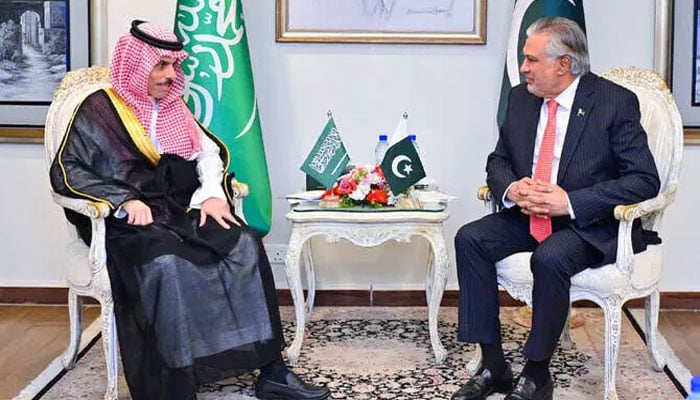
      Pakistan’s Deputy Prime Minister and Foreign Minister Ishaq Dar held a telephone conversation with Saudi Foreign Minister Prince Faisal bin Farhan, during which the two sides discussed matters of mutual interest as well as regional and international developments. According to a statement issued by the Foreign Office spokesperson, the two foreign ministers exchanged views on a range of issues of common interest during the telephone call. The conversation focused on strengthening bilateral relations between Pakistan and Saudi Arabia and maintaining close coordination on important regional and global matters. During the discussion, Ishaq Dar and his Saudi counterpart also reviewed the prevailing regional situation. The two ministers exchanged views on developments affecting peace and stability in the region and discussed the importance of continued diplomatic engagement and cooperation among countries. The foreign ministers also discussed multilateral cooperation and matters related to international forums. They emphasised the importance of maintaining coordination between Pakistan and Saudi Arabia on issues of common concern at both regional and international levels. According to the Foreign Office, Pakistan and Saudi Arabia reaffirmed their commitment to maintaining close contact and cooperation through bilateral and multilateral platforms. The telephone conversation comes as Pakistan and Saudi Arabia continue to maintain close and longstanding relations based on political, economic, diplomatic and people-to-people ties. Both countries regularly consult each other on regional developments and issues of mutual interest. Pakistan considers Saudi Arabia an important partner in the Middle East, while Saudi Arabia has maintained close relations with Pakistan over the years. High-level exchanges between officials from both countries have remained an important feature of their bilateral relationship. The discussion between Ishaq Dar and Prince Faisal bin Farhan also reflects the importance attached by both countries to regular diplomatic consultations. Such contacts provide an opportunity for the two sides to exchange assessments of emerging regional developments and coordinate their positions on matters discussed at international forums. Multilateral cooperation was another important aspect of the conversation. Pakistan and Saudi Arabia have worked together at various international platforms and have frequently supported closer coordination on issues affecting the Muslim world and the broader international community. The two ministers also reiterated the importance of continued engagement between their respective governments. By maintaining regular communication, both sides aim to strengthen their strategic partnership and enhance cooperation on matters of mutual interest. The telephone conversation is expected to contribute to ongoing diplomatic efforts to further deepen Pakistan-Saudi Arabia relations. Both countries have repeatedly expressed their desire to expand cooperation across multiple areas and maintain strong institutional and political contacts. The Foreign Office spokesperson did not provide further details about the specific regional issues discussed during the call. However, the reference to the regional situation and multilateral cooperation indicates that the conversation covered broader developments beyond bilateral relations. The reaffirmation of close coordination on bilateral and multilateral platforms demonstrates the continued importance of the relationship between Islamabad and Riyadh. Regular communication between senior officials remains a key mechanism for both countries to exchange views, coordinate diplomatic positions and respond to developments in the region. The latest telephone conversation between Ishaq Dar and Prince Faisal bin Farhan therefore underscores the two countries’ commitment to maintaining close diplomatic engagement and strengthening cooperation at both bilateral and international levels.

  • | |

    Nimra Khan and husband reportedly part ways

    Pakistani actress Nimra Khan has once again drawn attention on social media after sharing a series of emotional and cryptic posts amid growing speculation surrounding her marriage. The actress, who has millions of followers on Instagram, has remained in the spotlight since announcing her marriage earlier this year. She had shared pictures and moments from her wedding and Nikah in Paris, receiving warm wishes from fans and fellow celebrities. However, reports and social media speculation about trouble in her marriage began circulating shortly afterward. The discussion intensified following a reel in which Nimra spoke about staying strong during difficult times and encouraged people not to abandon themselves when life becomes challenging. At the time, she appeared to dismiss concerns about her relationship, suggesting that everything was fine. She also explained that she had restricted access to some personal pictures to protect them from negative attention and the evil eye. Despite those remarks, speculation has continued to grow. In her latest Instagram activity, Nimra shared another message about strength and personal boundaries. Her post focused on standing firmly for oneself and making sure silence is not mistaken for weakness. The actress also highlighted the importance of setting boundaries, saying that failing to establish them had previously come at a personal cost. Adding to the speculation, her husband, Zain Hamid, reportedly shared a cryptic message on social media that appeared to suggest relief after a difficult situation. The development quickly caught the attention of social media users, particularly because the couple’s accounts reportedly no longer show signs of their previous connection. Nimra and Zain have also reportedly stopped following each other on Instagram, while pictures of the couple are no longer visible on his account. These developments have further intensified questions among fans about the status of their relationship. Neither Nimra Khan nor Zain Hamid has publicly provided a detailed explanation of the reported separation or addressed all the speculation circulating online. Meanwhile, Nimra recently shared content highlighting a woman’s account of alleged domestic abuse. In the post, the actress expressed support for women facing difficult circumstances and encouraged victims to speak up. Her decision to share the message has also attracted attention, with many followers linking it to her recent posts about boundaries, strength and self-respect.

  • | |

    Lahore police launch major crackdown on loan shark…

    Lahore Police have launched a large-scale operation against illegal moneylenders and their facilitators as part of an intensified effort to protect citizens from financial exploitation, harassment, and intimidation. Authorities have directed police across the city to register cases without discrimination against individuals involved in illegal lending practices, particularly those accused of threatening, blackmailing, or harassing borrowers. The campaign aims to curb predatory lending and ensure strict legal action against offenders. DIG Operations Faisal Kamran said there would be zero tolerance for moneylenders who recover amounts far exceeding the original loans through coercive and unlawful means. He emphasized that no concessions would be granted to those exploiting financially vulnerable people. To strengthen access to justice, Lahore Police have also partnered with the Lahore Bar through a newly signed memorandum of understanding. Under the agreement, deserving and financially disadvantaged citizens will be referred, with their consent, to a panel of lawyers who will provide free legal representation in civil cases. Faisal Kamran added that legal experts have also been engaged to assist in disputes involving inheritance, the return of dowry items, and financial transactions. He assured that police would continue to monitor such cases closely to ensure that victims receive timely justice and legal protection. The initiative reflects Lahore Police’s broader commitment to tackling financial crimes while expanding legal support for vulnerable members of society.

Leave a Reply

Your email address will not be published. Required fields are marked *