mrunal thakur warns
| | |

Mrunal Thakur warns of legal action over deepfake …

Bollywood actress Mrunal Thakur has strongly condemned the misuse of artificial intelligence to create fake videos and images using her identity. Expressing serious concern over the growing circulation of AI-generated deep fake content on social media, the actress warned that she will pursue legal action against anyone involved in creating or sharing such material.

According to Indian media reports, several deepfake videos and manipulated images featuring Mrunal Thakur have recently appeared across social media platforms. The actress described the unauthorized use of her face and identity through AI technology as unacceptable and called for an immediate end to the practice.

Taking to her Instagram Stories, Mrunal Thakur issued a clear warning to individuals responsible for generating or distributing fake AI content using her name or likeness. She urged them to stop immediately, stating that continued misuse of her identity would leave her with no choice but to take legal action against those involved.

Deepfake technology, powered by artificial intelligence, allows users to create highly realistic but fabricated videos, images, and audio recordings. While the technology has legitimate applications in entertainment and education, it has increasingly been misused to spread misinformation, damage reputations, and violate personal privacy.

Mrunal Thakur’s statement has once again highlighted the growing concerns surrounding the ethical and legal challenges posed by deepfake technology. Experts warn that AI-generated fake content can seriously affect an individual’s reputation, personal life, and professional career. In many cases, victims may also face emotional distress and legal complications as a result of manipulated media circulating online.

The issue has become increasingly significant in the entertainment industry, where celebrities are frequent targets of AI-generated fake content. Actors, musicians, and public figures across the world have raised concerns about the unauthorized use of their identities and have called for stronger legal protections against digital impersonation.

Governments and technology companies are also working to address the misuse of artificial intelligence by introducing stricter regulations, improving content detection systems, and developing tools to identify manipulated media. However, experts believe that public awareness and responsible use of AI remain equally important in tackling the problem.

Mrunal Thakur’s strong response reflects the growing determination among celebrities to protect their privacy and digital identity. Her warning serves as a reminder that while artificial intelligence offers remarkable technological advancements, its misuse can have serious legal, ethical, and social consequences. As deep fake technology continues to evolve, stronger safeguards and greater accountability will be essential to prevent its abuse.
Similar Posts

  • | |

    Female UEFA officials lead pushback against Infantino amid FIFA turmoil

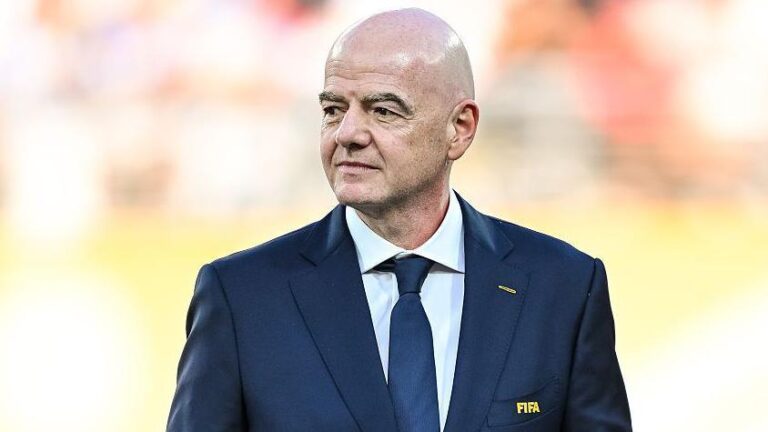
    Two women sitting on UEFA’s executive committee have become the most visible faces of opposition to FIFA President Gianni Infantino as he confronts the toughest test of his ten years leading world football’s governing body, raising fresh questions about whether the sport is ready for female leadership at the top. Laura McAllister of Wales and Lise Klaveness of Norway, the only two women on UEFA’s executive committee, have taken outspoken public stances against Infantino during a crisis triggered by the collapse of his plan to push through a private equity backed venture called FIFA Football Enterprises. The backlash against that failed proposal has opened up a broader conversation about whether football, an industry historically run by men, could realistically be led by a woman. McAllister, who serves as a UEFA vice president, told a foreign news agency that seeing a woman elected FIFA president would be a welcome development, though she cautioned that the path there remains complicated. “I’d like to think we’re not far off having a female president,” she said, adding that she worries football still lags behind broader social progress on gender. The conversation gained additional traction after former FIFA President Sepp Blatter publicly said this week that the time had come for a woman to lead the organization, singling out Klaveness for praise. McAllister welcomed the sentiment but pushed back on the idea that installing a female president would be straightforward. She said a woman could well be the strongest candidate available, but stressed that FIFA’s global politics do not operate as a simple meritocracy. Her comments follow the unraveling of Infantino’s FFE plan, which fell apart after UEFA and several other regional federations mounted fierce resistance. Wales became the first national association to publicly withdraw its backing for Infantino’s re election bid, and opposition quickly spread through other parts of FIFA’s membership. Infantino was scheduled to hold an emergency meeting in Morocco on Wednesday as the fallout continued. McAllister, whose call for national associations to boycott FIFA events won unanimous backing at UEFA’s emergency meeting last week, said the current unrest points to governance failures that run deeper than any single controversy. She said the organization appears to be approaching a genuine crisis point, if it has not reached one already. She cited a string of episodes that have chipped away at confidence in Infantino’s leadership, including FIFA’s connections to the failed European Super League proposal, political controversies tied to the World Cup, and the federation’s decision to overturn a red card issued to American forward Folarin Balogun after President Donald Trump publicly urged Infantino to revisit the call. McAllister said these incidents collectively point to serious flaws in how FIFA governs itself. She framed the standoff as a fight to preserve football’s core principles, tracing her outlook and Klaveness’s back to their shared history as international players for their respective countries before they moved into administrative careers, Klaveness as a lawyer and McAllister as a political scientist. She said both are driven by a strong sense of values, warning that football risks losing its essential character if those values slip away. She added that women in the sport sometimes bring a clearer focus on football’s fundamental purpose rather than getting absorbed in its business side, arguing the game belongs to everyone, from grassroots participants to elite professionals, spanning wealthy and poor countries alike, and should remain free from private capital control or political interference. Only 10 of FIFA’s 211 member associations currently have a woman at the helm, Klaveness among them. Any serious bid for the FIFA presidency would require support stretching well beyond Europe, and McAllister urged patience rather than a rushed push for female leadership. She said building momentum gradually often proves more effective than trying to force rapid change. Michael Payne, a former marketing director at the International Olympic Committee, said football’s governing bodies have historically trailed other sports when it comes to advancing women into leadership positions. He drew a contrast with the IOC, now led by Kirsty Coventry, noting that the Olympic movement has spent roughly two decades pursuing gender equity and has reached full parity between male and female athletes at the Games, a benchmark football’s World Cup has yet to meet. The dispute over FIFA’s direction reflects broader tensions playing out across international sports governance, where longstanding institutions face growing pressure to modernize leadership structures and diversify decision making bodies that have remained largely unchanged for decades. As football’s global profile continues to expand, the question of who holds power at its highest levels, and how that power gets exercised, appears likely to remain a central point of contention well beyond the current crisis surrounding Infantino’s leadership.

  • | | |

    PRL and SSGC face Senate anger over missing inform…

    Islamabad: State owned petroleum companies Pakistan Refinery Limited (PRL) and Sui Southern Gas Company (SSGC) faced serious criticism in the Senate after lawmakers expressed dissatisfaction over missing information, failure to follow committee directions and concerns about company management. The Senate Standing Committee on Petroleum questioned the performance and accountability of government owned petroleum companies and considered taking strict action against officials who failed to cooperate with parliamentary oversight. During the meeting chaired by Senator Umer Farooq, the committee reviewed the appointment criteria for chairpersons and managing directors of petroleum companies, the structure of their boards and progress on previous committee recommendations. The committee took serious notice of the absence of the Managing Director of Pakistan Refinery Limited during the meeting. Members expressed concern that PRL, despite being a state-owned company, did not provide the required information to the committee. The committee considered initiating a privilege motion against the Managing Director of PRL for failing to appear and provide necessary details. The Petroleum Division was directed to submit complete information about the boards of directors and senior management of all government owned petroleum companies. The committee said transparency in leadership appointments and company management is necessary because these organisations deal with matters directly linked to the national economy and public interest. The committee also expressed dissatisfaction over the performance of Sui Southern Gas Company and its failure to implement previous recommendations. Members said SSGC had not provided details of its board of directors despite earlier instructions. The committee also raised concerns over remarks made by SSGC that were considered discouraging toward the Senate Standing Committee’s role in discussing important matters. The committee considered moving a privilege motion against SSGC over non compliance with its directions. The Petroleum Division was further directed to review the tenure of board members who have remained in positions beyond the approved period and submit a detailed report. The committee also raised concerns over the absence of performance audits of oil rigs. Authorities were directed to provide the required audit report within seven days so that the committee could review the performance and efficiency of petroleum sector operations. Members said proper audits are necessary to identify problems, improve production and ensure better use of national resources. The committee also reviewed issues related to LPG quotas and licensing. The Oil and Gas Regulatory Authority was directed to hold consultations with all relevant stakeholders and submit a detailed report to the committee. Senators stressed that petroleum companies must improve governance, follow parliamentary instructions and ensure public institutions operate with transparency. The committee said accountability in state owned petroleum companies is essential to protect national interests and improve confidence in the energy sector.

  • | | |

    Govt plans single gas tariff after scrapping 12 sl…

    ISLAMABAD: The government has decided to abolish the existing 12-slab gas tariff structure and introduce a uniform gas tariff for consumers. Under the proposed system, protected consumers will be shifted to an income-based subsidy mechanism. The government plans to protect low-income households through targeted subsidies rather than maintaining separate protected tariff slabs. The proposed reform is aimed at replacing the existing cross-subsidy mechanism with a simpler and more targeted system. The government and the International Monetary Fund (IMF) are expected to discuss and finalise a timeline for eliminating cross-subsidies and introducing a single gas tariff during the Fund’s fourth review of Pakistan’s economic programme, expected to take place in September or October 2026. Under the planned arrangement, subsidies would be directed specifically towards eligible low-income consumers, while the broader consumer base would be brought under a common gas pricing structure. The move is expected to form part of wider reforms aimed at improving the efficiency and transparency of the gas pricing system and reducing the financial burden created by the existing cross-subsidy structure.

  • | |

    Bradley Cooper and Gigi Hadid spark wedding buzz a…

    Bradley Cooper and Gigi Hadid have become the center of intense wedding speculation after the couple was photographed in Paris wearing matching gold bands on their ring fingers. The new photos quickly sent social media into a frenzy, with many fans wondering whether the Hollywood actor and the supermodel had secretly tied the knot during a private ceremony in Europe. However, despite the growing rumors, neither Cooper nor Hadid has publicly confirmed that they are married.  The couple was spotted enjoying a relaxed outing in Paris, where photographers captured them wearing coordinating gold rings while spending time together. Their matching jewelry immediately caught the attention of fans, who interpreted the bands as possible wedding rings. The appearance has fueled widespread speculation, although representatives for the couple have remained silent on the rumors.  According to People, the rings have been identified as wedding bands from the French luxury jewelry house Boucheron. Hadid was seen wearing the Quatre Radiant Edition Wedding Band, while Cooper wore the Godron Pink Gold Wedding Band. Although the designs are traditionally marketed as wedding rings, wearing them does not necessarily confirm that the pair have exchanged vows.  Bradley Cooper and Gigi Hadid first sparked romance rumors in October 2023. Since then, the two have gradually become more comfortable sharing glimpses of their relationship in public. Over the past three years, they have attended major events together, traveled across Europe, and supported each other’s careers while largely keeping their romance out of the spotlight.  The latest Paris appearance has only intensified interest in the couple’s relationship. Fashion observers also noted how coordinated their outfits looked throughout the trip, further highlighting how their personal styles have evolved together. While the matching rings became the biggest talking point, many fans also praised the pair’s effortless chemistry during their outings around the French capital.  Despite the excitement, there is currently no official confirmation that Bradley Cooper and Gigi Hadid have secretly married. Most reports describe the situation as speculation based on the rings and the couple’s recent appearance. Until either star addresses the rumors publicly, the reports of a private European wedding remain unverified.  Whether the rings symbolize marriage, an engagement, or simply a meaningful commitment, one thing is clear: Cooper and Hadid continue to attract attention wherever they go. Their relationship has steadily grown stronger while remaining relatively private, a rarity in Hollywood. For now, fans will have to wait for an official statement. Until then, the mystery surrounding the matching gold bands is likely to keep wedding rumors alive, making Bradley Cooper and Gigi Hadid one of the entertainment world’s most talked-about couples. 

  • | |

    Bessent says Hormuz shipping deal with Iran could …

    US Treasury Secretary Scott Bessent said on Tuesday that a deal to reopen the Strait of Hormuz to normal shipping traffic could be reached within a day or two, as diplomatic activity intensified across the Gulf region. Speaking in a television interview, Bessent said American officials are in active discussions with Iranian counterparts and expressed optimism about a near term breakthrough. “There is a chance we may have a deal today or tomorrow,” he said, adding that the goal is to move toward a more normalized posture in the conflict. Asked whether any agreement would let Iran charge ships a toll for using the waterway, Bessent said he expects the outcome to guarantee freedom of movement rather than a fee based system. He noted that vessel traffic through the strait has picked up in recent days despite lingering danger, and predicted that energy prices would ease once a deal takes hold. His comments followed a report from The New York Times saying Iran and Oman have moved close to an arrangement that would restore commercial shipping through the strait. Under the terms described in that report, inbound vessels would travel through a corridor close to the Iranian coast while outbound ships would use a route nearer Oman. Iranian officials told the newspaper that no formal tolls would apply, though they said a service charge tied to environmental protection, cargo security and staffing costs would be split evenly between Tehran and Muscat. A US official pushed back on that characterization, calling the Iranian version inaccurate and insisting any temporary shipping lanes would not need Iranian sign off or involve fees. The report also noted that some Pentagon officials worry the arrangement could look like a concession to Tehran, while some Iranian officials privately questioned whether it would actually stop further American strikes. Qatar’s Foreign Ministry said Tuesday that mediators including Doha, Pakistan and Oman continue to coordinate closely to bridge the gap between Washington and Tehran, exchanging draft proposals between the two sides. Ministry spokesperson Majed Al Ansari said there is still no clear timeline for a final agreement, and Qatar separately called for a return to normal conditions in the strait while diplomacy continues. Tension over the waterway remained visible even as talks progressed. A dry bulk carrier called the Minoan Pioneer, sailing under the Liberian flag, was struck by an unidentified projectile near Oman’s coast on Tuesday, according to maritime security sources. The strike reportedly hit the engine room and sparked a fire in the crew’s living quarters, forcing the entire crew to abandon ship. One crew member, the vessel’s third engineer, was reported missing. The ship’s Greece based operator did not immediately respond to requests for comment. The incident followed an earlier report from the UK Maritime Trade Operations center, which said a separate cargo vessel had broadcast that it was hit by an unknown projectile about 20 nautical miles northeast of Khasab, Oman. No group has claimed responsibility for either strike, and authorities have opened an investigation. In Tehran, President Masoud Pezeshkian used a televised address to reject reports that he had offered his resignation amid the ongoing standoff with Washington. “If I were going to resign, I would announce it publicly,” he said, denying any rift with Supreme Leader Ali Khamenei or the armed forces and insisting the leadership is working in full coordination. He separately said Iran intends to defend its territorial integrity but has no interest in expanding the conflict, while claiming Iranian missile and drone strikes had disrupted US military goals during a recent 17 day period of fighting. The regional picture grew more complicated elsewhere. Yemen’s Houthi movement claimed responsibility for a drone strike on Najran Airport in southern Saudi Arabia, with military spokesman Yahya Saree saying the attack struck its target accurately. He described the strike as retaliation for alleged Saudi drone incursions over Yemen’s Saada and Hajjah provinces and warned that further violations would draw a response. Saudi authorities had not commented on the claim as of Tuesday. In Lebanon, a seventh round of direct negotiations with Israel opened in Rome under American sponsorship, continuing talks tied to a framework agreement the two sides signed in June covering a phased Israeli withdrawal from Lebanese territory in exchange for Lebanese army deployment and the disarming of armed factions, a clear reference to Hezbollah. Hezbollah Secretary General Naim Qassem used a speech at an Arbaeen commemoration in Baalbek to criticize the talks, saying they have delivered only “shame, humiliation, despair and repeated concessions” for Lebanon. He accused Lebanese President Joseph Aoun of acting with bias rather than serving as a unifying figure and argued that only the earlier US brokered truce between Washington and Tehran had kept Israeli strikes at bay. Financial markets showed relief at the signs of diplomatic movement. Brent crude futures fell about 7 percent to near $83.77 a barrel on Monday, while the Dow Jones Industrial Average closed at a record high. Asian stocks and oil prices ticked higher again on Tuesday. In a Truth Social post, Trump described Iran’s leadership as “unbelievably duplicitous” while claiming more talks were scheduled for the near future. He also reasserted that the US Navy maintains full control over the strait, writing that nothing passes through unless Washington allows it. The exchange fits a broader pattern that has defined the conflict since it began roughly five months ago under the codename Operation Epic Fury. Trump has repeatedly threatened major military escalation only to step back and cite diplomatic openings, while Iran has publicly refused direct talks with Washington since a memorandum of understanding both sides signed collapsed in early July. Washington maintains that June’s memorandum obligated Iran to open the Strait of Hormuz to shipping, while Tehran insists the agreement preserved its authority over traffic through the waterway, a disagreement that continues to sit at the center of the standoff.

Leave a Reply

Your email address will not be published. Required fields are marked *