field marshal visits
| |

Field Marshal visits NEOC, reviews monsoon disaste…

Field Marshal Syed Asim Munir visited the National Emergencies Operation Center (NEOC), where he was briefed on preparedness measures and coordinated response arrangements for dealing with monsoon-related disasters.

According to the Inter-Services Public Relations (ISPR), the Chairman of the National Disaster Management Authority (NDMA) briefed the Field Marshal on the authority’s operational capabilities and its technology-driven disaster response mechanism.

During the visit, Field Marshal Asim Munir stressed that the protection of human lives and critical national infrastructure must be ensured under all circumstances.

He said the Pakistan Armed Forces remain fully prepared at all times to support the civil administration and the NDMA in relief, rescue, and rehabilitation operations whenever required.

The Field Marshal also appreciated the NDMA’s efforts to strengthen the country’s disaster management capacity and enhance preparedness for natural emergencies.

According to the ISPR, he underscored the importance of maintaining constant readiness, ensuring effective coordination among all relevant institutions, and delivering a timely response to emergency situations during the ongoing monsoon season.

Similar Posts

  • | | | |

    Pezeshkian says ‘now is the best time’ for Ira…

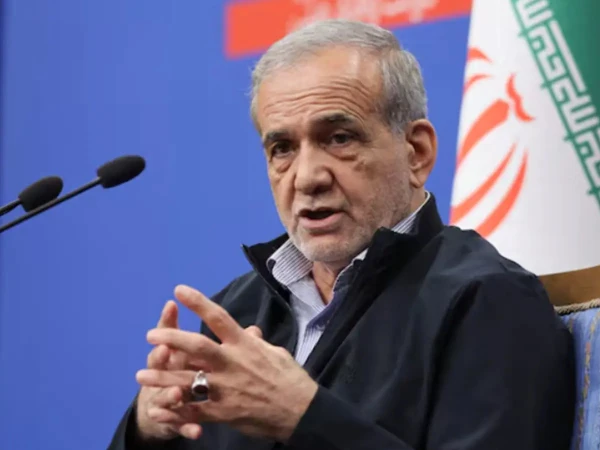
    TEHRAN: Iranian President Masoud Pezeshkian has described the current moment as the “best time” for reaching an agreement with the United States, while making clear that Tehran’s broader policy toward Washington has not changed. Speaking to media representatives in Tehran on Sunday, Pezeshkian said the United States had been pushed toward negotiations and reconciliation with Iran, describing the development as a success for Tehran’s diplomacy. His comments come amid heightened tensions between Iran and the United States and growing international efforts to find a diplomatic way out of the crisis. Pezeshkian suggested that the present circumstances could provide an opportunity to move toward an agreement if Washington was prepared to meet its commitments. The Iranian president accused the United States of failing to implement understandings reflected in an Islamabad memorandum and points jointly prepared by Iran and Oman. According to Pezeshkian, Washington’s failure to follow through on those commitments forced Tehran to respond. He said Iran had established a special team to deal with the crisis and that the group was continuing its work. “We are hopeful that Iran will move forward with dignity, determination and pride,” Pezeshkian said, stressing that Tehran would continue to protect what it considers its national interests. Despite signaling openness to negotiations, Pezeshkian adopted a tough tone toward Washington. He described the United States as a “criminal” and “colonial” power and insisted that Iran’s policy toward Washington remained unchanged. The president also warned against what he portrayed as attempts by the United States and Israel to weaken Iran from within. According to Pezeshkian, military pressure and war had failed to force Tehran into submission. He argued that Washington and Israel could now seek to exploit divisions within Iranian society by encouraging internal disputes. Pezeshkian urged Iranians to remain alert to what he described as such efforts, emphasizing that national unity was particularly important at the current stage. He called on the Iranian public to stand together to safeguard the country’s security and defence capabilities. The remarks underline the delicate balance in Tehran’s position: Iran appears willing to explore diplomacy while simultaneously maintaining its longstanding opposition to Washington’s policies. Pezeshkian’s comments could therefore signal a possible opening for renewed diplomatic engagement, but any breakthrough is likely to depend on whether Iran and the United States can overcome deep mistrust and resolve disagreements over previous commitments. For now, Tehran’s message is clear: the door to negotiations may be open, but Iran says it will enter those talks from a position of dignity, national unity and strength.

  • | |

    Tom Holland reveals the surprising secret behind h…

    Tom Holland has offered fans a refreshingly honest look at his skincare routine, admitting that he relies almost entirely on wife Zendaya when it comes to looking after his skin. During a recent interview, the Spider-Man star revealed that he has very little knowledge about the products he uses and simply trusts Zendaya to handle that part of their daily routine. The 30-year-old actor confessed that he does not even know the name of the moisturizer he applies every day because Zendaya is the one who buys all of their skincare products. Holland joked that he simply follows her lead, explaining that she has a much better understanding of skincare than he does. “I don’t even know what it’s called,” Holland said with a laugh, adding that Zendaya takes care of purchasing everything they need. His candid remarks quickly amused fans, many of whom praised the couple’s relatable dynamic. Although Holland admitted he is far from being a skincare expert, he emphasized that maintaining healthy skin has become increasingly important because of his career. Long filming schedules, heavy makeup and frequent travel can all take a toll on an actor’s complexion, making a consistent routine essential. Instead of researching products himself, however, Holland happily leaves those decisions to his wife. The actor also opened up about wearing makeup for film and television projects, explaining that it has become a normal part of his job. Whether preparing for action-packed scenes or walking the red carpet, professional makeup helps ensure he looks camera-ready under bright studio lights and high-definition cameras. Holland and Zendaya have become one of Hollywood’s most beloved couples since first meeting while filming Spider-Man: Homecoming in 2016. Over the years, both stars have spoken warmly about supporting each other’s careers, and Holland’s latest comments offered another glimpse into their everyday life together. Fans appreciated the actor’s honesty and sense of humor, with many saying his admission made the couple seem even more down-to-earth. The interview comes during a busy period for Holland as he promotes Spider-Man: Brand New Day. The actor has recently attended several promotional events alongside Zendaya, where the pair have continued to charm fans with their playful interactions and genuine affection for one another. Their close partnership has become one of the entertainment industry’s most admired relationships. While Holland may not know the names of his favorite skincare products, he made it clear that he trusts Zendaya’s judgment completely. His lighthearted confession highlighted the couple’s easygoing relationship and showed that, sometimes, the simplest beauty routine is letting someone you trust take the lead. As fans continue to celebrate their romance, Holland’s candid comments have once again proven why the pair remain among Hollywood’s most relatable stars.

  • |

    PEMRA fines news channel Rs10 million, bans Fiza Ali show

    Islamabad: The National Assembly Standing Committee on Information and Broadcasting convened a high profile session at the Pakistan Electronic Media Regulatory Authority (PEMRA) headquarters, revealing pressing issues affecting Pakistan’s media sector, including heavy fines, project funding discrepancies, and cybersecurity vulnerabilities. The session, chaired by Mr. Pullain Baloch, highlighted a landmark enforcement action where Local News Channel was fined 10 million PKR for serious content violations, a penalty exceeding the typical 1 million PKR limit due to the case’s gravity. Officials confirmed the amount had been deposited into the Federal Consolidated Fund to maintain regulatory compliance. The committee also examined entertainment content, focusing on morning shows. A notable case involved performer Fiza Ali, whose program was removed from broadcast for airing content deemed inappropriate for family audiences. Despite this, her social media activity remained outside PEMRA’s jurisdiction, highlighting regulatory gaps in digital media oversight. Another key revelation was a coordinated cyber attack in March 2024, targeting Geo News, Abb Takk, Hum TV, and ARY. Satellite transmissions were compromised, and social media accounts were hacked. PEMRA has mandated all licensees to undergo cybersecurity audits and upgrade their systems by August 2026 to prevent future breaches. Worker welfare and salary recovery were also discussed. The PEMRA Council of Complaints reported 437 complaints regarding unpaid wages, with successful recoveries, notably at Bol TV. The committee directed that government advertisement clearances be linked to the timely payment of staff salaries. Discrepancies in staffing at regional stations were flagged, with Khairpur station employing 49 staff compared to 75–89 staff in other regional hubs like Quetta and Peshawar, raising concerns about resource allocation and operational efficiency. MNA Sehar Kamran raised serious objections regarding the 2026-27 Public Sector Development Programme (PSDP). She questioned the increase from 14 projects costing 12.3 billion PKR to 17 projects totaling 14.5 billion PKR, including 10 unapproved projects, demanding transparency on decision-making and additional expenditures. The committee also reviewed violations by an entertainment channel airing content described as “excessively liberal,” which prompted discussions about the absence of a pre censorship system to prevent public offense. The session underscored ongoing challenges in media regulation, project oversight, cybersecurity, and worker protections, highlighting the need for stronger accountability and transparent implementation of government directives.

  • | |

    Olivia Dean celebrates record-breaking music milestone

    British singer-songwriter Olivia Dean has added another major achievement to her growing career after performing before nearly 97,000 fans at Lollapalooza 2026, marking her first time headlining a music festival in the United States. The 27-year-old artist shared the milestone on social media, describing the experience as emotional and unforgettable. She admitted feeling overwhelmed before taking the stage and thanked fans and her team for their continued support throughout her musical journey. Dean delivered an energetic performance that received an enthusiastic response from the massive crowd, making her American festival debut one of the standout moments of this year’s event. The latest success comes only days after Dean celebrated another landmark achievement in the United Kingdom. Her duet with British singer Sam Fender, “Rein Me In,” has officially become the longest-running number one single in UK chart history, setting a new national record. During her performance at Lollapalooza, Dean took a moment to acknowledge the historic accomplishment and shared her excitement with the audience. She then welcomed Sam Fender to the stage, where the pair performed “Rein Me In” together for the first time in the United States. The chart-topping track is a re-recorded duet from Fender’s third studio album, People Watching. Released in June 2025, the song climbed to the top of the UK Singles Chart in early 2026 before going on to achieve its record-breaking run.

  • Pakistan’s imports from Iran hit record $1.395 b…

    ISLAMABAD: Pakistan’s imports from Iran surged to a record level during the fiscal year 2025-26, highlighting the growing importance of bilateral trade despite heightened geopolitical tensions in the region. According to sources, Pakistan imported goods worth around $1.395 billion from Iran during FY2025-26, marking a significant increase compared with the previous fiscal year. The data shows that imports from Iran grew by approximately 12% year-on-year during the latest fiscal year. The increase reflects a continuing upward trend in Pakistan’s purchases from its western neighbour, with the import bill rising steadily over the past several years. The growth became particularly pronounced in June 2026. Pakistan’s imports from Iran reached approximately $119 million during the month, representing a 47% increase compared with June 2025, according to the sources. On a month-on-month basis, imports also showed notable growth. Pakistan imported around $100 million worth of goods from Iran in March 2026, while the June figure stood significantly higher. Imports show long-term upward trend The latest figures indicate that Pakistan’s reliance on Iranian imports has expanded considerably over the years. In FY2024-25, Pakistan’s imports from Iran stood at approximately $1.241 billion, compared with $1.395 billion in FY2025-26. The import value was even higher in FY2023-24, when Pakistan purchased goods worth around $1.37 billion from Iran. Despite fluctuations from year to year, the overall trend has remained substantially higher than the levels recorded several years ago. In FY2022-23, imports from Iran amounted to approximately $880 million, while the figure stood at around $773.8 million in FY2021-22. Pakistan’s imports from Iran were recorded at approximately $518.6 million in FY2020-21, showing how sharply bilateral import activity has expanded compared with earlier years. The import bill stood at around $440 million in FY2019-20, meaning the latest figure of $1.395 billion represents more than three times the level recorded six years earlier. Growing trade despite regional tensions The continued rise in imports underscores the importance of cross-border economic activity between Pakistan and Iran. The two neighbouring countries share a long border and have historically maintained trade links involving energy, food products and other commodities. The latest increase also comes amid a challenging regional environment, with geopolitical tensions affecting trade routes, commodity markets and economic activity across the region. For Pakistan, trade with neighbouring countries remains strategically important as the country seeks to manage its import requirements, diversify supply sources and strengthen economic links within the region.

  • |

    Pakistan’s health system requires lasting reform

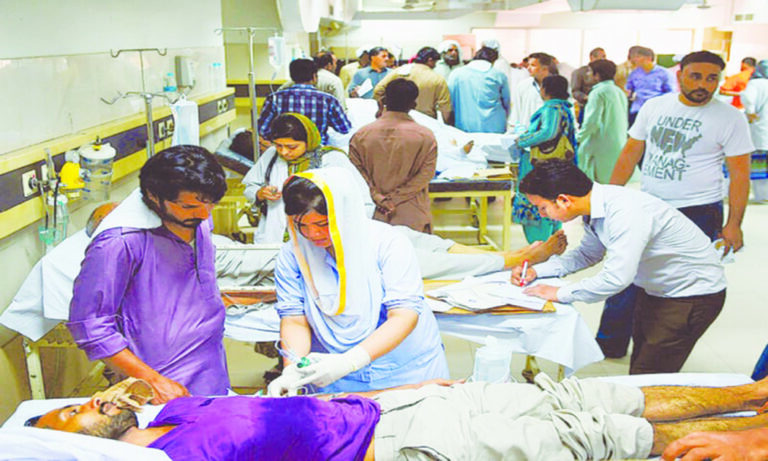
    By Raja Ashraf A country’s healthcare system is judged not only by the number of hospitals it has but also by whether people can access timely, affordable, and quality medical care. In Pakistan, public confidence in the health sector has weakened due to persistent challenges, including shortages of healthcare professionals, rising medicine prices, under-resourced hospitals, and the continued presence of unqualified medical practitioners. These issues require comprehensive and long-term reforms rather than short-term policy responses Healthcare is a fundamental right closely linked to Article 9 of Pakistan’s Constitution, which guarantees the right to life. The Supreme Court has interpreted this provision to include access to essential healthcare services. Pakistan is also a signatory to the International Covenant on Economic, Social and Cultural Rights, which commits the country to progressively ensuring the highest attainable standard of physical and mental health for its citizens. One of the most pressing concerns is the shortage of qualified doctors in rural and underserved regions. Although medical institutions produce thousands of graduates every year, many public health facilities outside major cities continue to face vacant positions. As a result, many communities struggle to obtain even basic healthcare services and are often forced to travel long distances for treatment. The migration of doctors, nurses, and other healthcare professionals to foreign countries has further weakened the healthcare system. Better salaries, improved working conditions, career opportunities, and greater security abroad encourage many skilled professionals to leave Pakistan, creating significant gaps in public hospitals and specialized medical services. The pharmaceutical sector also faces increasing challenges. Some multinational pharmaceutical companies have reduced their presence in Pakistan, raising concerns about future medicine availability and investor confidence. While local pharmaceutical manufacturers continue to meet much of the country’s demand, policymakers must create a stable regulatory and economic environment that supports both domestic production and responsible international investment. The rising cost of medicines has become another major burden for families already affected by inflation. Patients suffering from chronic illnesses such as diabetes, hypertension, and cardiovascular diseases often require lifelong treatment, making affordability a growing concern. At the same time, the continued circulation of counterfeit and substandard medicines highlights weaknesses in regulation and quality control, despite improvements in oversight by regulatory authorities. Public hospitals also frequently experience shortages of essential medicines and emergency supplies, forcing patients to purchase drugs from private pharmacies. This increases treatment costs and can delay critical medical care during emergencies. Ensuring uninterrupted medicine supplies in government hospitals should remain a national priority. Another persistent issue is the presence of unqualified medical practitioners, commonly known as quacks, particularly in areas where licensed healthcare providers are scarce. Tackling this problem requires stronger enforcement of existing laws alongside improved access to qualified medical professionals. Pakistan’s healthcare challenges extend beyond these issues to include inadequate public health funding, ageing hospital infrastructure, weak primary healthcare services, limited mental health facilities, and uneven implementation of health policies across provinces. Addressing these problems requires a comprehensive national strategy focused on increasing healthcare investment, improving working conditions for medical professionals, strengthening medicine regulation, modernizing pharmaceutical oversight, expanding preventive care, and reinforcing primary healthcare services. Investing in healthcare is not merely a public expense—it is an investment in human capital, economic growth, and national development. Pakistan possesses skilled healthcare professionals, reputable medical institutions, and a capable pharmaceutical industry. With sound policymaking, stronger governance, and sustained investment, these strengths can be transformed into a healthcare system that guarantees every citizen safe, affordable, and quality healthcare. The need for reform is no longer in question; the real challenge is ensuring that action is not delayed any further.

Leave a Reply

Your email address will not be published. Required fields are marked *