fuego volcano forces
| |

Fuego volcano forces evacuations in Guatemala as l…

Guatemalan authorities have ordered residents in at least two villages to evacuate after the Fuego volcano erupted, sending lava and ash shooting into the air.

Fuego, regarded as one of the most active volcanoes in the Western Hemisphere, began erupting on Monday. The country’s volcanic monitoring agency reported that pyroclastic flows, fast moving currents made up of hot gas, volcanic ash and rock fragments, continued rushing down the volcano’s south eastern slope into early Tuesday.

Guatemala’s disaster management agency, known as Conred, raised a nationwide orange alert, the second highest level on its warning scale, and cautioned residents to remain prepared as further eruptions could generate additional pyroclastic flows and large ash clouds. The agency advised people living nearby to keep their doors and windows shut, and officials canceled classes at schools located close to the volcano.

Fuego sits roughly 16 kilometers, or about 10 miles, west of Antigua, a city that draws large numbers of tourists each year for its well preserved colonial era architecture and status as a UNESCO World Heritage Site. The volcano itself has also become a popular destination for hikers in recent years, drawing visitors who trek its slopes for views of the surrounding region.

Conred urged both tourists and local residents to avoid approaching the volcano or lingering in areas considered at risk, particularly along its slopes, as the situation continues to develop.

The eruption has revived memories of a far deadlier event in 2018, when a sudden eruption of Fuego killed more than 200 people. Many of the victims were overtaken by fast moving pyroclastic flows that swept down the Las Lajas ravine with little warning, a disaster that remains one of the deadliest volcanic events in the country’s recent history.

Fuego’s frequent activity has long made it one of Central America’s most closely monitored volcanoes, with authorities maintaining routine surveillance given its proximity to populated areas and popular tourist destinations.
Similar Posts

  • |

    FIA arrests 15 passport agents in crackdown outside regional passport offices

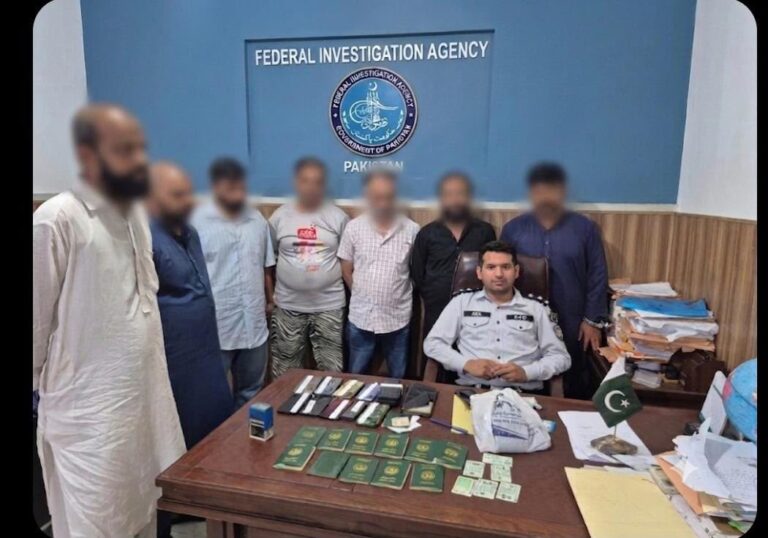
    GUJRANWALA: The Federal Investigation Agency (FIA) Gujranwala Zone has arrested 15 alleged agents during a coordinated crackdown on individuals operating outside passport offices in Gujranwala, Gujrat and Sialkot, accusing them of illegally charging citizens by promising expedited passport processing. The operation was launched on the directions of FIA Director General Dr Usman Anwar and the Director FIA Gujranwala Zone, according to an FIA spokesperson. The spokesperson said the suspects allegedly lured applicants by claiming they could secure passports quickly in exchange for money. Preliminary investigations have also indicated the alleged involvement of some passport office officials, and further inquiries are underway to determine their role. According to the FIA, seven suspects were arrested by the Gujranwala Circle, three by the Gujrat Circle and five by the Sialkot Circle. Those arrested in Gujranwala were identified as Hafiz Ayub, Muhammad Afzal, Muhammad Tariq, Ali Hassan, Muhammad Asad, Jamshed Ali and Sajjad Ali. An FIR (No. 578/2026), dated July 22, 2026, has been registered against them under Section 6 of the Passport Act, 1974, along with Sections 419, 420 and 34 of the Pakistan Penal Code. In Gujrat, FIA officials conducted a raid outside the Passport Office in Mandi Bahauddin and arrested Zahid Iqbal, Zubair Aslam and Shahroz Ali. An FIR (No. 03/2026 ACC), dated July 22, 2026, has been registered against them under Sections 419 and 420 of the Pakistan Penal Code. The FIA said five more suspects were arrested by the Sialkot Circle, where separate cases have also been registered under relevant legal provisions. Their identities were not disclosed in the press release. The agency said investigations are continuing to identify other members of the network and examine the alleged involvement of officials who may have facilitated the illegal activities. The FIA urged the public not to approach unauthorized agents for passports or other government services. Citizens have been advised to deal directly with the relevant government offices and report anyone demanding money or offering illegal facilitation so that legal action can be taken. An FIA spokesperson said the agency would continue its crackdown against agents exploiting citizens and those involved in corruption related to public services.

  • | |

    Khawaja Asif says Mir Raza case exposes compromise…

    Defence Minister Khawaja Asif has criticised the Sindh government over the investigation into the Mir Raza case. He said the developments emerging from the case suggest that the entire system had been compromised. In a social media post, Asif said continued attention was needed to ensure that the matter was investigated properly. He warned that any previous attempts to settle or cover up the issue should not be repeated. The defence minister also called for those who allegedly tried to conceal facts in the case to be exposed. His remarks came as questions continued to be raised over the handling of the Mir Raza case. The case has attracted attention because of conflicting information and concerns about the progress of the investigation. Meanwhile, the Sindh government has decided to establish a judicial commission to investigate the Mir Raza murder case. Sindh Home Minister Zia Lanjar said the provincial government wanted justice for Mir Raza’s family. He said a new committee had also been formed to examine the matter. Lanjar said the authorities would allow the judicial commission or the court to determine how conflicting reports should be dealt with. The government’s decision to form a judicial commission is expected to provide another forum for examining the circumstances surrounding the case. It may also help clarify conflicting accounts and determine responsibility based on the available evidence.

  • |

    Mamdani’s multilingual, meme-friendly style wins over young voters

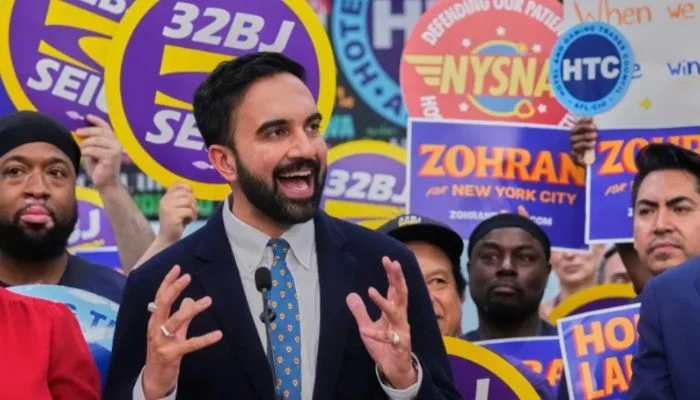
    Zohran Mamdani has built a notably different kind of political connection with New York’s diverse communities. His approach centers on delivering campaign outreach in multiple languages, including Mandarin, Bengali and Spanish. Rather than relying solely on English, Mamdani’s team has woven the city’s varied linguistic makeup directly into its outreach strategy. That approach has helped him connect more directly with working-class neighbourhoods and immigrant populations in their native languages. The New York City mayor’s approach to engaging constituents has repeatedly drawn attention. His localised messaging and public appearances, often delivered fluently across several languages, have become a defining feature of his public image. The style has also sparked plenty of reaction online, with social media users reacting with a mix of praise and humour. One widely shared comment joked that he seems to be collecting languages the way people collect Pokémon cards. Online audiences have picked up on his frequent switching between languages across different platforms, fuelling ongoing viral commentary and internet humour surrounding his public appearances. Mamdani’s rise has been driven largely by viral moments, genuine community engagement, and his multilingual outreach. Together, these elements have made him a particularly influential figure among Gen Z and millennial voters. Exit polling data shows just how central younger voters have been to his political base. Roughly 75% to 78% of voters aged 18 to 29 backed him, contributing to a notable rise in youth turnout during recent municipal elections. Unlike many politicians who stick closely to rehearsed talking points, Mamdani’s communication style leans heavily on relatable humour, short-form video content and an active social media presence. Whether he is sharing lighthearted Gen Z-style clips, interacting casually with a neighbourhood cat, or switching fluidly between Mandarin, Bengali and Spanish, his approach reflects both the language and culture of a diverse, younger audience. Beyond his online popularity, younger voters also point to his focus on core issues like housing affordability, economic inequality and broader representation. By treating everyday culture and multilingual communication as central to his political identity rather than an afterthought, Mamdani has reshaped how candidates in the city are attempting to reach younger, more diverse voters.

  • |

    DR Congo bans copper and cobalt concentrate exports to boost domestic smelting

    The Democratic Republic of Congo has banned the export of copper and cobalt concentrates, accelerating national efforts to enforce in-country mineral processing and retain greater economic value from its natural resources. The ministerial decree, signed by Mines Minister Louis Kabamba Watum, Foreign Trade Minister Julien Paluku Kahongya, and Economy Minister Daniel Mukoko Samba, takes effect immediately. The regulation revokes a previous 2023 framework and its associated exemptions, replacing them with a comprehensive structure governing mineral exports alongside a new tax regime on mining by-products. Following news of the export ban, benchmark three-month copper on the London Metal Exchange rose by up to 1.8 per cent to $14,369.50 per metric ton, approaching historic record highs. While the prohibition is absolute, the decree allows for temporary one-year waivers under specific strategic circumstances. Major mining operators, including Ivanhoe Mines, which runs the Kamoa-Kakula copper complex in partnership with Zijin Mining,indicated that domestic processing facilities, such as the on-site smelter and the Lualaba copper smelter in Kolwezi, process the majority of local yields. Analysts note that because the vast majority of Congolese copper and cobalt is already refined locally into cathodes and hydroxides prior to shipment, the new policy primarily aims to eliminate remaining concentrate exports while standardising royalty collections across trace mineral by-products.

  • | | |

    No date finalised for renewed US-Iran talks, sources say

    Efforts to revive direct negotiations between the United States and Iran are continuing through diplomatic channels, but no date or venue has been finalised for the next round of talks, according to informed sources. The sources said discussions are ongoing with the help of mediators from Pakistan and Qatar, who are working with both Washington and Tehran to arrange a fresh round of negotiations aimed at reducing tensions and restoring dialogue after months of conflict. Officials familiar with the process said there is currently no scheduled meeting between American and Iranian negotiators in Islamabad. They added that both Islamabad and Doha remain possible venues for future talks, although no final decision has been made. According to the sources, Pakistan’s Interior Minister Mohsin Naqvi is expected to visit Tehran in the coming days to discuss diplomatic efforts and explore ways to help restart negotiations between the two countries. Diplomatic contacts between the two sides have reportedly continued despite recent hostilities, with mediators exchanging messages in an effort to revive dialogue under the Islamabad Memorandum of Understanding signed earlier this year. The sources said both countries are expected to begin with indirect discussions through mediators before moving to direct negotiations. The initial phase is likely to focus on maintaining the current reduction in hostilities and building mutual confidence rather than addressing Iran’s nuclear programme. One of the main issues expected to dominate future discussions is the Strait of Hormuz, a strategically important waterway through which a significant share of the world’s oil supply passes. Mediators are reportedly working on proposals to ensure safe maritime navigation and reduce tensions in the Gulf. Meanwhile, Iran’s Foreign Ministry said there are currently no direct negotiations taking place with the United States. Iranian officials confirmed that Tehran is engaged in discussions with Oman regarding a temporary maritime route through the Strait of Hormuz but stressed that these talks should not be interpreted as an agreement to fully reopen the strategic waterway. Iran also maintained that any broader agreement would depend on changes in the regional security situation and an end to what it described as continued US pressure. Regional tensions remained high as Iranian media reported that the country’s Revolutionary Guard had shot down a US MQ-9 Reaper drone over the Strait of Hormuz. Separately, several oil tankers reportedly changed their shipping routes to avoid potential security threats near the Bab al-Mandab Strait, increasing transportation costs for energy shipments. At the same time, Israel launched military exercises involving naval and ground forces, saying the drills had been planned in advance. Israeli forces also continued military operations in southern Lebanon, while cross-border tensions remained elevated despite an existing ceasefire. US President Donald Trump recently said he had postponed a planned military strike against Iran after receiving requests from regional countries to allow more time for diplomacy. He expressed hope that negotiations could eventually lead to agreements on the Strait of Hormuz and broader regional security issues.

  • | |

    Sardar Yousaf renews call for creation of Hazara p…

    Federal Minister for Religious Affairs Sardar Muhammad Yousaf has reiterated his demand for the creation of a separate Hazara province, saying there is broad political consensus on the issue and that administrative reforms are essential to improve governance and public service delivery. Addressing a joint press conference in Islamabad alongside Senator Talha Mahmood, the minister said the movement for Hazara province began in 2010 and has remained a longstanding demand of the region’s people. He said seven young people sacrificed their lives during the movement, adding that their contributions would always be remembered. According to the minister, people from different political parties have consistently supported the establishment of Hazara as a separate province. Sardar Yousaf noted that the Khyber Pakhtunkhwa Assembly has passed constitutional resolutions in support of Hazara province on three occasions—in 2014, 2018, and 2020. He added that bills seeking the creation of the new province have also been introduced in both the National Assembly and the Senate and have been referred to the relevant standing committees on law and justice. The minister said the creation of new administrative units has become a necessity in view of Pakistan’s growing population, which now exceeds 250 million. He argued that additional provinces would improve governance, revenue collection, and the implementation of development projects. He stressed that the demand for Hazara province is not linked to any single political party but represents a united movement supported by people from all walks of life, including political leaders, lawyers, journalists, students, traders, and religious scholars. Sardar Yousaf said several national political leaders have publicly expressed support for the Hazara province during visits to the region and public gatherings. He maintained that smaller administrative units would bring government services closer to the people, help address public issues more effectively, and strengthen the federation. He also paid tribute to those who lost their lives during the Hazara province movement, noting that Hazara Martyrs’ Day is observed every year on April 12 in their memory.

Leave a Reply

Your email address will not be published. Required fields are marked *