date finalised renewed
| | |

No date finalised for renewed US-Iran talks, sources say

Efforts to revive direct negotiations between the United States and Iran are continuing through diplomatic channels, but no date or venue has been finalised for the next round of talks, according to informed sources.

The sources said discussions are ongoing with the help of mediators from Pakistan and Qatar, who are working with both Washington and Tehran to arrange a fresh round of negotiations aimed at reducing tensions and restoring dialogue after months of conflict.

Officials familiar with the process said there is currently no scheduled meeting between American and Iranian negotiators in Islamabad. They added that both Islamabad and Doha remain possible venues for future talks, although no final decision has been made.

According to the sources, Pakistan’s Interior Minister Mohsin Naqvi is expected to visit Tehran in the coming days to discuss diplomatic efforts and explore ways to help restart negotiations between the two countries.

Diplomatic contacts between the two sides have reportedly continued despite recent hostilities, with mediators exchanging messages in an effort to revive dialogue under the Islamabad Memorandum of Understanding signed earlier this year.

The sources said both countries are expected to begin with indirect discussions through mediators before moving to direct negotiations. The initial phase is likely to focus on maintaining the current reduction in hostilities and building mutual confidence rather than addressing Iran’s nuclear programme.

One of the main issues expected to dominate future discussions is the Strait of Hormuz, a strategically important waterway through which a significant share of the world’s oil supply passes. Mediators are reportedly working on proposals to ensure safe maritime navigation and reduce tensions in the Gulf.

Meanwhile, Iran’s Foreign Ministry said there are currently no direct negotiations taking place with the United States. Iranian officials confirmed that Tehran is engaged in discussions with Oman regarding a temporary maritime route through the Strait of Hormuz but stressed that these talks should not be interpreted as an agreement to fully reopen the strategic waterway.

Iran also maintained that any broader agreement would depend on changes in the regional security situation and an end to what it described as continued US pressure.

Regional tensions remained high as Iranian media reported that the country’s Revolutionary Guard had shot down a US MQ-9 Reaper drone over the Strait of Hormuz. Separately, several oil tankers reportedly changed their shipping routes to avoid potential security threats near the Bab al-Mandab Strait, increasing transportation costs for energy shipments.

At the same time, Israel launched military exercises involving naval and ground forces, saying the drills had been planned in advance. Israeli forces also continued military operations in southern Lebanon, while cross-border tensions remained elevated despite an existing ceasefire.

US President Donald Trump recently said he had postponed a planned military strike against Iran after receiving requests from regional countries to allow more time for diplomacy. He expressed hope that negotiations could eventually lead to agreements on the Strait of Hormuz and broader regional security issues.

Similar Posts

  • |

    England on track to eliminate hepatitis C by 2030

    More than 100,000 people in England have received potentially life-saving treatment for hepatitis C in the past decade, as the NHS steps up efforts to eliminate the virus as a public health threat by 2030. New NHS figures show that more than 100,000 people have been diagnosed and treated since pioneering antiviral medicines were introduced in 2015, putting England among a handful of countries that have already exceeded the World Health Organisation benchmark of treating 80% of known hepatitis C cases. (NHS England) Hepatitis C is a viral infection that can damage the liver and, if left untreated, can lead to serious and potentially life-threatening conditions including cirrhosis, liver failure and liver cancer. The infection can remain undetected for years because many people experience no noticeable symptoms until significant liver damage has already occurred. However, modern treatment has transformed the disease. A free course of antiviral tablets lasting between eight and 12 weeks can cure more than 95% of cases. The NHS says effective treatment could reduce the number of people requiring liver transplants by 80% over the next decade, while also reducing cases of liver cancer and cirrhosis. Deaths from hepatitis C have already fallen by 36% over the past ten years. (NHS England) NHS urges people at risk to get tested The latest figures have prompted the NHS to urge people who may be at greater risk of having undiagnosed hepatitis C to order a free and confidential home-testing kit. Those particularly encouraged to test include people who have moved to England from certain Eastern European countries, anyone who has had a tattoo abroad, and people who currently use or have previously used injectable drugs. Adults born in Ukraine, Romania, Estonia, Latvia, Poland, Albania, Lithuania, Bulgaria, Czechia and Slovakia are also being urged to test. The NHS says some people from these countries may have been exposed to the virus through medical or dental procedures before 1991, when modern sterilisation standards were introduced. The free home-testing service is designed to reach people who may not otherwise come into contact with drug and alcohol services, sexual health services, GPs or A&E departments. Thousands of hidden cases identified The NHS has significantly expanded hepatitis C testing over the past five years. A first-of-its-kind programme offering hepatitis C testing to patients having blood tests in participating A&E departments has identified around 1,900 previously undiagnosed cases since 2022. GP practices are also asking new patients whether they received a blood transfusion before 1996, helping identify people who may have been infected through the contaminated blood scandal. The treatment programme was made possible on a large scale following a landmark 2019 agreement between the NHS and pharmaceutical companies Gilead Sciences, MSD and AbbVie, which enabled access to modern curative treatments. (NHS England) ‘Determined to finish the job’ Professor Frankie Swords, NHS national medical director, said hepatitis C could cause serious harm including liver failure and cancer, while many people could remain unaware they have the virus. He said treating more than 100,000 people in a decade was a major achievement but stressed that the NHS would continue looking for people with undiagnosed infections. “England is now leading the world in the mission to eliminate this disease and on course to beat the WHO’s 2030 target,” Professor Swords said. He added that the NHS was “determined to keep up the momentum and finish the job”. “With hepatitis C curable in more than nine out of ten cases, we are committed to finding and treating everyone who needs support,” he said. (NHS England). Patient urges others to take the test Among those treated is 65-year-old Paul Eatwell from Blackburn, Lancashire, who discovered he had hepatitis C after routine liver-function tests following a change of GP. His new doctor ordered additional tests, including screening for hepatitis C. Paul said he initially could not believe the result because he had no symptoms and could not understand how he might have contracted the virus. The precise source of his infection was never established, although possible risk factors included surgery in South Africa several decades ago. He said the specialist team helped answer his questions and reassured him about the condition. Paul said treatment was far less difficult than he had imagined, involving one tablet a day for 12 weeks and several blood tests. He urged anyone who believes they may have been exposed to hepatitis C to get tested, saying that knowing their status could provide peace of mind. ‘Leading the world’ Health and Social Care Secretary Yvette Cooper said the progress demonstrated the impact of NHS treatment and prevention programmes. She said hepatitis C was now curable in the vast majority of cases and described the UK’s progress as part of efforts to “wipe out this disease for good”. “This is exactly the kind of preventative, forward-looking healthcare that we want the NHS to deliver across the board – catching illness earlier, easing pressure on hospitals, and giving people the chance to live longer, healthier lives,” Cooper said. (NHS England. Dr Sema Mandal, deputy director of Blood Safety, Hepatitis, STIs and HIV at the UK Health Security Agency, said the sharp fall in cases since 2015 demonstrated the impact of expanded testing and access to modern treatments. She said treating more than 100,000 people in ten years had brought England closer than ever to eliminating hepatitis C as a public health threat. The Hepatitis C Trust also called for continued long-term investment to maintain the progress made by the national programme, particularly among marginalised communities that can face barriers to healthcare. Rachel Halford, chief executive of The Hepatitis C Trust, said continued funding would be essential to ensure people at greatest risk were not left behind. Hepatitis B remains a challenge While England’s progress against hepatitis C is described as world-leading, health authorities stress that elimination of viral hepatitis as a whole also includes hepatitis B. Further work is therefore required to improve diagnosis and access to treatment for people living with hepatitis B. A national

  • | |

    Punjab University Town-III project faces fresh scr…

    LAHORE: A Pakistan Muslim League-Nawaz (PML-N) lawmaker has submitted an adjournment motion in the Punjab Assembly, calling for a comprehensive investigation into alleged financial and administrative irregularities surrounding the Punjab University Town-III housing scheme. According to the motion submitted by MPA Raja Shaukat Aziz, the housing project was allegedly launched in 2017 by a Punjab University professor without fulfilling the required legal and regulatory formalities. It further claims that the professor entered into a development agreement with his own brother, who was appointed as the project’s developer despite the alleged absence of due legal procedures. The motion alleges that payments amounting to Rs2.70 billion were made to the developer. However, despite the release of funds, no significant development work was carried out at the project site, and plot holders have yet to receive possession of their plots. The document states that nearly 900 affected families have been waiting for justice for the past nine years, claiming they have suffered financial losses and uncertainty due to the stalled housing scheme. It further alleges that, despite repeated complaints, no effective legal action has been taken against those purportedly responsible. Seeking legislative intervention, Raja Shaukat Aziz has urged the Punjab Assembly to establish a special committee to investigate the Town-III project, determine responsibility for the alleged irregularities, and ensure appropriate legal action against those found accountable. The Punjab University Town-III housing scheme has previously remained under public and academic scrutiny over allegations of administrative and financial mismanagement. The latest move is expected to renew debate over accountability and transparency in public housing projects.

  • | |

    Bangladesh cricket board cancels BPL this year aft…

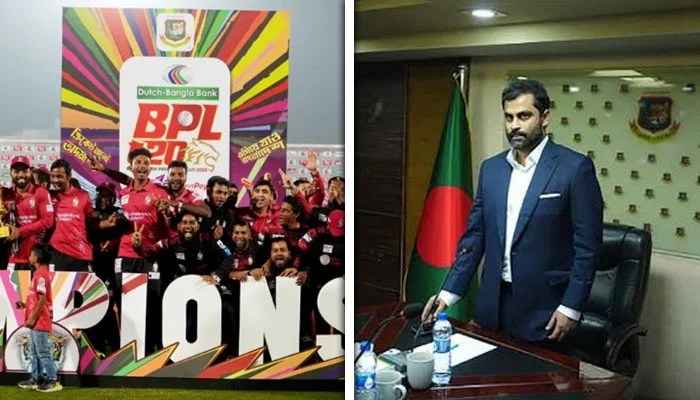
    The Bangladesh Cricket Board (BCB) has decided not to hold the Bangladesh Premier League (BPL) this year after suffering significant financial losses in the tournament’s previous two editions. According to reports in the international media, the BCB has decided to suspend the current BPL format and use the additional time to develop a more sustainable structure for the popular domestic T20 competition. BCB President Tamim Iqbal said the decision was taken after the board incurred losses of approximately Tk400 million over the last two editions of the tournament. Rather than rushing ahead with another edition featuring a limited number of teams, the board wants to focus on improving the league’s quality, credibility and financial sustainability. Iqbal said the BPL will not be scrapped permanently. Instead, the board plans to relaunch the competition next year after making significant changes to its franchise system, financial arrangements and regulations. One of the major issues identified by the BCB has been franchise compliance. According to the board president, repeated violations of tournament regulations and failure by franchises to fulfill their commitments have created serious challenges. In some cases, franchise withdrawals or non-compliance reportedly left the BCB with financial responsibilities that contributed to the league’s losses. The board now wants to establish a more reliable system before bringing the competition back. Iqbal said the BCB is prepared to spend six to 12 months working on the restructuring process. Discussions with potential and existing franchises have already begun, with the board reportedly targeting completion of the franchise process by April or May next year. The decision means Bangladesh will have to create an alternative domestic cricket calendar for the period in which the BPL would normally be played. The BCB is expected to use domestic competitions to ensure that players continue to receive competitive cricket opportunities. The board’s long-term objective is to make the BPL a more organized and financially sustainable tournament. Rather than accepting recurring losses, officials want the competition to generate revenue for Bangladesh cricket. The temporary suspension could therefore mark a major turning point for the BPL. If the proposed reforms are successfully implemented, the tournament could return with a stronger franchise structure, clearer financial rules and greater accountability. For now, however, the BCB has chosen restructuring over a rushed edition, making Bangladesh Premier League 2026 one of the most significant developments in the country’s domestic cricket calendar.

  • |

    Two presiding officers arrested in Kotli over rigging claims as Rana Sanaullah demands election halt

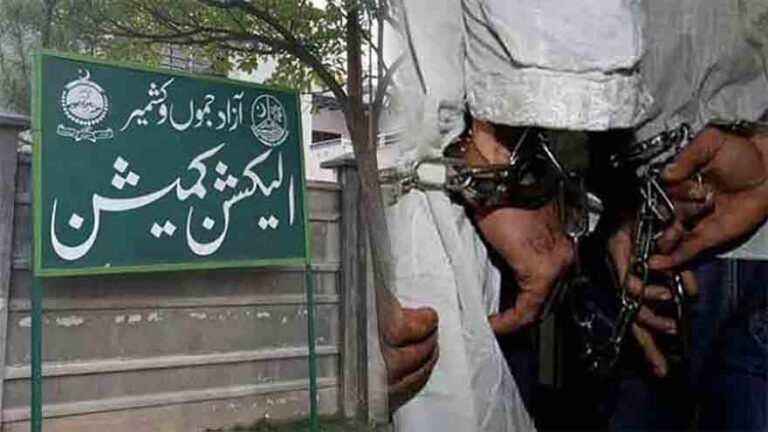
    The Azad Jammu and Kashmir (AJK) Election Commission has suspended and arrested two presiding officers in Kotli after they were caught transporting polling materials to a private residence instead of their assigned polling station. According to an election commission spokesperson, a returning officer intercepted the officers, seized the two polling bags, and appointed replacement presiding officers to ensure the voting process could continue at the station. The commission confirmed that formal legal proceedings are underway against the arrested officials, emphasising that negligence or irregularities will not be tolerated and that strict measures remain in place to guarantee transparent elections. Following the incident, Pakistan Muslim League-Nawaz (PML-N) senior leader Rana Sanaullah demanded the immediate suspension of voting in the Kotli LA-10 constituency. Sanaullah urged the Prime Minister of Azad Kashmir and the Chief Election Commissioner to launch an inquiry into the accused officials, named as Saqlain and Qaiser Patwari. Calling for polls in LA-10 to be halted until the investigation concludes, Sanaullah insisted on determining where the polling bags were being taken, noting that AJK Peoples Party President Chaudhry Yasin is contesting the constituency.

  • | |

    DG ISPR holds special session with students during…

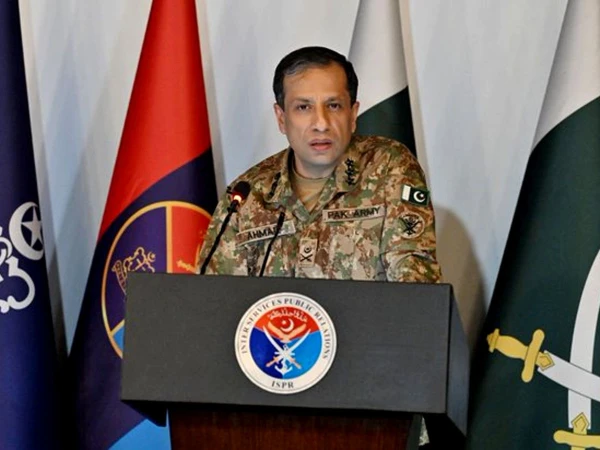
    RAWALPINDI: The Director General of the Inter-Services Public Relations (ISPR) held a special interactive session with participants of the ISPR Summer Internship 2026, discussing national security, terrorism, misinformation and the responsible use of social media. According to ISPR, the internship programme has attracted more than 6,000 students from across Pakistan, who are participating at 21 different stations nationwide. The initiative aims to provide young people with greater awareness of national institutions, security issues and the challenges facing the country. During the session, the DG ISPR responded to a wide range of questions from students, offering detailed explanations on issues related to Pakistan’s security environment, information warfare and the importance of verifying information before sharing it on digital platforms. A key focus of the discussion was the growing challenge of misinformation, disinformation and propaganda. Students were encouraged to critically evaluate online content and avoid circulating unverified news that could mislead the public or harm national interests. Participants said the session provided valuable guidance on identifying false narratives and understanding the impact of digital misinformation. They described the interaction as informative and said it helped clear up several misconceptions surrounding national security and current affairs. The briefing also covered the situation in Azad Jammu and Kashmir, where participants were given an overview of Pakistan’s official position and regional developments. Students said the discussion helped them better understand the ground realities and the broader context of issues affecting the region. According to participants, the DG ISPR also addressed questions regarding what the military described as hostile propaganda campaigns and security threats. Students noted that the detailed responses helped clarify several issues that had previously caused confusion or uncertainty. At the conclusion of the session, participants expressed their commitment to promoting accurate information and exercising greater responsibility while using social media platforms. They also pledged to play a constructive role in countering false information by relying on verified sources and encouraging informed public discourse. The ISPR Summer Internship has become one of the military’s flagship youth engagement initiatives, bringing together students from universities across the country for interaction with officials, educational activities and discussions on national issues. Officials said the programme is intended to strengthen awareness among young Pakistanis, encourage critical thinking and promote responsible digital citizenship at a time when misinformation and online propaganda continue to pose growing challenges worldwide.

  • | |

    Interior Minister Talal Chaudhry says government&#…

      ISLAMABAD: Minister of State for Interior Talal Chaudhry has asserted that the ruling coalition will complete its full five-year constitutional term, even as he acknowledged that political speculation intensifies after the two-and-a-half-year mark. The minister addressed a range of pressing political questions, from the possibility of an opposition alliance to the stability of the current government. Chaudhry began by offering a pragmatic observation about Pakistan’s political rhythm. “After two and a half years, the countdown for any government effectively begins,” he said. However, he quickly dispelled any notion that this countdown implies an early end for the present administration. “The five years will be completed in full,” he emphasized, “and the coalition will continue to function in exactly the same manner as it does today.” He expressed complete confidence that the ruling alliance, led by the Pakistan Muslim League-Nawaz (PML-N), remains cohesive and resilient against any internal or external pressures. When questioned about the Pakistan Peoples Party (PPP) – a key coalition partner – Chaudhry delivered a nuanced response. He acknowledged that the PPP possesses a certain political awareness, or “ehsas”, regarding its current position within the alliance. He went further to state that this awareness will only deepen with time. “The PPP has this feeling today, and more feeling will also come,” he remarked, suggesting that as the government progresses, all partners will increasingly recognize the mutual benefits of remaining united. He framed this evolving consciousness not as a threat, but as a natural part of political maturity within a multi-party democratic setup. One of the most emphatic parts of Chaudhry’s interview was his categorical dismissal of any potential alliance between the PPP and the Pakistan Tehreek-e-Insaf (PTI). He stated, “There is no possibility of an alliance between the PPP and the PTI,” calling such speculation unfounded and politically motivated. He further reassured the public and investors alike that the government faces no existential threat from the opposition. According to the minister, the opposition remains fragmented and lacks the numerical strength or public mandate to destabilize the elected administration. Chaudhry then elevated his argument beyond mere political expediency, framing the continuity of the coalition as a national imperative. “It is in the best interest of Pakistan and the entire political system that the current alliance continues to function as it is,” he declared. He warned that any premature disruption of the government would create a dangerous power vacuum at a time when the country is grappling with economic stabilization, security challenges, and the need for institutional reforms. He called on all political stakeholders to prioritize national unity over partisan scores. The minister also took the opportunity to defend the government’s performance on key issues, including inflation management, anti-terrorism operations, and diplomatic engagements. While conceding that difficulties persist, he argued that the government has set the foundation for long-term recovery and that the opposition’s role should be constructive criticism rather than obstructionism. He urged political parties to rise above personal rivalries and focus on the greater good of the nation. In his concluding remarks, Talal Chaudhry made it clear that while the government is not afraid of early elections, it is also not shirking its responsibilities. “We were elected for five years, and we will serve for five years,” he said firmly. He expressed confidence that the public will ultimately judge this administration on its tangible achievements, not on opposition rhetoric. He dismissed the “two-and-a-half-year countdown” as a political cliché rather than a prophecy, reiterating that the coalition will not only survive but thrive until the very last day of its term. Overall, the interview projected an image of a self-assured government determined to see through its tenure, while subtly reminding its coalition partners – especially the PPP – that their long-term political futures are best secured within the existing fold. Whether this confidence will translate into political reality remains to be seen, but for now, Chaudhry’s message was unambiguous: the alliance is stable, the system is strong, and the government is here to stay.

Leave a Reply

Your email address will not be published. Required fields are marked *