car turn signals

Why do car turn signals click?

When you turn your car left or right you hear the familiar click-click sound from the turn signal. At the same time the arrow on the dashboard flashes to show the signal is working.

Even though cars have become much more advanced this sound has stayed the same for many years. But have you ever wondered why?

Turn signals first appeared in cars in the late 1930s. In older vehicles the clicking sound came from a thermal flasher.

When the driver switched on the turn signal electricity heated a small metal strip.  As it bent from the heat it completed an electrical circuit and turned the signal lights on.

The metal quickly cooled returned to its original shape and broke the circuit turning the lights off.

This heating and cooling cycle repeated over and over making the lights flash. The movement of the metal strip created the well known clicking sound.

As technology improved car makers replaced the old thermal system with electromagnetic and later electronic systems controlled by computer chips.  These newer systems no longer need moving metal parts to flash the lights.

However most modern cars still play the click click sound on purpose.

Manufacturers keep it because drivers are used to hearing it and the sound reassures them that the turn signal is working correctly even though it is no longer mechanically necessary.

Similar Posts

  • Black holes are real

    In 1915, Albert Einstein published his ground-breaking theory of general relativity, radically altering humanity’s understanding of gravity. Rather than treating gravity as an invisible pulling force between masses, Einstein demonstrated that heavy objects warp the very fabric of space and time. Soon after, physicists realized that Einstein’s field equations contained a dramatic prediction. If enough mass were compressed into a small enough region, space-time would curve so intensely that nothing, not even light, could escape. However, Einstein himself remained deeply skeptical of these mysterious cosmic objects, which would later be named black holes. He believed that such extreme entities were merely theoretical mathematical artifacts products of idealized, perfectly symmetrical equations that could never exist in the chaotic reality of the actual universe. Einstein argued that real collapsing stars, possessing natural asymmetries and rotational forces, would scatter or bounce rather than implode into a point of infinite density. The Breakthrough of 1965 Ten years after Einstein’s death in 1955, a British mathematician and physicist named Roger Penrose forever settled the debate. In a revolutionary 1965 paper, Penrose provided the first rigorous mathematical proof that black holes are not merely theoretical curiosities, but robust and inevitable consequences of general relativity. Penrose realized that traditional analytical methods were insufficient to tackle the messy reality of stellar collapse. Instead, he introduced novel geometrical and topological concepts to physics, most notably the concept of a trapped surface. A trapped surface is a two-dimensional closed boundary where all light rays, regardless of whether they are directed inward or outward, are forced to converge toward the center. Once a collapsing star forms a trapped surface, an event horizon is established, creating a point of no return. Penrose proved that as long as gravity remains attractive and energy remains positive, the collapse cannot be stopped by any physical force or asymmetrical shape. The collapsing matter is driven relentlessly toward a singularity: a central region where density and space-time curvature become infinite, and where classical physics breaks down entirely. Transforming Astrophysics and Modern Cosmology Penrose’s singularity theorem fundamentally altered how scientists viewed the cosmos. It proved that black hole formation is a robust phenomenon that regularly occurs across the universe whenever massive stars exhaust their nuclear fuel and collapse under their own gravitational weight. Furthermore, Penrose’s mathematical techniques opened completely new avenues of theoretical research: The Big Bang Origin: Inspired by Penrose’s methods, a young Stephen Hawking applied similar topological techniques in reverse to show that the entire universe must have originated from an initial space-time singularity at the moment of the Big Bang. Penrose Diagrams: Penrose introduced conformal visual diagrams that allowed physicists to map out the infinite causal structures of space-time on manageable two-dimensional surfaces. The Information Paradox: Defining the strict causal properties of black hole event horizons laid the groundwork for decades of theoretical inquiry into how quantum mechanics interacts with extreme gravity. From Theoretical Paper to Nobel Prize For decades, Penrose’s work remained largely theoretical because observational technology could not directly detect black holes. However, in the 21st century, astrophysics caught up with Penrose’s mathematics. Ground-breaking discoveries—such as the detection of gravitational waves from colliding black holes by LIGO in 2015 and the Event Horizon Telescope’s first direct image of a black hole’s shadow in 2019—provided unequivocal empirical evidence supporting his theory.   Recognizing the immense impact of his 1965 breakthrough, the Royal Swedish Academy of Sciences awarded Roger Penrose half of the 2020 Nobel Prize in Physics. More than half a century after its publication, Penrose’s paper stands as the single most critical contribution to general relativity since Einstein’s original masterpiece, proving that the most extreme objects in the universe are a tangible reality.

  • |

    China’s Chongqing East becomes world’s largest railway station

    Almost everyone has travelled by train at some point and has seen railway stations. But do you know which country is home to the world’s largest railway station? If you do not, here is the answer: the world’s largest railway station is located in China and is nothing short of an architectural marvel. China is already known for numerous engineering wonders ranging from remarkable bridges to the world’s largest high-speed railway network. Chongqing East Railway Station Chongqing East Railway Station located in southwestern China is the world’s largest railway station in terms of area. It was opened to the public in June 2025. The railway station covers an area of approximately 13 million square feet equivalent to around 170 football fields. It is also about five times larger than New York’s Grand Central Terminal. The station has 15 platforms and 29 railway tracks and during peak hours, it can accommodate around 16,000 passengers per hour. Around 16,500 tonnes of steel were used for its roof. However, the most remarkable feature of the station is the speed at which it was constructed and it was built on top of a mountain. The Chongqing region is mountainous which has traditionally made the development of transportation infrastructure particularly challenging. The station was constructed in just 38 months with the help of around 40,000 workers and a fleet of robotic machinery. Although 38 months may seem like a long period, in many countries, simply obtaining approval for projects of this scale can take longer than that.

  • Sindh’s missing universe

    Since Ashura, the mothers of Sindh have been sitting in at Babarloi Bypass through suffocating heat and humidity, with one demand: return our missing and abducted children. For a mother, a child is her entire universe — and for years these women have lived in psychological anguish searching for theirs. Fazila Sarki of Thul vanished nearly seventeen years ago; her father named the local Wadero he says orchestrated it, yet she was never recovered. Priya Kumari of Sangrar is entering her fifth year missing — committees formed, updates promised, and still nothing, as if the earth or sky simply swallowed her. Sindh’s landlords and chieftains have built a parallel state, one that operates above the law. If not, why would fourteen children currently be missing, why would the soil be stained with young blood over trifles, why would mothers go blind from weeping and cemeteries keep expanding? Innocent young women are still declared Kari and honor-killed — denied even a ritual bath, shroud, or funeral prayer, sometimes dumped in rivers. The law exists on paper; hundreds of thousands of officials draw salaries and perks from public taxes to enforce it — yet ordinary people have no protection at any level. The papers are full of these stories daily. The law exists, but it is locked away in books. Are the hands meant to enforce it helpless, or simply indifferent? Sukkur Civil Hospital — the teaching hospital for Ghulam Muhammad Mahar Medical College, and once a lifeline stretching from Balochistan’s Sibi, Nasirabad, and Bhag Nari to Kandhkot-Kashmore, Shikarpur, and Ghotki — has sunk to the level of Shikarpur’s Rai Bahadur Udhodas Hospital. Department heads sit in name only; real control rests with a handful of favorites who have run these institutions into the ground. Road accidents are a daily occurrence on the highways, and while the Orthopaedic Department stays busy, its facilities inspire only regret. With Nasir Shah and veteran politician Khurshid Shah both present, this hospital ought to be a model for Northern Sindh — instead it is anything but. Law and order, and justice, are the pillars any civilized society rests on. Where they hold, life, property, and honor are protected, and social harmony follows. Where they fail, fear, distrust, and unrest take their place — and our own society is proof enough of that; little more needs saying. An educated person lifts not just himself but his society; where ignorance and social ills grow instead, it is education that has failed first. Healthcare here tells the same story: women give birth in Qingqi rickshaws, medicine is scarce, and families buy even a disposable syringe out of pocket — though the budget for it exists. Doctors draw government salaries while absent, some working in Qatar or Saudi Arabia, others running private clinics. A friend recently told me PPHI, on taking over a government health unit, found a stockpile of medicines for heart disease, diabetes, and stomach ailments — worth a fortune, and only months from expiry. What tyranny is greater than this: medicine sitting unused while the needy go without? It is nothing short of an atrocity against the public. Hunger, disease, unemployment, lawlessness, and ignorance have battered Sindh until its people’s capacity for critical thought is paralyzed. The state, along with conscious citizens, politicians, and the well-off, must turn to this crisis — urgently.

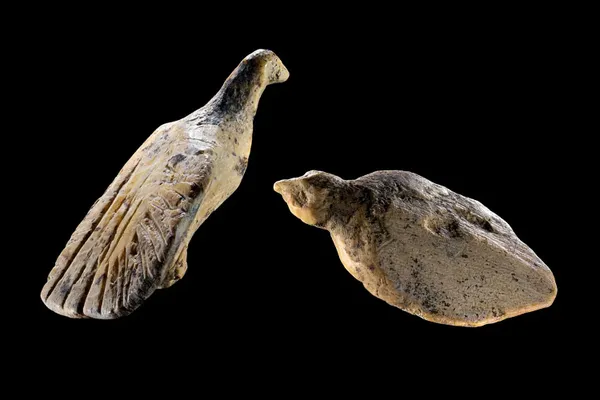
  • 40,000-Year-Old ivory birds discovered in a German cave

    Archaeologists have recently uncovered two thumbnail-sized sculptures of birds carved from mammoth ivory approximately 40,000 years ago. These delicate figurines, which have spent dozens of millennia buried in sediment, offer an intimate glimpse into the minds, environments, and creative capacities of our ancient ancestors during the Ice Age. The astonishing discoveries were made in the Hohle Fels Cave, a site deeply embedded in the Swabian Jura region of Germany. This location has long been celebrated as one of the most critical archaeological sites in the world for understanding early modern human culture in Europe. The newly found sculptures are extraordinarily small. Each measures less than a single inch in length and weighs merely a fraction of an ounce. It makes them roughly the size of an average human thumbnail. Despite their diminutive scale, the level of detail the prehistoric artist managed to achieve is nothing short of masterful. Rather than relying on abstract or highly stylized representations, the Ice Age carver recorded specific, anatomical observations. The figurines feature carefully incised markings that clearly delineate feathers, as well as distinctively carved eyes. One of the miniature sculptures portrays a bird with its wings fully spread, capturing a moment of dynamic movement, although a few fragments of its body have unfortunately been lost to time. Remarkably, this particular piece now holds the record as the smallest Ice Age artwork ever found in the region. The second figurine, which survived completely intact, depicts a bird in a resting posture. It appears to be lying down, a pose that researchers speculate might represent the animal tending to its eggs. Experts analyzing the avian features believe that at least one of the sculptures represents a ptarmigan, a robust bird belonging to the grouse family that would have been familiar to inhabitants of the harsh Ice Age landscape. While the identity of the second bird remains slightly less certain, it too could be a ptarmigan, or possibly a small bird of prey. Because the two ivory pieces were found just about five feet apart during the 2025 excavation season and share stylistic similarities, archaeologists strongly suspect they were crafted around the exact same time, quite possibly by the very same artist. The excavation was led by Nicholas Conard and a dedicated team from the University of Tübingen, who have been meticulously studying the Hohle Fels site for nearly three decades. The process of unearthing such fragile artifacts requires incredible patience. Researchers painstakingly remove layers of earth before washing and sifting the prehistoric sediment through extremely fine mesh screens. It was during this rigorous process that Elisa Luzi, a paleontologist at the university, first spotted one of the tiny birds. She described the profound emotional weight of the moment, emphasizing the sheer privilege of being the first human being to lay eyes on the carving in 40,000 years, and feeling an instant connection to the humanity of its maker. The Hohle Fels Cave These findings belong to the Aurignacian period, an epoch that coincides with the early settlement of Homo sapiens in Europe. The Hohle Fels Cave which is protected as a UNESCO World Heritage site has previously yielded some of the oldest known figurative art and musical instruments on the planet. The collection includes early bone flutes and the famous Venus of Hohle Fels. Exactly why these early humans took the time to carve such intricate, tiny birds remains a mystery. Researchers have proposed various theories, wondering if they were utilized as personal talismans meant to bring good fortune, or as cultural symbols associated with the specific identity of their owner. While we may never have a definitive answer regarding their prehistoric purpose, these thumbnail-sized masterpieces firmly remind us that the human desire to observe, create, and capture beauty is as ancient as humanity itself.  

  • NASA shares breathtaking full moon photo

    People on Earth see a full Moon almost every month but have you ever wondered what it looks like from space? A NASA astronaut living aboard the International Space Station (ISS) has shared a breathtaking photo showing the full Moon from orbit. The image was released on July 29, when July’s full Moon appeared in the night sky. It was shared on social media by NASA astronaut Anil Menon. While people on Earth watched the full Moon rise above the horizon and shine brightly in the sky astronauts on the ISS enjoyed a completely different view. From space the Moon appears to glow brilliantly against the deep black background of the universe. NASA also shared a message encouraging people to take a moment to look up at the night sky. The space agency said that the full Moon remains one of nature’s most beautiful and timeless sights continuing to inspire people around the world with its beauty.

  • Get natural brown hair with henna

    Chemical hair dyes and salon coloring treatments are becoming increasingly common.  While they can give hair an attractive color frequent use may leave hair dry weak and damaged. For people who want a more natural option homemade henna can be a simple alternative.  It can add a warm brown shade while helping hair look soft and shiny. How chemical dyes can affect hair Many chemical hair dyes contain ingredients such as ammonia and hydrogen peroxide.  These chemicals can affect the hair’s outer layer and may weaken its structure over time. Repeated coloring can make hair dry and brittle leading to more breakage.  Some people may also experience scalp problems such as itching irritation or small bumps. Why choose natural henna? Many women use henna but later return to chemical dyes because they do not get the brown shade they want.  Adding a few natural ingredients to henna can help create a deeper brown color. Ingredients you need 1 cup dry henna 2 cups water 1 tablespoon tea leaves 1 tablespoon coffee 1 egg 2 tablespoons coconut mustard or olive oil How to prepare the mixture Boil two cups of water with one tablespoon each of tea leaves and coffee. Continue boiling until about one and a quarter cups of water remain. In a bowl add one cup of dry henna one egg and two tablespoons of your preferred oil.  Add the prepared tea and coffee water and mix everything well. Cover the mixture and let it rest for about 30 minutes. How to apply henna Wash your hair properly with shampoo one day before applying the henna. The next day apply the prepared mixture evenly from the roots to the ends. Leave it on for around three to four hours. Once the henna has dried rinse your hair with plain water. For the next step mix about half a teaspoon of lemon juice with a small amount of your regular hair oil.  Apply it to damp hair and let your hair dry. Shampoo your hair normally the following day. Use it regularly Using this henna method around twice a month may gradually give the hair a natural brown tone. It can also help hair look smoother and shinier. However natural does not always mean risk free. It is best to do a small patch test before using henna or any new ingredient especially if you have sensitive skin or a history of allergies.

Leave a Reply

Your email address will not be published. Required fields are marked *