kimberly van der
|

Kimberly Van Der Beek honours late husband on wedding anniversary

Kimberly Van Der Beek has honoured her 16th wedding anniversary with James Van Der Beek. This marks the first time she’s celebrating the milestone without him by her side. The actor, best known for his role in Dawson’s Creek, passed away earlier this year.

The 44-year-old took to Instagram to share her feelings. She reflected on the day she married him, calling herself the luckiest woman in the world at the time. She spoke about how their bond continues to grow stronger, even now.

Kimberly credited their children for keeping that connection alive. She described how the beauty of their marriage keeps unfolding through the kids they raised together. She also shared a sense that James remains present in their lives, guiding the family forward. Her gratitude for the years they shared came through clearly in her words.

This tribute carries the same emotional weight as her earlier statement. That post came when she first announced James had passed away.

At the time, Kimberly wrote that James left peacefully, surrounded by courage, faith, and grace. She mentioned there would be more to share eventually. This included his wishes, his love for people, and thoughts on how precious time really is.

For that moment, though, she asked for privacy. She wanted space to grieve her husband, the father of her children, and a beloved son, brother, and friend.

James Van Der Beek died after a battle with colorectal cancer. He was 48 years old. He leaves behind Kimberly and their six children, a family he clearly cherished until the end.

Their story captured hearts long before this tribute. James rose to fame playing Dawson Leery, a role that made him a household name in the late ’90s. His chemistry with Kimberly, though, extended far beyond the screen. Together, they built a life rooted in family and faith.

Fans and followers have continued to send support since his diagnosis became public. Many have praised Kimberly’s strength throughout this difficult journey. Her willingness to share both grief and gratitude has resonated widely online.

As the family navigates this new chapter, Kimberly’s words suggest a sense of peace. Even in loss, she seems to hold onto the love they built over sixteen years together.

Similar Posts

  • | | | |

    Tanweer Ahmed champions human-centred AI at UN you…

    Tanweer Ahmed, a technology and artificial intelligence professional, has called for a human-centred approach to AI adoption, stressing that emerging technologies should support people rather than replace them. Speaking at the Youth and AI Summit at United Nations Headquarters in New York on International Youth Day, Ahmed delivered a presentation titled “Keeping Humanity in AI Adoption.” He focused particularly on how nonprofit organisations can use artificial intelligence responsibly while protecting human judgment and accountability. Ahmed said his professional background in technology consulting, data analytics and AI had given him experience in understanding the opportunities created by emerging technologies. However, he said his passion for the nonprofit sector was rooted in his earlier experiences working with communities and young people. He recalled working on a community farm and participating in cultural education activities in Cuba during 2007 and 2008. In 2010, he travelled to South Africa, where he taught mathematics to fifth-grade students. Ahmed said these experiences shaped his long-term desire to contribute to communities and help children around the world. He described his appearance at the UN event on International Youth Day as an honour and an opportunity to reconnect with those early aspirations. During his presentation, Ahmed discussed the rapid growth of artificial intelligence and its increasing use by individuals, businesses and nonprofit organisations. He explained that AI adoption should not simply mean occasionally using chatbots or other AI applications. Instead, organisations should strategically integrate AI into their daily workflows, operations and decision-making processes. Ahmed highlighted several areas where nonprofits can use AI, including internal productivity, communication, fundraising, grant writing and administrative tasks. He presented the Ugandan Water Project as an example of how AI can support a nonprofit organisation. The project works to improve access to clean water in Uganda and reduce the impact of waterborne diseases. According to Ahmed, the organisation uses AI to assist with grant applications and donor outreach. Previous grant applications and organisational information can be analysed to help prepare targeted applications for new funding opportunities. Ahmed stressed that AI-generated material is not simply submitted without human involvement. Staff review, edit and verify the content before applications are sent to funders. He said AI had also helped the organisation identify new grant opportunities and improve internal processes, including contract drafting and project-management workflows. Ahmed emphasised that the purpose of such technology should be to make employees more efficient rather than eliminate their jobs. He also discussed AI-powered voice-to-text technology used in social work and community services. Such systems can allow workers to record information while they are in the field and transfer it into required software, reducing the amount of time spent on administrative duties. Ahmed said reducing paperwork could give nonprofit workers more time to interact directly with the people and communities they serve. However, he warned that AI adoption also presents challenges. These include financial costs, limited access to technology, concerns over job losses, inaccurate information, privacy issues, bias and difficulties in understanding cultural and linguistic nuances. He also highlighted concerns about the environmental impact of the infrastructure required to operate increasingly powerful AI systems. Ahmed urged organisations to develop responsible AI policies covering privacy, security, fairness, transparency, human oversight and accountability. He encouraged nonprofit organisations to learn from one another and share successful experiences with AI, saying organisations working for social causes can benefit from cooperation rather than competing over technological approaches. A key message of his presentation was that humans must remain responsible for AI-assisted decisions. Ahmed warned organisations against blindly accepting AI-generated content and urged them to review outputs carefully, correct errors and ensure that technology does not replace human judgment. Who is Tanweer Ahmed, the Pakistani-American philanthropist? Pakistani-American businessman and philanthropist Tanweer Ahmed has attracted renewed attention in Pakistan following his reported $9 million contribution to the National University of Sciences and Technology (NUST) and his recent appearance alongside senior Pakistani officials in the United States. Ahmed, who is based in Houston, has built a diverse business portfolio in the United States while also becoming involved in philanthropy, education, healthcare and cricket. His recent contribution to NUST is aimed at supporting talented students from financially disadvantaged backgrounds. The endowment is expected to provide scholarships to deserving students each year, with a particular focus on fields such as artificial intelligence, information technology, science and other emerging technologies. Ahmed has said his objective is to ensure that talented Pakistani students are not deprived of quality education because of financial difficulties. He has also expressed plans to expand similar scholarship initiatives to other educational institutions. The businessman has also supported infrastructure and technology-related initiatives at NUST, including the development of facilities intended to strengthen research and innovation. His philanthropic activities extend beyond education. Ahmed has been associated with healthcare initiatives in Pakistan and has supported efforts aimed at providing assistance to communities affected by natural disasters. He also drew attention for his role in relief efforts following the devastating floods that struck Pakistan in 2022. He has been credited with helping mobilise substantial humanitarian assistance for flood-affected communities. Ahmed’s business journey began after he moved to the United States as a student. According to accounts of his career, he initially worked in restaurants and at gas stations while trying to establish himself. He later moved through several positions in the American fast-food industry. His career accelerated after he joined Jack in the Box as a shift manager. His performance and business approach helped him move into senior management positions, eventually leading to opportunities in the Taco Bell franchise system. Ahmed later expanded into franchising and developed a large portfolio of food outlets across several US states. His business interests have also extended into insurance, energy, transportation and other sectors. Over the years, he has developed a reputation as an entrepreneur who combines commercial ventures with philanthropic activities. Ahmed is also closely associated with the development of cricket in the United States. A passionate cricket enthusiast, he established the Prairie View Cricket Complex near Houston after acquiring a large tract of

  • | |

    US report urges stronger parliament oversight of P…

    WASHINGTON: Pakistan needs to strengthen parliamentary oversight of its public finances by improving the timely disclosure of budget proposals, government debt and other fiscal information, according to a new US State Department assessment. The findings were published in the department’s 2026 Fiscal Transparency Report, an annual review examining how governments make financial information available to citizens and whether public institutions have adequate oversight mechanisms. The report acknowledged several positive aspects of Pakistan’s fiscal system but highlighted important gaps that could make it harder for Parliament and the public to fully assess government spending plans and financial risks. One of the key concerns was the delayed publication of the executive budget proposal. The report said Pakistan did not release the proposal within a reasonable period, limiting the opportunity for lawmakers and citizens to examine spending and revenue priorities before the budget was formally approved. The State Department recommended that the government publish its proposed budget in a timely manner to allow greater public scrutiny and parliamentary debate. The report also raised concerns over the limited disclosure of government debt obligations, particularly liabilities linked to major state-owned enterprises. More comprehensive information, it said, would provide a clearer picture of Pakistan’s overall financial position and help identify potential fiscal risks. Despite these shortcomings, the assessment offered credit for several areas of Pakistan’s financial transparency. It said enacted budgets and year-end reports were widely and easily accessible, including online. Publicly available budget documents were also found to provide a substantially complete picture of most planned government expenditures and revenues, including income from natural resources. Pakistan’s auditing arrangements received a broadly favourable assessment. The report said budget information was generally reliable and subject to scrutiny by the country’s supreme audit institution. It further noted that the institution met international standards of independence and made its findings public within a reasonable period. The assessment also examined natural resource contracts and public procurement. It found that Pakistan had established legal procedures for awarding natural resource extraction licences and appeared to follow them in practice. Information on public procurement contracts was also considered accessible. However, the report identified a particularly sensitive area requiring greater oversight: military and intelligence spending. According to the assessment, the budgets of military and intelligence agencies were not subject to adequate parliamentary or civilian public oversight. The State Department included stronger scrutiny of these expenditures among its principal recommendations. Overall, the report presented a mixed picture rather than describing Pakistan’s fiscal system as broadly opaque. It recognised progress in publishing budgets, audit findings and procurement information while urging authorities to close key transparency gaps. The recommendations underline the importance of timely financial disclosure and stronger parliamentary scrutiny in improving accountability, public confidence and the management of Pakistan’s fiscal risks.

  • |

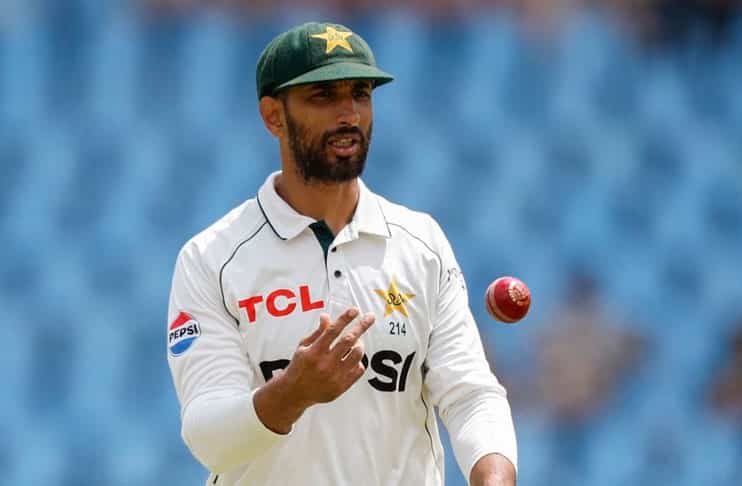
    Shan Masood resumes batting ahead of England Tests

    BECKENHAM: Pakistan batter Shan Masood has taken another important step towards returning to Test cricket, resuming batting practice with the national squad ahead of the three-match series against England. Masood, 36, suffered a fractured index finger during the opening Test against the West Indies in Tarouba, despite scoring a century in the first innings. The injury forced him to miss the second Test, but the former Pakistan captain remained with the squad to continue his rehabilitation under the supervision of the team’s medical staff. The Pakistan Cricket Board (PCB) has now confirmed that Masood participated in a training session at Kent County Cricket Club in Beckenham, where Pakistan players worked through batting and bowling drills. “Under the supervision of the medical team, he carried out batting practice,” the PCB said in an update. Masood’s progress will be closely monitored as Pakistan prepare for a demanding series against England. His availability for the first Test will depend on his recovery and clinical assessment. The opening Test is scheduled to begin at Headingley on August 19, leaving Masood only a limited window to prove he is fit enough for the challenge. Before the series begins, Pakistan will play a four-day warm-up match against PCC Select XI starting Wednesday. The fixture will provide the squad with valuable preparation in English conditions. The second Test will be played at Lord’s from August 27, followed by the final match at Edgbaston from September 9. For Pakistan, Masood’s return could provide a significant boost to the batting line-up. His century in the Caribbean showed his ability to make an impact, and his recovery now gives the team hope that the experienced left-hander could be back when the England challenge begins. Pakistan squad Babar Azam (c), Aamir Jamal, Ali Usman, Abdullah Shafique, Azan Awais, Imam-ul-Haq, Khurram Shahzad, Mohammad Abbas, Mohammad Ali, Mohammad Rizwan (wk), Mohammad Awais Zafar, Muhammad Ghazi Ghori (wk), Sajid Khan, Salman Ali Agha, Saud Shakeel* (subject to fitness), Shan Masood and Ubaid Shah.

  • | |

    Barrister Gohar again seeks permission to meet PTI…

      Pakistan Tehreek-e-Insaf (PTI) Chairman Barrister Gohar Khan has once again appealed for permission to meet the party’s founding chairman, saying that he has not met him since October 15, 2025. Barrister Gohar said he was once again requesting the authorities to allow him to meet the PTI founder. He strongly denied reports or claims suggesting that he had met the party founder after October 15, 2025. “I once again request that I be allowed to meet the founding chairman,” Barrister Gohar said, reiterating his demand for access to the incarcerated PTI leader. The PTI chairman clarified that he had not met the party founder since October 15 last year and categorically rejected any suggestion that a meeting had taken place after that date. According to him, despite repeatedly submitting requests for a meeting, he had neither been offered an opportunity nor granted permission to meet the former prime minister. Barrister Gohar said that his repeated requests had not resulted in any meeting being arranged. He maintained that he had made several attempts to obtain permission but had not received a positive response from the relevant authorities. The PTI chairman said he would once again submit a request for permission to meet the party founder. He also stressed the importance of allowing the founder’s family members and legal team to meet him. His remarks come amid continued political and legal developments surrounding the PTI founder, whose access to family members, lawyers and party leadership has remained a subject of political discussion. Barrister Gohar’s statement also seeks to clarify his own position regarding reports about his alleged meetings with the PTI founder. By specifying October 15, 2025 as the date of his last meeting, he rejected any claims that he had subsequently met the party leader. The PTI chairman emphasized that he had not been given even a single opportunity to meet the founder despite repeatedly requesting permission. He therefore appealed again to the authorities to facilitate a meeting. The issue of access to political leaders in custody has remained particularly significant for their parties, as meetings with senior leadership allow them to discuss political strategy, legal matters and organizational issues. For PTI, communication with its founder is especially important because party members have frequently sought his guidance on political and legal matters. Barrister Gohar’s latest comments indicate that he intends to continue pursuing permission for a meeting. He did not indicate that any such permission had been granted. He also called for the founder’s family and lawyers to be given access, underscoring their role in maintaining communication and handling his legal affairs. The PTI chairman concluded by reiterating his request for permission to meet the party founder. His statement makes clear that, according to his account, no meeting has taken place between the two since October 15, 2025. The development is likely to attract further political attention as PTI continues to seek access to its founder and maintain communication with him regarding the party’s political and legal affairs.

  • | |

    Umera Ahmed urges fans to avoid AI-generated content

    Renowned Urdu novelist Umera Ahmed has appealed to readers and content creators to stop producing and sharing AI-generated visuals based on her literary works, saying such content diminishes the emotional and spiritual depth of her stories. In a statement shared through her official Instagram page, Ahmed’s team thanked readers for their continued love and support but expressed concern over the growing number of AI-generated images, videos and reels portraying scenes, characters and dialogues from her novels. The statement urged fan pages and digital creators to refrain from using artificial intelligence to recreate her books. According to the team, literature offers every reader a unique and personal experience, while AI-generated visuals limit that imagination by presenting a fixed interpretation of characters and events. Special concern was raised over Ahmed’s acclaimed novel Peer-e-Kamil, which the team described as a deeply spiritual and emotionally sensitive work. They said its message, beauty and sanctity should not be diluted through artificial intelligence-generated content. While appreciating the passion and dedication of fan communities, the statement encouraged readers to experience and share the author’s work in its original form, allowing the stories to leave their intended emotional impact without technological alteration. The appeal comes as artificial intelligence continues to spark debate within Pakistan’s creative and entertainment industries. Concerns over the misuse of AI have grown in recent months, with artists and public figures warning about its impact on originality, artistic integrity and personal image rights. The discussion intensified after an AI-generated promotional music video released by the Ministry of Planning and Development drew widespread criticism. Separately, television personalities Tauseeq Haider and Farah Saadia were forced to deny false rumours after AI-created images depicting their alleged wedding circulated online. Actor Hira Tareen has also urged fellow performers to carefully review contract terms, warning that some agreements may allow studios to use an actor’s likeness for AI-generated productions without adequate safeguards.

  • | |

    Makkah pact hailed as boost for regional peace and…

    LAHORE: Senior journalists, defence analysts and experts have described the Makkah Joint Defence Pact between Pakistan, Saudi Arabia and Türkiye as a significant step towards strengthening regional peace, collective security and strategic cooperation. The views were expressed during a panel discussion titled “Makkah Pact: Peace, Security and Stability,” organised by the Press Information Department (PID) Lahore. PID Lahore Director General Shafqat Abbas said the agreement was not directed against any particular country but was intended to strengthen peace, stability, mutual confidence and collective security. He stressed that dialogue, diplomacy and cooperation should remain the preferred means of resolving regional disputes. He said Pakistan, Saudi Arabia and Türkiye brought different strengths and experiences to the partnership, creating opportunities for closer cooperation in defence, diplomacy, economics and strategic affairs. According to him, modern national power extended beyond military strength and depended equally on a strong economy, quality education, scientific advancement, technology, skilled human resources and effective diplomacy. Shafqat Abbas called for greater efforts to convert Pakistan’s defence capabilities and achievements into economic opportunities through investment in education, research, technology, skills development and exports. He said a combination of strong defence and economic stability could enable Pakistan to play a more influential role internationally. Senior journalist and analyst Mujeebur Rehman Shami highlighted Pakistan’s achievements in defence, diplomacy and foreign relations since independence. He praised Pakistani diplomats for enhancing the country’s international standing despite limited resources and stressed the urgent need to improve education, technical skills, research and scientific development. He also called for higher exports, improved productivity and stronger economic policies, saying that Pakistan’s defence successes should ultimately contribute to broader economic progress. Senior journalist Salman Ghani said the pact combined the unique strengths of its three members, describing Pakistan as a country with significant defence capabilities, Saudi Arabia as a major economic power and Türkiye as an important player in defence technology and military production. He said the partnership could open new avenues for investment, economic cooperation and regional stability. Defence analyst Colonel (retd) Abid said Pakistan’s political and military leadership had played an important role in developing the agreement. He noted that the pact carried implications beyond defence and could influence regional diplomacy, economic relations and strategic cooperation. Former Vice Chancellor of Home Economics University Dr Faleha Afzal said the agreement had further demonstrated Pakistan’s potential role in promoting peace and stability and expressed hope that other Muslim countries would eventually participate in similar cooperative initiatives. Columnist Malik Salman stressed the importance of mutual trust and collective security among Muslim countries, while urging Pakistan to maintain a balance between defence preparedness and economic development. Government College University Lahore Urdu literature professor Dr Farzana Riaz said the pact could create new opportunities for unity and cooperation among Muslim countries and encourage joint efforts to address shared regional challenges. Journalist Noorullah said the agreement could contribute to greater peace and stability in the region, but stressed the need for a comprehensive strategy to convert Pakistan’s strategic and defence strengths into tangible economic and diplomatic gains. The participants agreed that closer cooperation among Pakistan, Saudi Arabia and Türkiye could have wider implications for regional peace, defence coordination, diplomacy and economic development. They called on Muslim countries to overcome differences, focus on common interests and pursue peace, development and collective security through dialogue and coordinated efforts. Concluding the session, Shafqat Abbas thanked the participants and said discussions of this nature were important for increasing public understanding of major national and international developments and encouraging informed debate.

Leave a Reply

Your email address will not be published. Required fields are marked *