shan masood resumes
|

Shan Masood resumes batting ahead of England Tests

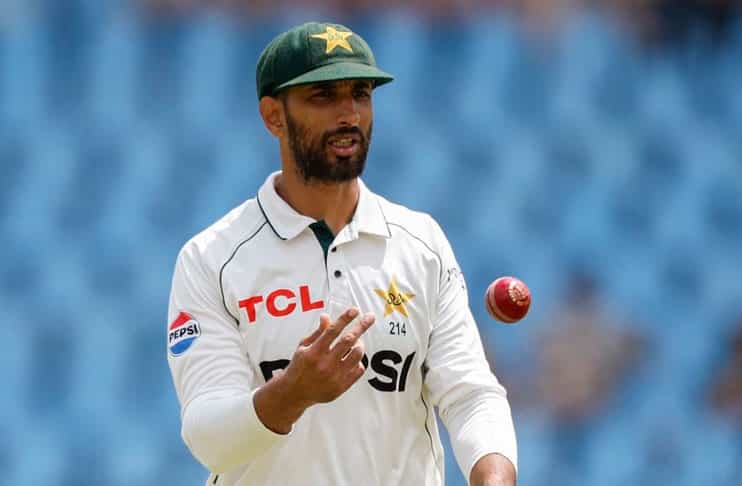
BECKENHAM: Pakistan batter Shan Masood has taken another important step towards returning to Test cricket, resuming batting practice with the national squad ahead of the three-match series against England.

Masood, 36, suffered a fractured index finger during the opening Test against the West Indies in Tarouba, despite scoring a century in the first innings.

The injury forced him to miss the second Test, but the former Pakistan captain remained with the squad to continue his rehabilitation under the supervision of the team’s medical staff.

The Pakistan Cricket Board (PCB) has now confirmed that Masood participated in a training session at Kent County Cricket Club in Beckenham, where Pakistan players worked through batting and bowling drills.

“Under the supervision of the medical team, he carried out batting practice,” the PCB said in an update.

Masood’s progress will be closely monitored as Pakistan prepare for a demanding series against England. His availability for the first Test will depend on his recovery and clinical assessment.

The opening Test is scheduled to begin at Headingley on August 19, leaving Masood only a limited window to prove he is fit enough for the challenge.

Before the series begins, Pakistan will play a four-day warm-up match against PCC Select XI starting Wednesday. The fixture will provide the squad with valuable preparation in English conditions.

The second Test will be played at Lord’s from August 27, followed by the final match at Edgbaston from September 9.

For Pakistan, Masood’s return could provide a significant boost to the batting line-up. His century in the Caribbean showed his ability to make an impact, and his recovery now gives the team hope that the experienced left-hander could be back when the England challenge begins.

Pakistan squad

Babar Azam (c), Aamir Jamal, Ali Usman, Abdullah Shafique, Azan Awais, Imam-ul-Haq, Khurram Shahzad, Mohammad Abbas, Mohammad Ali, Mohammad Rizwan (wk), Mohammad Awais Zafar, Muhammad Ghazi Ghori (wk), Sajid Khan, Salman Ali Agha, Saud Shakeel* (subject to fitness), Shan Masood and Ubaid Shah.

Similar Posts

  • |

    Rain forecast for several parts of Pakistan as flood risk rises

    LAHORE: Rain is expected in several parts of Punjab, Balochistan, upper Khyber Pakhtunkhwa, Gilgit-Baltistan and Kashmir on Sunday, with authorities warning of possible flooding in urban centres and watercourses following increased rainfall. According to the latest weather forecast, scattered showers are likely to affect different areas of the country, while parts of Punjab may experience intermittent rain during the day. The weather in Lahore turned pleasant on Sunday morning after rainfall was reported in various parts of the provincial capital. The early-morning showers brought temporary relief from the prevailing heat and humidity, with residents experiencing relatively cooler conditions. Rain was reported in several localities, adding to the likelihood of water accumulation on roads and low-lying areas if the spell continues. Meanwhile, the National Emergency Operation Center has warned that rainfall could lead to a rise in water levels and flows in major rivers across the country. The situation has prompted authorities to remain vigilant and closely monitor river channels, drains and vulnerable urban areas. Officials have also highlighted the possibility of low to moderate-level urban flooding in several Punjab cities, including Rawalpindi, Gujranwala, Sialkot, Narowal, Faisalabad, Okara and Lahore. Heavy or persistent rainfall in these areas could result in water accumulating on roads, underpasses and other low-lying locations, potentially disrupting traffic and routine activities. Relevant departments have been advised to remain prepared to respond to any emergency arising from the weather system. The risk is not limited to Punjab. In Khyber Pakhtunkhwa, low to moderate flooding has also been forecast in rivers, streams and rain-fed waterways in Chitral, Upper Dir, Abbottabad, Shangla, Khyber, Orakzai, Kohat, Tank and North and South Waziristan. Authorities have urged local administrations and disaster-management agencies in vulnerable districts to maintain close coordination and monitor developments, particularly in areas located near rivers, streams and seasonal rain drains. Residents in low-lying and flood-prone areas have been advised to exercise caution, avoid unnecessary travel during heavy rainfall and stay informed about weather and flood alerts issued by the relevant authorities. The latest warnings come as the country continues to monitor the impact of the ongoing monsoon activity, which can cause sudden increases in river flows and urban flooding in areas receiving intense or prolonged rainfall.

  • | | | |

    Oil prices fall as Hormuz shipments resume

    Global oil prices fell sharply on Friday, extending weekly losses as crude exports through the Strait of Hormuz gradually resumed, easing fears of prolonged supply disruptions despite a fresh maritime security incident near Oman. Brent crude dropped nearly 2% to $73.76 per barrel, while US West Texas Intermediate (WTI) crude also declined around 2% to $70.43 per barrel during trading. The decline reflected growing market confidence that oil supplies from the Gulf were beginning to recover after months of disruption. Saudi Arabia’s state-owned energy company resumed crude loading operations at the Ras Tanura export terminal after a suspension of almost four months. Shipping data indicated that two very large crude carriers were loading oil at the terminal, with another tanker waiting offshore, signalling a gradual restoration of export activity. Market analysts said traders were reacting positively to the increase in tanker movements through the Strait of Hormuz, one of the world’s most important energy corridors. However, they noted that crude demand from China remains weaker than expected, adding downward pressure on prices. The market had briefly rallied a day earlier after a commercial cargo vessel was struck by an unidentified projectile near Oman, prompting the United Nations’ shipping agency to suspend its voluntary evacuation programme in the area. US officials later alleged that Iranian forces had fired on the vessel as it attempted to transit the strait, while Iranian authorities maintained that security could not be guaranteed for ships operating outside designated navigation routes. Although oil shipments through the Strait of Hormuz have reached their highest level since the outbreak of the US-Israel-Iran conflict in February, overall maritime traffic remains well below normal levels recorded before the crisis. Analysts observed that much of the recent increase in tanker traffic reflects vessels that had been stranded during the conflict finally leaving the Persian Gulf. They cautioned that inbound shipping remains limited, suggesting export flows could slow again once the backlog of delayed vessels has cleared. Adding another layer of uncertainty, earthquakes in Venezuela raised fresh concerns about global oil supplies. Initial assessments indicated that the country’s major oilfields, refineries and export facilities escaped significant damage because they were located away from the hardest-hit regions. Nevertheless, widespread power outages have created uncertainty over whether Venezuela can maintain crude production near its recent level of approximately 1.2 million barrels per day. Despite ongoing geopolitical tensions and supply risks, the resumption of Gulf oil exports outweighed immediate concerns, leaving both Brent and WTI crude on course for weekly losses of around eight percent.

  • Chiang Rai Hosts Authentic Muaythai 2569″ Tournament Northern Qualifiers

    CHIANG RAI – The Sports Authority of Thailand (SAT) officially launched the northern regional quarterfinals of the highly anticipated “Authentic Muaythai 2569” tournament. This grassroots development initiative aims to find and nurture raw, undiscovered boxing talent from local communities and elevate them onto the global sports stage. The action-packed event took place at the temporary boxing […]

  • | |

    Pakistan’s IT exports hit record $4.6 billio…

    KARACHI: Pakistan’s information technology (IT) sector achieved a historic milestone in the fiscal year 2025-26, with IT and IT-enabled services (ITeS) exports reaching a record $4.6 billion, marking an impressive 21 percent increase from the previous year’s $3.81 billion. Although the sector narrowly missed the government’s $5 billion export target, the achievement reinforces Pakistan’s position as one of the country’s fastest-growing export industries and strengthens its long-term goal of reaching $10 billion in IT exports by FY2028-29. Industry experts believe the strong performance reflects the steady expansion of Pakistan’s digital economy, driven by a growing pool of skilled professionals, rising demand for remote services, improved internet infrastructure and favourable tax incentives. However, they also caution that the sector must overcome structural challenges and shift towards innovation-led growth to sustain momentum. Pakistan is home to more than 600,000 IT professionals and freelancers, alongside tens of thousands of registered software and IT-enabled services companies operating from major technology hubs in Karachi, Lahore and Islamabad. Secondary cities such as Faisalabad, Sialkot and Sukkur are also emerging as important contributors to the country’s digital workforce. Software development, business process outsourcing (BPO), enterprise technology services, call centres and freelancing remain the backbone of Pakistan’s IT exports. Meanwhile, demand for advanced services including artificial intelligence (AI), cybersecurity, cloud computing, automation and digital consulting is expanding rapidly as global businesses seek specialised technology solutions. The United States continues to be Pakistan’s largest export destination for IT services, followed by the United Kingdom, the Gulf region, Europe, Canada and several Asian markets. Experts say significant opportunities remain untapped in Saudi Arabia, the UAE, Qatar, Germany, Japan, South Korea, Australia, Africa and Central Asia, particularly in high-value technology sectors. Industry leaders stress that Pakistan must diversify both its export markets and service offerings. They argue that relying mainly on traditional software development and low-cost outsourcing will limit future growth, while greater investment in AI-powered solutions, enterprise software, cybersecurity and digital transformation services can significantly increase export earnings. Freelancers have also emerged as a major force in Pakistan’s digital economy, contributing an estimated $1.1 billion, or roughly a quarter of total IT exports, during FY2025-26. Online platforms have enabled thousands of professionals to access global clients, creating new employment opportunities and boosting foreign exchange inflows. Beyond export revenues, the sector continues to generate employment, with thousands of technical positions available across the country. The expansion of remote work has also increased opportunities for women and professionals living outside major urban centres. Experts believe the next phase of growth depends on moving beyond providing outsourced services to creating globally competitive technology products and intellectual property. They argue that Pakistan must position itself as a producer of innovation rather than simply a destination for low-cost software development. The country’s AI ambitions are also gaining momentum. Under the National AI Policy 2025, Pakistan plans to establish AI centres of excellence, launch dedicated funding programmes, expand public-sector AI adoption and train around one million people in AI-related skills by 2030. New AI hubs are also being developed to support startups and accelerate innovation. International partnerships are expected to play a key role in this transformation. Pakistan has strengthened technology cooperation with China through joint AI and IT initiatives and recently became a founding member of the World Artificial Intelligence Cooperation Organisation (WAICO). At the same time, interest from the United States has grown, with American investors pledging more than $20 million for Pakistan’s technology sector during a recent investment conference. Connectivity has also improved through expanded submarine cable capacity, cross-border fibre links and stronger cloud infrastructure, making it easier for local companies to deliver digital services worldwide. Despite the progress, industry stakeholders warn that policy uncertainty, foreign exchange restrictions, internet disruptions, energy costs, weak intellectual property protection and limited access to global payment systems continue to hinder faster growth. They believe addressing these challenges while promoting innovation and AI-driven technologies will be essential if Pakistan hopes to transform its record-breaking IT industry into a global technology powerhouse.

  • | | |

    Balochistan attack: sessions judge Abdul Hakeem Ka…

    District and Sessions Judge Abdul Hakeem Kakar and his security guard were killed in an armed attack while traveling toward Mastung from Quetta, officials confirmed on Thursday. According to officials, Judge Kakar was traveling with Additional Sessions Judge Tariq Lashari when unidentified armed men targeted their vehicles near Wali Khan crossing. The attack resulted in the deaths of Judge Kakar and his guard, while Judge Lashari and another person sustained injuries. Balochistan Home Department officials said the injured victims were shifted to a hospital in Mastung for medical treatment. Authorities have launched an investigation into the attack and are collecting evidence from the crime scene. Balochistan Chief Minister Sarfraz Bugti took notice of the incident and directed authorities to investigate all aspects of the attack. Officials said strict action would be taken if any negligence was found during security arrangements. The provincial government described the attack as a targeted assault against the judicial community. Officials said such incidents were aimed at creating fear and challenging the authority of state institutions. President Asif Ali Zardari strongly condemned the attack and expressed grief over the deaths of the judge and his guard. He said the sacrifices of those killed in such attacks would not go in vain and reaffirmed the country’s commitment to fighting terrorism. Interior Minister Mohsin Naqvi also condemned the incident, saying such acts could not weaken the nation’s determination against terrorism. PPP Chairman Bilawal Bhutto-Zardari expressed solidarity with the victims’ families and vowed that those responsible would be brought to justice. The attack comes amid heightened security concerns in Balochistan, where several violent incidents have recently taken place. Just a day earlier, three people were killed and several others injured in an attack on a passenger bus in Mastung, while a bridge on the national highway was damaged in a separate incident. Security forces have intensified operations across the province following a rise in militant activities. Authorities say counterterrorism efforts are continuing to restore peace and prevent further attacks. The investigation into the killing of Judge Abdul Hakeem Kakar and his guard remains ongoing, with security agencies working to identify and arrest those responsible.

  • | |

    Hafiz Naeem targets IPP deals, fuel prices

    Jamaat-e-Islami Emir Hafiz Naeemur Rehman has strongly criticised the government over rising fuel prices, heavy taxation and electricity costs. Addressing participants at the party’s sit-in in Lahore, Hafiz Naeemur Rehman said the government was putting an increasing financial burden on ordinary citizens. He demanded the immediate withdrawal of the recent increase in petrol and diesel prices. He said the petroleum levy had no direct connection with the actual price of petrol. He questioned the justification for repeatedly increasing fuel prices and said the government was making life more difficult for the public. “The government drops a petrol bomb on us every day,” he said. Hafiz Naeemur Rehman also criticised the government’s policies regarding independent power producers (IPPs). He alleged that successive governments had entered into unfair agreements with IPPs in the name of ending load-shedding. According to him, the government was now passing the cost of its own shortcomings on to the people through higher taxes. He said citizens were already struggling with expensive electricity and gas bills. The Jamaat-e-Islami leader said heavy taxes were being imposed on electricity and gas bills. He argued that such charges were increasing household expenses and adding to the difficulties faced by ordinary consumers. Hafiz Naeemur Rehman further said the government had shut down five of the 27 IPPs. He referred to the government’s own claim that the move would provide a benefit of Rs3,360 billion to the national exchequer. He questioned why similar measures could not be taken to provide lasting relief to consumers. He said the government should focus on reducing electricity costs instead of continuously increasing taxes and other charges. The Jamaat-e-Islami emir also criticised the Federal Board of Revenue (FBR). He alleged that corruption within the tax collection system remained widespread. He called for greater transparency and accountability in government institutions. He said economic policies should be designed to provide relief to the public rather than increase their financial difficulties.

Leave a Reply

Your email address will not be published. Required fields are marked *