barrister gohar again
| |

Barrister Gohar again seeks permission to meet PTI…


Pakistan Tehreek-e-Insaf (PTI) Chairman Barrister Gohar Khan has once again appealed for permission to meet the party’s founding chairman, saying that he has not met him since October 15, 2025.

Barrister Gohar said he was once again requesting the authorities to allow him to meet the PTI founder. He strongly denied reports or claims suggesting that he had met the party founder after October 15, 2025.

“I once again request that I be allowed to meet the founding chairman,” Barrister Gohar said, reiterating his demand for access to the incarcerated PTI leader.

The PTI chairman clarified that he had not met the party founder since October 15 last year and categorically rejected any suggestion that a meeting had taken place after that date. According to him, despite repeatedly submitting requests for a meeting, he had neither been offered an opportunity nor granted permission to meet the former prime minister.

Barrister Gohar said that his repeated requests had not resulted in any meeting being arranged. He maintained that he had made several attempts to obtain permission but had not received a positive response from the relevant authorities.

The PTI chairman said he would once again submit a request for permission to meet the party founder. He also stressed the importance of allowing the founder’s family members and legal team to meet him.

His remarks come amid continued political and legal developments surrounding the PTI founder, whose access to family members, lawyers and party leadership has remained a subject of political discussion.

Barrister Gohar’s statement also seeks to clarify his own position regarding reports about his alleged meetings with the PTI founder. By specifying October 15, 2025 as the date of his last meeting, he rejected any claims that he had subsequently met the party leader.

The PTI chairman emphasized that he had not been given even a single opportunity to meet the founder despite repeatedly requesting permission. He therefore appealed again to the authorities to facilitate a meeting.

The issue of access to political leaders in custody has remained particularly significant for their parties, as meetings with senior leadership allow them to discuss political strategy, legal matters and organizational issues. For PTI, communication with its founder is especially important because party members have frequently sought his guidance on political and legal matters.

Barrister Gohar’s latest comments indicate that he intends to continue pursuing permission for a meeting. He did not indicate that any such permission had been granted.

He also called for the founder’s family and lawyers to be given access, underscoring their role in maintaining communication and handling his legal affairs.

The PTI chairman concluded by reiterating his request for permission to meet the party founder. His statement makes clear that, according to his account, no meeting has taken place between the two since October 15, 2025.

The development is likely to attract further political attention as PTI continues to seek access to its founder and maintain communication with him regarding the party’s political and legal affairs.

Similar Posts

  • |

    Qatar and Pakistan advance mediation efforts as US and Iran pause direct military strikes

    Regional mediators led by Qatar and Pakistan have achieved significant progress in restoring negotiations between the United States and Iran following a three-day pause in direct military strikes, according to regional officials. The temporary lull comes after nearly two weeks of heavy bombardment triggered by Iranian actions in the Strait of Hormuz. While US President Donald Trump and Tehran have temporarily halted direct strikes against one another, scattered attacks by regional armed groups persist, including drone attacks targetting Saudi petroleum facilities by Iran-backed militias and Houthis, alongside drone interceptions over Jordan and Iraq. Talks facilitated alongside Oman are focusing on establishing a maritime management mechanism for the Strait of Hormuz to restore an interim ceasefire deal, although Iranian Foreign Ministry spokesperson Esmail Baghaei stated that no direct negotiations with Washington are taking place and that the waterway currently remains closed. Concurrently, US naval blockades against Iran persist, and global shipping through both the Strait of Hormuz and the Bab el-Mandeb strait remains constrained. Amid ongoing mediation, Israeli Prime Minister Benjamin Netanyahu is scheduled to meet US President Donald Trump in Washington to discuss the wider conflict, while Iranian officials have condemned a recent Ukrainian strike on an Iranian vessel in the Caspian Sea.

  • | |

    Sindh schools to follow six-day week from August 1

    The Sindh government has announced that all public and private schools across the province will observe a six-day working week from August 1. The new schedule will remain in place until further orders. An official notification issued by the School Education and Literacy Department confirmed that schools will remain open from Monday to Saturday. The decision applies to all educational institutions operating under the department’s administrative control. The announcement comes as schools prepare to reopen after the end of summer vacations. Educational institutions remained closed for two months, with the holiday period running from June 1 to July 31. Students and teachers will now return to classrooms under the revised weekly schedule. Officials said the six-day week has been introduced to ensure smooth academic activities and improve the pace of teaching. The move is expected to help schools complete the academic calendar on time and make up for learning time lost due to previous disruptions. The decision applies equally to government and private schools throughout Sindh. School administrations have been instructed to implement the revised timetable immediately after reopening. Earlier this year, educational institutions in Sindh also experienced temporary closures because of regional security concerns linked to tensions in the Middle East. Schools remained closed for a brief period before normal academic activities resumed. Provincial authorities later restored regular operations while maintaining Saturday holidays. However, the latest notification has withdrawn that arrangement and introduced a six-day working week across the province. Education officials have advised parents, students and school administrations to follow the updated schedule. They said any future changes to school timings or working days will be communicated through official notifications.

  • | |

    Human-like robotic head amazes people with realist…

    The gap between humans and machines is becoming smaller as robotics technology continues to advance. A Chinese startup has introduced a highly advanced robotic head that can imitate human facial expressions, attracting attention for its realistic movements and lifelike appearance. The company reportedly behind the innovation is AgiHead Farm, founded in 2024 by Columbia University engineer Yuhang Hu. The startup introduced the robotic head known as Origin M1, which aims to create more natural interaction between humans and machines. Unlike traditional robots that often display limited movements, the robotic head is designed to reproduce subtle facial expressions. These include eyebrow movements, slight smiles, eye movements, and other small changes that are important for human communication. The robot uses a silicone-based outer layer and a network of miniature motors placed beneath the surface. These motors work similarly to human facial muscles by expanding and contracting to create different expressions. This technology allows the robot to respond in a way that appears more natural compared with earlier robotic systems. The robotic head is also equipped with cameras hidden inside its eyes, allowing it to observe its surroundings and track movement. Built-in microphones and speakers enable it to listen and communicate with people, creating the possibility of more interactive human-machine conversations. The advanced technology comes with a high price tag. According to reports, the most sophisticated version of the robotic head costs around $150,000, making it primarily a product for research institutions, technology companies, and specialized applications. The company aims to further improve the system by adding lip-sync technology and advanced artificial intelligence models. Future versions could potentially understand human speech better and respond with facial expressions that match the tone and emotions of a conversation. Experts believe that realistic facial expressions are one of the biggest challenges in developing human-like robots. While robots have made significant progress in movement and artificial intelligence, creating machines that communicate naturally through facial expressions remains a complex field. The development of lifelike robotic faces represents a major step in robotics research. As artificial intelligence and robotics continue to evolve, technologies like Origin M1 could influence future applications in education, healthcare, customer service, and human-computer interaction.

  • |

    Fiza Ali criticises Nimra Khan’s ex-husband over divorce comments

    Pakistani actress Fiza Ali has spoken out about the recent divorce involving actress Nimra Khan and her former husband, urging people to maintain respect and dignity even when a marriage comes to an end. Nimra Khan recently entered into her second marriage and shared pictures from the wedding celebrations with her new family on social media. However, the relationship reportedly faced difficulties soon after the marriage, with both sides eventually sharing posts on social media that fueled speculation about problems between them. The situation attracted further attention after Nimra Khan’s husband shared a social media message using the phrase “good riddance,” which many users interpreted as a sign that the couple had separated. He later expressed his best wishes for Nimra and confirmed that the marriage had ended. Fiza Ali has now reacted to his post and criticised the way the end of the relationship was presented publicly. The actress stressed that a man should continue to treat a woman with respect, even after their marriage has ended. According to Fiza, if someone feels relieved after getting divorced, it also raises questions about what was happening in their life before the separation. She suggested that the end of a marriage should not become an opportunity to publicly humiliate or disrespect the former partner. The actress also emphasised that a woman deserves respect even when she is no longer part of a man’s life. She pointed out that people eventually move forward, rebuild their lives and find happiness after difficult experiences. Fiza strongly objected to portraying divorce as a victory. She said that ending a relationship should not be treated as if someone has won a competition or received a trophy. In her view, a marriage may have ended, but that does not mean the dignity or worth of the woman involved has ended with it. Addressing Nimra directly, Fiza encouraged her to remain confident and hold her head high despite the breakdown of her marriage. She stressed that the end of a relationship does not reduce a woman’s value or importance. Her comments have sparked discussion on social media, with many people debating whether former spouses should publicly discuss their relationships after divorce. Fiza’s message, however, focused primarily on the importance of maintaining basic respect and avoiding language that could further hurt someone during an already difficult period. The actress’ remarks highlight a broader conversation about how celebrities and public figures handle personal relationships in the age of social media, where private disputes can quickly become public controversies.

  • |

    FIFA’s $20bn plan shakes football power balance

    FIFA’s plan to bring private equity investment into global football is opening a new chapter in its long-running struggle with Europe over the sport’s power, finances and commercial control. The world football governing body, led by President Gianni Infantino, is considering the creation of a subsidiary valued at around $20 billion. The proposed company would manage the World Cup and other major FIFA events. Under the plan, outside investors could acquire stakes of up to 20% in the new entity. The proposal has already triggered strong opposition from European football authorities. UEFA has criticised the idea and accused FIFA of putting the “soul” of football at risk by allowing private investors greater access to the sport’s most valuable competitions. Infantino has defended the proposal as an effort to make football’s financial system more inclusive. He has described the initiative as a form of “democratisation” that could allow more football nations to benefit from the sport’s growing commercial revenues. The plan could also provide financial incentives to FIFA’s 211 member associations. Under the proposal, each association could receive up to $20 million in immediate funding for special projects. Further grants of $20 million or more could be provided during subsequent four-year cycles. Such funding could prove particularly attractive to smaller and emerging football nations that depend heavily on FIFA for financial support. FIFA already generates billions of dollars through broadcasting rights, sponsorships and other commercial agreements. The organisation had set a revenue target of $13 billion for its previous four-year cycle, which included the latest World Cup and the Club World Cup. However, FIFA’s financial strength remains smaller than the overall commercial value of European football. UEFA reported that Europe’s top club competitions generated around €4.4 billion during the 2024-25 season alone. Football competitions across Europe generated more than €40 billion during the same period, according to Deloitte’s annual football finance review. The continent’s five major domestic leagues — the Premier League, Bundesliga, LaLiga, Serie A and Ligue 1 — accounted for more than half of that revenue. FIFA has spent decades trying to reduce Europe’s dominance over the global game. The organisation’s leadership has repeatedly sought to give greater influence to football associations in Africa, Asia and Latin America. Former FIFA president João Havelange was a major figure in that effort. He expanded the World Cup and built political support among smaller football nations, helping shift the balance of influence within FIFA. Successive FIFA presidents continued that approach. Infantino has expanded the World Cup from 32 teams to 48, increasing opportunities for countries outside Europe’s traditional football powers. The FIFA president has also suggested that a 64-team World Cup could be considered for the 2030 centenary tournament. The idea followed calls from South American football’s governing body CONMEBOL for an expanded competition. The proposal has faced criticism from European football officials. LaLiga president Javier Tebas has accused FIFA of damaging the sport. His criticism reflects wider concerns in Europe about the growing number of international competitions and the commercial expansion of FIFA. FIFA has previously attempted to attract external investment into its competitions. A proposed expansion of the Club World Cup backed by a consortium led by SoftBank in 2018 failed to materialise after strong resistance from UEFA. The latest private equity proposal could face a similar challenge. However, Infantino has a major advantage within FIFA’s political structure. The organisation’s decisions are determined by its global membership rather than European football alone. FIFA has 211 member associations, meaning support from Africa, Asia, Latin America and other regions could allow Infantino to advance the plan despite European opposition. Experts believe the financial incentives could make the proposal attractive to developing football nations. Eric Windholz, an associate professor at Monash University’s law faculty, said countries in the Global South could find the plan appealing because their domestic football competitions generate far less commercial income than major European leagues. The regional football authorities have also reacted cautiously

  • |

    UN appeals for urgent funding for Afghan women as Taliban restrictions deepen

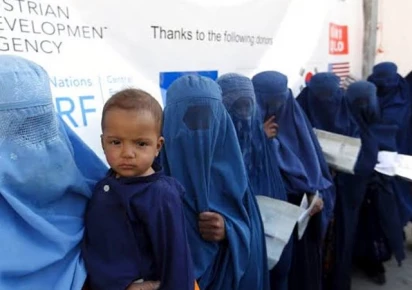
    The United Nations has appealed directly to international donors not to reduce financial support for women’s programmes in Afghanistan, warning that aid cuts will worsen an already severe humanitarian and human rights crisis. Speaking to reporters in Geneva, Susan Ferguson, the UN Women special representative in Afghanistan, revealed that more than 50% of 74 surveyed women’s organisations expect to suspend operations or close within the next year due to extreme funding shortfalls. She highlighted that the UN’s $1.7 billion humanitarian appeal for the country remains only 25% funded, while nearly three-quarters of local women’s groups saw their budgets slashed in 2025. The UN reports that the Taliban has issued over 100 discriminatory decrees restricting education, employment, healthcare access, and freedom of movement. Surveys indicate that over half of Afghan women now leave their homes only once or twice a month, with 70% rating their mental health as bad or very bad. While a coalition of 56 nations, including Britain, France, the US, Japan, and the UAE, issued a joint statement calling on the Taliban to lift these restrictions, key regional neighbours and global powers including Pakistan, Iran, Russia, China, and India did not sign, underlining continued international division over how to engage with Kabul.

Leave a Reply

Your email address will not be published. Required fields are marked *