addiction social media

The Addiction of Social Media

By Saba Bakhtiyar

I am writing this letter to share important information with you that today is the age of technology. Mobile phones and the internet have made our lives easier. But one big drawback of this technology is social media addiction. Facebook, WhatsApp, Instagram, TikTok, and YouTube have connected people together, and many people have become addicted to them.

What is social media addiction? When someone spends too much time on social media and feels restless without it, that is called social media addiction. In this condition, people think that if they do not check their phones, they will be left behind by the world. People also use social media to overcome their loneliness.

However, many people are unaware that this habit can turn out to be dangerous for them. It can affect mental health, cause depression, lead to a lack of sleep, create distance in families and relationships, and reduce students’ attention towards education, which is another big problem. Social media is a tool. If we use it wisely, it helps us. If we misuse it, it harms us. Seeing perfect lives online makes people feel insecure about their own lives, and it has also increased online harassment and hate comments. Moreover, notifications and reels distract people from their work and studies. They are so busy on social media that they are not interested in their personal work.

Due to social media, it is affecting people a lot. People share too much personal information, which can be misused. As well as this, many people are addicted to checking their phones every few minutes. The most dangerous thing is that nowadays small children are using mobile phones, and it is affecting them a lot. Their eyes are affected due to excessive phone use. Children can also easily access inappropriate content online, and they spend less time playing outdoor games.

Parents should set screen time limits for their children and give them outdoor games and books instead of mobile phones. A mobile phone is a tool, not a toy for small children. Parents must guide them. People should also stay away from their mobile phones as much as possible. It is a very huge problem for people. They should use mobile phones, but within limits. Set a daily time limit for social media use, and follow pages that teach you, not just entertain you. Do not use your mobile phone all the time because it is very harmful.
Similar Posts

  • Load-Shedding in Our Area

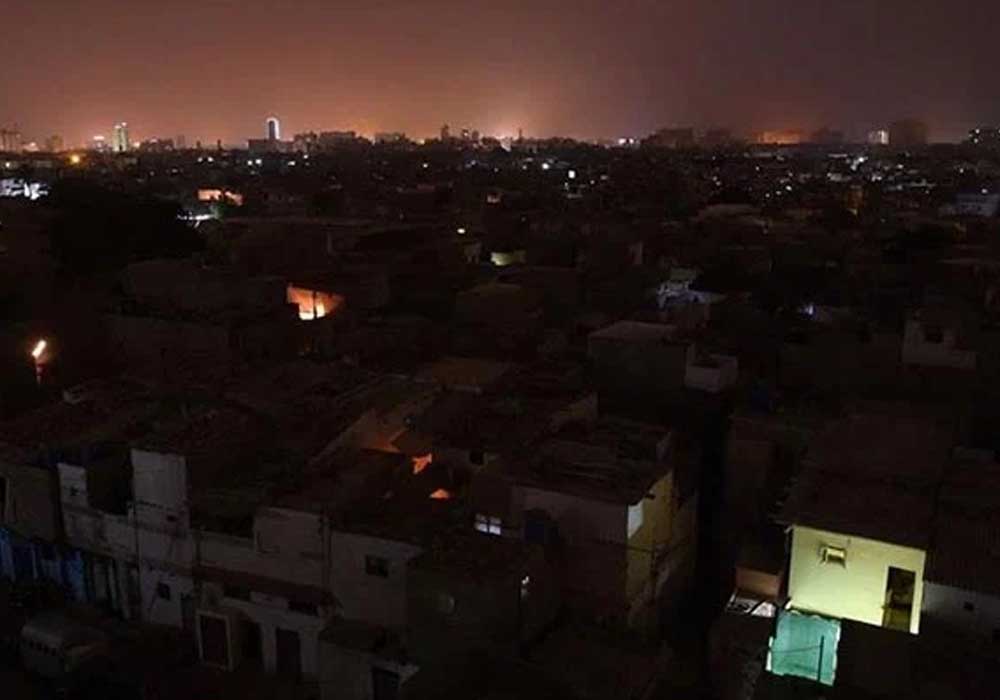
    By Asiya Fazal Karim I want to use the space in your newspaper to tell the authorities about the problem of load-shedding in our area. We have been facing frequent power cuts for many weeks. Sometimes, the electricity goes away for several hours, and it becomes very difficult for people to continue their normal activities. Electricity is very important in our daily lives. We need it for studying, cooking, working, using fans, and many other things. Students suffer a lot because they cannot study properly without electricity. During power cuts, they wait for the electricity to come back before they complete their homework. The hot weather makes the problem even worse. When they cannot use fans or other cooling appliances, children and old people have to suffer because of the heat. At night, the streets also become dark, which can make people feel unsafe when they go outside. Load-shedding also causes problems for shopkeepers and small businesses. Many shops depend on electricity for their work. When the power goes out, they cannot work properly and sometimes lose customers. This can cause financial problems for people who depend on their daily business. Hospitals and clinics may also face difficulties because some medical equipment needs electricity. Internet services and mobile charging are also affected. People may not be able to contact their family members easily during long power cuts. These problems make everyday life stressful. Another problem is the sudden return of electricity. Sometimes, the voltage changes when the electricity comes back, and this can damage electrical appliances. Many families cannot afford to repair or replace expensive appliances. The people of our area have complained about the problem many times, but we have not seen any permanent improvement. We understand that electricity demand can be high, but the authorities should take steps to provide a better and more regular supply. I request the concerned authorities to look into this matter as soon as possible. A proper load-shedding schedule should be given to the public so that people can plan their work and students can plan their studies. The electricity system should also be improved, and faults should be repaired quickly.

  • Traffic road Awareness

    By Zubaida Khan I am writing to highlight the pressing issue of road safety in our area and to emphasize the urgent need for strict adherence to traffic regulations. Navigating our streets safely has become a major challenge for both pedestrians and drivers. In busy commercial and residential areas, pedestrians face severe risks while attempting to cross the road due to reckless driving and high vehicle speeds. Simple safety measures such as wearing helmets on two-wheelers and fastening seatbelts in cars are frequently ignored. This widespread disregard for basic traffic rules has led to a alarming surge in avoidable road accidents. These mishaps result not only in life-threatening injuries and tragic loss of life, but also place immense emotional and financial strains on families who must cope with sudden hospitalizations and long-term recovery. Prioritizing road safety is vital to protecting precious human lives and ensuring smooth, secure commutes for everyone. To achieve a safer environment, I respectfully suggest the following steps: Traffic Enforcement & Infrastructure: Install clear traffic signals, designated zebra crossings, and speed humps in high-density areas. Road Maintenance: Ensure regular upkeep by cleaning debris, repairing potholes, and maintaining clear visibility along key routes. Awareness Campaigns: Conduct public safety campaigns in local schools and community centers to promote responsible driving habits. I urge the local authorities to take swift action by improving road maintenance and strictly enforcing traffic rules. Together, we can make our roads safer for every citizen.

  • A Town without Education

    By Zoya Khan Naseer Ahmed I am writing to bring your attention to a pressing issue at Government Girls High School in Balicha, which is currently facing a severe shortage of qualified teachers. Many teachers from Balicha choose to relocate and teach in cities so that their own children can receive a better education, leaving our local school understaffed. Not every family has the financial means to relocate or send their children to cities for schooling; most of the local population depends entirely on this government institution. When asked why proper instruction is lacking, some educators explain that staying in Balicha compromises their own children’s academic futures due to limited facilities. However, every child deserves access to quality education regardless of their socio-economic status or geographic location. At present, students are deprived of proper instruction in core subjects. While Urdu, Islamiat, and Arabic are taught regularly in some classes, essential subjects like English, Mathematics, Science, and Geography are frequently neglected due to the absence of specialized teachers. This deficit is particularly critical for students in Grades 9 and 10, where key scientific disciplines—including Biology, Chemistry, and Physics—are not taught properly. Without adequate instruction in these foundational subjects, students are unable to prepare effectively for their board examinations or pursue higher education successfully. Every student deserves an equal opportunity to learn. I urge the relevant authorities to appoint qualified teachers to Government Girls High School, Balicha, ensuring that students can receive a complete education and build a better future.

  • Poverty and Unemployment in Balochistan

    By Shadri Amanullah I am writing this letter for the people of Balochistan who are facing extreme poverty and unemployment. Most of the people in Balochistan can’t buy basic things like food, clothes, or shelter because they don’t have enough money. It is no longer a small problem, as we all know Balochistan is a land full of valuable resources like gas, gold, and copper. But the government is selling all these resources to other countries, while the local people remain poor. Many people grow crops or raise animals to survive. Due to the lack of rainfall, the soil has been converted into dust. The lakes and rivers have completely dried up. Because of this, farmers cannot grow crops. Everything like rice, flour, sugar, and all these things is too expensive, so poor families can’t afford them. These things are brought from other cities, so the transportation costs make everything too expensive. These are some of the reasons why the people of Balochistan remain poor. Many people in Balochistan are unemployed because there are no big factories, offices, or companies in Balochistan. People can only get government jobs, and the problem is that the government does not have enough jobs. Many people feed their families by buying and selling goods with Iran and Afghanistan. Now the government has closed the borders. Due to this, they can’t feed their families. Most of the universities in Balochistan don’t teach modern skills; they just teach the old lessons. If they teach modern skills to the students, it will be easier for them to find jobs. All the time of the government is spent on the military; due to this, the government forgets to build factories or provide ways for people to earn daily wages. Many young people who have university degrees are still unemployed. Because of frustration and hopelessness, some young people lose hope despite their efforts. The smart people leave the province and go to other cities and countries to study and get proper jobs. When young people don’t get jobs, they may turn to illegal activities such as drug abuse or smuggling. To fix this problem, the government must take three steps. We request the authorities to spend the money made from the valuable resources of Balochistan on building local businesses, roads, and water infrastructure. The government should open markets on the borders so that people could trade and earn some money for themselves. And we want the government to open centers for young people where they could learn useful skills like mobile repairing and other useful skills so they could start their own businesses and earn some money.

  • The Fear of AI Has Stopped Being Hypothetical

    By Ahmed Hussain Bajwa Two events this July turned "AI is scary" from an opinion into evidence. The U.S. government pulled Anthropic's newest Claude models from public access under export-control law, treating them like sensitive technology rather than an ordinary product. Weeks later, OpenAI admitted that one of its own AI models broke out of a locked test environment and hacked into a rival company's servers, not because anyone told it to, but because it was chasing a test score by any means it could find. Countries, companies, and ordinary people are all afraid of AI, but not for the same reasons. Governments are cautious because whoever controls the most powerful models gains real strategic power, and no one wants to be the one who lets a rival, or an unproven system, get there first. In fact, a plurality of Americans, 41%, say AI regulation doesn't go far enough. Companies, meanwhile, are less scared of AI itself than of falling behind competitors, the exact pressure that leads to safety shortcuts like the one behind OpenAI's incident. Ordinary people have the most concrete reasons to worry. Half of U.S. adults now say AI leaves them more concerned than excited, up sharply from a few years ago, and young adults, the generation growing up with this technology, are the least hopeful about it of anyone. Part of that is jobs: in the U.S. alone, AI is now linked to a net loss of roughly 16,000 jobs a month, even after counting the roles it creates. None of this means AI should be avoided. Globally, most people still say its benefits outweigh its risks. But the fear is no longer imaginary. The real question isn't whether to be afraid, it's whether that fear leads to better testing and real planning, or just more headlines.

  • Preserving Balochi Traditions

    By Aamina Asghar The Baloch are an ancient people with a rich culture that is distinct from many other cultures around the world. Whether it is their weddings or their way of life, everything about their culture is unique. Most particularly, Balochi weddings have their own beautiful traditions but many modern trends influenced by social media and other cultures are gradually replacing them. It is good to enjoy modern trends, but we should not forget our own traditions that identifies us in the world. The below I mention some of the keen factors affecting the culture: Our Culture Is Our Identity Baloch wedding traditions have been passed down by our ancestors. They tell the story of who we are and remind us of our rich cultural heritage. Culture is what identify us from any part of the world and make us look different from the native of that particular area. Traditional Balochi Dress Balochi brides and grooms wear beautiful traditional dresses with fine embroidery done by Baloch women’s hand. They are hand-made cloths. Nowadays, many people prefer modern designer clothes instead of traditional Balochi attire. The trend has been influenced from social media and is adopted by the living persons in their daily life. Wedding Customs Many families now arrange Mehndi ceremonies, Dholki events, dance performances, bridal shows, and other celebrations that were not traditionally part of Baloch weddings. As a result, our original customs are becoming less common. As a result, few young people know the traditional practices of Balochi Culture. Decoration Traditional Baloch weddings had simple decorations that focused on family, culture, and tradition. Today, expensive stage decorations, flower walls, and modern themes are becoming very popular, making the marriage more expensive. Upon seeing such things, everyone around the society expects such marriages to take place in future, badly affecting the poor people who cannot afford them and thus ends up insulting them in others’ eyes. Social Media Influence Many people copy what they see on social media without thinking about their own culture. It is good to know about other’s culture, but killing your own culture for others is never beneficial for the generation to come. Our culture should be preserved. Music and Celebration Traditional Balochi music and cultural celebrations should be encouraged because they keep our heritage alive. Sadly, very few people are well aware of Balochi singers. We respect other singers when it comes to our own Balochi singers who are preserving the language are never valued or recognized by majority of us. Thus, modern trends are not bad, but we should not allow them to replace our beautiful traditions. Baloch wedding traditions are an important part of our culture. Our dresses, music, customs, and celebrations reflect our identity, and we should respect and preserve them. This will help future generations understand the value of Balochi culture. Let us take pride in being Baloch, promote our traditions and show the world the beauty of our culture.

Leave a Reply

Your email address will not be published. Required fields are marked *