babar creates another
|

Babar creates another captaincy milestone for Pakistan

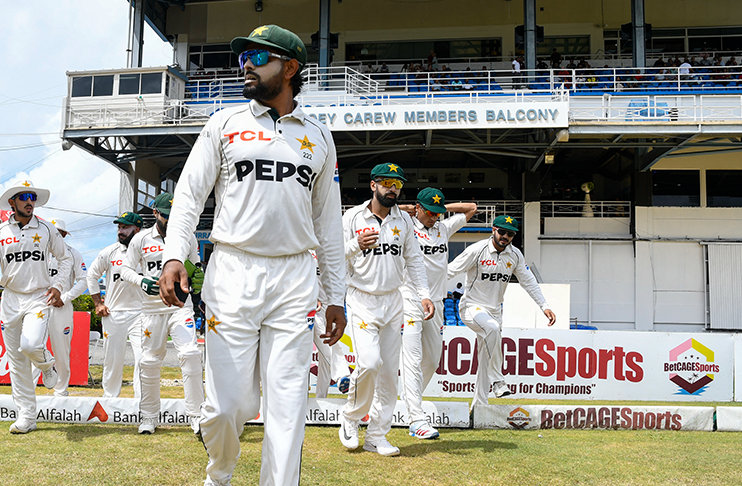
TRINIDAD: Pakistan captain Babar Azam added another milestone to his illustrious career after leading the national side for the 150th time in international cricket, joining legendary captains Imran Khan and Misbah-ul-Haq in one of Pakistan cricket’s most exclusive leadership clubs.

The landmark came during the second Test against the West Indies, further cementing Babar’s place among the country’s most successful and experienced captains.

The 31-year-old recently returned as Pakistan’s Test captain, replacing Shan Masood ahead of the team’s tours of the West Indies and England. His return marked a new chapter in a leadership journey that has already produced numerous records across all three formats.

With 150 international matches as captain, Babar now stands third on Pakistan’s all-time list. Former World Cup-winning captain Imran Khan remains at the top with 187 matches, while Misbah-ul-Haq occupies second place with 151.

Babar is also closing in on another remarkable achievement. He has guided Pakistan to 84 international victories, the second-highest by any Pakistan captain. Only Imran Khan, with 89 wins, has recorded more triumphs, while Misbah follows with 77 victories.

Across his 150 matches in charge, Babar has registered 84 wins, 51 defeats, two ties, four draws and eight no-results, giving him an impressive overall winning percentage of 56 percent.

Former captain Wasim Akram ranks fourth on Pakistan’s captaincy list with 134 international matches, followed by Inzamam-ul-Haq with 119 and Sarfaraz Ahmed with 100.

Babar first captained Pakistan in T20 Internationals in October 2019 before taking charge of the ODI side in May 2020. Later that year, he was appointed Test captain, becoming the leader across all three formats.

He stepped down from the role after Pakistan’s disappointing campaign at the 2023 ICC Men’s Cricket World Cup, but was reappointed white-ball captain in March 2024 before resigning again later that year to focus on his batting.

Following Pakistan’s recent leadership changes, the Pakistan Cricket Board restored Babar as Test captain ahead of the current overseas assignments.

Reaching 150 international matches as captain places Babar among Pakistan cricket’s greatest leaders, and with several years of international cricket still potentially ahead of him, he now has an opportunity to surpass Misbah-ul-Haq and move closer to Imran Khan’s long-standing captaincy record.

Similar Posts

  • |

    Gattuso’s Lazio reign begins with Italian Cup shock

    ROME: Gennaro Gattuso’s highly anticipated start as Lazio coach turned into a nightmare on Sunday as the Serie A side suffered a shock 2-0 home defeat to second-tier Mantova and crashed out of the Italian Cup. Gattuso, 48, took charge of Lazio in July, hoping to revive a club that came agonisingly close to lifting the trophy last season. Instead, his first competitive match ended with an early elimination and raised immediate questions about the team’s readiness for the new campaign. Mantova, who play outside Italy’s top flight, stunned the home crowd with a disciplined performance and took full advantage of Lazio’s struggles. The result made Lazio the only one of the 12 Serie A clubs entering the last 64 to be eliminated at this stage. The defeat is particularly painful given Lazio’s recent Italian Cup history. The seven-time winners reached last season’s final but lost to Inter Milan in May, narrowly missing the chance to add another trophy to their collection. For Gattuso, the setback is another difficult chapter in a coaching career that has yet to match the success he enjoyed as a player. A World Cup winner with Italy in 2006, Gattuso spent 13 successful years at AC Milan between 1999 and 2012. During that period, he won two Serie A titles and two Champions League trophies and established himself as one of Europe’s most respected midfielders. His managerial career has included spells with Fiorentina, Valencia, Napoli and Marseille, but major silverware has remained elusive. Gattuso’s appointment at Lazio came just four months after he left his position as Italy coach following the national team’s failure to qualify for a third consecutive World Cup. The Italian will now have little time to dwell on Sunday’s disappointment, with Lazio’s focus turning to the Serie A campaign. For a coach seeking a fresh start, however, the defeat to Mantova was hardly the opening Gattuso had imagined.

  • | | | |

    Why Lahore sinks whenever it rains in the city? 

    The rain on July 22 almost sank most parts of Defence Housing Authority. Those low-lying areas of the city were also under water. And this happened as the city was lashed with 343 millimetres of rain for two days, according to the Provincial Disaster Management Authority (PDMA). That spell has gone and when you are reading these lines, the city is undergoing a second rain spell. Pakistan’s Meteorological Department has issued a fresh weather advisory, warning that another active monsoon spell is expected from July 29 to August 5 across much of the country. The department said rain, wind and thundershowers, along with scattered heavy to very heavy rainfall, may trigger urban flooding, flash floods and landslides in vulnerable areas. This will keep the residents of low-lying areas, mainly of Lahore’s south, and DHA on the toe. Reacting to this advisory, environmental activist Rafay Alam explained why cities like Lahore keep flooding every monsoon season, and what is really behind the crisis. He said the Met Department had already notified that rain would continue for two days and people were warned in advance that urban flooding would take place, not just in Lahore, but in several cities across Punjab, including Gujranwala and Sialkot. He then pointed to last year’s floods for comparison. “Those floods were caused by heavy rains in the northern areas of the country, which caused rivers to swell,” he said. On top of that, India had released water from the Pong Dam and Bhakra Dam. He said a gate at the Madhopur headworks also broke, causing water levels in the Ravi river to rise sharply. Alam said the situation today is different. The flooding happening now is not caused by river floods or dam releases. Instead, it is simply due to heavy rainfall occurring within Pakistan itself. He said that if people read the Met Department’s advisory carefully, the heaviest rain in the coming days is expected in the northern areas once again, not directly over Lahore. He advised people to check whether they live in low lying or high lying areas, since this makes a big difference during heavy rain. However, he said that the real issue lies in the sheer intensity of rainfall being recorded now. “Some areas have received around 150 millimetres of rain within just a few hours,” he said. He added that 20 or 30 years ago, when the drainage systems and infrastructure in these areas were built, climate change was never part of the planning. Nobody at that time imagined that such intense rainfall could happen within just a few hours. As a result, the old infrastructure simply cannot handle the kind of rain Pakistan is now experiencing. Dr Farid A Malik, a resident of Defence Phase 5, witnessed the entire flood attack first hand. He said that when he was growing up in the 1950s, 1960s and 1970s, rainwater never used to stand in Lahore. At that time, he said, the city was much smaller and the population was far lower, yet even then, the city did not face standing water after rainfall the way it does today. “Whenever the rain would stop, we children used to go out on our bicycles looking for standing water, just for fun. And there were really only two places where water would collect. One was near Shahdara, and another was near the Do Moriya Pul area close to the railway station. That area of Shahdara was a low lying area,” he said. He recalled that in the 1970s, when Zulfiqar Ali Bhutto’s government came into power, and the People’s Party had a lot of support from that area of Lahore at the time, the government promised that they would install pumps in Shahdara and set up a proper system to drain the water out. And they actually did this. Heavy duty pumps were installed in Shahdara, and they used to successfully drain the water out. Dr Farid said the sewerage system Lahore has today simply cannot handle rainwater, because the amount of water that comes with heavy rain is very large, and the system does not have the capacity to handle that much water. He explained there are two separate problems here. First, the underground sewerage system is not cleaned properly. The pipes, whether four feet wide or six feet wide, have become clogged with scaling inside them over time. So even though a pipe might be four or six feet in diameter, the actual open space left for water to pass through has shrunk down to just one or two feet, meaning the whole system does not flow properly. Second, even if the sewerage system was clean, it still cannot handle rainwater on top of regular sewage. For this reason, Lahore used to have separate storm drains, called nalas in Urdu, which carried rainwater away separately into the Ravi river. Because of this separate system, rainwater never used to accumulate in the city. He said this has changed because storm drains have been blocked, either through neglect or construction on top of them. “An entire market has been built on top of a storm drain along Hall Road,” he said, adding that similar encroachment has happened along the Ravi river itself. Last year, water that should have gone into the river ended up flowing into housing societies instead. Dr Farid also pointed out that when Lahore had open drains instead of an underground sewerage system, the drainage actually worked better. Since the city moved underground, cleaning has become irregular, flow has suffered, and pumping stations work only some of the time. He said Lahore’s expansion added to the problem, since new areas were given sewerage systems but no proper storm drain network for rainwater. DHA, he said, expanded in phases over the years without any master plan covering how sewage and rainwater would both be managed. Speaking about his own neighbourhood, Dr Farid said there is a pumping station near the Sui Gas Society area of Defence that pumps sewage water

  • | |

    Murad vows action as Mir Raza murder probe uncover…

    KARACHI: Sindh Chief Minister Syed Murad Ali Shah has assured the family of murdered businessman Mir Raza that the investigation will be conducted fairly and that those responsible for any police or medico-legal lapses will face action once the case is concluded. Speaking to reporters at the Arts Council Karachi on Tuesday, the chief minister said the proposed judicial commission was not meant to investigate the murder itself. He explained that the police were responsible for probing the killing, while the commission was intended to examine shortcomings in the handling of the case by police and medico-legal authorities. Murad said the provincial government had initially discussed the commission with Mir Raza’s parents through the home minister and Karachi mayor, and the family had agreed to the proposal. However, after the family later withdrew its support, the government respected their decision. Meanwhile, investigators have received the chemical analysis report from Mir Raza’s first post-mortem, which reportedly detected traces of acid on his shirt. The report also found gunshot residue on the rear side of the shirt’s perforation, identified as the entry wound. Further samples were collected during a second post-mortem after the body was exhumed. So far, investigators have received the DNA report, which confirmed that the remains belonged to Mir Raza. The investigation team is also preparing to conduct geofencing around different locations near the crime scene in Gulistan-i-Jauhar to establish the movements of people in the area around the time of the incident. Call data records from Mir Raza’s mobile phone will also be obtained as part of the probe. At the request of the family’s lawyer, Jibran Nasir, DSP Siraj Lashari and Inspector Mohammed Ali have been added to the investigation team headed by DIG Amir Farooqui. Mir Raza, an IBA graduate and owner of the food business Wafflix, went missing on July 28. His body was discovered the following day in bushes near Shahi Qila Ground in Gulistan-i-Jauhar. In a related development, the National Cyber Crime Investigation Agency (NCCIA) has summoned four people over alleged defamatory social media content concerning Sindh Senior Minister Sharjeel Inam Memon and his son in connection with the murder case. Syed Abdullah, Amin Qureshi, Bilal Warsi and Obaid Qureshi have been directed to appear before the NCCIA’s Karachi office on August 13. The notices were issued following a complaint filed on Memon’s behalf, alleging that fabricated and defamatory material had been circulated through digital platforms. Memon had approached the cybercrime agency after claims circulated online alleging that he owned a guest house in Gulistan-i-Jauhar where Mir Raza was allegedly tortured and killed. Other posts claimed that Memon’s son had travelled to London immediately after the incident and was later seen accompanied by a security guard. The latest developments come as investigators continue to piece together the circumstances surrounding Mir Raza’s disappearance and death, while authorities face growing pressure to ensure that every aspect of the case is thoroughly examined.

  • | |

    ‘The Odyssey’ earns $264 million in global opening

    LOS ANGELES: Director Christopher Nolan’s latest epic, The Odyssey, has made a powerful debut at the global box office, earning $264.1 million during its opening weekend and becoming one of the biggest film launches of the year. The historical fantasy collected $124.5 million from the United States and Canada, while international markets contributed the remaining earnings. The film secured the top position at both the domestic and worldwide box office during its first weekend in cinemas. Based on the ancient Greek epic poem by Homer, The Odyssey stars Matt Damon as the legendary warrior Odysseus, who faces a dangerous journey home after the Trojan War. The story follows his encounters with mythical creatures, powerful gods, deadly storms and personal tragedy. The film marks Christopher Nolan’s first directorial project since the Oscar-winning success of Oppenheimer. Industry analysts say the strong opening reflects the director’s global popularity and the high expectations surrounding his latest production. Produced with a reported budget of $250 million, the film has already recovered a significant portion of its production costs in its opening weekend. It also received an A CinemaScore from audiences and a 97 percent audience rating on Rotten Tomatoes, indicating an overwhelmingly positive response from moviegoers. The film has become the third-biggest global opening of Nolan’s career after adjusting for inflation, trailing only The Dark Knight Rises and The Dark Knight. Large-format screenings played a major role in the film’s success. Nearly half of North American audiences chose premium viewing formats, with a significant number opting for IMAX screenings. Strong demand led several cinemas to add late-night and early-morning shows to accommodate moviegoers. Advance ticket sales also reached record levels, reflecting months of anticipation ahead of the film’s release. Cinema operators reported exceptional demand from fans eager to experience Nolan’s latest visual spectacle on the biggest screens available. With its impressive opening performance, The Odyssey has strengthened Christopher Nolan’s reputation as one of Hollywood’s most successful filmmakers and is expected to remain a major attraction at the global box office in the coming weeks.

  • | |

    GCU Lahore goes fully paperless in major digital s…

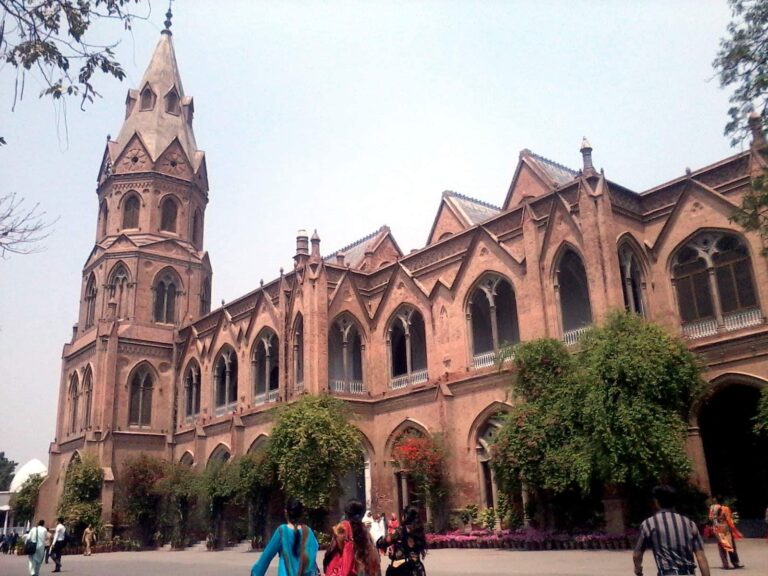
    LAHORE: Government College University (GCU) Lahore has officially moved its administrative operations to a fully paperless digital system, marking a major step towards modernising governance and reducing reliance on traditional office files. The transformation has been achieved through the implementation of the e-Filing and Office Automation System, a cloud-based digital platform developed by the Punjab Information Technology Board (PITB). The system has been provided to the university free of cost under special directions from the Punjab government, according to university officials. Under the new framework, administrative processes across GCU’s departments will now be handled online through a single digital platform. Routine matters such as leave applications, travel permissions, annual performance reports, official orders and departmental correspondence can now be processed electronically. The university said the system would also cover digital note sheets for proposals between departments, approval of payments for visiting faculty, purchase requests and agendas for departmental meetings. No more files moving from desk to desk One of the most significant changes will be the elimination of the traditional practice of physically moving files from one office to another. Instead, officials will be able to create, review, approve and track documents digitally through the cloud-based platform. This is expected to improve administrative efficiency while making it easier to monitor the progress of official matters. GCU Vice Chancellor Professor Muhammad Umar Chaudhry described the transition as more than an environmental initiative, saying digital governance was essential for a modern educational institution. He said moving administrative affairs away from paper would strengthen transparency, speed and accountability, while reducing delays associated with manual file tracking. According to the vice chancellor, removing routine administrative delays would allow faculty members and heads of departments to devote more time to teaching and research. Part of wider digital transformation The university said the paperless initiative is part of a broader digitalisation drive launched during the previous academic year under the vice chancellor’s leadership. Before implementing the complete e-office system, GCU had introduced online approval mechanisms for student society events and digital billing for payments to visiting faculty members. The administration is now preparing to take the process further with the planned launch of a comprehensive e-Services Portal. The upcoming platform is expected to streamline requests related to campus maintenance and other facilities. Officials hope the system will allow infrastructure-related problems to be reported and addressed more quickly without disrupting academic activities. Alumni records also going digital GCU’s digital reforms are not limited to current campus operations. The university is also working on a major project to digitise the records of its alumni, expanding technology-based management beyond day-to-day administration. The move towards a paperless campus could ultimately reduce paperwork, improve record management and provide university officials with faster access to important information. With administrative processes increasingly moving online, GCU Lahore is positioning itself as an example of how Pakistan’s public-sector universities can use digital technology to make governance faster, more transparent and more efficient.

  • | |

    PM Shehbaz hails efforts to unite muslim countries

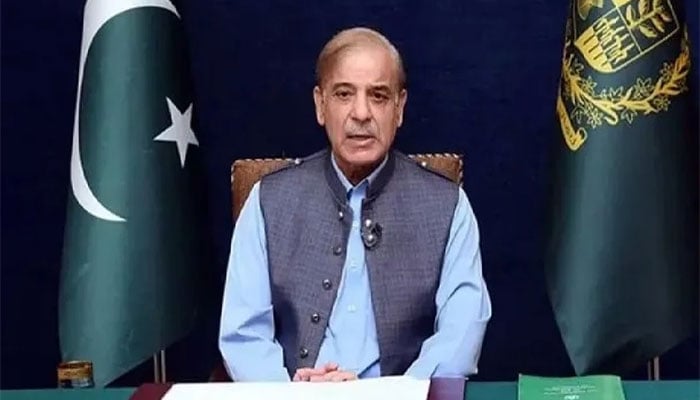
    Prime Minister Shehbaz Sharif has said hostile forces made every possible effort to create divisions among Muslim countries in the region but failed to achieve their objective. Addressing the National Seerat-un-Nabi ﷺ Conference, the prime minister credited Field Marshal Syed Asim Munir with helping thwart attempts to create discord among Muslim nations. He said peace and stability remained essential for the Muslim world and praised efforts aimed at countering elements seeking to spread hatred and division. Shehbaz Sharif also highlighted Pakistan’s close and historic ties with Saudi Arabia and Türkiye. He said the three countries had strengthened their cooperation through the historic Makkah Defence Agreement, describing the development as an important step toward closer strategic coordination. The prime minister praised Saudi Arabia and Türkiye for standing by Pakistan during difficult times as well as periods of prosperity. He particularly appreciated Saudi Crown Prince Mohammed bin Salman’s support for Pakistan, saying the Saudi leadership had stood with the country like an “iron wall.” Recalling Pakistan’s recent conflict with India, Shehbaz Sharif said the entire nation had remained united in the face of the challenge. He stressed that national unity and solidarity played a crucial role in safeguarding the country’s interests. The prime minister also called for greater efforts to eliminate sectarianism and promote harmony among Muslims. He urged religious scholars and clerics to spread the teachings of Prophet Muhammad ﷺ, particularly his messages of love, tolerance, compassion and brotherhood. Shehbaz Sharif said mosques, pulpits and religious gatherings should become platforms for promoting peace and mutual respect rather than division. He emphasized that following the Prophet’s ﷺ teachings could help strengthen unity within the Muslim community and counter attempts to create hatred and discord among Muslims.

Leave a Reply

Your email address will not be published. Required fields are marked *