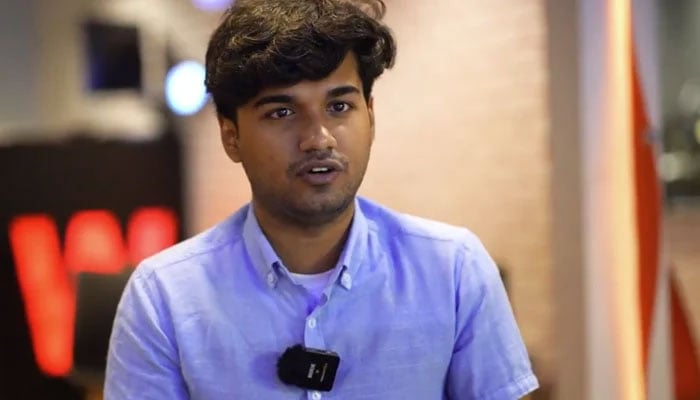
gcu lahore goes
| |

GCU Lahore goes fully paperless in major digital s…

LAHORE: Government College University (GCU) Lahore has officially moved its administrative operations to a fully paperless digital system, marking a major step towards modernising governance and reducing reliance on traditional office files.

The transformation has been achieved through the implementation of the e-Filing and Office Automation System, a cloud-based digital platform developed by the Punjab Information Technology Board (PITB).

The system has been provided to the university free of cost under special directions from the Punjab government, according to university officials.

Under the new framework, administrative processes across GCU’s departments will now be handled online through a single digital platform. Routine matters such as leave applications, travel permissions, annual performance reports, official orders and departmental correspondence can now be processed electronically.

The university said the system would also cover digital note sheets for proposals between departments, approval of payments for visiting faculty, purchase requests and agendas for departmental meetings.

No more files moving from desk to desk

One of the most significant changes will be the elimination of the traditional practice of physically moving files from one office to another.

Instead, officials will be able to create, review, approve and track documents digitally through the cloud-based platform. This is expected to improve administrative efficiency while making it easier to monitor the progress of official matters.

GCU Vice Chancellor Professor Muhammad Umar Chaudhry described the transition as more than an environmental initiative, saying digital governance was essential for a modern educational institution.

He said moving administrative affairs away from paper would strengthen transparency, speed and accountability, while reducing delays associated with manual file tracking.

According to the vice chancellor, removing routine administrative delays would allow faculty members and heads of departments to devote more time to teaching and research.

Part of wider digital transformation

The university said the paperless initiative is part of a broader digitalisation drive launched during the previous academic year under the vice chancellor’s leadership.

Before implementing the complete e-office system, GCU had introduced online approval mechanisms for student society events and digital billing for payments to visiting faculty members.

The administration is now preparing to take the process further with the planned launch of a comprehensive e-Services Portal.

The upcoming platform is expected to streamline requests related to campus maintenance and other facilities. Officials hope the system will allow infrastructure-related problems to be reported and addressed more quickly without disrupting academic activities.

Alumni records also going digital

GCU’s digital reforms are not limited to current campus operations. The university is also working on a major project to digitise the records of its alumni, expanding technology-based management beyond day-to-day administration.

The move towards a paperless campus could ultimately reduce paperwork, improve record management and provide university officials with faster access to important information.

With administrative processes increasingly moving online, GCU Lahore is positioning itself as an example of how Pakistan’s public-sector universities can use digital technology to make governance faster, more transparent and more efficient.

Similar Posts

  • | |

    IHC seeks answers over delay in judicial appointme…

    ISLAMABAD: The Islamabad High Court (IHC) has asked the federal government to explain the constitutional implications of keeping Prime Minister Shehbaz Sharif’s advice on judicial appointments pending with President Asif Ali Zardari. Justice Arbab Muhammad Tahir issued notices to the president, the federal government and the attorney general on Monday while hearing a petition challenging the delay in approving appointments to the superior courts. The court also directed the respondents to submit separate concise reports detailing when the prime minister’s advice was sent to the president and what action had been taken on it. The case has been fixed for hearing on August 11. The petition was filed by lawyer Luqman Zafar through his counsel Zahid Asif Chaudhry, who questioned the prolonged delay in completing the constitutional process for judicial appointments. The Judicial Commission of Pakistan, headed by Chief Justice Yahya Afridi, had recommended 19 additional judges and the confirmation of five judges for the high courts during meetings held on July 20 and 21. The recommendations were subsequently forwarded by the prime minister to President Zardari for approval under Article 48 of the Constitution. During Monday’s proceedings, the petitioner’s lawyer argued that the use of the word “shall” in Article 48(1) placed a constitutional duty on the president to act on the prime minister’s advice. He maintained that although the president could return the advice for reconsideration within the prescribed period, the Constitution did not permit an indefinite delay. The counsel further argued that the delay was affecting the administration of justice at a time when the superior courts were already struggling with a growing backlog of cases. According to the petitioner, prolonged vacancies could also undermine the public’s constitutional right to timely access to justice. Justice Tahir directed that notices be served through all available modes. Additional Attorney General Rashid Hafeez was also asked to ensure that the respondents provide the court with clear timelines regarding the submission and handling of the judicial appointments summary. The presidential delay has already had consequences for the high courts. Four additional judges of the Peshawar High Court whose confirmation had been recommended by the Judicial Commission ceased to hold office on August 4 after their terms expired without formal notifications. A similar situation arose in the Sindh High Court, where an additional judge left office after his extended tenure ended on July 29. The oath-taking ceremony for the newly recommended judges had originally been scheduled for July 27 but was postponed indefinitely after the president neither approved the summary nor returned it for reconsideration. With the matter now coming under judicial scrutiny, the Islamabad High Court is set to examine whether the continued delay in acting on the prime minister’s advice is constitutionally permissible.

  • | |

    Police Commission Unanimously Endorses Pol Gen Samran Nualma as Next Royal Thai Police Chief

    Bangkok – Prime Minister Anutin Charnvirakul’s nomination of Pol Gen Samran Nualma as the 16th Commissioner-General of the Royal Thai Police (RTP) received unanimous backing from the National Police Commission on Wednesday. The 12-0 vote came after more than 90 minutes of deliberation, clearing the way for the veteran officer to assume the top police […]

  • |

    PSX extends rally as KSE-100 jumps nearly 1,500 points

    The Pakistan Stock Exchange (PSX) maintained its strong upward momentum on Thursday, with investors continuing aggressive buying across major sectors, pushing the benchmark KSE-100 Index higher by nearly 1,500 points during intraday trading. By 2:40pm, the KSE-100 Index was trading at 181,488.61 points, reflecting an increase of 1,473.68 points, or 0.82%, compared with the previous session’s close. The latest gain extended the market’s recovery after Wednesday’s sharp rally, indicating renewed investor confidence amid improving domestic and international market conditions. Market participants said buying activity remained broad-based, with investors accumulating shares in several heavyweight sectors. Strong demand was witnessed in automobile assemblers, cement manufacturers, chemical companies, commercial banks, fertiliser producers, oil and gas exploration firms, oil marketing companies (OMCs), and power generation stocks. Among the index-heavy companies contributing to the rally were Attock Refinery Limited (ARL), Hub Power Company (HUBCO), Mari Energies (MARI), Oil and Gas Development Company (OGDC), Pakistan Petroleum Limited (PPL), Pakistan Oilfields Limited (POL), MCB Bank, Meezan Bank (MEBL), and National Bank of Pakistan (NBP), all of which traded in positive territory during the session. The bullish sentiment follows Wednesday’s impressive recovery, when the benchmark KSE-100 Index climbed 2,931.71 points, or 1.66%, to settle at 180,014.93 points. The surge enabled the index to reclaim the important 180,000-point milestone for the first time in 16 trading sessions, signaling renewed optimism among investors. Analysts attributed the recent gains to easing geopolitical concerns in the Middle East, which have reduced fears of supply disruptions in global energy markets. The decline in international crude oil prices has also helped improve investor sentiment by easing inflationary concerns and strengthening expectations for economic stability. The recovery has encouraged investors to return to the equity market, particularly in sectors expected to benefit from lower energy costs and improving macroeconomic indicators. Banking and energy stocks remained among the biggest contributors to the benchmark index’s advance. Meanwhile, global financial markets presented a mixed picture on Thursday. Asian stock markets paused after a technology-led rally in the previous session, while crude oil prices traded within a narrow range as investors monitored developments surrounding potential diplomatic progress between Iran and the United States. MSCI’s broad index of Asia-Pacific shares excluding Japan declined by 0.69%, weighed down primarily by losses in technology stocks. South Korea’s benchmark index fell 3.64%, while Japan’s Nikkei 225 dropped 1.57%. Major technology companies also came under pressure. In South Korea, Samsung Electronics slipped 2.44%, while semiconductor manufacturer SK Hynix fell 6.95%. In Japan, memory chip producer Kioxia plunged 9.61%, and Tokyo Electron declined 4.61%. The cautious mood in Asia followed a weaker overnight performance on Wall Street, where the Nasdaq Composite ended its recent winning streak. Investors reacted to quarterly earnings from major technology companies, including SpaceX and Advanced Micro Devices (AMD). Although companies continued to highlight strong demand for artificial intelligence-related investments, market participants remained cautious about the sustainability of heavy spending on AI infrastructure. Investors also questioned whether profitable businesses such as satellite internet services could continue financing expensive data centre expansion over the long term.

  • | |

    Police record fiancée’s statement in Mir Ra…

    Police have made fresh progress in the investigation into the murder of 25-year-old Mir Raza, whose body was found in Karachi’s Gulistan-e-Jauhar area. Investigators have recorded the statement of his fiancée and uncovered new details about his movements before his death. According to the investigation, Mir Raza left his home at approximately 4:02am on July 28. Before leaving, he reportedly left behind several personal belongings, including his wallet, house keys, and smartwatch. Police said he also transferred some money to his parents’ bank account before departing. Investigators have obtained more than 100 CCTV recordings from different locations and are reviewing the footage to trace Mir Raza’s final movements and identify any suspects or suspicious activity. Police also recorded the statement of Mir Raza’s fiancée as part of the investigation. She told investigators that he had not shared any concerns, fears, or personal problems with her before leaving home. She added that she repeatedly tried to contact him by phone on the morning of July 28 but received no response. According to the post-mortem report, Mir Raza died after suffering a gunshot wound to the chest, with excessive blood loss identified as the cause of death. Police recently recovered Mir Raza’s mobile phone from a location near the crime scene. The device has been sent for forensic examination to help investigators retrieve digital evidence and establish the circumstances leading to the killing. The investigation remains underway, with police examining CCTV footage, forensic evidence, and witness statements as they continue efforts to determine the motive behind the murder and identify those responsible.

  • |

    Lahore crime rate declines, DIG Faisal Kamran says

    LAHORE: DIG Operations Lahore Faisal Kamran visited the Lahore Press Club and attended the “Meet the Press” programme as the chief guest. President Lahore Press Club Arshad Ansari, Senior Vice President Salman Qureshi, General Secretary Afzal Talib, Joint Secretary Imran Sheikh, Finance Secretary Salik Nawaz, Governing Body members Syed Sajjad Kazmi, Sarmad Farrukh Khawaja, Asad Mahmood, Syed Badr Saeed and Kamran Khan, along with office-bearers of the Crime Reporters Association and senior journalists, attended the event. Welcoming the distinguished guest, Lahore Press Club President Arshad Ansari said that the police and journalists had a close working relationship and both professions were jointly striving to eliminate crime from society. He appreciated the tireless efforts and policies of DIG Operations Faisal Kamran, saying that they had contributed to a decline in the crime rate in Lahore. Speaking to the media, DIG Operations Faisal Kamran said that in June 2023, as many as 9,149 incidents used to be reported in a single month, whereas the number had now come down to around 900 calls. He said tackling crime in any major city was a major challenge, adding that metropolitan cities such as New York also faced numerous challenges in this regard. He said that the Safe City, CCD and Lahore Police had worked jointly to control crime. Safe City’s assistance was sought in tracing reported incidents, he added. He said that Lahore had witnessed a decline in its crime index compared with 380 cities around the world. Faisal Kamran said that in 2026, major events including Basant, Ramazan, Sehri, Eid shopping and other public events, as well as Eid-ul-Azha and Muharram-ul-Haram, were held peacefully. Lahore Police continued to perform its duties during all these events, he added. The DIG Operations said that, besides these measures, the accountability system within the police had also been strengthened. “Wherever there is corruption, I will take strict action,” he said. He said that in 2023, Rs3.6 million had been provided for the welfare of police personnel, whereas Rs60 million had so far been provided for their welfare. He further stated that during the past two and a half years, he had personally heard the grievances of 55,050 people at open courts, adding that 70 to 80 per cent of the complainants had expressed satisfaction with the resolution of their complaints. The DIG Operations said that an MoU had also been signed between Lahore Police and the legal fraternity under which free legal assistance was being provided to deserving and underprivileged people. He added that Lahore Police was also taking strict action against usury and illegal money-lending. At the conclusion of the programme, Lahore Press Club President Arshad Ansari and representatives of the Crime Reporters Association presented commemorative shields and bouquets to DIG Operations Lahore Faisal Kamran.  

  • |

    Indian activists challenge AI-powered police surveillance following student demonstrations

    Indian digital rights activists and student leaders are challenging Prime Minister Narendra Modi’s government in the Delhi High Court over the deployment of artificial intelligence-powered mass surveillance during recent youth protests in New Delhi. Student activist Aishe Ghosh filed a petition with the Delhi High Court seeking to declare the police’s mass surveillance of demonstrators unconstitutional. The lawsuit requests the immediate destruction of all personal and biometric data collected during the demonstrations and asks the court to establish clear binding guidelines governing the use of surveillance technologies at public gatherings. The controversy intensified after photographs circulated showing a mobile police surveillance unit, branded “Ikshana” and developed alongside security firm CP Plus, deployed at the main protest site. The vehicle featured telescopic masts providing 360-degree coverage, AI-powered cameras, and real-time facial recognition capabilities that displayed face accuracy metrics to match attendees against law enforcement databases. Furthermore, police officers were documented recording the social media handles of arriving participants. Digital rights organisations, including the Internet Freedom Foundation, have formally requested the Delhi Police Commissioner to delete all biometric data gathered during the events. Advocates emphasise that India currently lacks a dedicated legal framework governing police deployment of facial recognition systems, making such intrusive measures disproportionate and illegal. During court proceedings, Solicitor General Tushar Mehta defended law enforcement actions, arguing that expectations of privacy at a public gathering were misplaced and asserting that the security measures were absolutely necessary in the interest of public order. Delhi Police maintained that the technology was used solely to identify individuals with criminal histories and count crowd size without restricting freedoms. The court challenge continues despite the end of the student demonstrations, which were triggered by widespread examination paper leaks in national competitive tests. The protests culminated in the resignation of Union Education Minister Dharmendra Pradhan and the announcement of a government panel tasked with overhauling the national examination system.

Leave a Reply

Your email address will not be published. Required fields are marked *