royal thai air

Royal Thai Air Force Clarifies Nighttime F-16 Flights Along Border

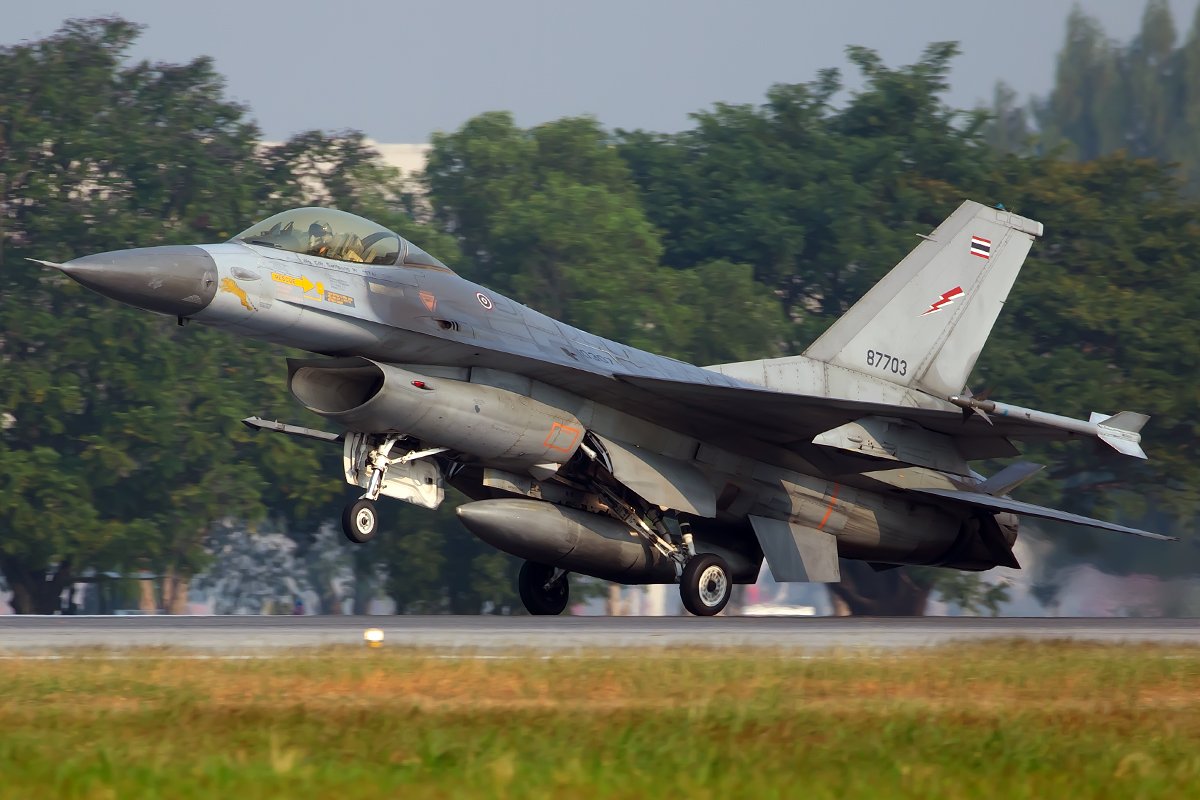
BANGKOK, Thailand — The Royal Thai Air Force has issued a formal clarification regarding nighttime F-16 fighter jet operations observed along the Thai-Cambodian border, confirming that the flights were part of standard monthly training exercises designed to maintain continuous operational readiness.

Thai Gripen and F-16 Jets Strike Cambodian Military Targets Ahead of Ceasefire

The official statement was released following widespread reports and social media speculation after residents in border provinces noticed significant aircraft activity during the late hours of June 22, 2026. The unusual nighttime flights and the resulting noise prompted public concern and rumors that the military might be preparing for a potential security development or escalating border tensions.

Addressing these concerns, the Air Force emphasized that the flights were strictly part of its regular training cycle, which necessitates night operations to ensure that both personnel and equipment remain fully capable of executing missions around the clock. Officials stressed that all aircraft adhered to designated training routes and remained entirely within sovereign Thai airspace, categorically denying any entry or violation of neighboring countries’ airspace.

Rather than viewing the public awareness of these activities as a source of alarm, the Air Force framed it as a positive demonstration of national defense capabilities. In its official statement, the RTAF sought to reassure communities living along the border, asserting that the sound of F-16s is the sound of Thailand’s independence and sovereignty, as it proves the nation’s enduring ability to conduct vital flight operations and defend its territory.

This clarification follows a similar precedent set earlier in the month. On June 5, 2026, the RTAF deployed F-16 MLU fighter aircraft on a nighttime mission to maintain combat readiness and closely monitor the border situation. That operation was similarly presented as a demonstration of the Air Force’s capabilities and its commitment to reassuring border communities. Additionally, in February of this year, the Royal Thai Air Force highlighted its nighttime target attack training exercises on its official platforms, noting that conducting operations after dark significantly improves operational effectiveness and strengthens overall combat capabilities.

Thai F-16 Bombs Key Cambodian Bridge in Strategic Escalation

According to reports from Khaosod, the latest public statement is intended to definitively address public inquiries regarding the recent flights and to reaffirm that these exercises are a standard component of established military training procedures. The Air Force has indicated that such readiness activities will continue uninterrupted as part of its ongoing mandate to maintain peak operational capability and conduct vigilant border surveillance.

-Thailand News (TN)

Similar Posts

  • |

    Anthropic releases Claude Opus 5, offering high pe…

    Anthropic on Friday released Claude Opus 5, a new artificial intelligence model that the company says approaches the performance of its most powerful system at half the price. The San Francisco-based startup, a chief rival to OpenAI, said the model tops industry benchmarks for coding and knowledge work while consuming fewer computing resources than earlier versions. The claim addressed rising concerns among business customers who have balked at the expense of running advanced AI systems. Claude competes with OpenAI’s ChatGPT and Google’s Gemini, with customers paying based on the amount of work performed, measured in units called tokens. Opus 5 costs $5 per million input tokens and $25 per million output tokens, half the price of Fable 5, Anthropic’s most expensive publicly available offering. The company said the new model performs close to Fable 5 across many tasks despite the lower cost. Cost has become a major issue after Anthropic and its rival OpenAI both filed for stock market listings in June. Wall Street is scrutinising their business performance more closely than ever ahead of their market debuts. The release of Opus 5 is a strategic move by Anthropic to address the growing demand for affordable AI solutions while maintaining high performance. On cybersecurity, Anthropic said it deliberately avoided training Opus 5 on cyber tasks, and that the model remains behind Mythos 5  its most capable and most tightly restricted system, available only to select partners  on both offensive cyber work and biological research capabilities that could be misused. Mythos is Anthropic’s most advanced series of AI models, and its strength at finding weaknesses in computer systems has caused controversy, pushing the company to build tight guardrails around them. The company said Opus 5 finds software flaws about as well as Mythos 5 but lags far behind in turning those flaws into something that could be weaponised into an attack. Citing the reduced risk, Anthropic said its automated safety filters will intervene roughly 85% less often on Opus 5 than on Fable 5, the Mythos-class model it released last month. Fable 5 and Mythos 5 were briefly pulled from public access in June after the US Commerce Department imposed export controls, which were lifted at the end of that month. The release of Claude Opus 5 marks a significant milestone for Anthropic as it seeks to compete in the rapidly evolving AI market. By offering a high-performance model at a lower cost, the company aims to attract a broader range of customers, including businesses and developers who may have been priced out of the market. The focus on affordability and performance reflects the growing demand for AI solutions that can deliver results without breaking the bank. As the AI industry continues to evolve, the competition between Anthropic, OpenAI, and other players is expected to intensify, with companies racing to develop models that are both powerful and cost-effective. Anthropic’s strategic approach to balancing performance, cost, and safety positions it well in the competitive landscape, and the company is likely to continue innovating to meet the needs of its customers. The launch of Opus 5 is a testament to Anthropic’s commitment to advancing AI technology while addressing the practical concerns of businesses and developers. The AI industry will be watching closely to see how the market responds to this new offering and how it shapes the future of AI development and deployment.

  • Thai Army Advances Border Fence Construction In Chanthaburi Amid Regional Scrutiny

    CHANTHABURI, Thailand — Thailand’s military is proceeding with the construction of a new border fence along the Thai-Cambodian frontier in Chanthaburi province, a project spanning approximately 1,310 meters between boundary markers 52 and 54 in Pong Nam Ron district, aimed at strengthening border security and enhancing safety for communities living near the international boundary. Thailand […]

  • | | | |

    Petrol pump owners announce nationwide strike over…

    The All Pakistan Petrol Pumps Owners Association (APPPOA) has announced a nationwide strike beginning Wednesday night after negotiations with the government over the proposed daily petroleum pricing mechanism ended without an agreement. The decision was announced following talks between representatives of the association and a government delegation led by Petroleum Minister Ali Pervaiz Malik. The discussions focused on the government’s plan to introduce daily fuel price adjustments, but both sides failed to reach a consensus. Speaking after the meeting, APPPOA leaders said the proposed pricing system was unacceptable and would seriously affect the financial stability of petrol pump owners across the country. They argued that the new mechanism would create uncertainty for businesses already operating on narrow profit margins. Association officials said nearly 15,000 petrol pumps across Pakistan are expected to remain closed if the strike goes ahead, warning that the shutdown could disrupt fuel supplies nationwide. Vice Chairman Nauman Ali Butt said petrol dealers wanted petroleum prices to continue being revised on a monthly basis rather than daily. He also pointed out that dealers’ commissions had not been increased for the past three years despite rising operating costs. APPPOA Chairman Humayun Khan said petrol pump owners were already facing financial pressure due to regulatory requirements, policies of oil marketing companies and increasing business expenses. He argued that daily price revisions would benefit oil marketing companies while placing additional risks on retail dealers. According to the association, frequent price changes could create confusion in the market and make inventory management more difficult for petrol pump operators. The association also criticised the government for introducing the policy without consulting key stakeholders. It urged authorities to suspend the daily pricing mechanism, increase dealers’ commissions and involve petrol pump owners in future policy decisions. Meanwhile, the Pakistan Petroleum Dealers Association (PPDA) said it would hold a meeting of its executive committee on Wednesday to decide whether it would also join the nationwide strike. PPDA representatives acknowledged that discussions with government officials and the Oil and Gas Regulatory Authority (OGRA) had taken place. They said OGRA officials sought additional time to review the concerns raised by dealers before making further recommendations to the government. The government maintains that the new pricing mechanism is intended to improve transparency and ensure domestic fuel prices reflect changes in international oil markets more quickly. Under the proposed system, petroleum prices would be updated daily using a rolling average of global market prices.

  • | |

    Sindh police finally question doctor over Mir Raza…

    Sindh police have finally questioned Dr Usama, the medico-legal officer who conducted the first post-mortem examination of Karachi businessman Mir Raza, nearly 25 days after the initial report was prepared. Dr Usama had classified Mir Raza’s death as suicide in his original post-mortem report. The report later came under serious scrutiny after several alleged discrepancies were highlighted by Police Surgeon Dr Samia Syed. Police initially defended the medico-legal officer’s findings. However, Dr Usama was later removed from his position following concerns over major errors in the post-mortem examination. Police have now formally included him in the investigation and questioned him for around five hours. The case concerns the death of young Karachi businessman Mir Raza Ali Khan, who went missing from the PECHS area on July 28. He reportedly left his home at around 4:09am in an online taxi. His body was recovered from Gulistan-e-Johar two days later. According to police officials, the body was found in a severely damaged condition. Mir Raza had suffered a gunshot wound to the chest. His social media accounts were also reportedly deactivated one day before his body was found. Mir Raza’s father had said that his son was scheduled to get married on August 30 at Bait-ul-Mukarram Mosque in Gulshan-e-Iqbal. He said Mir Raza had been excited about beginning a new chapter in his life. Questions were raised over the initial post-mortem report after several discrepancies were highlighted during a television programme on August 4. Police Surgeon Dr Samia Syed and Mir Raza’s father both expressed dissatisfaction with the initial findings and called attention to issues surrounding the examination. Following a court order, Mir Raza’s grave was exhumed on August 8 for a second post-mortem examination. His body was reburied later the same day. The initial post-mortem findings reportedly stated that the bullet had entered from the back. The examination also documented signs of physical injuries and trauma. According to the report, Mir Raza had fractured ribs and multiple injuries to his head and face. Dark marks were also reportedly found on different parts of his body. The report further mentioned injuries to his feet and blood staining in tissues in the lower part of the body. A fracture and injury measuring around 12 centimetres were reportedly found on his right thigh. The initial examination also identified a deep injury and fracture around the jaw, along with injuries to the nasal bone and several areas of the face. The developments have intensified questions surrounding the circumstances of Mir Raza’s death and the accuracy of the first post-mortem report.

  • Thai Army Reports Gunfire On Surin Border

    BANGKOK, Thailand — The Royal Thai Army has confirmed that sounds of gunfire were heard during a patrol along the Thai-Cambodian border in Surin province, though no unusual activity was detected and no retaliatory action was taken, according to an official statement released on Friday. Cambodia Releases Elderly Thai Man Detained For Accidental Border Crossing […]

  • | |

    NCCIA crack down on OTP fraud Gang, arrests 27 acr…

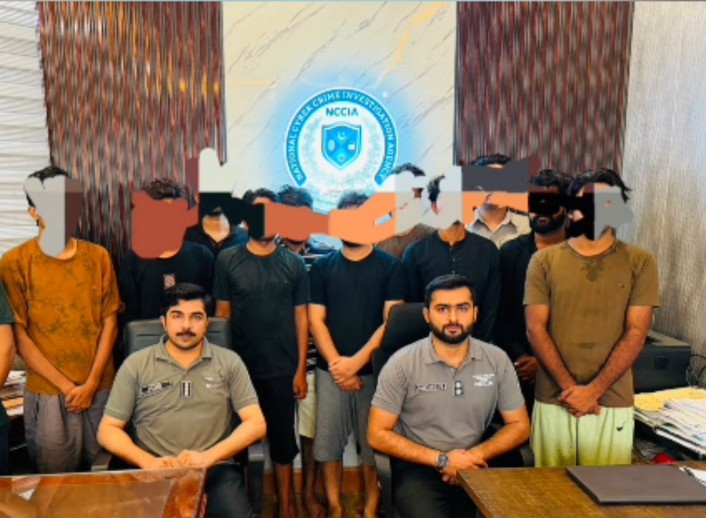
    LAHORE: In one of the largest cybercrime crackdowns in recent months, Pakistan’s National Cyber Crime Investigation Agency (NCCIA) has dismantled an organised online fraud network, arresting 27 suspects during coordinated operations in Lahore, Multan and Faisalabad. According to officials, the suspects were part of an organised “OTP Gang” accused of targeting bank customers through sophisticated phone scams. Investigators said the group impersonated bank officials, customs officers and police personnel to deceive citizens into revealing sensitive financial information before stealing money from their accounts. The largest operation was carried out in Lahore, where NCCIA teams conducted raids at multiple locations and arrested 13 suspects in two separate operations. Authorities also recovered mobile phones, computers and other digital evidence believed to have been used in cyber fraud activities. In Multan, four intelligence-based operations resulted in the arrest of 13 key members of the network. Officials believe the suspects played central roles in planning and executing online scams that affected victims in different parts of the country. Meanwhile, in Faisalabad, investigators arrested another suspect allegedly involved in hacking bank and social media accounts. During the raid, officials recovered several fake SIM cards and digital devices that are being examined as part of the investigation. Preliminary findings suggest the network relied on social engineering techniques, convincing victims that their bank accounts or identity documents required urgent verification. Once victims shared one-time passwords (OTPs), banking details or verification codes, the suspects allegedly gained access to their accounts and carried out unauthorised financial transactions. Cybercrime investigators are analysing the seized electronic devices to identify additional members of the network, trace stolen funds and determine whether the group has links to other organised fraud rings operating across Pakistan. Following the successful operation, the NCCIA urged citizens to remain vigilant against phone and online scams. The agency warned people never to share their OTPs, ATM PINs, passwords or banking information with anyone claiming to represent a bank, government department or law enforcement agency. Officials also advised the public to verify suspicious calls through official customer service numbers and immediately report suspected cyber fraud to the relevant authorities. The latest crackdown highlights the growing threat of cyber-enabled financial crime in Pakistan and underscores the government’s increasing efforts to dismantle organised digital fraud networks while encouraging stronger public awareness of online security.

Leave a Reply

Your email address will not be published. Required fields are marked *