rescued thai scam

Rescued Thai Scam Victim in Cambodia Warns of Beatings, Organ Sales

TRAT – Thai authorities have repatriated 32 nationals who escaped from scam centers in Cambodia, with one survivor describing brutal conditions including beatings, fatalities, and the alleged sale of organs. The group crossed back into Thailand on January 31, 2026, following coordination between Thai officials and the embassy in Phnom Penh.

Chinese Social Media Influencer Rescued from Cambodian Streets Following Job Scam

The returnees were received at the Ban Cham Yeam border checkpoint in Trat province, led by district chief Ms. Kalaya Prasitphak alongside marine and immigration personnel. Initial health checks found all in stable condition, though six individuals were detained due to existing arrest warrants and face separate legal proceedings.

One victim, identified as Mr. Riew from Surat Thani, said he was lured with an administrative job in Sa Kaeo before being trafficked to Cambodian scam compounds in Bavet and Poipet. He described being forced to scam other Thais under threat of violence.

“Those who couldn’t meet targets were beaten,” he stated. “Some were beaten to death.” He also alleged that some detainees were coerced into organ sales to third countries. Medical care was unavailable unless paid for by victims, at costs ranging from $100 to $300.

New Scam Center Discovered in Cambodia Following Thai Border Crackdown

Mr. Riew escaped during a police raid on January 17, hiding in a forest before reaching Phnom Penh with help from the Thai embassy. Thai authorities warned the public against fraudulent overseas job ads and pledged continued cooperation with neighboring countries to combat human trafficking and scam networks.

-Thailand News (TN)

Similar Posts

  • | |

    Norwegian foreign minister to visit Pakistan after…

    Norwegian Foreign Minister Espen Barth Eide will arrive in Pakistan on August 13 for a two-day official visit aimed at strengthening bilateral relations and expanding cooperation between Islamabad and Oslo. The visit will continue through August 14 and will be Eide’s first trip to Pakistan by a Norwegian foreign minister in a decade. Eide is visiting Pakistan at the invitation of Deputy Prime Minister and Foreign Minister Ishaq Dar. During his stay, the Norwegian minister will hold delegation-level talks with Dar. The discussions are expected to cover a wide range of bilateral and international issues. According to Pakistan’s Foreign Office, the two sides will examine opportunities to increase cooperation in trade and investment, climate change, renewable energy, education and people-to-people contacts. Regional and global developments are also expected to feature prominently in the talks. The visit comes as Pakistan and Norway have maintained diplomatic engagement through senior-level contacts in recent months. Dar and Eide held telephone discussions in March and April, while Norwegian State Secretary Andreas Motzfeldt Kravik visited Islamabad in May. Officials expect the latest visit to provide an opportunity to build on these contacts and identify new areas of cooperation that could benefit both countries. Pakistan and Norway have maintained cordial relations for decades, with cooperation extending across economic, development and diplomatic fields.

  • Thailand to Initiate Process to Cancel Maritime MoU with Cambodia, PM Announces

    BANGKOK – Prime Minister Anutin Charnvirakul announced today that his government has instructed relevant agencies to begin the process of canceling a long-standing maritime memorandum of understanding (MoU 44) with Cambodia, citing a lack of progress and diminished utility. Rescued Thai Scam Victim in Cambodia Warns of Beatings, Organ Sales During a Cabinet meeting on […]

  • | |

    Current system has lost public trust, reset is ine…

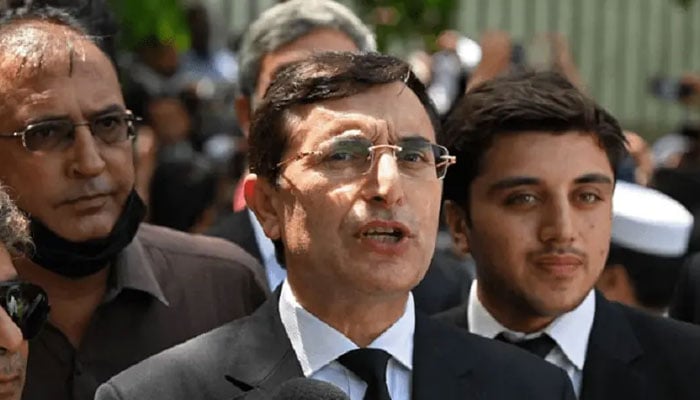
    Barrister Gohar Ali Khan, Chairman of the Pakistan Tehreek-e-Insaf (PTI), said the country’s current political system has lost the confidence of the public and requires a complete reset to restore democratic credibility. Speaking to the media outside Adiala Jail in Rawalpindi, Barrister Gohar said that instead of forming more governments under the existing circumstances, the leadership should return to the people and seek a fresh public mandate. He claimed that a key coalition partner had publicly described the prime minister as the beneficiary of a rigged election. According to Gohar, such a statement should have prompted the prime minister to immediately seek a vote of confidence in the National Assembly. The PTI chairman argued that the prime minister failed to obtain a vote of confidence and had therefore lost the moral legitimacy to continue in office. He added that the prime minister’s silence on the issue reflected a loss of political support and public confidence. Barrister Gohar further alleged that the government’s administrative structure had effectively collapsed. He claimed the government had lost its constitutional, legal and democratic standing, making the continuation of the current system increasingly difficult. He said the time had come for the existing political system to come to an end, adding that the Constitution provides a legal mechanism for moving a vote of no confidence. He said PTI would consult its allies before deciding its future course of action. The PTI chairman also said he believed the Pakistan Peoples Party (PPP) had emerged from a disputed electoral process. Calling for a political solution, Barrister Gohar urged all stakeholders to develop a national consensus to resolve the country’s ongoing political crisis. He stressed that Parliament should seriously address the public demands coming from all provinces.

  • | |

    Iran says Oman deal nears completion but insists U…

    Iran said on Sunday that a deal with Oman establishing new shipping lanes through the Strait of Hormuz has entered its final stages, though Tehran maintained the critical waterway will remain closed until Washington satisfies a broader set of conditions tied to the ongoing standoff between the two countries. A US official told Reuters on Friday that an agreement between Iran and Oman appeared close and could soon lead to the reopening of the strait, a passage that carried roughly a fifth of global oil and liquefied natural gas shipments before Iran shut it down in response to American and Israeli military strikes earlier this year. Iranian Foreign Minister Abbas Araqchi confirmed on Sunday that negotiations over the strait, which sits between Iran and Oman, had reached their final stages. However, he repeated comments made a day earlier stressing that the waterway would not reopen unless additional conditions set by Tehran were met first. Iran’s Mehr news agency quoted Araqchi as saying the emerging agreement would establish the new shipping lanes to be used once the United States fulfils those conditions and the strait formally reopens. Araqchi said Iran and the United States are not currently engaged in direct talks and that Tehran has no plans to begin them as long as Washington continues to breach an interim agreement the two countries signed in June. He added that messages between the two sides are being exchanged through intermediaries rather than direct contact. Iran demands compensation and sanctions relief The United States launched air strikes against Iran in late February, saying the campaign aimed to prevent the Islamic Republic from acquiring nuclear weapons or using missiles and regional proxy forces to threaten the wider Middle East. Washington and Tehran agreed to a ceasefire in June, but the United States reimposed a blockade on Iranian shipping in the Gulf in July, a move Iran characterised as a violation of a truce that had already shown signs of collapse. A US official, speaking to Reuters on condition of anonymity, said the blockade on Iranian ports would lift once a deal restoring unimpeded commercial shipping is formally announced. The official added that any American actions would remain directly tied to Iran fulfilling its own commitments under the emerging agreement, pointing to a carefully sequenced approach that both sides appear to be navigating cautiously. The arrangement under discussion appeared, according to sources who previously spoke to Reuters, to grant Tehran a degree of control over vessels entering the Gulf through the strait, an arrangement that shipping industry sources have said would be difficult to implement in practice. The precise current status of the agreement remained unclear on Sunday, and Iran’s latest statements suggested several additional factors could still complicate its finalisation. Araqchi said the strait’s reopening would depend in part on the United States providing compensation to Iran for what Tehran describes as widespread attacks on its territory and interests. Mohammad Baqer Zolqadr, secretary of Iran’s top national security body, outlined a broader list of demands, including an end to US threats against Iran, a halt to what Tehran calls aggression against its allies in Lebanon, the Palestinian territories, Yemen and Iraq, the lifting of the shipping blockade and broader sanctions, and the release of frozen Iranian financial assets. Supreme Leader’s condition remains unclear Ultimate decision making authority in Iran rests with Supreme Leader Mojtaba Khamenei, who has not appeared in public since an air strike killed his father and predecessor on February 28, the first day of the joint US and Israeli air campaign against Iran. State media reported on Sunday that Iranian President Masoud Pezeshkian met with Khamenei in late July, and a paramilitary leader promised that footage of the supreme leader would soon be released publicly. Khamenei was reportedly injured in the same strike that killed his father, according to earlier reporting. Separately, the United Arab Emirates said on Saturday that Iran had attacked a vessel affiliated with its state oil company. Iran did not immediately respond to the allegation. The country’s powerful Revolutionary Guards have attacked commercial vessels in the past, arguing that ships transiting the strait without coordinating their passage with Iranian authorities are not protected from such action. Houthi attacks widen regional shipping crisis Iran’s strikes on shipping in the Strait of Hormuz have coincided with intensified attacks from its Yemen based allies, the Houthis, who have targeted vessels at a separate chokepoint located between the Red Sea and the Gulf of Aden on the opposite side of the Arabian Peninsula. The Houthis declared a naval blockade against Saudi Arabia in the Red Sea last month, framing the move as retaliation for what they described as a Saudi imposed siege in Yemen, an accusation the Saudi government has firmly denied. Riyadh continues to back Yemen’s internationally recognised government in the country’s ongoing conflict. The group claimed responsibility for an attack on Saudi Aramco’s Jazan refinery on Sunday, coming just two days after the kingdom signed a defence pact with fellow Sunni Muslim majority nations Turkey and Pakistan amid growing concern over regional instability stemming from the US and Israeli military campaign against Shiite led Iran. Saudi Arabia’s energy ministry confirmed that a fire broke out at the refinery following the attack but was later extinguished without causing any injuries, and that authorities were continuing to manage the aftermath of the incident. The ministry did not specify a cause for the blaze. Houthi military spokesperson Yahya Saree said on social media platform X that the group used a drone to strike the facility. The Houthis have targeted Aramco sites in Jazan before, a refinery that processes approximately 400,000 barrels of crude oil daily in southwestern Saudi Arabia. It remains unclear whether or to what extent Pakistan or Turkey would participate in any Saudi response to the latest attack. Turkish Foreign Minister Hakan Fidan said the newly formed alliance between the three countries was not directed against Iran or any other nation, describing it instead as a general commitment to

  • | |

    India accused of promoting banned committee narrat…

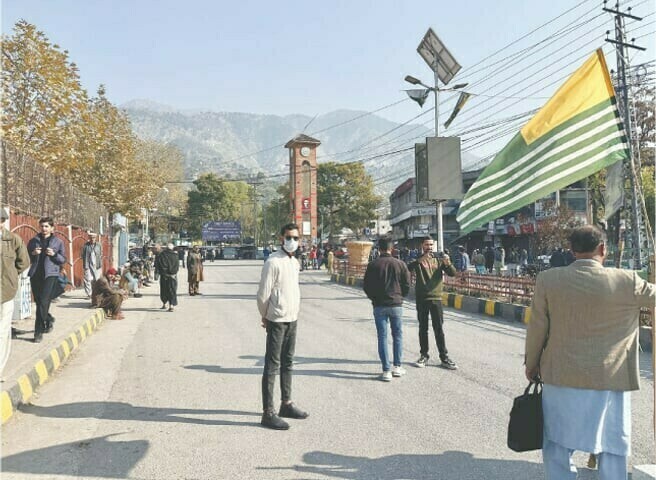
    India has allegedly stepped up efforts to promote the narrative of a banned committee in Azad Jammu and Kashmir after the group failed to gain wider public support, according to security sources. The sources claimed that Indian forces played videos linked to the banned Public Action Committee in the Keran sector on August 13 and 14. The alleged move was aimed at creating anti-Pakistan sentiments among people living near the Line of Control. Security officials said the videos were used to highlight the committee’s narrative and influence public opinion. Experts believe the alleged move raises questions about possible links between the banned group and India. They said the promotion of the committee’s material from the Indian side could indicate an attempt to exploit political and social issues in Azad Jammu and Kashmir. Defence analyst and retired Major General Zahid Mahmood said people were already aware of claims regarding foreign involvement in the activities of the banned Action Committee. He said information about alleged external support had previously emerged through what he described as reliable sources. Mahmood said efforts had been made to develop a specific narrative about Azad Jammu and Kashmir. According to him, the objective was to damage the broader Kashmir freedom movement and create divisions among the people. He alleged that India and other international actors were playing a role in shaping narratives related to Kashmir. The retired general also claimed that some international forces and media groups were helping promote these narratives. He said such efforts could be aimed at influencing public opinion and weakening support for the Kashmir cause. Security sources maintained that the alleged circulation of the videos was part of a broader attempt to provoke anti-Pakistan sentiments. They said the use of material associated with the banned committee could also be intended to create political unrest and confusion among the public. The allegations come amid continued tensions surrounding political developments in Azad Jammu and Kashmir. Authorities are closely monitoring activities along the Line of Control and the dissemination of material they believe could fuel unrest.

  • | | | |

    Iran warns Oman deal does not mean Hormuz is fully…

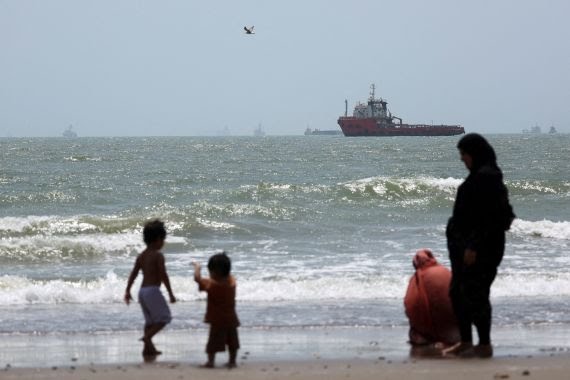
    TEHRAN: Iran has cautioned that its emerging understanding with Oman over the management of the Strait of Hormuz should not be interpreted as a guarantee that the strategic waterway will immediately reopen to normal international shipping. The clarification came after Iran and Oman agreed on a temporary maritime corridor intended to facilitate navigation through the strait. Iranian officials stressed that the arrangement remains limited and does not amount to a full restoration of commercial traffic. Mukhtar Haddad, editor-in-chief of Iran’s Al-Wefaq newspaper, told Arab media that Tehran and Muscat had been discussing the management of the waterway for some time. He said the talks could lead first to a temporary agreement and eventually to a permanent arrangement, but neither step should automatically be seen as a decision to fully restore shipping. Iranian Deputy Foreign Minister Kazem Gharibabadi also sought to temper expectations, saying Tehran and Muscat had agreed on a new temporary route but that the understanding did not mean the strait would be completely and immediately reopened. Gharibabadi said Iran remained in a state of war and had made clear to mediators that conditions during an armed conflict could not be treated in the same way as normal circumstances. He added that the United States would need to fulfil its obligations under an earlier memorandum of understanding before Iran considers fully reopening the waterway. Under the joint Iranian-Omani framework, the proposed maritime corridor would be temporary. Russian media reported that vessels entering the Persian Gulf would pass through Iranian waters, while ships returning from the Gulf would use Omani waters. The reported corridor would operate like a two-way maritime route and have a width of about 11.25 kilometres. Iran and Oman are expected to hold further negotiations over the next 30 to 60 days to discuss the possibility of establishing a permanent navigation arrangement. The developments come as the Strait of Hormuz remains at the centre of a wider regional security crisis. The waterway is one of the world’s most important energy routes, connecting the Persian Gulf with the Gulf of Oman and the Arabian Sea. US President Donald Trump, meanwhile, claimed that the US Navy had removed or neutralised all mines in international waters of the Strait of Hormuz. He warned that any vessel that attempted to lay new mines would be destroyed. Despite the temporary corridor agreement, Iran’s latest statements underline that a complete reopening of Hormuz remains a separate and politically sensitive issue. For shipping companies and global energy markets, the distinction could prove crucial: a limited navigation arrangement may ease some pressure, but it does not yet signal a return to normal maritime traffic.

Leave a Reply

Your email address will not be published. Required fields are marked *