thailand initiate process

Thailand to Initiate Process to Cancel Maritime MoU with Cambodia, PM Announces

BANGKOK – Prime Minister Anutin Charnvirakul announced today that his government has instructed relevant agencies to begin the process of canceling a long-standing maritime memorandum of understanding (MoU 44) with Cambodia, citing a lack of progress and diminished utility.

Rescued Thai Scam Victim in Cambodia Warns of Beatings, Organ Sales

During a Cabinet meeting on Tuesday, Anutin confirmed he had directed officials to prepare for the annulment of the agreement, signed in 2001, which establishes a framework for negotiating overlapping claims to the continental shelf and its resources in the Gulf of Thailand.

“The cancellation will not happen immediately under this administration, but we are taking the necessary preparatory steps,” Anutin stated. He emphasized that the MoU had yielded no tangible progress and that maintaining it no longer served Thailand’s interests.

When questioned about the legal authority to cancel the agreement, the Prime Minister asserted, “Everything will be done according to the law.”

The move fulfills a campaign pledge Anutin made ahead of the February 8 general election, during which he told supporters that a returned Bhumjaithai-led government would “immediately cancel MoU 44.” He also indicated that a previously discussed 50-50 profit-sharing arrangement for maritime resources would no longer be considered.

Following the election, unofficial results show Bhumjaithai securing a dominant position with approximately 194 parliamentary seats, placing the party at the core of the incoming coalition government. Incumbent Foreign Minister Sihasak Phuangketkeow is expected to resume his role as deputy prime minister overseeing foreign affairs.

Calls from civil society groups and the public to annul the MoU have grown louder, particularly after two rounds of deadly border clashes between Thai and Cambodian forces last year.

The Thai Foreign Ministry has previously clarified that MoU 44 serves solely as a mechanism for dialogue over maritime boundaries and resource-sharing and does not constitute a concession of territorial claims. Any final agreement reached under its framework would require parliamentary approval to take effect.

Thai Navy Detains Cambodian Vessel for Illegal Fishing in Trat

The impending cancellation process signals a significant shift in Thailand’s approach to a sensitive and long-stalled bilateral issue.

-Thailand News (TN)

Similar Posts

  • |

    Brazil’s Lula announces fourth-term campaign…

    Brazilian President Luiz Inacio Lula da Silva has launched his campaign for a fourth term at a Workers’ Party convention in Sao Paulo, confirming it would be his final bid for office. Centring his platform on global affairs and national defence, the 80-year-old leader pledged to increase military spending and protect the country’s vast rare earth mineral reserves. He warned foreign powers that Brazil would not permit nations like China, France, or the United States to access these resources without respecting territorial sovereignty. Lula currently holds a slight lead in opinion polls against his likely main challenger, Senator Flavio Bolsonaro.

  • | |

    Mir Raza’s father says new probe is moving in ri…

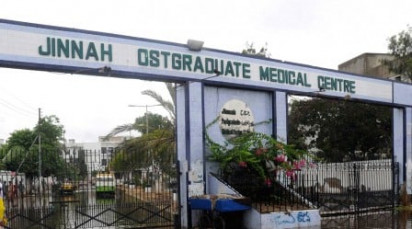
    KARACHI: The father of young Karachi resident Mir Raza has expressed confidence in the newly formed investigation team. He said he felt, for the first time in 13 days, that the investigation was moving in the right direction. Mir Raza’s parents, lawyer Jibran Nasir and members of the new investigation team visited locations connected to the case. The visit was aimed at reviewing important points and gathering information that could help investigators understand what happened. Jibran Nasir said the family had identified several important locations on its own. These locations were later shown to the police. He said Mir Raza’s parents were cooperating fully with the investigators and answering their questions. Nasir said the investigation team was waiting for the results of samples collected during the post-mortem examination. He said additional samples obtained after the exhumation had also been sent to a forensic laboratory. The lawyer said the family now believed that an honest and serious officer was handling the investigation. He said the family had earlier faced difficulties in getting the matter investigated properly. Mir Raza’s father, Mir Hussain, said the family still wanted clear answers about his son’s death. He said the exact circumstances surrounding the incident had not yet been established. According to him, the initial investigation should have been more effective. He said timely and proper action at the beginning could have taken the case to a different stage. Mir Hussain said the new investigation team was listening to the family’s concerns. He said investigators were considering the information provided by the parents. The family, he added, now had greater confidence in the process. He said the main objective was to establish what happened to Mir Raza and how the incident took place. The family wanted every aspect of the case to be examined. Mir Hussain said Mir Raza’s kitchen was located around half a kilometre from the site of the incident. He also said information about three suspicious individuals had already been shared with the police. The victim’s father further alleged that the previous investigation team had not properly shared details of the inquiry with the family. He hoped the new team would maintain transparency and investigate the case from all possible angles. The family said it would continue cooperating with investigators. Mir Hussain said they would pursue the case as far as necessary to uncover the truth and obtain justice for Mir Raza. Investigators are now expected to examine forensic evidence, statements and other available information. The reports from the forensic laboratory could also play an important role in determining the circumstances surrounding the case.

  • Truckers End Laem Chabang Rally, Vow to Keep Pressing Government on Fuel Crisis

    CHONBURI — Transport operators who gathered near Laem Chabang Port on Wednesday have dispersed following a symbolic truck convoy aimed at forcing the government to take immediate action against soaring fuel prices and domestic shortages that are paralyzing the logistics industry. Pump Prices to Rise Starting Wednesday as Government Adjusts Fuel Subsidies The Land Transport […]

  • | | |

    Pakistan imposes new restrictions on foreign media

    Pakistani authorities have exposed regulatory measures governing foreign media operations in the country. The strategy has triggered an alarm among press freedom advocates, legal observers, and media personnel. Under the newly issued Foreign Media Facilitation Guidelines, journalists representing international organizations will no longer be permitted to travel or cover news events outside three major metropolitan hubs without explicit prior authorization from the government. The regulations come at a delicate juncture marked by escalating political instability, public demonstrations, and security crackdowns across key regions including recent demonstrations connected to heightened tensions in Kashmir and subsequent enforcement actions in urban centers like Lahore. Critics argue that by constraining the scope of international newsgathering precisely when accurate coverage is most vital, the state risks deepening information voids and exacerbating the spread of unverified claims. Key Requirements of the New Media Framework Administered through the External Publicity Wing of Pakistan’s Ministry of Information, the updated regulatory policy establishes procedural hurdles for international news agencies. Foreign correspondents, local staff, contributors, and freelance journalists working for international outlets must secure an official No Objection Certificate (NOC) before traveling to conduct reporting assignments outside Islamabad, Karachi, and Lahore. Regions requiring prior approval now explicitly cover all provincial territories, sensitive border zones, and Pakistan-administered Kashmir. The framework provides no defined processing timeframe for NOC applications, leaving reporting teams facing unpredictable delays and potential administrative holds. The Ministry reserves the authority to suspend or revoke official media accreditation if reporting is judged to run counter to the country’s national sovereignty, ideology, or public safety phrasing that legal analysts describe as intentionally open-ended. Backlash from Analysts and Rights Groups The enactment of these guidelines has drawn sharp rebuke from political commentators, civil society organizations, and international press watchdogs, who view the move as part of a systematic contraction of independent journalism within the country. Former senator and political commentator Mustafa Nawaz Khokhar highlighted the grave consequences of curtailing foreign news organizations, warning that restricting legitimate press operations ultimately undermines public trust. These guidelines are tantamount to choking international media in an increasingly shrinking space, Khokhar noted, emphasizing the vital role global news outlets play when local media environments face structural pressure. The public looks at the international media for independent reporting. Placing restrictions simply creates more room for disinformation and the spread of fake news.   Rights groups including the Pakistan Federal Union of Journalists (PFUJ) and international watchdogs have echoed these concerns. They’re pointing out that advance the requirement of government permission for routine reporting effectively grants authorities veto power over what news reaches the global audience. Broader Context of Press Freedom in Pakistan Pakistan’s media environment has historically operated in a complex space balancing constitutional guarantees of free speech against national security laws. However, media analysts note that state oversight of both traditional print/broadcast journalism and online digital spaces has tightened significantly in recent years. The introduction of the new foreign media guidelines coincides with broader legislative shifts aimed at regulating online speech and social media platforms. Observers express concern that administrative barriers, combined with strict digital laws, could leave remote or politically sensitive areas completely cut off from independent news coverage. By limiting foreign journalists’ mobility primarily to the capital and two largest economic centers, field reporting from rural regions, border zones, and conflict-affected territories will become exceptionally difficult to conduct legally. Implications for International Coverage As international newsrooms adapt to the new framework, news gathering strategies across South Asia are likely to face operational friction. Bureau chiefs and correspondents report that unpredictable NOC processing times make time-sensitive breaking news coverage outside major cities nearly impossible to guarantee.   Without direct on-the-ground access for independent journalists, global news consumers may increasingly have to rely on official statements or unverified social media updates during crises. For a country navigating complex domestic politics and delicate international relations, press freedom advocates warn that restricting the lens through which the world views Pakistan could backfire, isolating the nation’s political discourse and fostering an environment where misinformation thrives unchecked.

  • Thailand Chokes Under Widespread Smog, 45 Provinces Exceed Safe PM2.5 Levels

    BANGKOK – Ultrafine dust blanketed much of Thailand on Monday, with unsafe levels of PM2.5 pollution recorded in Bangkok and 45 provinces over the past 24 hours, according to data released by the Geo-Informatics and Space Technology Development Agency (Gistda). The readings highlight a severe and persistent air quality crisis affecting the Central Plains, Northeast, […]

  • | |

    Kashmir Exploitation Day, Pakistan’s leaders uni…

    ISLAMABAD: Pakistan observed Kashmir Exploitation Day on Wednesday with political leaders across party lines renewing their support for the people of Indian-administered Jammu and Kashmir, while condemning India’s constitutional changes of August 5, 2019, as unlawful and contrary to international law and United Nations resolutions. Messages of solidarity were issued by senior government officials, provincial leaders, parliamentarians and political parties, all reiterating Pakistan’s commitment to supporting the Kashmiri people’s right to self-determination. Rallies, public gatherings and awareness events were also held in different parts of the country to mark the occasion. Deputy Prime Minister and Foreign Minister Ishaq Dar Deputy Prime Minister and Foreign Minister Ishaq Dar said Pakistan would continue extending its political, diplomatic and moral support to the Kashmiri people until they were able to exercise their internationally recognised right to self-determination. He described India’s unilateral decisions of August 5, 2019, as illegal and urged New Delhi to reverse all measures that altered the disputed territory’s constitutional status. Pakistan’s Foreign Office Pakistan’s Foreign Office also reaffirmed the country’s unwavering support for Kashmiris, paying tribute to what it described as their courage, resilience and sacrifices. A spokesperson said Pakistan would continue highlighting the Kashmir issue at regional and international forums and called on the global community to uphold international law and relevant UN Security Council resolutions. Punjab Chief Minister Maryam Nawaz Punjab Chief Minister Maryam Nawaz paid tribute to the families of those who lost their lives during the Kashmir conflict and appealed to the United Nations and international human rights organisations to take notice of alleged human rights violations in the region. She said August 5, 2019, represented an attack on the identity and rights of the Kashmiri people and maintained that Pakistan would continue raising its voice on their behalf. Sindh Chief Minister Murad Ali Shah Sindh Chief Minister Murad Ali Shah also termed India’s constitutional changes a violation of UN Security Council resolutions. He urged the international community to play an effective role in ensuring the protection of human rights in Indian-administered Kashmir. Chairman Senate Yousaf Raza Gilani Chairman Senate Yousaf Raza Gilani strongly criticised India’s actions, saying attempts to alter the demographic composition of the disputed territory and undermine the identity of the Kashmiri people were unacceptable. He stressed that the Kashmir dispute should be resolved in accordance with the aspirations of its people and relevant UN resolutions. Governor Faisal Karim Kundi In Peshawar, a solidarity rally led by Governor Faisal Karim Kundi marched from the Civil Secretariat to the Governor House. Government employees, civil society representatives and citizens participated in the event, carrying Pakistani and Kashmiri flags while expressing support for the Kashmiri cause. Addressing participants, Kundi said Pakistan would continue standing with Kashmiris and expressed confidence that the people of the region would eventually determine their own future according to their wishes. Sindh Interior and Law Minister Zia-ul-Hassan Lanjar Sindh Interior and Law Minister Zia-ul-Hassan Lanjar said force and restrictions could not suppress the desire for freedom among Kashmiris. He alleged that India had violated international law and reiterated Pakistan’s solidarity with the people of Kashmir. Sindh Assembly Speaker Awais Qadir Shah Sindh Assembly Speaker Awais Qadir Shah also urged the United Nations to play a more active role, saying Kashmiris had been facing serious human rights challenges for several years. Jamaat-e-Islami chief Hafiz Naeem ur Rehman Jamaat-e-Islami chief Hafiz Naeem ur Rehman said the Kashmiri freedom movement would continue until the dispute was resolved in line with United Nations resolutions. He described the revocation of Kashmir’s special constitutional status as a challenge to international law and the UN system. Senator Sherry Rehman Senator Sherry Rehman praised the determination and resilience of the Kashmiri people, saying their struggle had continued despite years of political uncertainty. She maintained that India’s constitutional changes were aimed at ending the region’s special status. Federal Minister Amir Muqam At a separate rally in Islamabad, Federal Minister Amir Muqam said Pakistan marks August 5 every year to express solidarity with Kashmiris and condemn India’s actions. He alleged that demographic changes were being introduced in the disputed territory through settlement policies. PPP Parliamentarians Secretary General Nayyar Bukhari Meanwhile, Pakistan Peoples Party Parliamentarians Secretary General Nayyar Bukhari said the revocation of Kashmir’s special status had failed to weaken the freedom movement. He warned that policies pursued by the Indian government could further undermine regional peace and stability. The observance of Kashmir Exploitation Day concluded with renewed calls from Pakistan’s political leadership for greater international engagement on the Kashmir dispute. Leaders urged the United Nations and the global community to work towards a peaceful resolution of the issue in accordance with international law and the wishes of the Kashmiri people.

Leave a Reply

Your email address will not be published. Required fields are marked *