iran executesan accused
| | |

Iran executesan accused of helping US, Israel duri…

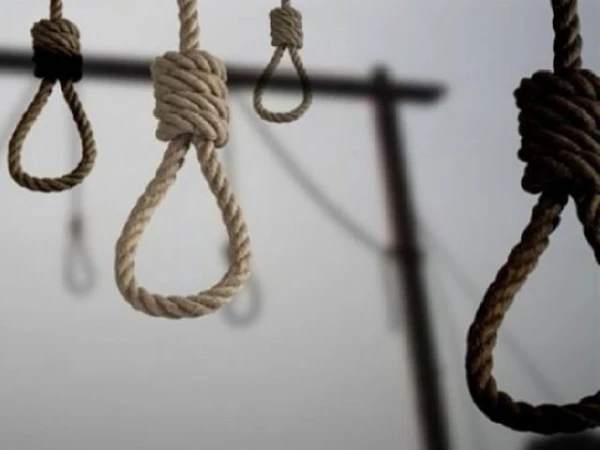
TEHRAN: Iran has executed a man accused of supporting the United States and Israel during the country’s January anti-government protests, adding to growing international concern over Tehran’s use of capital punishment against people linked to the unrest.

Iranian judicial authorities identified the man as Majid Adineh, saying he was arrested during the protests and accused of involvement in activities carried out in support of groups considered hostile to Iran.

According to the judiciary, Adineh was accused of deliberately committing arson, participating in gatherings aimed at undermining national security and conspiring against the state. Authorities also alleged that he had worked with opposition groups linked to the United States and Israel.

Iran’s judiciary said the Revolutionary Court in Karaj convicted him after considering documents, evidence and statements attributed to the defendant. The court also ordered the confiscation of his property.

The allegations could not be independently verified, and the account published by Iranian authorities did not include comments from Adineh’s lawyer or family.

The execution comes amid an increasingly severe crackdown following nationwide protests that began in late December and expanded across Iran in January. The demonstrations were initially fuelled by economic grievances but quickly developed into broader anti-government protests.

Iranian authorities have repeatedly described some protesters as agents or operatives working for foreign enemies, while rights organisations have challenged the fairness of several cases brought against demonstrators.

The latest execution also follows a broader increase in executions connected to the unrest. The UN human rights chief said earlier this month that Iran had executed at least 56 people on national-security-related charges since March 19, including 27 people linked to the anti-government protests.

Human rights organisations have warned that dozens of other protesters remain at risk of execution. Amnesty International said in July that at least 60 people, including some who were children when arrested, were at risk after receiving death sentences connected to the protests.

The UN’s Iran fact-finding mission has also urged Tehran to halt executions linked to the protests, expressing concern over accelerated proceedings and allegations surrounding the fairness of trials.

Iran, however, maintains that its courts are dealing with serious national-security offences and that capital punishment is lawful.

The executions have intensified debate over the government’s response to dissent. While officials portray the cases as necessary measures against threats to national security, rights groups argue that protesters and political dissidents are being subjected to harsh sentences after proceedings that fail to meet international fair-trial standards.

With further cases reportedly moving through Iran’s Revolutionary Courts, the execution of Adineh is likely to renew scrutiny of Tehran’s treatment of those accused of involvement in the January protests.
Similar Posts

  • | | |

    ECC approves Rs4.188bn PASSCO compensation package

    The Economic Coordination Committee (ECC) has approved a Rs4.188 billion compensation package for employees of the Pakistan Agricultural Storage and Services Corporation (PASSCO). The decision is part of the government’s plan to wind up PASSCO. The process is also linked to the disposal of the corporation’s wheat stocks. The government has set December 2026 as the deadline for completing the process. The ECC directed that the winding-up process must be independently reviewed. A third party will validate the process to ensure transparency and compliance with the approved plan. The committee also stressed the need to dispose of PASSCO’s wheat stocks as soon as possible. Officials said the early disposal of the stocks would help implement the employee compensation package on time. The Ministry of National Food Security and Research assured the ECC that the process would be completed by December. The government began work on the closure of PASSCO in 2025. The Prime Minister’s Office had directed the finance minister to oversee the process in consultation with the relevant ministry. A meeting chaired by the finance minister later decided that a severance package should be prepared for PASSCO employees. The package was designed along the lines of the voluntary separation scheme approved for employees of the Utility Stores Corporation. PASSCO’s Board of Directors subsequently approved the revised compensation package. The scheme covers regular employees as well as contractual and daily-wage workers. It includes severance compensation and several terminal benefits. These include leave encashment and a farewell grant. The package also provides maintenance support for widows and retired employees through PASSCO’s Benevolent Fund. The ECC had previously approved the winding up of PASSCO. It also approved the creation of a Special Purpose Vehicle called the Wheat Stock Management Company (WSMC) Public Limited. The federal cabinet later ratified the decision. The total cost of the employee package is estimated at Rs4.188 billion. Around Rs3.967 billion has been allocated for severance compensation and terminal benefits for PASSCO employees. Another Rs221 million has been set aside for maintenance grants. The amount will benefit 38 widows and 236 retired employees.

  • | |

    Pakistan plans digital system for private Hajj 202…

    The Ministry of Religious Affairs has decided to introduce a new digital system for the private Hajj operation in 2027 in line with Saudi Arabia’s Nusuk Masar system. Under the new arrangement, bookings for private Hajj will be processed through the Ministry of Religious Affairs instead of being handled directly by private Hajj operators. For the first time, both the government and private Hajj operations will come under the direct supervision of the Ministry of Religious Affairs, according to sources. Sources said the private Hajj scheme will be operated through the ministry’s official Pak Hajj app, which will serve as the digital platform for managing bookings and related arrangements. The move is aimed at bringing greater transparency, centralised oversight and digital management to the private Hajj scheme. It will also align Pakistan’s private Hajj operations with the digital procedures being implemented by Saudi authorities. Under the proposed system, pilgrims seeking to perform Hajj through the private scheme will be able to access the relevant services through the official digital platform, while the ministry will maintain direct oversight of the process. The decision marks a significant change from the existing arrangement, under which private Hajj operators play a central role in booking and managing pilgrims. The ministry is expected to announce further details regarding registration, booking procedures, packages, payments and the role of private operators as preparations for Hajj 2027 progress.

  • | | |

    Constitutional provisions fuel referendum debate

    Debate over the possibility of holding a national referendum has resurfaced in Pakistan, prompting discussions among political observers and constitutional experts about the legal framework governing such a move. Although the government has made no official announcement regarding a referendum, speculation in political circles has raised questions about when and how a nationwide vote can be conducted under the Constitution. Constitutional experts say Articles 48(6) and 48(7) of the Constitution empower the prime minister to propose a referendum on a matter of national importance. Under Article 48(6), the prime minister may refer such a proposal to a joint sitting of Parliament. If approved by the joint session, the matter can be presented to the public through a referendum in the form of a “Yes” or “No” question. Article 48(7) further provides that Parliament may legislate the procedure for conducting a referendum and determining its results. Legal experts note that, unlike a constitutional amendment, such legislation does not require a two-thirds majority and can be passed through a simple majority of members present, provided the quorum is complete. The renewed debate has also revived interest in the history of referendums in Pakistan. The concept first gained prominence during the political crisis that followed the March 7, 1977 general elections. Opposition parties, united under the Pakistan National Alliance (PNA), rejected the election results, alleging widespread rigging. They later boycotted provincial assembly elections and launched a nationwide protest movement demanding fresh elections, dissolution of assemblies and the resignation of then-prime minister Zulfikar Ali Bhutto. Despite mediation efforts by Saudi Arabia, negotiations between the government and the opposition failed, and the political deadlock culminated in the imposition of martial law by General Muhammad Zia-ul-Haq on July 5, 1977. Following these developments, constitutional provisions allowing referendums were introduced through the Seventh Constitutional Amendment. Pakistan’s first referendum was held on December 19, 1984, during General Zia-ul-Haq’s rule. While the public was asked to vote on the continuation of the Islamization process, a “Yes” vote effectively extended Zia’s presidency for another five years. Official results declared overwhelming support for the proposal, though opposition parties questioned both the process and the outcome. A second nationwide referendum was held in April 2002 under General Pervez Musharraf. The exercise enabled him to secure another five-year presidential term before the general elections later that year. After the 2002 elections, Musharraf was formally elected president by an electoral college comprising Parliament and the four provincial assemblies under the framework established through the Seventeenth Constitutional Amendment. Political analysts say recent discussions intensified after comments made during a media briefing by the Director General of Inter-Services Public Relations (ISPR), whose carefully worded responses to questions on constitutional matters drew public attention.

  • | |

    Evan Rachel Wood breaks silence on Practical Magic…

    Evan Rachel Wood has finally addressed her absence from Practical Magic 2, sharing her honest feelings about not returning for the highly anticipated sequel to the 1998 cult classic. While promoting her latest project, The Shards, the actress spoke with Entertainment Tonight and admitted she is disappointed that she won’t be reuniting with the cast that helped shape one of her earliest film experiences.  Wood portrayed Kylie Owens, the eldest daughter of Sandra Bullock’s character Sally Owens, in the original Practical Magic. The upcoming sequel, inspired by Alice Hoffman’s 2021 novel The Book of Magic, sees Joey King taking over the role of Kylie, while Maisie Williams has been cast as Antonia Owens, originally played by Alexandra Artrip.  Reflecting on the decision, Wood said she understood why the filmmakers may have chosen a different direction. She explained that after reading The Book of Magic, she felt the novel could have allowed her character to return. However, she acknowledged that the movie appears to be taking a different creative approach, making her involvement less likely.  Despite understanding the creative changes, the actress admitted the experience has been emotional. She said what hurts the most is missing the opportunity to reunite with the original cast and revisit the iconic house where much of the film was shot. According to Wood, those shared childhood memories are impossible to recreate and would have been meaningful not only for the actors but also for longtime fans of the beloved fantasy film.  This is not the first time Wood has spoken about the sequel. In 2025, she revealed on social media that she had offered to return “even for one scene or one line,” but was informed that the roles were being recast. She emphasized that the decision was entirely out of her hands and said she would have happily returned if given the opportunity.  Even so, Wood made it clear that she holds no ill will toward the production. She wished Joey King the very best in taking over the role and expressed hope that the new cast enjoys the same magical experience she had while filming the original movie nearly three decades ago.  Practical Magic 2 will reunite original stars Sandra Bullock and Nicole Kidman alongside returning cast members Stockard Channing and Dianne Wiest. The sequel is scheduled to arrive in theaters on September 11, 2026, bringing the magical Owens family back to the big screen for a new generation of fans.  Evan Rachel Wood has finally addressed her absence from Practical Magic 2, sharing her honest feelings about not returning for the highly anticipated sequel to the 1998 cult classic. While promoting her latest project, The Shards, the actress spoke with Entertainment Tonight and admitted she is disappointed that she won’t be reuniting with the cast that helped shape one of her earliest film experiences.  Wood portrayed Kylie Owens, the eldest daughter of Sandra Bullock’s character Sally Owens, in the original Practical Magic. The upcoming sequel, inspired by Alice Hoffman’s 2021 novel The Book of Magic, sees Joey King taking over the role of Kylie, while Maisie Williams has been cast as Antonia Owens, originally played by Alexandra Artrip.  Reflecting on the decision, Wood said she understood why the filmmakers may have chosen a different direction. She explained that after reading The Book of Magic, she felt the novel could have allowed her character to return. However, she acknowledged that the movie appears to be taking a different creative approach, making her involvement less likely.  Despite understanding the creative changes, the actress admitted the experience has been emotional. She said what hurts the most is missing the opportunity to reunite with the original cast and revisit the iconic house where much of the film was shot. According to Wood, those shared childhood memories are impossible to recreate and would have been meaningful not only for the actors but also for longtime fans of the beloved fantasy film.  This is not the first time Wood has spoken about the sequel. In 2025, she revealed on social media that she had offered to return “even for one scene or one line,” but was informed that the roles were being recast. She emphasized that the decision was entirely out of her hands and said she would have happily returned if given the opportunity.  Even so, Wood made it clear that she holds no ill will toward the production. She wished Joey King the very best in taking over the role and expressed hope that the new cast enjoys the same magical experience she had while filming the original movie nearly three decades ago.  Practical Magic 2 will reunite original stars Sandra Bullock and Nicole Kidman alongside returning cast members Stockard Channing and Dianne Wiest. The sequel is scheduled to arrive in theaters on September 11, 2026, bringing the magical Owens family back to the big screen for a new generation of fans. 

  • | |

    Rod Stewart’s wife Penny Lancaster breaks silenc…

    Rod Stewart’s recent health scare has forced the legendary singer to cancel the remaining dates of his One Last Time farewell tour, leaving fans concerned about his recovery. His wife, Penny Lancaster, has now offered a reassuring update as the 81-year-old musician focuses on getting better. Stewart recently underwent a successful coronary stent procedure after being taken to hospital for a medical issue. His representatives confirmed that he is recovering well and has resumed normal daily activities, but doctors have advised him to take around four weeks away from performing.  Penny Lancaster shares an emotional update Lancaster, who has been married to Stewart since 2007, has remained close to him throughout his recent health difficulties. Her response comes as the singer takes a break from the demanding touring schedule he has maintained for years. The couple’s family life has frequently remained separate from Stewart’s huge career, but Lancaster has supported her husband through several health challenges over the years. Stewart himself has attempted to reassure fans that he is recovering. Following the procedure, the singer expressed his gratitude to the medical professionals who cared for him and apologized to fans who will miss his upcoming performances.  Tour cancellation follows several setbacks The heart procedure comes after a difficult period for Stewart’s touring schedule. Earlier this month, he postponed a Cincinnati performance after requiring what was initially described as a minor medical procedure. A Cleveland show was also postponed. These cancellations followed other health-related disruptions earlier in the year.  Stewart also caused concern during a July concert in Utah when he briefly stopped performing and used oxygen backstage after nearly fainting. He later addressed the audience and continued his performances.  With his latest medical procedure requiring additional recovery time, Stewart has now canceled the remaining dates of his One Last Time tour. The affected schedule included performances in North America, Mexico and a planned Las Vegas residency. Promoters and venues are expected to provide information about refunds and other arrangements directly to ticket holders.  Stewart focuses on recovery Despite the disappointment of ending the tour early, Stewart’s representatives say he is doing well and following medical advice. The singer has spent decades performing around the world, and stepping away from the stage is clearly an emotional decision. However, his latest update suggests that his priority is now regaining his strength. For Lancaster and the rest of Stewart’s family, the recent health scare has brought another reminder of the importance of putting his wellbeing first.

  • | | | | |

    Trump claims Iran war could end soon, Hormuz to re…

    WASHINGTON: US President Donald Trump has claimed that the war with Iran could come to an end soon, while negotiations are reportedly continuing over the future of the conflict and the reopening of the strategically vital Strait of Hormuz. Trump said the United States, Iran and Oman were close to reaching a temporary agreement aimed at reopening the key maritime passage. His remarks offered a potentially hopeful signal after weeks of heightened tensions and disruption in the region. The US president also dismissed reports that the conflict had significantly depleted American weapons stocks, insisting there was no truth to such claims. Trump further rejected reports of disagreements or growing tensions with US Defence Secretary Pete Hegseth, playing down speculation about friction within his administration over the handling of the war. However, the picture on the diplomatic front remains uncertain. Arab media reports have claimed that efforts to broker a ceasefire between the United States, Israel and Iran have stalled, highlighting the difficulties surrounding a possible breakthrough. At the same time, Iranian authorities have reportedly tightened internal security measures across the country, particularly in Tehran, as uncertainty over the conflict continues. The Strait of Hormuz remains central to the crisis because of its importance to global energy supplies and international shipping. Any agreement that restores normal traffic through the waterway could ease pressure on regional markets and provide a significant boost to wider diplomatic efforts. For now, Trump’s prediction of a quick end to the war contrasts with reports suggesting that major obstacles still remain before a lasting ceasefire can be secured.

Leave a Reply

Your email address will not be published. Required fields are marked *