fao govt punjab

FAO, Govt of Punjab reaffirm ties to strengthen cl…

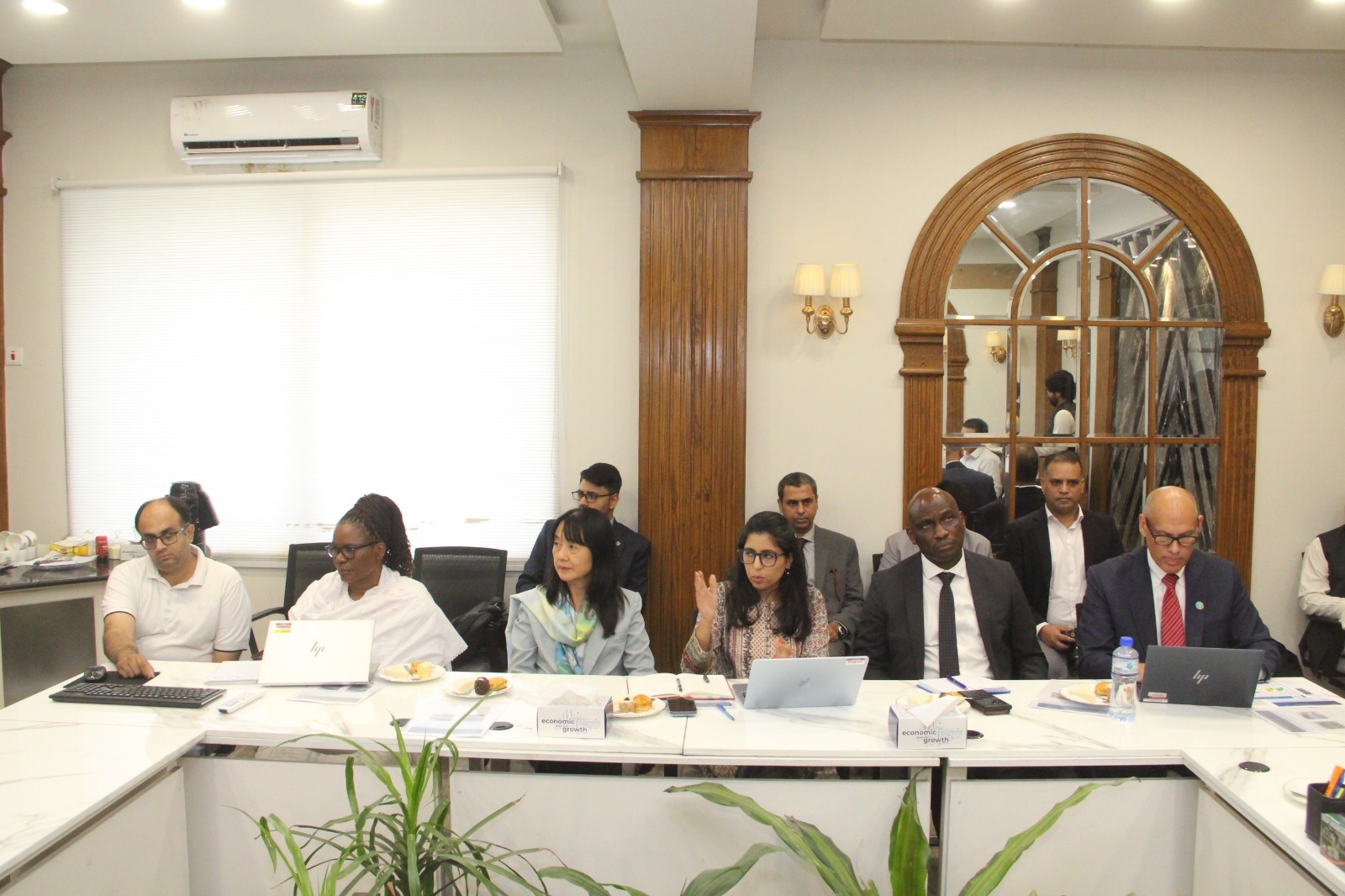
Food and Agriculture Organization of the United Nations (FAO) and the Government of Punjab reaffirmed their strategic partnership to advance climate-resilient agriculture, climate information services and sustainable water management during a high-level strategic meeting held at the Planning and Development Board, Government of Punjab, Lahore.

The meeting was chaired by Mr. Rafaqat Ali, Secretary, Planning and Development Board, and attended by Mr. Aslam Javed, Member Agriculture, along with senior representatives from the Planning and Development Board, Agriculture Department, Irrigation Department, and other relevant public institutions.

The discussions focused on the Green Climate Fund-supported and Government of Punjab and Government of Sindh co-financed project “Transforming the Indus Basin with Climate Resilient Agriculture and Water Management.” In Punjab, the project is being implemented in Khanewal, Multan, Muzaffargarh, Dera Ghazi Khan and Lodhran, supporting government institutions and farming communities to respond more effectively to climate risks affecting agriculture and water resources.

The high-level FAO mission was led by Mr. Robert Simpson, Deputy Regional Representative for Asia and the Pacific / FAO Representative ad interim in Pakistan, accompanied by Ms. HangThiThanh Pham, Senior Resilience Officer and Lead Technical Officer. The FAO delegation also included Mr. James Okoth, Officer in Charge, FAO Pakistan, Ms. Amina Bajwa, Assistant FAO Representative Programme, Ms. Emelda Berejena, Technical Adviser and Project Manager, Tousif Bhatti, Senior Ground Water Management Specialist , Mr. Mudasir Maqsood, Senior Water Management Expert, Mr. Mr. Waleed Ahmad, Provincial Coordinator Punjab, and Mr. Shahnawaz Arif, Communications Specialist.

The project is strengthening Punjab’s capacity to plan and act on climate risks through many interconnected areas like climate-resilient agriculture (CRA) practices, farmer field schools, CRA demonstration plots, improving climate and water information services, building on-farm resilience among smallholder farmers, and creating an enabling environment for long-term transformation in agriculture and water management.

In Punjab, the project has supported installation of 15 automatic weather stations and two flux towers, along with groundwater and surface-flow sensors to support improved climate and water information for planning and advisory services. The project has also supported water accounting, WaPOR-based evapotranspiration monitoring, groundwater assessments in Khanewal and Dera Ghazi Khan, and draft aquifer management plans for both districts.

At the field level, the project is helping farmers adopt climate-resilient agriculture and on-farm water management through farmer learning platforms, demonstration plots, Women Open Schools, field days and community-based extension support. By building the capacities of extension staff and Farmer Facilitators, the project is transferring practical, locally relevant knowledge to farming communities, helping farmers make better decisions, improve resource use, reduce climate-related risks and move towards more resilient farming systems.

The project is also strengthening the enabling environment for wider adoption through awareness campaigns, farmer advisories, training materials and digital outreach. By engaging financial institutions, it is helping link farming communities with services and financing opportunities needed to scale climate-resilient practices.

Speaking on the occasion, Mr. Rafaqat Ali, Secretary, Planning and Development Board, said:

“Climate-resilient agriculture and sustainable water management are central to Punjab’s development priorities. The Government of Punjab values its partnership with FAO under this important initiative, which is strengthening institutional capacity, improving climate-informed planning and supporting practical solutions for farmers. The progress achieved so far provides a strong basis to deepen impact in the target districts and align project results with provincial priorities for food security, water efficiency and rural resilience.”

The chair further emphasized on strengthening coordination among government stakeholders and with FAO to expedite the project.

He directed to hold steering committee meetings frequently to remove any bottlenecks.

Mr. Robert Simpson appreciated the Government of Punjab’s leadership and continued collaboration.

“FAO deeply values its partnership with the Government of Punjab. This project demonstrates how climate science, water management, extension services and farmer-focused solutions can come together to support more resilient agricultural systems. Our shared priority is to ensure that technical investments translate into practical benefits for farming communities, especially smallholders facing increasing climate and water-related risks,” he said.

The meeting emphasized the importance of continued coordination among planning, agriculture, irrigation, meteorology, research, and extension institutions.

Participants discussed priorities for strengthening the use of climate data, improving water productivity, expanding farmer learning systems, supporting women farmers, and ensuring that field-level innovations are linked with government planning, policy and service delivery.

Through this partnership, FAO and the Government of Punjab are helping build a stronger foundation for climate adaptation in agriculture, improving the resilience of vulnerable farming communities and contributing to Pakistan’s broader goals of food security, sustainable water management and resilient rural development.

Similar Posts

  • | |

    Oil surges above $100 as Red Sea attacks stokes fe…

    Oil prices have surged above $100 a barrel for the first time since May, following Houthi attacks on oil tankers in the Red Sea that have stoked fears of a wider regional conflict. Brent crude spiked more than 5% on Thursday, as the Middle East conflict teeters on the edge of an “unimaginable spread of conflict.” Until Wednesday, oil was hovering around $90 per barrel, but the strikes in the Red Sea have put energy markets on edge. West Texas Intermediate, the US benchmark, was up almost 5% to $90.98 per barrel. The price surge comes after Yemen’s Houthi rebels announced a naval blockade on Saudi Arabia earlier this week, threatening the kingdom’s ability to bypass the Strait of Hormuz. The Houthis have targeted oil tankers in the Red Sea, disrupting shipping through the Bab el-Mandeb strait, a vital alternative route for Saudi oil exports. The attacks have raised concerns about global oil supply disruptions, with fears of a supply crunch intensifying as the conflict escalates. In response to the attacks, President Donald Trump issued a stern warning on Truth Social, stating: “If they do this again, the U.S. will hold Iran responsible, in that the Houthis are a Surrogate and/or Proxy of Iran, and major military punishment will be inflicted upon Iran and, of course, the Houthis, themselves.” The warning underscores the growing tensions between the US and Iran, as the Houthis’ actions are seen as part of Tehran’s broader regional strategy. Gas prices have also risen steadily over the past month, with average US gas prices surging to $4.09 per gallon. The spike in energy costs is expected to have a ripple effect on global economies, with inflationary pressures already mounting in many countries. The International Energy Agency has warned that the disruption to oil supplies could exacerbate the global energy crisis, particularly if the conflict in the Red Sea continues to escalate. The Houthi attacks come amid a broader escalation of the US-Iran war, with Iran launching attacks on US allies in the Gulf region and the US conducting strikes on Iranian targets. The conflict has already disrupted shipping through the Strait of Hormuz, and the Red Sea attacks add a new dimension to the crisis, threatening a key alternative route for oil exports. The international community has urged restraint, but the situation remains volatile, with both sides showing little willingness to de-escalate. As oil prices continue to climb, the economic impact of the conflict is being felt around the world, with consumers and businesses facing higher energy costs. The coming days will be critical in determining whether diplomatic efforts can prevent a wider conflict or whether the region will slide further into chaos, with devastating consequences for global energy markets and the world economy. The surge in oil prices serves as a stark reminder of the fragility of global energy supplies and the interconnected nature of modern economies. As the conflict continues, the world watches with concern, hoping for a de-escalation that would restore stability to energy markets and prevent further economic disruption.

  • | | |

    Pakistan highlights mediatory role in US-Iran conf…

    Pakistan’s Permanent Representative to the United Nations, Ambassador Asim Iftikhar Ahmad, has highlighted Pakistan’s mediatory efforts in the US-Iran conflict, saying the country remains committed to promoting peace and stability amid growing global tensions. Speaking at an Independence Day ceremony at Pakistan House in New York, Ahmad said Pakistan continued to seek peaceful solutions to conflicts and reaffirmed its commitment to sovereignty, security and socio-economic development. He paid tribute to Quaid-e-Azam Muhammad Ali Jinnah, describing him as a visionary leader who played a historic role in creating Pakistan. Reflecting on the country’s journey since 1947, he praised the resilience and achievements of Pakistanis despite major challenges. Ahmad also praised the armed forces for defending the country and protecting its people, particularly during the May 2025 conflict with India. He highlighted the contributions of Pakistanis around the world, including innovators, athletes and artists, and recognised the work of Saima Saleem and Aleena Majeed at Pakistan’s UN mission. The ambassador said Pakistan had overcome major economic and structural challenges over the decades and continued to show resilience in the face of adversity.

  • | |

    Balochistan suspends nitrogen fertilizer movement …

    QUETTA: The Balochistan government has imposed a ban on the transportation of nitrogen-based fertilizers across the province for 15 days over concerns that such materials could be misused for sabotage and terrorist activities. According to an official notification issued by the Directorate General of Agriculture Balochistan, the decision was taken in view of the prevailing law and order situation and to ensure the safety of lives and property across the province. The order states that the sale, purchase, supply and distribution of nitrogen-based fertilizers have been suspended with immediate effect. Authorities said the restriction aims to prevent the possible use of these fertilizers in the manufacture of explosive materials and other unlawful activities. The banned products include urea, calcium ammonium nitrate, ammonium nitrate and potassium nitrate. Officials said the restrictions will remain in force until further orders. The notification also directs all dealers, distributors and suppliers to maintain a complete record and inventory of their existing fertilizer stocks. Authorities warned that compliance with the order would be closely monitored and that legal action could be taken against those found violating the restrictions. The provincial government said the temporary measure is part of broader efforts to strengthen security and prevent the misuse of materials that could pose a threat to public safety.

  • Thai Soldier Seriously Injured by Landmine Near Cambodian Border in Surin

    SURIN — A Thai soldier was critically injured on Friday morning after stepping on an anti-personnel landmine inside a military outpost in Surin province near the Cambodian border, marking the second such incident along the sensitive frontier in recent weeks. Thai Navy Finds Newly Planted Landmines on Trat Border The incident occurred at 6:44 a.m. […]

  • Thailand’s stray dog crisis: attacks rise as rabies increase

    BANGKOK, Thailand – A series of recent dog attacks across Thailand has reignited urgent calls for government action, as the nation grapples with a growing stray dog population that inflicts more than one million bites annually and continues to claim lives from rabies. The latest incident, in which a four-year-old boy in Nakhon Ratchasima required […]

  • | |

    Norwegian foreign minister to visit Pakistan after…

    Norwegian Foreign Minister Espen Barth Eide will arrive in Pakistan on August 13 for a two-day official visit aimed at strengthening bilateral relations and expanding cooperation between Islamabad and Oslo. The visit will continue through August 14 and will be Eide’s first trip to Pakistan by a Norwegian foreign minister in a decade. Eide is visiting Pakistan at the invitation of Deputy Prime Minister and Foreign Minister Ishaq Dar. During his stay, the Norwegian minister will hold delegation-level talks with Dar. The discussions are expected to cover a wide range of bilateral and international issues. According to Pakistan’s Foreign Office, the two sides will examine opportunities to increase cooperation in trade and investment, climate change, renewable energy, education and people-to-people contacts. Regional and global developments are also expected to feature prominently in the talks. The visit comes as Pakistan and Norway have maintained diplomatic engagement through senior-level contacts in recent months. Dar and Eide held telephone discussions in March and April, while Norwegian State Secretary Andreas Motzfeldt Kravik visited Islamabad in May. Officials expect the latest visit to provide an opportunity to build on these contacts and identify new areas of cooperation that could benefit both countries. Pakistan and Norway have maintained cordial relations for decades, with cooperation extending across economic, development and diplomatic fields.

Leave a Reply

Your email address will not be published. Required fields are marked *