iran says progress
| |

Iran says no progress on reviving interim peace deal with US

Iran and the United States remain at loggerheads over efforts to agree a permanent end to the war in the Gulf, according to a senior Iranian source, who said there had been no progress in talks to revive the interim deal agreed in June and define a time frame to implement it.

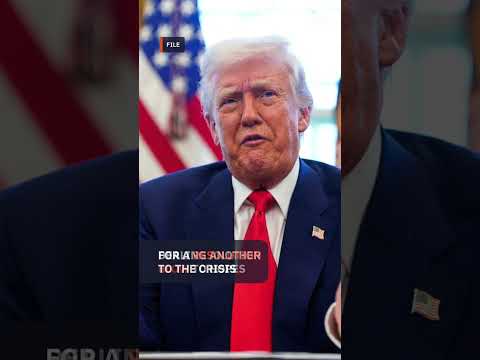
The comments came as US President Donald Trump issued yet another broadside against Iran’s leaders, dealing a further blow to hopes for a resolution to the crisis, following new attacks on shipping in the region on Tuesday, August 11.

Iran says no progress on reviving interim peace deal with US

The deal agreed in June declared an “immediate and permanent termination of military operations on all fronts,” but quickly unraveled, with Trump saying it was “over” on July 7, and Iran’s foreign ministry declaring it “suspended” a week later.

The US accuses Iran of failing to honor an agreement under the deal to reopen the vital Strait of Hormuz shipping route. Tehran says Washington has reneged on its commitments, including lifting a blockade of Iranian ports and releasing frozen Iranian assets.

“One of the issues that is being discussed via mediators is the US returning to the interim agreement and defining a time frame for implementing the commitments. There has been absolutely no progress on this issue,” the Iranian source said.

Trump said on Wednesday that the US has “total control” over the Strait of Hormuz.

But the Persian Gulf Strait Authority, the body Iran set up to ‌manage the waterway, said it remains blocked and will not be reopened until Iran’s conditions are accepted.

“Iran is all talk and no action, the Bully of the Middle East No Longer,” Trump said on his Truth Social platform.

Throughout the conflict, Trump has alternated between threats of escalation and claims that a peace deal is imminent.

‘No talk of extension’

Thousands of people have been killed in the conflict, mainly in Iran and Lebanon, since the US and Israel launched attacks on Iran on February 28.

Iran has struck US assets and infrastructure in countries including Oman, Jordan, Kuwait, Israel, the United Arab Emirates and Saudi Arabia.

The June interim ceasefire agreement set a 60-day period, extendable by mutual consent, within which Iran and the US were expected to reach a final deal limiting Tehran’s nuclear program and lifting US sanctions.

The Iranian source dismissed a report on Wednesday from Turkey’s Anadolu news agency that quoted Pakistani government sources as saying they had agreed to extend that 60-day period.

“There is no talk of an extension because, from Iran’s perspective, there is no period that began and therefore nothing to extend. The United States violated the interim agreement 48 hours after it was reached and withdrew from it a few days later,” the source told Reuters.

Attacks on shipping

The Strait of Hormuz, a narrow waterway between Iran and Oman and the entrance to the Gulf, handled a fifth of global oil and liquefied natural gas flow before the war.

Benchmark Brent crude futures have surged since the start of the war in February, hitting a peak of $126 a barrel, roughly 75% above pre-war levels, with choppy trade reflecting concerns over disruptions to Gulf oil supplies and shifting signals on peace talks.

On Tuesday, in separate incidents, a suspected Houthi attack on a small cargo vessel killed four crew members in the Bab el-Mandeb Strait and a US Navy MH-60 helicopter fired two Hellfire missiles to disable the steering gear of a Panama-flagged cargo ship, the US military said.

Oil prices rose but then steadied in volatile trading on Wednesday, August 12. after forecasters cut projections for 2026 oil demand. Brent crude futures were trading at ​around $88 a barrel and US West Texas Intermediate crude at around $83 a barrel. – Rappler.com

Similar Posts

  • |

    North Korea’s fake remote workers rake in $800m a year

    North Korean operatives have quietly built a hidden workforce inside American companies. They are using stolen identities, AI tools and fake profiles to secure remote jobs. The money earned through this scheme is funneled straight back to North Korea. Investigators say it could be channeling millions of dollars annually to Kim Jong Un’s regime. A new investigation pieced together leaked data, interviews and previously unseen videos to expose how the operation actually works. The findings offer a rare, detailed look at how Pyongyang’s undercover workers get recruited and placed. According to the investigation, a single tracked operative applied to more than 1,000 companies in just three months. That volume points to a highly organized, large-scale effort rather than isolated cases. Investigators also found that AI tools played a direct role in helping operatives write convincing cover letters and resumes. Screen recordings reportedly captured workers reading answers straight from ChatGPT during live hiring interviews. North Korea’s IT operatives typically rely on stolen American identities to pass candidate screening and background checks. Many are said to juggle multiple jobs simultaneously, all operating under the same stolen name. Some of these workers reportedly earn as much as $300,000 a year through these remote positions. The US Treasury Department has found that up to 90% of those earnings get funneled directly back to the regime. Officials estimate the overall operation generates as much as $800 million annually for North Korea. That scale has made it one of the more lucrative sanctions-evasion schemes uncovered in recent years. Investigators traced the flow of funds through a wider network involving North Korean IT workers and affiliated cybercriminals. That trail eventually led to a company being sanctioned by the US, reportedly tied to Pyongyang’s broader defence development program. The findings highlight how North Korea has adapted its sanctions-evasion tactics for the remote work era. By blending stolen identities with AI-assisted job applications, the regime has found a modern, low-visibility way to bypass international restrictions on its economy. As remote hiring becomes more common globally, cases like this are raising fresh questions about how companies verify who they’re actually hiring.

  • |

    Muslim student in Russia named in India protest case 

      A Muslim student from India’s Bihar state has claimed that he was named in a police case related to protests against the alleged NEET examination paper leak, despite having lived in Russia for the past four months. The student, identified as Mohammad Sadaqat, belongs to Kishanganj district in Bihar. He alleged that his name was included in a First Information Report (FIR) registered after demonstrations held on July 24 against the alleged NEET paper leak, even though he was not in India at the time of the protest. In a video message shared on social media, Sadaqat said he has been residing in Russia for the last four months for educational purposes and therefore could not have participated in the protest. According to him, the case relates to a demonstration that took place at LRP Chowk, where people gathered to protest against the alleged irregularities surrounding the NEET examination. The student maintained that he was shocked to learn that his name had been included among those accused in the case. He said his passport and travel records clearly show that he was outside India when the protest occurred. He urged the authorities to verify the facts and remove his name from the police case, arguing that it was impossible for him to have taken part in the demonstration while living abroad. Sadaqat appealed to the district administration and police officials to conduct a fair investigation and correct what he described as an error. He emphasized that he was not present in India during the protest and requested that the allegations against him be withdrawn after proper verification. Meanwhile, Kishanganj Superintendent of Police Hari Mohan Shukla neither confirmed nor denied whether the student had been named in the FIR. Responding to questions from the media, the police chief said that anyone who has concerns regarding the protest-related cases is welcome to approach the police. He stated that authorities would examine any complaint submitted by an affected individual and review the available evidence before taking an appropriate decision. However, he did not specifically address Sadaqat’s claim or comment on the contents of the FIR. The Bihar Police’s official account on X (formerly Twitter) initially responded to the student’s viral video by assuring the public that the matter would be investigated. The response suggested that the allegations raised in the video would be looked into by the relevant authorities. However, the police later deleted the post without providing any explanation, prompting further discussion on social media. The deletion has raised questions among users, although officials have not commented on why the statement was removed. The controversy comes amid widespread protests in Bihar over the alleged NEET paper leak, an issue that has sparked public outrage and demands for accountability. During a statewide strike organized in connection with the controversy, police reportedly detained 694 people for allegedly participating in protests and violating public order. According to reports, nearly half of those detained were minors. The incident involving Mohammad Sadaqat has drawn significant attention online, with many social media users calling for a transparent investigation into his claims. Authorities have not yet released further details regarding the case, and the matter remains under official review.

  • |

    Does your native language control how you think?

    With over 7,000 distinct human languages spoken across the globe today, humanity communicates through fascinating sentence structures. A compelling debate has captivated thinkers for decades. Does the language you grow up speaking dictate the limits of what your mind can comprehend? This captivating idea lies at the heart of the Sapir-Whorf hypothesis. A theory that continues to provoke vibrant discussions across linguistics, philosophy, and cognitive science. The Power of Vocabulary and Perception The hypothesis was formulated in the early 20th century by linguists Edward Sapir and Benjamin Lee Whorf. It’s often referred to as linguistic relativity or linguistic determinism. They propose that the structure of a native language fundamentally shapes its speakers’ worldview and cognitive capacity. If a concept or object lacks a dedicated word in a person’s language, that person cannot truly perceive, categorize or conceptualize it. Consider how different cultures classify colors. Some languages possess dozens of specific terms for distinct shades. Whereas,  others operate with only a couple of basic terms distinguishing between light and dark tones. According to strong linguistic determinism, a speaker whose native tongue lacks a dedicated word for green would struggle to perceive a green leaf as distinct from yellow. Similarly, emotional vocabularies vary widely across cultures. German famously uses the word Schadenfreude to describe taking pleasure in someone else’s misfortune. According to Sapir-Whorf theory, an English speaker whose language lacks an exact single-word equivalent would supposedly find it difficult to recognize or isolate that specific emotional state within themselves. Why the Concept Fascinates Us? It is easy to see why the Sapir-Whorf hypothesis captured public imagination. The notion that our mother tongue acts as a unique way through which we view reality is deeply romantic. Philosophically, the theory suggests that the world contains thousands of distinct cognitive universes. If language entirely dictated thought, cross-cultural understanding would face profound barriers. It is so as the speakers of different languages would operate inside fundamentally incompatible mental frameworks. In semantic studies, labeling objects and experiences allows humans to organize chaotic sensory input efficiently. Giving a name to a precise group such as distinguishing toddlers, teenagers and senior citizens helps us categorize society into recognizable stages. The hypothesis demonstrated that naming things provides cognitive shortcuts. Such a naming method makes specific distinctions far easier to reference and discuss in daily life. Why Modern Science Rejects Strong Determinism Despite its initial popularity, modern linguistics and cognitive scientists reject strong linguistic determinism. The fundamental flaw in the hypothesis rests on a misunderstanding of the relationship between mind and speech. Language does not produce thought. Rather, human thought drives the creation and evolution of language. When people encounter new experiences, foods or technologies, they do not remain silent simply because they lack pre-existing terminology. Instead, humans spontaneously create new phrases. They adapt existing terms or borrow words from other cultures to describe what they have experienced. An English speaker can easily understand and feel pleasure at a rival’s failure without ever having heard the German word Schadenfreude. While English uses blue for both dark and light shades. Whereas Italian maintains separate primary words (blu and azzurro). English speakers are fully capable of seeing the difference between a midday sky and the deep ocean. Human cognition precedes language. Speech serves as a flexible tool designed to communicate human experiences, not a rigid cage that imprisons cognitive ability. The Lasting Value of Sapir-Whorf   The Sapir-Whorf hypothesis retains great value even if its most radical claim has been disproven. It paved the way for weak linguistic relativity. The claim further explores how language subtly influences cognition, memory and visual attention without imposing hard limits on intellect. Ultimately, Sapir and Whorf inspired generations of researchers to explore the mysterious connection between human culture, language and the mind.

  • |

    Turkish Vice President, top officials join Pakistan Day celebration in Ankara

    ANKARA: Pakistan’s 79th Independence Day was celebrated with a grand ceremony at Pakistan House in Ankara, where Türkiye’s senior leadership joined Pakistani officials, diplomats and members of the community to highlight the deep and enduring friendship between the two countries. Türkiye’s Vice President Cevdet Yilmaz attended the event as chief guest, joined by senior political, military and diplomatic officials. The high-level participation underscored the importance Ankara attaches to its relationship with Islamabad and the longstanding bonds between the two nations. Among those attending were Turkish Defence Minister Yaşar Güler, Chief of General Staff Gen Selçuk Bayraktaroğlu, Naval Forces Commander Adm Ercüment Tatlıoğlu, Land Forces Commander Gen Metin Tokel and Air Force Commander Gen Ziya Cemal Kadıoğlu. Former senior officials, members of parliament, ambassadors, diplomatic representatives, Pakistani community members and media representatives also attended the ceremony. The event began with the recitation of the Holy Quran, followed by the national anthems of Pakistan and Türkiye. Students from the Pakistan Embassy International Study Group School added a colourful touch to the celebrations with national songs and traditional performances. Guests warmly applauded the cultural presentation. A documentary showcasing Pakistan’s history, cultural heritage, natural beauty, tourism potential and social and economic development was also screened. Yilmaz: Pakistan-Türkiye ties go beyond diplomacy Addressing the gathering, Vice President Yilmaz conveyed greetings from President Recep Tayyip Erdogan and the Turkish people to the government and people of Pakistan. He emphasised that the relationship between Pakistan and Türkiye went far beyond conventional diplomatic ties, describing it as a unique brotherly bond rooted in shared history and mutual solidarity. Yilmaz recalled the support shown by Muslims of the subcontinent to the Turkish people during the Turkish War of Independence, saying the historic connection continued to shape relations between the two countries. He reaffirmed Türkiye’s commitment to expanding bilateral cooperation with Pakistan and said both countries would continue working together to promote peace and stability in the region. The Turkish vice president also highlighted the importance of strengthening strategic cooperation and exploring new avenues for regional collaboration, including greater trilateral cooperation among Türkiye, Pakistan and Saudi Arabia. Pakistan envoy highlights sacrifices behind independence Pakistan’s Ambassador to Türkiye, Dr Yousaf Junaid, paid tribute to Quaid-i-Azam Muhammad Ali Jinnah and the sacrifices made during the Pakistan Movement. He said Pakistan’s independence was achieved through extraordinary courage, perseverance, determination and sacrifice. The ambassador urged Pakistanis to strengthen national unity and work collectively for the country’s stability, prosperity and development. Referring to Pakistan-Türkiye relations, Junaid said the partnership was based not merely on formal diplomacy but on shared values, history, mutual trust and strong public sentiment. He said cooperation between the two countries was expanding across defence, trade, investment, education, culture and people-to-people contacts. Jinnah exhibition adds historic touch The ceremony also featured a special photographic exhibition marking the 150th birth anniversary of Quaid-i-Azam Muhammad Ali Jinnah. Vice President Yilmaz, Ambassador Junaid and other dignitaries jointly inaugurated the exhibition, which highlighted Jinnah’s life, political vision, leadership and historic role in the creation of Pakistan. The event concluded with a traditional Pakistani dinner hosted in the gardens of Pakistan House. Against the backdrop of Pakistan’s green and white flags and warm Turkish hospitality, the Ankara celebration became more than an Independence Day ceremony. It served as a vivid reminder of a relationship built on history, affection and mutual trust — and of the two countries’ shared ambition to take that friendship into a stronger and broader future.

  • | | | |

    Egypt weighs joining Pakistan-Saudi-Türkiye defen…

    CAIRO: Egypt has started a serious review of the possibility of joining the Makkah Joint Defence Agreement between Pakistan, Saudi Arabia and Türkiye. Egyptian Foreign Minister Badr Abdelatty said Cairo has close and strategic relations with all three countries. He said Egypt’s ties with Pakistan, Saudi Arabia and Türkiye extend beyond political cooperation. Abdelatty was asked about Egypt’s possible inclusion in the defence agreement. He said Egypt has been aware of the pact since the beginning. He confirmed that Egyptian state institutions are currently conducting a comprehensive assessment of the agreement. The minister said no final decision has been taken yet. He added that the relevant Egyptian authorities are examining the agreement and its possible implications. Abdelatty stressed that defence agreements involve important commitments. Therefore, Egypt must carefully assess all legal and constitutional aspects before making a decision. He said any possible Egyptian participation would have to comply with the country’s Constitution and existing legal requirements. The review will also consider the responsibilities that could arise from joining the agreement. The development comes days after Pakistan, Saudi Arabia and Türkiye signed the Makkah Joint Defence Agreement. The pact seeks to strengthen defence cooperation among the three countries and enhance their collective security. Under the agreement, an attack against any one of the three countries would be considered an attack against all three. The arrangement has been described as a major step towards closer defence and strategic cooperation.

Leave a Reply

Your email address will not be published. Required fields are marked *