khameneis resurfaced message
| | |

Khamenei’s resurfaced message explains Iran’s …

Tehran: A message previously shared by Iran’s Supreme Leader, Ayatollah Ali Khamenei, has resurfaced on social media during the Chehlum commemorations of Hazrat Imam Hussain (RA), drawing renewed attention to Iran’s stance against reaching a deal with the United States.

The post, published on the social media platform X from Ayatollah Khamenei’s account, quotes a saying attributed to Imam Hussain (RA), emphasizing the duty to stand against oppression. The message states that those who fail to confront tyranny risk sharing the same fate as the oppressor.

It concludes by saying that this principle is the reason Iran refuses to compromise with the United States, linking the country’s political position to its ideological beliefs.

The message was originally posted on October 13, 2019, but has now been republished to coincide with the Chehlum observance honoring the martyrs of Karbala, highlighting the continued significance of its message in Iran’s political narrative.

Similar Posts

  • | |

    Irish songwriter Glen Hansard dies in Dublin motor…

    Irish singer-songwriter Glen Hansard, acclaimed for his work with The Frames and his Academy Award-winning song Falling Slowly, has died following a motorbike accident in Dublin. He was 56. Emergency services were called to Lower Road in Lucan shortly before dawn on Wednesday. Police confirmed the crash involved only Hansard’s vehicle and appealed for witnesses. His management, ATC, said his family was “heartbroken” and asked for privacy. Hansard’s career began on Dublin’s streets as a busker before he appeared in Alan Parker’s The Commitments in 1991. A year earlier he had founded The Frames, a band that became a cornerstone of Ireland’s rock scene. His international breakthrough came with Once, the 2007 film in which he starred alongside Czech musician Markéta Irglová. Their duet Falling Slowly won the Oscar for Best Original Song the following year and later formed the backbone of a Broadway musical that earned eight Tony Awards. Beyond his collaborations with Irglová in The Swell Season, Hansard released solo records including Didn’t He Ramble, which earned a Grammy nomination in 2016. He also became a familiar face on Irish television as the original presenter of RTÉ’s Other Voices. Hansard was widely admired for his charity work, particularly the Christmas Eve busk he launched in Dublin in 2010 to support the Simon Community. The annual event drew stars such as Bono, Sinéad O’Connor and Shane MacGowan. The charity described him as “a giant in the fight against homelessness” and said his compassion would remain part of his legacy. Tributes poured in from fellow artists and public figures. Actor Chris O’Dowd wrote: “He did that. And he leaves it with us. Thanks Glen.” Musician Mike Scott of The Waterboys added: “Travel on well, Buddy. You made your dreams come true.” Irish Prime Minister Micheál Martin called Hansard “a talented musician and actor who made a significant contribution to Ireland’s cultural landscape.” Hansard leaves behind his partner and their young son. In a recent interview he reflected on fatherhood, saying it had “upturned everything I know” and brought him to “a very different place than I’ve ever been before.”

  • |

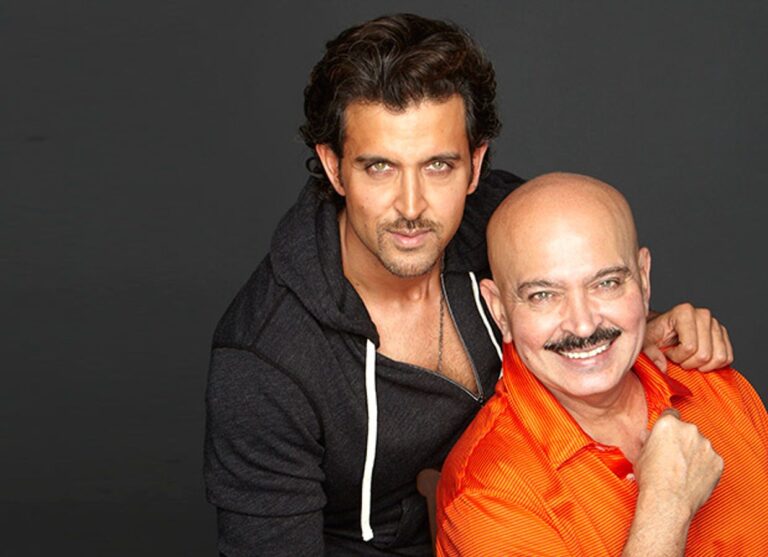
    Hrithik Roshan recalls father’s financial crisis after Koyla setback

    Bollywood actor Hrithik Roshan has opened up about one of the most emotional periods in his family’s life, recalling the financial difficulties his father, filmmaker Rakesh Roshan, faced following the commercial disappointment of Shah Rukh Khan’s 1997 film Koyla. The 52-year-old actor recently spoke about his father’s struggles and revealed that there was a time when Rakesh Roshan lost a significant portion of the money he had earned throughout his career. According to Hrithik, the setback was severe enough to create financial difficulties for the family and left a lasting impression on him. Recalling the difficult period, Hrithik said he still remembers a particular morning when he saw his father with tears in his eyes for the first time. The actor explained that Rakesh Roshan had told him that he had lost all the money he had earned. For Hrithik, witnessing his father in such a vulnerable state was an experience he could never forget. He described the moment as extremely emotional because he had never previously seen his father so broken and distressed. Rakesh Roshan had produced Koyla under his production banner Filmkraft Productions. The action thriller featured Shah Rukh Khan and Madhuri Dixit in the lead roles, alongside Amrish Puri, Deepa Sahi, Ashok Saraf, Johnny Lever and several other prominent actors. Released in 1997, Koyla revolved around Shankar, played by Shah Rukh Khan, a mute and loyal coal miner who works in a coal mine. The film combined action, romance and drama and was one of the major productions associated with Rakesh Roshan’s production house at the time. Despite its scale and star-studded cast, the film failed to achieve the level of commercial success that had been expected. It was reportedly made on a budget of around Rs 12 crore and earned approximately Rs 28 crore worldwide. Although the film recovered a significant amount at the box office, its overall commercial performance was considered disappointing in relation to its investment and expectations. The experience became an important chapter in Hrithik Roshan’s understanding of his father’s professional and personal journey. Years later, the actor has established himself as one of Bollywood’s leading stars, while Rakesh Roshan has continued to remain an influential filmmaker and producer. The father-son duo is now preparing to return to the superhero franchise that has been closely associated with their careers. Hrithik and Rakesh Roshan are currently involved in preparations for Krrish 4, the next installment in the popular superhero series. Hrithik’s recent recollection offers a rare glimpse into the challenges his family faced behind the glamour of Bollywood and highlights the personal impact that professional setbacks can have, even on established filmmakers.

  • | |

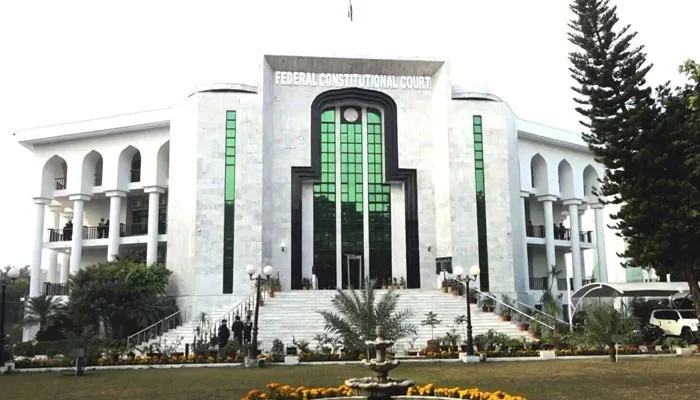
    FCC refuses to halt inquiry against former NAB DG

    ISLAMABAD: The Federal Constitutional Court (FCC) has declined to suspend inquiry proceedings against former National Accountability Bureau (NAB) Director General Saleem Shehzad, allowing an investigation into his alleged unlawful appointment and promotion to continue. The decision came during a hearing of an appeal filed by Shehzad challenging a show-cause notice issued against him. He had requested the court to stay the inquiry until the case was decided, but the bench refused to grant interim relief. A two-member bench headed by Justice Hassan Azhar Rizvi heard the appeal and directed the federal government to submit its response within three weeks before further proceedings. The case revolves around allegations that Saleem Shehzad’s appointment and subsequent promotion within the National Accountability Bureau were made in violation of applicable rules and procedures. Authorities had earlier issued him a show-cause notice seeking an explanation over the alleged irregularities. Before approaching the Federal Constitutional Court, Shehzad had challenged the notice in the Islamabad High Court. However, after his petition was dismissed, he filed an appeal before the FCC, seeking legal protection against the inquiry. During the hearing, the court did not interfere with the ongoing investigation, effectively allowing the relevant authorities to continue examining the allegations while the constitutional appeal remains pending. Legal experts say the ruling does not determine Shehzad’s guilt or innocence but indicates the court’s reluctance to halt administrative proceedings before hearing the case in detail. The federal government’s reply is expected to play an important role in the next stage of the proceedings. The case has attracted attention because it involves the appointment of a senior official in Pakistan’s top anti-corruption watchdog. Any findings from the inquiry could have broader implications for accountability, transparency and the process of appointments in public institutions. With the inquiry set to continue and the government directed to file its response within three weeks, the Federal Constitutional Court is expected to take up the matter again after reviewing the submissions of both sides. The outcome could shape the future course of the legal challenge brought by the former NAB official.

  • | |

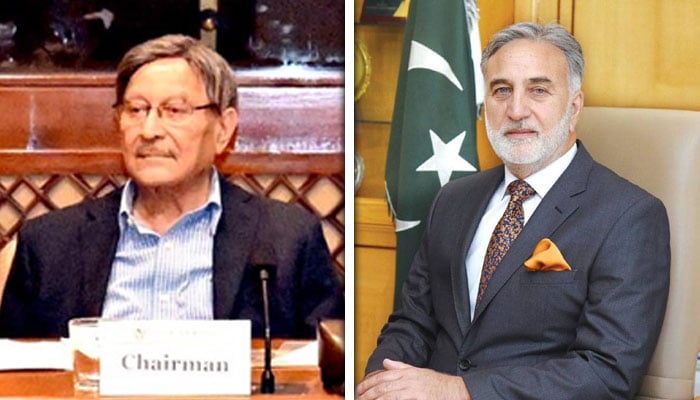
    NAB chairman grilled over bureau’s performance

    A meeting of the Senate Standing Committee on Law and Justice was held under the chairmanship of Senator Farooq H Naek, where National Accountability Bureau (NAB) Chairman Nazir Ahmed Butt appeared before the committee on its instructions. During the meeting, Senator Farooq H Naek remarked that the NAB chairman had perhaps appeared before the committee for the first time. In response, Nazir Ahmed Butt said that it was his first appearance before the committee as NAB chairman. He added that he had appeared before the committee several times while performing his previous responsibilities. The NAB chairman said he had been assigned the responsibility in 2023. He recalled that ministers he met during his tenure repeatedly complained that the bureaucracy was afraid to make decisions and was therefore reluctant to work. During the meeting, NAB Director General Operations briefed the committee on the bureau’s powers and performance. The official said NAB had received 505,799 complaints since its establishment. He said NAB also operates as an investigative agency under the Anti-Money Laundering Act, 2010. According to the briefing, NAB has so far completed 12,147 inquiries, conducted 7,339 investigations and filed 4,105 references. The DG Operations further told the committee that NAB had been allocated Rs22.556 billion over the past three-and-a-half years. Despite the expenditure, the bureau reported significantly higher recoveries during the same period. The committee was informed that NAB had recovered Rs1.069 trillion over the past three-and-a-half years. The briefing highlighted the bureau’s role in investigating corruption, financial crimes and other cases falling under its legal mandate. The committee members discussed NAB’s powers, investigations, recoveries and its overall performance during the meeting. The NAB chairman and officials responded to questions from the committee and provided details about the bureau’s operations and financial performance.

  • | |

    US revokes over 600 visas in crackdown on birth to…

    The United States has revoked more than 600 visas from foreign nationals over the past month as part of a sweeping campaign against birth tourism operations, the State Department announced Wednesday. Secretary of State Marco Rubio said on social media that American citizenship is not for sale, accusing criminal organizations of profiting by coaching foreign nationals to defraud the visa system and forge documents in order to secure citizenship for their children. He said these networks have systematically exploited weaknesses in US immigration law for financial gain. The State Department recently launched a dedicated Birth Tourism Prevention Task Force tasked with identifying and dismantling these networks. Rubio said the unit will continue reviewing the activities of visa holders to put an end to what he called a heinous abuse of national law, and said the department intends to use every tool available to dismantle birth tourism networks and protect the integrity of American citizenship. The crackdown follows an executive order President Donald Trump signed on August 6 that describes birth tourism as a calculated exploitation of immigration policy and casts it as a threat to national security. The order gives the State Department and the Department of Homeland Security authority to permanently bar entry and revoke documentation for individuals found to be facilitating these schemes. Trump signed two executive orders on August 6 in a narrower attempt to limit birthright citizenship, again testing a constitutional provision even after the Supreme Court rejected an earlier version of his effort. Curbing birthright citizenship has remained one of the central goals of Trump’s broader immigration crackdown, with the White House specifically targeting birth tourism, in which pregnant foreign nationals travel to the United States specifically to give birth on American soil. Following the Supreme Court setback on June 30, Trump initially urged Congress to pass legislation addressing the issue before ultimately turning to executive orders instead, a route that allows the administration to set policy directly but carries less legal weight than legislation passed by Congress.

  • | | |

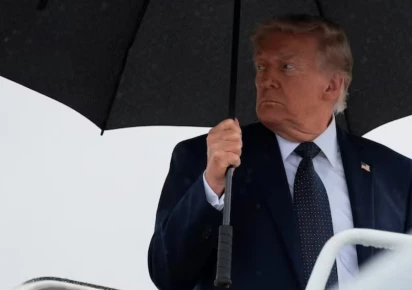
    CIA doubted Iran threat behind Trump plane switch

    WASHINGTON: US intelligence officials had doubts about the credibility of an alleged Iranian threat against President Donald Trump that triggered an extraordinary security operation during his departure from Türkiye last month, according to a Washington Post report. The revelation adds a new twist to the dramatic episode in which Trump was secretly moved from an aircraft at Ankara airport and flown to Britain aboard a smaller military jet while another aircraft was used as a decoy. The Washington Post, citing current and former US officials familiar with the intelligence, reported that CIA analysts did not consider information provided by Israel sufficiently compelling. The analysts reportedly communicated their reservations to officials in the Trump administration. The intelligence was described by one US official as Israeli-derived rather than US-generated and assessed with “low confidence”, according to the report. The CIA has declined to comment publicly. Despite the doubts, the US Secret Service decided that the potential danger justified extraordinary precautions. Trump’s security team has faced several serious incidents during his presidency and officials have stressed that they were unwilling to take unnecessary risks. The unusual operation unfolded after Trump attended the NATO summit in Ankara on July 8. According to reports, the president was initially expected to leave Türkiye aboard Air Force One. Instead, he was covertly transferred to a C-32A military aircraft through an airport catering truck. Trump and a small group of close aides then travelled to Britain’s Mildenhall air base, with fighter jets providing protection. Meanwhile, the regular presidential aircraft continued as part of a carefully planned deception. The operation has attracted considerable attention because it involved not only a change of aircraft but also secrecy from journalists and some senior officials travelling with the presidential delegation. The Washington Post reported that close Trump aides Dan Scavino, Natalie Harp and Walt Nauta accompanied him during the covert transfer, while no Cabinet officials did. The White House has defended the decision, saying Trump faces numerous threats, including threats linked to Iran, and that the Secret Service’s primary responsibility is protecting the president. Trump himself said the decision to use another plane was made by the Secret Service and that he followed its instructions. Reuters also reported that US officials considered the threat serious enough to warrant the covert aircraft switch. The intelligence dispute has nevertheless raised broader questions about the information shared between Israel and Washington. Some current and former US intelligence officials reportedly believe Israeli reporting can sometimes be intended not only to warn American leaders but also to influence policy decisions. The episode comes amid heightened tensions between Washington, Israel and Iran, making intelligence assessments particularly sensitive. It also highlights the difficult balance between acting quickly on potential threats and determining how reliable those threats actually are. For the Trump administration, the incident has now become more than a story about an unusual plane switch. It has raised questions about intelligence credibility, presidential security and the influence of foreign-provided information on US decision-making.

Leave a Reply

Your email address will not be published. Required fields are marked *