iran warns oman
| | | |

Iran warns Oman deal does not mean Hormuz is fully…

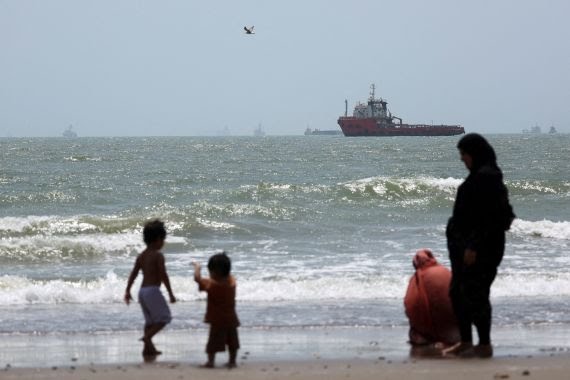
TEHRAN: Iran has cautioned that its emerging understanding with Oman over the management of the Strait of Hormuz should not be interpreted as a guarantee that the strategic waterway will immediately reopen to normal international shipping.

The clarification came after Iran and Oman agreed on a temporary maritime corridor intended to facilitate navigation through the strait. Iranian officials stressed that the arrangement remains limited and does not amount to a full restoration of commercial traffic.

Mukhtar Haddad, editor-in-chief of Iran’s Al-Wefaq newspaper, told Arab media that Tehran and Muscat had been discussing the management of the waterway for some time. He said the talks could lead first to a temporary agreement and eventually to a permanent arrangement, but neither step should automatically be seen as a decision to fully restore shipping.

Iranian Deputy Foreign Minister Kazem Gharibabadi also sought to temper expectations, saying Tehran and Muscat had agreed on a new temporary route but that the understanding did not mean the strait would be completely and immediately reopened.

Gharibabadi said Iran remained in a state of war and had made clear to mediators that conditions during an armed conflict could not be treated in the same way as normal circumstances. He added that the United States would need to fulfil its obligations under an earlier memorandum of understanding before Iran considers fully reopening the waterway.

Under the joint Iranian-Omani framework, the proposed maritime corridor would be temporary. Russian media reported that vessels entering the Persian Gulf would pass through Iranian waters, while ships returning from the Gulf would use Omani waters.

The reported corridor would operate like a two-way maritime route and have a width of about 11.25 kilometres. Iran and Oman are expected to hold further negotiations over the next 30 to 60 days to discuss the possibility of establishing a permanent navigation arrangement.

The developments come as the Strait of Hormuz remains at the centre of a wider regional security crisis. The waterway is one of the world’s most important energy routes, connecting the Persian Gulf with the Gulf of Oman and the Arabian Sea.

US President Donald Trump, meanwhile, claimed that the US Navy had removed or neutralised all mines in international waters of the Strait of Hormuz. He warned that any vessel that attempted to lay new mines would be destroyed.

Despite the temporary corridor agreement, Iran’s latest statements underline that a complete reopening of Hormuz remains a separate and politically sensitive issue. For shipping companies and global energy markets, the distinction could prove crucial: a limited navigation arrangement may ease some pressure, but it does not yet signal a return to normal maritime traffic.
Similar Posts

  • | |

    Denise Richards calls for honesty about cosmetic p…

    Denise Richards is speaking openly about cosmetic procedures, saying what frustrates her most is when celebrities and influencers deny having work done while promoting unrealistic beauty standards. The actress believes there is nothing wrong with choosing plastic surgery, but she feels people should be honest about it. Richards discussed the topic during the August 3 episode of the Dumb Blonde podcast, hosted by Bunnie Xo, the wife of country star Jelly Roll. The two women reflected on their own cosmetic procedures and shared why transparency matters, especially for younger generations who often compare themselves to celebrities online.  During the conversation, Bunnie Xo passionately criticized public figures who claim their youthful appearance comes only from skincare products or healthy habits. Richards agreed, saying she dislikes when people refuse to admit they have had cosmetic work while allowing others to believe their results are completely natural. She explained that such claims create unrealistic expectations for women and girls who may feel pressured to look the same.  Richards also opened up about her own experience with plastic surgery, revealing that she underwent a facelift after initially considering only a neck lift. Following discussions with a trusted friend and consultation with facial plastic surgeon Dr. Ben Talei, she decided a full procedure would create a more balanced result. The surgery included a facelift, neck lift, brow lift, eyelid surgery, lip lift and fat grafting.  The 55-year-old actress admitted she was terrified before going through with the operation because she has spent decades in the public eye. She knew people would notice the changes, making it impossible to hide the procedure. However, she now describes it as one of the best decisions she has made for herself, saying the goal was never to look like someone else but simply to restore the features she felt had changed with age.  Richards has long been candid about cosmetic enhancements. She previously spoke about getting breast implants at a young age and later needing revision surgery. She said she prefers openness over secrecy because it helps reduce the pressure placed on women to achieve impossible beauty standards without assistance.  Throughout the interview, Richards stressed that every woman should have the freedom to make personal choices about her appearance without fear of judgment. Whether someone decides to age naturally or undergo cosmetic procedures, she believes the decision should be respected. For Richards, the real issue is not plastic surgery itself but the dishonesty surrounding it. By sharing her own journey, she hopes to encourage more realistic conversations about beauty, aging and self-confidence while reminding people that authenticity is just as important as appearance. 

  • |

    PSX opens higher as KSE-100 index gains over 500 points

    KARACHI: Buying activity dominated trading at the Pakistan Stock Exchange (PSX) on Thursday, with the benchmark KSE-100 Index rising more than 500 points during the early session. At around 9:45am, the benchmark index was trading at 180,864.26 points, recording an increase of 553.05 points, or 0.31%, from the previous close. The positive trend reflected renewed investor interest in several major sectors. Strong activity was witnessed in cement, commercial banking, fertiliser, oil marketing companies (OMCs) and power generation stocks. Several index-heavy companies also contributed to the upward movement. HUBCO, Fauji Fertilizer Company (FFC), MCB Bank, National Bank of Pakistan (NBP) and United Bank Limited (UBL) were among the stocks trading in positive territory during the early hours. The latest gains come after the stock market staged a recovery in the previous session. On Wednesday, the PSX rebounded as investors returned to buying after two consecutive sessions of profit-taking. Market sentiment also improved toward the end of Wednesday’s trading session following reports regarding an extension of the US-Iran ceasefire, which helped ease some concerns among investors about geopolitical developments and their potential impact on regional markets. The KSE-100 Index ultimately closed Wednesday’s session at 180,311.22 points. Global markets provide positive cues The positive momentum at the domestic bourse was also supported by a broadly upbeat trend in Asian equity markets. Asian stocks advanced on Thursday after fresh US inflation data broadly matched market expectations. The figures reduced some expectations of an immediate tightening move by the US Federal Reserve and provided support to investor sentiment. MSCI’s broadest index of Asia-Pacific shares outside Japan rose 0.97%, while South Korea’s benchmark market climbed sharply, gaining 4.4%. Japan’s Nikkei index also advanced 1.86%. US stock futures remained relatively stable, with S&P 500 E-mini futures up 0.02% during the Asian trading session. US inflation remains in focus According to data released on Wednesday, US consumer prices increased by 0.1% in July, broadly matching economists’ expectations. The modest increase in consumer prices has lowered expectations of an immediate interest-rate hike by the Federal Reserve. Market participants are closely monitoring inflation figures as they assess the central bank’s next policy move. According to CME Group’s FedWatch tool, financial markets were pricing in around a 40% probability of a rate hike next month, down from approximately 54% a week earlier. Oil prices remain near $80 Meanwhile, international oil prices remained close to the $80-per-barrel level, as diplomatic efforts between Washington and Tehran remained unresolved. Developments in oil prices remain important for Pakistan’s economy and financial markets because changes in global crude prices can influence the country’s import bill, inflation outlook, exchange-rate pressures and corporate earnings. Investors at the PSX are expected to closely monitor both domestic economic developments and international market cues as trading progresses on Thursday.

  • | |

    ‘Rigging mastermind cries foul’: Maryam’s sh…

    Punjab Chief Minister Maryam Nawaz has strongly criticised the Pakistan Peoples Party (PPP) over its allegations of rigging in the Azad Jammu and Kashmir (AJK) elections. Maryam responded to criticism from PPP leaders in a social media post on Wednesday. She accused the PPP of being behind what she described as “subtle rigging” and questioned its decision to complain about electoral irregularities. “The mastermind of subtle rigging is crying foul over rigging,” Maryam said in her post. She then added a sarcastic question about when doomsday would arrive. Her remarks came after PPP Central Punjab General Secretary Hassan Murtaza accused the Pakistan Muslim League-Nawaz (PML-N) of manipulating the AJK election process. Speaking at a press conference in Lahore, Murtaza alleged that electoral rules had been repeatedly violated during the polls. He also criticised the role of the Election Commission. He claimed that the commission had acted like an election agent instead of performing its constitutional responsibilities. Murtaza accused the PML-N of setting a new example of electoral rigging. He said his party had been treated unfairly during the elections. The PPP leader also criticised the political activities of the PML-N leadership in AJK. Without directly naming Maryam Nawaz, Murtaza referred to her father, Nawaz Sharif. He said Sharif had gone to Kashmir and expressed a desire to become prime minister. Murtaza argued that if the PML-N leadership was now seeking the AJK premiership, it was only possible because of the PPP’s political role. He also defended Nawaz Sharif and said the PPP respected the former prime minister. Murtaza claimed that the PML-N had itself reduced Sharif’s political standing by offering him a position as chairman of an institution in Lahore while he was seeking the AJK premiership. The PPP leader then shifted his criticism to Punjab’s governance and public services. He claimed that thousands of acres of farmland between Shahdara and Muridke had been inundated. According to Murtaza, water had reached several feet in some agricultural areas. He said the damage was not caused by a major flood. Instead, he blamed a breach in a drain embankment. Murtaza also criticised the Punjab government’s claims about Lahore’s development. He argued that the city’s infrastructure remained vulnerable to heavy rainfall. He said several roads turned into what he described as drainage channels after only a few hours of rain. The PPP leader blamed government decisions for creating difficulties for citizens. He also criticised the import of one million metric tonnes of wheat. Murtaza claimed that the imported wheat was worth around Rs1 trillion. He questioned the government’s economic decisions and argued that citizens deserved better public services. He said taxes collected from the public should be used to provide essential facilities. He also called on the government to fulfil its responsibility toward citizens. The political dispute comes amid growing tensions between the PPP and PML-N over the AJK elections. PPP Chairman Bilawal Bhutto Zardari has also alleged irregularities in the first phase of the AJK elections. The PML-N, however, has rejected allegations of rigging and defended the election results. Maryam Nawaz has previously urged political opponents to accept defeat rather than make allegations of electoral manipulation

  • | |

    Former MPA Sadia Sohail Rana escapes attack in Lah…

    Former Member of the Provincial Assembly (MPA) Sadia Sohail Rana remained safe after unidentified individuals allegedly attacked her vehicle in Lahore, police said. According to police officials, the incident occurred when unknown suspects targeted her vehicle and pelted it with stones. The attack caused damage to the vehicle, but the former lawmaker was not injured. Police said Sadia Sohail Rana safely escaped the incident and immediately informed the authorities. Officers reached the scene soon after receiving the report and began collecting evidence. The former MPA has submitted an application requesting the registration of a criminal case against the unidentified attackers. Police said legal proceedings are being initiated in light of her complaint. Investigators have launched an inquiry to determine the motive behind the attack. Officials are examining all available evidence and questioning witnesses who may have seen the incident. Police are also reviewing CCTV footage from cameras installed in the surrounding area to identify the suspects and trace their movements before and after the attack. Authorities said efforts are underway to arrest those responsible. They added that action will be taken in accordance with the law once the attackers are identified.

  • |

    Lt Gen (R) Abdul Qayyum calls for global peace through dialogue; FIRD Chairman Toaha Qureshi backs strong armed forces

    LONDON:  Senator Lt Gen (R) Abdul Qayyum (HI(M)), President of the Pakistan Ex-Servicemen Society, called for greater respect for international law, dialogue under the umbrella of the United Nations and enhanced cooperation among Muslim countries to address global security challenges, while Forum for International Relations Development (FIRD) Chairman Toaha Qureshi reaffirmed support for Pakistan’s armed forces, saying they remained the country’s defenders and that the Field Marshal had enhanced Pakistan’s reputation on the global stage. Addressing the Second International Conference on Global Peace, organised by FIRD in London, Senator Abdul Qayyum said lasting peace could only be achieved through diplomacy and adherence to international law. “Respect for international law and pursuing dialogue as a strategy for peace under the umbrella of the United Nations can help resolve even the most complex global challenges. Destructive wars can only lead to catastrophic consequences and bring suffering to humanity as a whole,” he said. During his address, the senator argued that the post-Cold War unipolar world had witnessed repeated violations of international law and human rights, weakening the effectiveness of institutions such as the United Nations and the International Court of Justice. Discussing global security, he said colonialism had evolved into neo-colonialism in the modern era and referred to the establishment of US military bases around the world. He also cited recent developments in the Middle East, saying they had highlighted the importance of national self-reliance in defence and strategic planning. Senator Abdul Qayyum said vulnerable states increasingly needed to strengthen their own defence capabilities while developing strategic partnerships through mutual defence agreements. Referring to recent tensions involving Iran, Israel and the United States, he said the evolving regional security environment had prompted Gulf countries to reassess their strategic priorities and seek greater autonomy. He said Pakistan, with its strategic geographical location and strong defence capability, could play a constructive role in promoting closer cooperation among Muslim-majority countries. He added that greater unity among Muslim states, beyond sectarian divisions, could strengthen regional stability and collective security. The senator warned that unilateral actions and disregard for international law risked pushing the world towards another major global conflict. Referring to former US President Richard Nixon’s geopolitical doctrine, he said pragmatic diplomacy, a balance of power and economic stability remained essential foundations for international peace. Addressing interfaith harmony, Senator Abdul Qayyum said dialogue and mutual respect remained essential to strengthening relations between different faith communities. He expressed concern over the rise of Islamophobia and called for greater engagement, education and cooperation to counter prejudice and promote peaceful coexistence. Speaking at the conference, FIRD Chairman Toaha Qureshi said Pakistan’s armed forces were the guardians of the country’s sovereignty and deserved the nation’s continued support. “Pakistan’s armed forces are the protectors of the country. We need strong armed forces, and it is necessary that we continue to support this institution,” he said. Qureshi added that Pakistan’s Field Marshal had earned the country greater international recognition and enhanced its standing through his leadership. The conference also heard from educationist and businessman Mian Muhammad Jehangir, who stressed the importance of meaningful education in shaping future generations and driving national development. He said Pakistan’s youth possessed immense talent and potential, adding that investment in quality education, skills development and character-building was essential for the country’s progress. He praised the achievements, resilience and capabilities of Pakistan’s young people, expressing confidence that they would play a pivotal role in building a stronger, more prosperous and globally competitive nation.

  • |

    ECNEC approves Rs1.15tr development projects amid major cost escalations

    ISLAMABAD: The government has approved 16 development projects with a combined estimated cost of around Rs1.15 trillion, including the controversial Lahore-Sahiwal-Bahawalnagar motorway and the fifth extension of the Tarbela hydropower project, whose cost has surged by nearly 282% from the original estimate. The decisions were taken by the Executive Committee of the National Economic Council (ECNEC), chaired by Deputy Prime Minister Ishaq Dar. Several of the projects had previously been considered by development forums and returned with revised costs following delays, changes in scope and rising construction expenses. Of the total approved amount, approximately Rs320 billion represents additional expenditure linked to cost increases and delays, highlighting the financial pressures facing major public-sector development schemes. The government, however, issued only a brief statement following the ECNEC meeting and did not provide a complete breakdown of all the projects and their financial details. The omission of the Lahore-Sahiwal-Bahawalnagar motorway from the official summary was particularly notable given the political controversy surrounding the scheme. Lahore-Bahawalnagar motorway approved The ECNEC approved the Rs407 billion Lahore-Sahiwal-Bahawalnagar Motorway project, retaining its original 295-kilometre alignment in accordance with a directive issued by Prime Minister Shehbaz Sharif earlier this year. The first package, covering an 18.5-kilometre stretch from the Lahore Ring Road to Raja Jang Interchange, was approved at an estimated cost of Rs49 billion through federal financing. The project has faced opposition from the Pakistan Peoples Party (PPP), which has raised objections to the scheme and its proposed alignment. Given the heavy financial burden on the Public Sector Development Programme (PSDP), the ECNEC directed the National Highway Authority (NHA) to examine public-private partnership options for sections that could attract private investment. For commercially viable portions, the NHA will arrange its contribution through its own revenues in the form of Viability Gap Funding. For sections that are considered financially unviable, alternative arrangements will be explored, including contributions from the Punjab government, loans or financing from international financial institutions and direct federal funding, subject to the availability of resources. Tarbela extension faces major cost increase One of the most significant approvals was the fifth extension of the Tarbela project, which received approval at a revised cost of Rs316 billion. The project’s original estimated cost stood at approximately Rs82 billion, meaning its revised price tag represents an increase of about 282%. The steep escalation has already attracted scrutiny from government officials. During the Central Development Working Party (CDWP) review, Planning Minister Ahsan Iqbal reportedly raised concerns over project management, transparency and oversight. Questions were also raised regarding the technical capacity of personnel associated with the project. The Ministry of Water Resources had previously highlighted shortcomings in an inquiry into problems encountered during project implementation. An inquiry into the failure of the downstream cofferdam reportedly concluded that the structural collapse was linked to design changes, inadequate supervision and delayed administrative action rather than flooding. The findings attributed the failure to the shift from roller-compacted concrete to a rock-fill structure, along with weaknesses in project oversight. The incident resulted in delays and financial losses, adding to concerns over the project’s rising cost. The Ministry of Finance also sought an explanation for the substantial increase in the project’s estimated cost. Since the scheme is being financed through international financial institutions, the ministry asked the Water and Power Development Authority (Wapda) to provide details regarding the mechanism for repayment. Despite the concerns and requests for additional information, the ECNEC ultimately approved the revised project cost. Road and infrastructure schemes The committee also approved the 48-kilometre Khwazakhela-Besham Expressway at a revised cost of Rs116.6 billion. The new estimate is around 47% higher than the original cost. Another interprovincial road scheme aimed at improving connectivity between Gilgit-Baltistan and Azad Jammu and Kashmir was approved at Rs29 billion, representing an increase of approximately Rs10 billion over its initial estimate. The Rathoa Haryam Bridge over the reservoir channel on the Mirpur-Islamgarh Road also received approval at a revised cost of Rs10.8 billion. Its original estimate had been only Rs1.4 billion, reflecting a substantial increase over the initial projection. The ECNEC further approved the Lahore Wastewater Treatment Plant at a cost of Rs56.6 billion, around Rs4.2 billion above the earlier estimate. Poverty alleviation and education initiatives The Southern Punjab Poverty Alleviation Project was approved at Rs29.7 billion and will cover 10 districts: Bahawalnagar, Bahawalpur, Bhakkar, Dera Ghazi Khan, Khushab, Layyah, Mianwali, Muzaffargarh, Rahim Yar Khan and Rajanpur. The scheme includes an additional cost escalation of around Rs6.8 billion and is aimed at improving socioeconomic conditions and livelihood opportunities in some of the region’s less-developed areas. The ECNEC also sanctioned Rs10.6 billion for the Fulbright scholarship programme, under which 816 scholarships are planned. Of these, 550 MS and 141 PhD scholarships will be administered through the United States Educational Foundation in Pakistan (USEFP), while the Higher Education Commission (HEC) will provide funding for another 125 PhD scholarships through the PSDP. Water projects in Sindh and Balochistan The Mazarani Dam project in Qambar Shahdadkot, Sindh, was approved at an estimated cost of Rs16.1 billion. The committee directed the provincial authorities to begin Command Area Development alongside construction of the main dam so that the project’s agricultural and economic benefits could be realised during its second phase. The Winder Dam project was also approved at Rs21.6 billion, with the federal government expected to contribute Rs15.6 billion. Meanwhile, the Mashkel Dam in Washuk, Balochistan, received approval at a cost of Rs41 billion. The project will be financed by the Balochistan government, while an environmental assessment report will be incorporated into the official project documentation.w Power-sector efficiency projects The ECNEC approved several schemes aimed at improving the performance of electricity distribution companies. A Rs24 billion project for the Supply, Installation, Testing and Commissioning of Asset Performance Management Systems at Lahore Electric Supply Company (LESCO) was approved. The committee also sanctioned Rs19 billion for the Electricity Distribution Efficiency Improvement Project of Hyderabad Electric Supply Company (HESCO). A similar initiative for Peshawar Electric Supply Company (PESCO) was approved at Rs30.2 billion. These projects are intended

Leave a Reply

Your email address will not be published. Required fields are marked *