motorway police must
| |

Motorway police must avoid unlawful challans

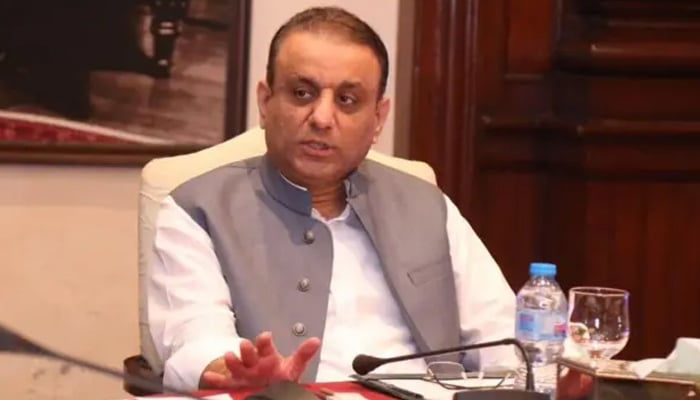
Federal Minister for Communications Abdul Aleem Khan has assured goods transporters that he will not allow the motorway police to issue a single unjustified or unlawful traffic challan, stressing that the government will honour all commitments made to the transport sector.

The minister made the remarks at a reception hosted in his honour by goods transporters following the successful conclusion of negotiations between transporters and the government.

Addressing the gathering, Abdul Aleem Khan urged transporters to comply with the axle-load policy, saying the regulation serves their own interests. He explained that carrying excessive weight puts additional pressure on vehicles and causes significant damage to roads and other transport infrastructure.

The federal minister acknowledged the vital role of the transport industry in keeping the country’s economy moving. He said the government needs the cooperation of transporters to support economic growth and improve the overall transportation system.

Abdul Aleem Khan also assured the transport community that he would personally monitor their concerns if necessary. “If required, I will stand on the roads myself to observe the problems faced by transporters,” he said, underlining his commitment to resolving issues through direct engagement.

The development follows high-level talks chaired by Sindh Governor Syed Muhammad Nehal Hashmi, during which representatives of the Pakistan Goods Transport Association held negotiations with federal and provincial government officials.

The talks ended successfully, prompting goods transporters to suspend their nationwide strike, which had continued for nine days. The transporters have agreed to postpone the strike for 40 days and resume the movement of goods across the country.

The agreement has temporarily eased tensions between the government and the transport sector, while both sides are expected to use the 40-day period to address outstanding concerns and work toward a longer-term resolution.
Similar Posts

  • | |

    Nearly 2,000 child abuse cases reported in Pakista…

    Pakistan recorded 1,914 reported cases of child abuse during the first six months of 2026, with child sexual abuse making up the largest share of incidents, according to a new report released by child rights organisation Sahil. The report, based on cases published in national and regional newspapers, revealed that 1,015 children were victims of sexual abuse between January and June. It also documented 558 abductions, 101 missing children, 35 child marriages and 98 cases involving child pornography linked to sexual abuse. In addition, 49 newborn babies were found abandoned in different parts of the country during the reporting period. Girls accounted for 58 percent of the reported victims, while children between the ages of 11 and 15 were identified as the most vulnerable group. The report also noted that children aged 16 to 18 and those between six and 10 years old were among the frequently affected age groups. According to Sahil, many victims were abused by people they knew. Acquaintances were identified as the alleged perpetrators in 43 percent of the reported cases, while strangers accounted for 34 percent. The findings further showed that nearly half of the abuse incidents occurred inside the victims’ homes, highlighting the hidden nature of child abuse. Other cases took place in the homes of the accused or at various public locations, while the location was not specified in several reports. Urban areas recorded a higher number of reported incidents than rural regions. Punjab accounted for around 80 percent of all reported child abuse cases nationwide, followed by Sindh with 15 percent. The remaining cases were reported from Khyber Pakhtunkhwa, Balochistan, Islamabad Capital Territory, Azad Jammu and Kashmir, and Gilgit-Baltistan. The report also stated that police registered cases in 89 percent of the reported incidents. However, a small number of cases were either not reported to law enforcement or allegedly faced refusal in the registration of a First Information Report (FIR), while the registration status of some cases remained unknown.

  • | |

    Sher Afzal Marwat urges government to rethink deci…

      National Assembly Member Sher Afzal Marwat has said that the government appears to be stuck on an issue that could negatively affect its public image and political standing. Marwat said the government needed to carefully consider its decisions and avoid taking positions that could ultimately damage its reputation among the public. He emphasized that decisions involving ordinary citizens, particularly matters related to healthcare, should be approached with greater understanding and consideration.   Commenting on the issue of medical treatment, Marwat said there was nothing wrong with a patient choosing to receive treatment at a private hospital at their own expense. He argued that if an individual is willing and able to pay for medical services privately, the government should not necessarily object to that choice.   According to Marwat, people should have the freedom to decide where and how they want to receive medical treatment, particularly when they are using their own resources. He suggested that restricting such choices could create unnecessary controversy and may not serve the interests of either the government or the public.   Marwat further stressed that the government must think carefully before making decisions that could have political or social consequences. He said that authorities should assess both the immediate and long-term impact of their policies instead of becoming fixated on a single issue. His comments come amid ongoing public debate over government decisions concerning healthcare and access to medical facilities. The issue has drawn attention because healthcare remains a sensitive matter for citizens, particularly those who seek timely treatment and may prefer private hospitals because of availability, facilities, or personal choice. Marwat’s remarks also highlight the broader question of how governments should balance public-sector policies with individual rights and choices. While governments have a responsibility to regulate healthcare and ensure that citizens have access to affordable and quality treatment, individuals may also want the option of using private healthcare services when they can afford them. The lawmaker maintained that the government should adopt a practical and carefully considered approach rather than allowing political disagreements to influence decisions that directly affect citizens. In his view, policies should be designed in a way that protects public interests while also respecting individual choices. He warned that continuing to remain focused on an issue without considering its wider implications could harm the government’s political standing. According to him, the government needs to recognize how its decisions are perceived by the public and make choices accordingly. Marwat’s statement reflects growing calls for greater flexibility and careful decision-making in matters that affect ordinary people. His comments suggest that governments can avoid unnecessary criticism by taking public concerns into account and ensuring that their policies remain focused on practical solutions. The National Assembly member ultimately urged the government to reconsider its approach and make decisions after carefully examining their possible consequences. He emphasized that thoughtful policymaking is essential to maintaining public confidence and avoiding decisions that could damage the government’s image. The remarks underline the importance of balancing government policy with the rights, needs, and preferences of citizens, particularly in sensitive areas such as healthcare.

  • Body of Last Thai Hostage Held by Hamas Returned to Israel

    BNGKOK – The remains of the last Thai national held hostage by Hamas in the Gaza Strip were handed over to Israeli authorities yesterday through the mediation of the International Committee of the Red Cross (ICRC). The Thai Foreign Ministry confirmed the return, marking a somber conclusion to the hostage crisis for Thailand following the […]

  • Four Thai Soldiers Killed, Three Wounded in Battle for Strategic Hill

    UBON RATCHATHANI – Four Thai soldiers were killed and three others wounded in intense fighting for control of Mount 677 in the Chong Anh Ma area of Ubon Ratchathani province today, according to Thai military sources. The Second Army Region confirmed that Thai forces have now successfully seized full control of the strategic hilltop. Thai […]

  • | |

    SC orders full medical record of Imran Khan

    The Supreme Court has ordered authorities to submit the complete medical record of Pakistan Tehreek-e-Insaf founder Imran Khan and provide detailed information about his meetings with his sisters over the past three years. A three-member bench led by Justice Shahid Waheed heard petitions concerning Imran’s access to his family, personal doctors and medical records. During the hearing, the court was informed that Imran’s sisters had met him 48 times during the last three years. The judges sought the complete record of these meetings. The court also asked authorities to provide details of telephone calls between Imran and his children. Justice Shahid Waheed questioned why Islamabad High Court orders concerning meetings with Imran had not been implemented. The court summoned why  officials from Adiala Jail and directed them to explain the situation at the next hearing. The court was particularly concerned about Imran’s medical information. Justice Waheed directed the Islamabad advocate general to submit the complete medical record instead of a summary. The judge questioned why the full record could not be provided to the court. Justice Naeem Akhtar Afghan also raised questions about a recommendation for Imran to undergo angiography. He asked whether the procedure could be carried out while Imran remained in jail. The Islamabad advocate general replied that the procedure could be performed at a hospital outside the prison. Justice Waheed expressed concern over the medical reports presented before the court. He observed that the reports indicated problems with Imran’s pulse and heart and suggested that some of his vital organs could be affected. The court also discussed the importance of family meetings for Imran’s health. Justice Waheed made it clear that meetings with Imran’s sisters should not be treated as a concession. “Meeting his sisters is not a favour; it is their fundamental right,” the judge observed. Imran’s sister, Uzma Khanum, was present during the proceedings. However, Justice Afghan stopped her from addressing the court directly and advised her to speak through her lawyer. Her counsel, Uzair Bhandari, assured the court that Imran’s sisters would not hold a media briefing outside Adiala Jail after meeting him. He also requested that Imran’s personal physician, Dr Asim Yusuf, and Uzma Khanum be allowed to meet the PTI founder. The court further sought comprehensive details about the legal cases against Imran. Authorities were asked to clarify the number of cases in which he is facing trial, the cases resulting in convictions and those in which his sentences have been suspended. The proceedings came after a medical board recommended greater interaction between Imran and his immediate family. The board said regular family contact could help manage his anxiety and blood pressure. According to the medical information presented to the court, Imran has experienced fluctuating blood pressure, palpitations, headaches, restlessness and anxiety. A cardiologist at the Pakistan Institute of Medical Sciences examined him on August 1. His blood pressure was recorded at 140/100mmHg. The doctor recommended measures to reduce mental stress, including increased family interaction and access to reading material. A four-member medical board examined Imran again on August 10. His blood pressure was recorded at 140/80mmHg. The board recommended daily walking and relaxation. It also suggested more frequent interaction with his immediate family and spouse to help control his anxiety and blood pressure. The medical report stated that Imran had undergone at least 39 medical examinations since his imprisonment. Jail doctors were also reportedly checking him three times a day. The report said his ECG was normal. It also stated that his eyesight had improved significantly after treatment for an eye condition. The PTI has challenged the completeness and authenticity of the medical information. The party has demanded examinations by Imran’s personal doctors, Dr Asim Yusuf and Dr Faisal Sultan, as well as an independent medical board. The government, however, has rejected allegations that Imran is being denied proper medical care. Government officials maintain that he is receiving treatment from qualified specialists and that his medical care and meetings are being managed according to the law and court orders.

  • | |

    KP CM denies forming Imran release force

    Khyber Pakhtunkhwa Chief Minister Sohail Afridi has told the Federal Constitutional Court that no “PTI founder release force” was ever established, describing the initiative instead as a peaceful movement for the release of Pakistan Tehreek-e-Insaf founder Imran Khan. Afridi submitted an eight-page response in the case through the Khyber Pakhtunkhwa advocate general. The response was filed after the Federal Constitutional Court sought his position on a petition challenging the alleged formation of the so-called release force. In his response, the chief minister said the actual initiative was the Release Peace Movement, which he described as peaceful, unarmed and voluntary. He maintained that the movement had no armed structure or military component. Afridi further argued that the constitutional petition was politically motivated and based on misrepresentation of facts. He said the petition was premature, hypothetical and therefore not maintainable. According to the chief minister, the petitioner had also failed to establish any violation of fundamental rights. Afridi said the Release Peace Movement was protected under Articles 16, 17 and 19 of the Constitution. These provisions relate to freedom of assembly, freedom of association and freedom of speech and expression. He also argued that Article 256 of the Constitution, which concerns private military organisations, had no relevance to the movement. The KP chief minister maintained that the Private Military Organisations Act, 1973 was also not applicable to the Release Peace Movement. He rejected allegations that the initiative posed a threat to public order. He described such claims as baseless and said comparisons between the movement and armed organisations of the past were misleading. Afridi asked the court to dismiss the constitutional petition at the preliminary stage. He also requested the court to declare the Release Peace Movement constitutional and lawful. The case comes amid political controversy over claims that the KP government or PTI supporters were preparing an organisation to campaign for Imran Khan’s release. Federal Defence Minister Khawaja Asif had previously criticised the KP government over the issue, alleging that it could establish a release force for the PTI founder while remaining silent against militants. The Federal Constitutional Court has scheduled the next hearing of the petition for July 29.

Leave a Reply

Your email address will not be published. Required fields are marked *