india accused promoting
| |

India accused of promoting banned committee narrat…

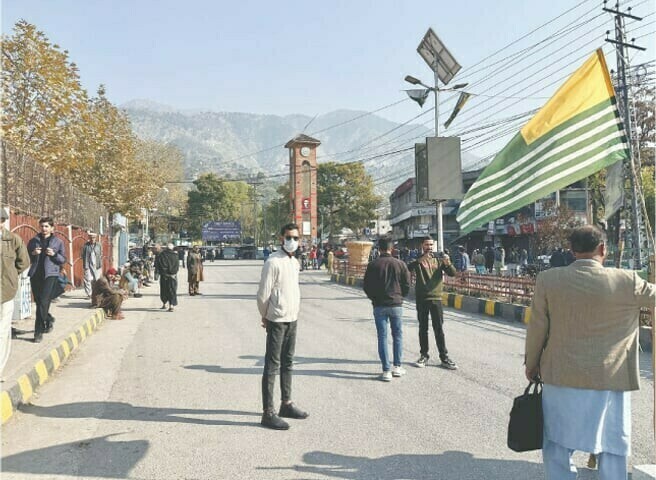
India has allegedly stepped up efforts to promote the narrative of a banned committee in Azad Jammu and Kashmir after the group failed to gain wider public support, according to security sources.

The sources claimed that Indian forces played videos linked to the banned Public Action Committee in the Keran sector on August 13 and 14.

The alleged move was aimed at creating anti-Pakistan sentiments among people living near the Line of Control.

Security officials said the videos were used to highlight the committee’s narrative and influence public opinion.

Experts believe the alleged move raises questions about possible links between the banned group and India.

They said the promotion of the committee’s material from the Indian side could indicate an attempt to exploit political and social issues in Azad Jammu and Kashmir.

Defence analyst and retired Major General Zahid Mahmood said people were already aware of claims regarding foreign involvement in the activities of the banned Action Committee.

He said information about alleged external support had previously emerged through what he described as reliable sources.

Mahmood said efforts had been made to develop a specific narrative about Azad Jammu and Kashmir.

According to him, the objective was to damage the broader Kashmir freedom movement and create divisions among the people.

He alleged that India and other international actors were playing a role in shaping narratives related to Kashmir.

The retired general also claimed that some international forces and media groups were helping promote these narratives.

He said such efforts could be aimed at influencing public opinion and weakening support for the Kashmir cause.

Security sources maintained that the alleged circulation of the videos was part of a broader attempt to provoke anti-Pakistan sentiments.

They said the use of material associated with the banned committee could also be intended to create political unrest and confusion among the public.

The allegations come amid continued tensions surrounding political developments in Azad Jammu and Kashmir.

Authorities are closely monitoring activities along the Line of Control and the dissemination of material they believe could fuel unrest.

Similar Posts

  • |

    US war on iran costs $37.5bn so far: Pentagon

    The United States has spent 37.5 billion dollars on its war against Iran to date, US Defence Secretary Pete Hegseth told lawmakers at a Senate Appropriations Committee hearing in Washington, while calling on Congress to approve additional funding for the conflict. The statement comes six months ahead of midterm elections, where Democrats lead in public opinion polls and are attempting to link the unpopular war with broader economic affordability concerns. Hegseth stated that the 37.5 billion dollar figure covers specific operational aspects of the war as well as anticipated expenditures through September 30, though the exact calculations used by the Pentagon were not detailed. The funding request follows President Donald Trump’s call for nearly 90 billion dollars in supplemental funding last month, primarily for the Iran conflict, setting up legislative friction with lawmakers who express frustration over the war’s trajectory and communication. Both Democratic and Republican members of Congress criticised the administration for a lack of transparency since US and Israeli military operations against Iran began on February 28. Senator Patty Murray warned that the president’s severe threats against civilian infrastructure risk war crimes and a prolonged conflict, while Senator Kirsten Gillibrand criticised contradictory statements from the administration regarding the duration and scope of the war. Hegseth warned lawmakers that without an urgent influx of capital, military training operations would need to be curtailed. Chairman of the Joint Chiefs of Staff General Dan Caine acknowledged that while service members would receive their pay, the Pentagon could face challenges covering equipment maintenance and investments in future capabilities due to strains on its nearly 1 trillion dollar budget. In response, Hegseth urged Congress to approve not only the supplemental package but also a 1.5 trillion dollar defence budget for 2027, describing any failure to fund the department at that level as the single greatest threat to national security. The appeal for funds follows the breakdown of a fragile ceasefire earlier in the month, leading to daily reciprocal strikes between US and Iranian forces. US troop casualties have risen to 18 killed and approximately 430 injured, including 100 wounded since July 7, though the Pentagon noted that 96 per cent of those injured have returned to active duty. Meanwhile, President Trump has threatened to expand targets to include Iranian energy plants, bridges, the Kharg Island oil hub via ground forces, and the deep-underground Pickaxe Mountain nuclear-linked facility, stating that a strike on the mountain site would occur in the near future.

  • | |

    Trump tells rally protester: ‘Your mom won’t b…

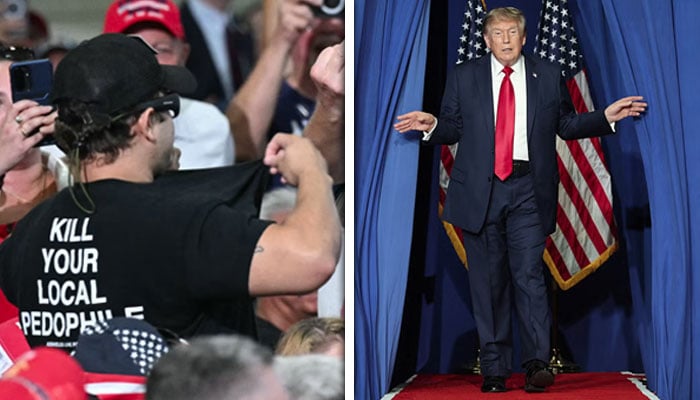
    US President Donald Trump made a pointed remark about a protester who interrupted his campaign rally in South Carolina, telling the man that his mother would not be pleased with his actions. Trump was speaking at the Myrtle Beach Convention Center while campaigning for Darlene Graham, a candidate seeking a seat in the South Carolina Senate. Although Trump’s name was not on the ballot, he urged his supporters to turn out and vote in the election. According to US media reports, the disruption occurred at around 7:28 p.m. on Friday when a man stood up and interrupted the president’s remarks. Police officers and convention center staff subsequently moved the protester out of the venue. As the man was being escorted away, Trump briefly paused his speech and commented on the incident. He suggested that the protester would face criticism from his mother, adding that she supported Trump politically. The president then resumed his address as the protester was taken outside the convention center. US media reported that the demonstrator was wearing a black shirt carrying a provocative slogan condemning sexual abuse of children.

  • |

    Government reviews splitting LESCO, MEPCO before privatisation

    The Ministry of Privatisation has established a high-level Technical Committee to examine the feasibility of dividing the Lahore Electric Supply Company (LESCO) and Multan Electric Power Company (MEPCO) into two or three smaller power distribution companies before their proposed privatisation, according to informed sources. The move is part of the government’s broader strategy to reform Pakistan’s power distribution sector and make state-owned electricity companies more attractive for private investment. LESCO and MEPCO currently serve the largest geographical areas and consumer bases among the country’s distribution companies (DISCOs), prompting officials to assess whether restructuring them into smaller entities could improve operational efficiency and facilitate the privatisation process. Technical Committee Constituted The committee is headed by Sajid Akram, Adviser (Power) at the Privatisation Commission. Other members include Ghulam Rasool, Joint Secretary at the Privatisation Commission; Imran Hafeez, Additional Director Tariff at the National Electric Power Regulatory Authority (NEPRA); and Abid Lodhi, Managing Director of the Power Planning and Monitoring Company (PPMC). The committee has been tasked with conducting a comprehensive review of the proposal and submitting recommendations to the government after evaluating its technical, operational and strategic implications. Weak Performance Raises Concerns Officials familiar with the matter said that both LESCO and MEPCO have consistently faced operational challenges, particularly in controlling electricity theft, reducing transmission and distribution losses, and improving bill recovery. These issues have affected their financial performance and have remained a major concern for policymakers pursuing reforms in the power sector. Recent audit reports for the fiscal year 2024-25 also highlighted unsatisfactory performance by both companies, reinforcing the need for structural reforms before moving ahead with the privatisation programme. MEPCO: Pakistan’s Largest Distribution Company MEPCO was incorporated in 1998 as a public sector company and operates under a permanent electricity distribution licence issued by NEPRA. The company is wholly owned by the Government of Pakistan through the Ministry of Energy. Serving nearly 8.76 million consumers across 13 districts of southern Punjab, MEPCO is the country’s largest electricity distribution company in terms of customer base. Its extensive network includes more than 82,000 kilometres of distribution lines and over 780 grid stations, supplying electricity across a vast region bordering three provinces. The company has initiated several modernisation projects, including the deployment of Advanced Metering Infrastructure (AMI), commonly known as smart metering, and digital billing systems aimed at improving transparency, reducing losses and enhancing customer services. LESCO Serving Over Seven Million Consumers LESCO also began operations in 1998 and supplies electricity to approximately 7.05 million consumers across Lahore, Kasur, Sheikhupura, Nankana Sahib and Okara. Its consumer base includes domestic, commercial, industrial, agricultural and bulk supply customers. The company’s operational network is divided into eight circles supervised by Superintending Engineers and 41 divisions managed by Executive Engineers to oversee field operations. In recent years, LESCO has accelerated efforts to modernise its infrastructure through the installation of smart meters, with plans to convert its entire consumer base to the Advanced Metering Infrastructure by 2029. However, the company continues to face significant operational hurdles, including shortages of transformers and electricity meters, resulting in delays in providing new connections and replacing faulty equipment. These issues have drawn criticism from regulators and consumers alike. Committee’s Terms of Reference According to the approved Terms of Reference (ToRs), the Technical Committee will: Assess the feasibility of splitting LESCO and MEPCO into two or three smaller distribution companies. Examine the potential advantages and disadvantages of such restructuring in line with the National Electricity Plan, the government’s Power Policy and the ongoing privatisation programme. Review whether similar committees were constituted in the past and analyse their findings, recommendations and implementation status. The committee’s recommendations are expected to play an important role in determining whether the government proceeds with restructuring the two major DISCOs before offering them for privatisation.

  • | | | |

    Iran says US strikes kill 55, injure 645 as confli…

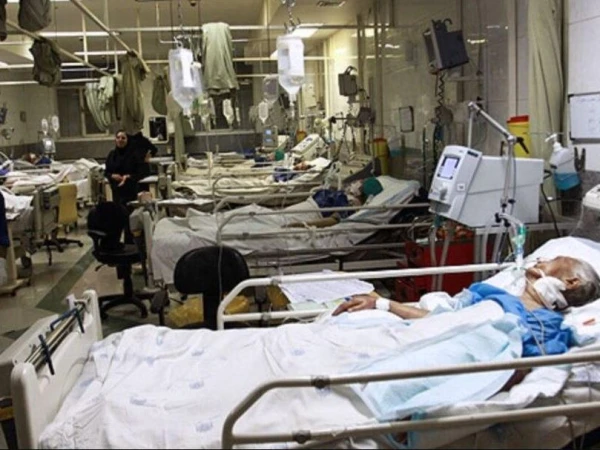
    TEHRAN: Iran’s Ministry of Health has claimed that at least 55 people were killed and 645 others injured in the latest wave of US military strikes across the country, as hostilities between Tehran and Washington continue to escalate. According to Iranian officials, the heaviest casualties were reported in the country’s southern and southwestern provinces, where several sites were allegedly targeted during the attacks. Iran’s state-affiliated Fars News Agency quoted a Health Ministry spokesperson as saying that the death toll had reached 55, while the number of injured had climbed to 645. The ministry described the strikes as among the deadliest incidents since the recent escalation in military tensions. Officials said Khuzestan Province suffered the highest number of casualties, followed by Hormozgan and Sistan and Baluchestan, where hospitals reportedly received dozens of wounded civilians following the attacks. The Health Ministry added that 586 of the injured have already been discharged after receiving treatment, while several others were treated for minor injuries and allowed to return home shortly afterward. According to the ministry, eight people remain hospitalized, with some expected to undergo additional surgeries due to the severity of their injuries. Iranian authorities condemned the attacks as an act of “American aggression” and called on the international community to respond to what they described as violations of international law. Officials urged global organizations to investigate the reported strikes and their humanitarian consequences. As of the time of publication, the United States had not issued an official response to the casualty figures released by Iran’s Health Ministry. The reported death toll and injury count have also not been independently verified, and international monitoring organizations have yet to confirm the claims. The latest figures come as military tensions between Iran and the United States continue to rise, fueling concerns about the humanitarian impact of the conflict and the risk of further regional instability. Security analysts warn that continued military exchanges could deepen the crisis across the Middle East, with civilians increasingly caught in the crossfire. They say the absence of verified information from independent sources makes it difficult to assess the full scale of the damage, but the competing claims from both sides underscore the rapidly evolving nature of the conflict. With diplomatic efforts showing little sign of progress, observers fear that further escalation could lead to additional civilian casualties and heightened security risks across the region, while the international community continues to monitor developments closely.

  • |

    France records more than 5,000 deaths during June heatwave

    More than 5,000 excess deaths were recorded in France during the severe heatwave that spanned late June and early July. According to data released by France’s national health agency, Santé publique France, 21,674 total deaths from all causes were registered between 17 June and 2 July across the affected regions. Under normal conditions, statistical modeling projected approximately 15,910 deaths for that period, resulting in 5,764 additional or excess deaths, a 36 per cent increase above expected baselines. Public health officials attribute the sharp rise in mortality to the intensity, early onset, and duration of the extreme temperatures, which affected 92 administrative departments representing nearly 98.5 per cent of the country’s population. Over half of the excess deaths occurred during the peak of the heatwave between 25 June and 27 June, with individuals aged 75 and older accounting for roughly two-thirds of the fatalities. The Île-de-France region, which encompasses Paris, recorded the highest impact, experiencing nearly 2,000 excess deaths, an 80 per cent surge above normal levels. The preliminary figures mark the highest excess mortality recorded from a heatwave in France since the historic 2003 heatwave. Authorities noted that the initial tally surpasses total summer heat-related excess deaths from the entire previous year, with consolidated final figures expected following the conclusion of summer health monitoring in the autumn.

  • | |

    Pakistan goods transporters association declares i…

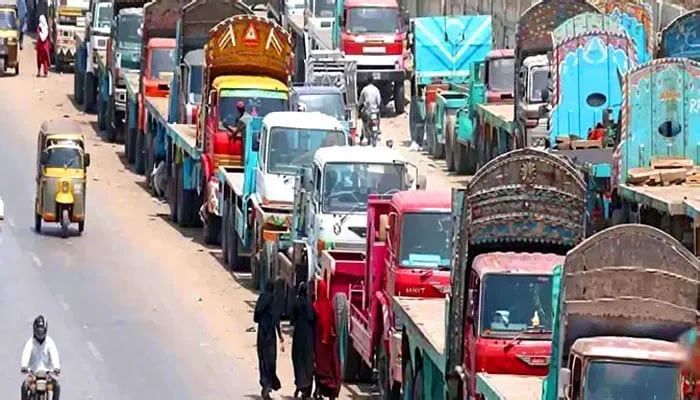
      The Pakistan Goods Transporters Association has raised serious concerns over the volatile and unpredictable daily adjustments in petroleum prices, stating that such frequent fluctuations make it impossible for the transport sector to continue operations smoothly. In a press conference held in Lahore, association officials, led by President Nabeel Mahmood Tariq, articulated a series of demands and grievances that have been mounting over recent months, warning that without immediate government intervention, the entire logistics and supply chain network could face severe disruption. Addressing the media alongside other senior office-bearers of the All Pakistan Goods Transporters Association, Nabeel Mahmood Tariq emphasized that the transportation industry is the backbone of the national economy, responsible for moving essential commodities, industrial raw materials, and consumer goods across the length and breadth of the country. However, he argued that the current pricing mechanism for petroleum products—which has seen almost daily revisions—has created an environment of extreme uncertainty for fleet operators. Unlike larger corporate entities, most truck owners and small transport companies operate on thin profit margins, and without a stable fuel pricing framework, they are unable to quote competitive rates to clients or plan their operational budgets effectively. Tariq pointed out that many transporters have already started grounding their vehicles, as each trip now carries the risk of financial loss if fuel prices rise unexpectedly mid-journey. Beyond fuel prices, the association president laid out a comprehensive list of demands aimed at reducing the financial burden on the sector. First and foremost, he called for an immediate end to unnecessary customs checking at various inter-provincial checkpoints. According to Tariq, these intrusive and repetitive inspections not only cause long delays—sometimes stretching into hours—but also open the door to harassment and bribery, which further inflate the cost of doing business. He urged the federal and provincial governments to streamline customs procedures and adopt a more efficient, technology-driven system that would expedite the movement of goods without compromising security or revenue collection. Another major point of contention raised by Tariq was the recent increase in toll taxes on highways and motorways. He demanded that this hike be rolled back completely, arguing that transporters are already struggling with rising maintenance costs, spare part prices, and tyre rates. The additional toll burden, he said, is simply unsustainable and forces many operators to take longer, less safe alternative routes, which ultimately hurts the overall efficiency of freight movement. Turning his attention to provincial policies, particularly in Punjab, Tariq called for the establishment of new, modern truck terminals across the province. He noted that existing truck stands and loading points are outdated, overcrowded, and lack basic amenities for drivers and helpers. New truck yards, equipped with proper parking, resting areas, workshops, and loading/unloading facilities, would not only improve working conditions but also reduce traffic congestion in urban centers. He also strongly condemned the 300 percent increase in token tax imposed on commercial vehicles in Punjab, labeling it as punitive and counterproductive. He demanded that this excessive tax hike be withdrawn immediately, asserting that it disproportionately affects small owner-operators who form the majority of the association’s membership. In a significant announcement, Nabeel Mahmood Tariq declared that the association fully supports the wheel-jam strike (hunger strike) called for August 8, which has been organized by various transport unions across the country to pressure the government into addressing these long-standing issues. He clarified that this is not a political move but a last-resort measure to draw attention to the existential crisis facing the transport industry. He warned that if the government fails to respond positively before that date, thousands of trucks, trailers, and tankers will park on the roads, effectively paralyzing the movement of food, medicine, fuel, and industrial goods. Such a strike, he cautioned, would have catastrophic consequences for an already fragile economy, leading to shortages, price hikes, and factory closures. Concluding his address, Tariq appealed to Prime Minister Shehbaz Sharif and the chief ministers of all provinces to personally intervene and hold urgent consultations with transport representatives. He reiterated that the industry is not asking for subsidies or charity, but merely for a predictable policy environment, fair taxation, and the elimination of corrupt practices at checkpoints. He expressed hope that the government would act wisely and avert a crisis that benefits no one except speculators and hoarders. The press conference ended with a unanimous resolution passed by the association leaders, vowing to continue their struggle peacefully but firmly until all their legitimate demands are met. The coming days, they warned, will be decisive for the future of Pakistan’s transport sector and, by extension, its entire supply chain.

Leave a Reply

Your email address will not be published. Required fields are marked *