activist thailand avoids

Activist in Thailand Avoids Jail in Landmark ‘Conscientious Objector’ Draft Dodging Case

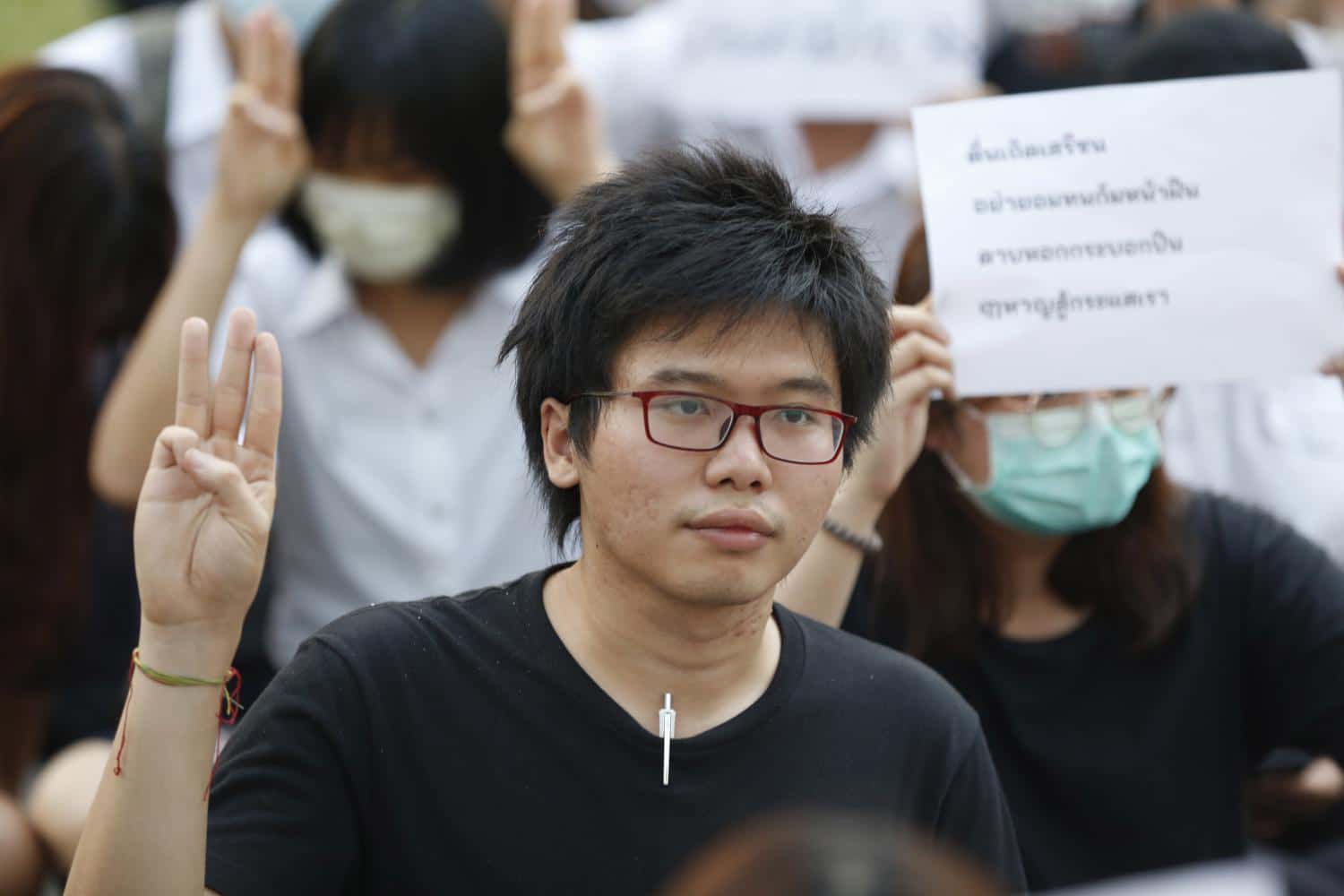
BANGKOK – A court in Samut Prakan, Thailand, has handed down a historic ruling that could reshape how the country handles military draft dodging. Student activist Netiwit Chotiphatphaisal received a six-month suspended prison sentence on Monday for refusing to participate in compulsory conscription.

This case marks the first time a Thai citizen has formally cited “conscientious objection” to avoid national military service. The Samut Prakan provincial court firmly rejected this defense, finding him guilty of violating the 1954 Military Service Act.

Key Takeaways

  • A Thai court sentenced a prominent student activist to a six-month suspended jail term for evading the draft.
  • This marks the very first time a draftee has used “conscientious objection” as a legal defense in Thailand.
  • Legal experts fear this suspended sentence could encourage more young Thai men to skirt their national service responsibilities.

According to Thai Lawyers for Human Rights, the judge originally sentenced the activist to six months behind bars. However, the court decided to suspend his punishment for a period of one year.

The judge granted this leniency because the young activist had never been sentenced to prison before. This means he will likely not serve any actual jail time, provided he stays completely out of legal trouble.

Netiwit has publicly opposed the military draft for many years. He strongly argues that forcing citizens to serve in the armed forces violates their personal, moral, and religious beliefs.

Understanding Conscription in Thailand

To grasp the weight of this ruling, you have to understand the Thai military draft system. Thailand requires all male citizens to participate in a conscription process when they reach the age of 21.

The military first accepts volunteers to fill its annual quota of recruits. When they do not get enough volunteers, the military uses a highly anticipated lottery system to draft the remaining men.

During the annual draft lottery in April, potential recruits blindly draw cards from a box. Drawing a black card means you are exempt, while drawing a red card means you must serve for up to two years.

This lottery system causes deep anxiety for thousands of young Thai men every single year. Many complain that mandatory service severely interrupts their college education, budding careers, and crucial family obligations.

The Battle Over Conscientious Objection

Conscientious objection is a legal concept widely recognized in many democratic nations around the world. It allows individuals to formally refuse military service based on deeply held ethical, moral, or religious convictions.

Unfortunately for the activist, Thailand does not legally recognize this concept at all. The Military Service Act only offers legal exemptions for specific medical conditions or temporary educational deferments.

Before his sentencing, Netiwit’s legal team asked the Constitutional Court to weigh in on his case. They argued that the 1954 draft law directly violated his basic constitutional right to freedom of belief.

The higher court unanimously disagreed with this ambitious legal argument. They ruled that mandatory conscription perfectly aligns with the Thai constitution, which paved the way for Monday’s final guilty verdict.

Fears of a Copycat Draft Dodging Effect

This suspended sentence has sparked a massive debate among legal professionals and military officials. Since the activist will not actually go to jail, some worry about the long-term impact on the draft system.

Legal experts fear this specific outcome might inspire a wave of similar protests across the country. They believe other Thai youth could start using the conscientious objector excuse to try and skirt their national responsibility.

If dodging the draft only results in a suspended sentence, the perceived risk of refusing service drops significantly. Young men might see this as an easy, relatively safe loophole to avoid pulling the dreaded red card.

Critics argue that if enough young men follow this path, the military could struggle to meet its enlistment quotas. This could force the government to rethink how it staffs its armed forces in the future.

What Happens Next for the Activist?

Despite the guilty verdict, the young activist remains free to travel and pursue his life goals. Recent news reports indicate he is currently studying in the United States, pursuing a postgraduate degree at Harvard University.

The court’s decision closes this specific chapter, but the national conversation is far from over. International human rights groups continue to heavily pressure Thailand to reform its strict military conscription laws.

These organizations want the Thai government to provide civilian service alternatives for those who refuse to take up arms. Until the laws change, refusing the military draft remains a very risky legal gamble for most citizens.

For now, the Thai military and the courts have made their official stance incredibly clear. Avoiding the draft is a serious crime, even if your personal conscience strongly tells you otherwise.

Trending News:

Defense Minister Warns Abuse of Conscripts Will Not Be Tolerated

Sailor from Thailand Supports U.S. Navy F-35C Fighter Jet Mission


Similar Posts

  • | |

    Islamabad to build two new underpasses

    Pakistan’s Interior Minister Mohsin Naqvi chaired a high-level meeting at the Capital Development Authority (CDA) headquarters to review the progress of ongoing development projects and approve new infrastructure initiatives aimed at improving Islamabad’s traffic system and public services. During the meeting, officials briefed the minister on the status of several major development schemes and presented plans for upcoming projects across the federal capital. Participants also reviewed timelines for ongoing construction work and discussed measures to ensure projects are completed without unnecessary delays. To ease traffic congestion and improve the flow of vehicles, Mohsin Naqvi announced the construction of two new underpasses at Kashmir Chowk and Faisal Mosque. He said work on both projects will begin next month and emphasized that the government is committed to expanding the city’s road infrastructure to meet growing transportation demands. The interior minister also expressed dissatisfaction over the absence of a fully operational Emergency 1122 service in Islamabad. He directed the relevant authorities to immediately complete all legal and administrative requirements needed to establish the Capital Emergency Services as a fully functional institution. He further instructed officials to launch work on four new emergency response centers on a priority basis to strengthen rescue and emergency services in the capital. In addition to infrastructure development, the meeting focused on improving the CDA’s financial sustainability. Officials discussed proposals to increase the authority’s permanent revenue, develop a long-term revenue model, and implement practical measures that would help the organization achieve greater financial independence. Naqvi stressed that strengthening the CDA’s financial position is just as important as delivering development projects. He also instructed officials to complete the Expressway Service Road project within the approved deadline, saying timely completion of public infrastructure remains a top government priority.

  • | |

    Khwaja Asif says Mohsin Naqvi is government’s mo…

    ISLAMABAD: Defence Minister Khawaja Asif has stirred fresh political debate after claiming that Interior Minister Mohsin Naqvi is the most powerful minister in the federal government and, in several matters, is not even answerable to Prime Minister Shehbaz Sharif. Speaking during a television interview on Monday, Asif delivered unusually candid remarks about Naqvi’s role in the current administration, suggesting that the interior minister operates outside the conventional framework of the federal cabinet. According to Asif, Naqvi has remained largely absent from the government’s routine decision-making process despite holding one of the country’s most influential portfolios. He said he had seen the interior minister attend only “two or three” cabinet meetings since the government took office. The defence minister also questioned Naqvi’s parliamentary presence, claiming the interior minister had appeared in Parliament only seven or eight times. He suggested that if a minister with such influence was publicly expressing dissatisfaction with the existing governance structure, it reflected poorly on the entire government. “If Mohsin Naqvi himself is complaining about the system, then perhaps we should simply go home,” Asif remarked, underscoring what he described as deep institutional weaknesses. His comments came in response to Naqvi’s recent statement warning that Pakistan’s current administrative structure had become too weak to effectively address the country’s long-standing challenges. The interior minister had argued that if the existing governance model continued unchanged, Pakistan could still be facing the same problems a decade from now. He maintained that creating new administrative units or provinces had become essential for improving governance, accelerating development and delivering public services more efficiently. Naqvi said the existing system had outlived its usefulness and was no longer capable of resolving the country’s growing administrative and governance issues. Asif’s remarks have added a new dimension to the ongoing debate over institutional reforms and the balance of power within the federal government. His observations also highlight differing perspectives within the ruling coalition on how Pakistan’s governance challenges should be addressed. The exchange between the two senior ministers is likely to fuel further political discussion, particularly over proposals to create new provinces and reform the country’s administrative framework—an issue that has periodically resurfaced in Pakistan’s political discourse but has remained politically contentious for years.

  • | | |

    Zardari, Shehbaz stress youth empowerment on World…

    ISLAMABAD: President Asif Ali Zardari and Prime Minister Shehbaz Sharif have highlighted the importance of empowering young people for Pakistan’s future. In their separate messages on World Youth Day, both leaders described the country’s youth as a valuable national asset. They stressed the need to provide young people with education, employment, skills and opportunities to contribute to national development. President Zardari said empowering young people was an investment in Pakistan’s future. He said the energy, creativity and determination of the country’s youth were among Pakistan’s most valuable assets. He said quality education, decent employment and innovation were among the common aspirations of young people. According to the president, around 67% of Pakistan’s population is below the age of 30. He said this made young people the country’s largest human resource. Zardari also highlighted the role of young women in national development. He said their potential and leadership were essential for Pakistan’s social and economic progress. The president said the Prime Minister’s Youth Programme was providing young people with opportunities in education, skills development, employment and entrepreneurship. He urged young people to adopt values of honesty, compassion and tolerance. He said empowering them to play an active role in national development was an urgent need. Zardari added that a strong, inclusive and prosperous Pakistan could be built through the meaningful participation of young people. Prime Minister Shehbaz Sharif also described the country’s youth as an invaluable asset. In his message on World Youth Day, the prime minister said this year’s theme was “Different circumstances, shared aspirations.” He said young people around the world live under different circumstances. However, their dreams, ambitions and hopes for a better future remain similar. Shehbaz said Pakistani youth were the architects of the country’s bright future. He noted that young Pakistanis had brought recognition to the country in different fields at both national and international levels. The prime minister said their abilities and full potential were essential for building a prosperous, peaceful and strong Pakistan. He added that the government’s priorities included using all available national resources to support the mental, physical, intellectual and academic development of young people.

  • | |

    Unforgiving July’s heatwaves in the U.S.

    According to a landmark report released by the National Oceanic and Atmospheric Administration (NOAA), the United States just experienced the single hottest month in modern history. Throughout July, atmospheric heat domes locked across vast stretches of the country. The heatwaves drove mean temperatures in the Lower 48 states to an unprecedented average of 76.9 degrees Fahrenheit (24.9 degrees Celsius). This mark sits an incredible 3.3 degrees Fahrenheit above the 20th-century norm, effectively surpassing the legendary heatwaves of July 1936 during the Dust Bowl and July 2012. The data underscores an extraordinary, nationwide thermal surge. Record-breaking conditions spared virtually no region, with all 48 contiguous states logging temperatures well above their long-term monthly averages. States in the Mountain West, the Southwest, the Northern Plains, and the Southeast bore the brunt of the extreme conditions. Across the country, over 600 monthly high-temperature records fell or were matched. 13 individual states logged a July that ranked among their top five hottest ever recorded. Wyoming stood out at the epicenter of the continental heat peak, registering its warmest month on record with temperatures soaring 5.1 degrees Fahrenheit higher than historical baselines. While intense afternoon conditions pushed daytime maximum temperatures to an average of 89.5 degrees Fahrenheit, ranking as the sixth-warmest daytime average in 132 years of record-keeping. Meteorologists emphasize that nighttime behavior represented the most dangerous aspect of this climatic event. Overnights offered almost no thermal relief, as minimum temperatures averaged 64.2 degrees Fahrenheit across the nation. This smashed the previous overnight low-temperature record set in July 2022 by a staggering 0.7 degrees Fahrenheit. Climatologists point out that uncomfortably warm nights are one of the most definitive signatures of human-driven climate change. High concentrations of greenhouse gases trap outgoing longwave radiation close to the Earth’s surface long after sunset. The physiological and infrastructural consequences of these elevated nighttime floors were felt severely across North America. When overnight temperatures fail to cool sufficiently, human bodies, livestock, and urban infrastructure lose their ability to recover from daytime heat stress. The sustained thermal stress strained municipal power grids, triggered localized water delivery alerts, and contributed to scores of heat-related illnesses and hospitalizations. In several western jurisdictions, compounding factors such as lingering droughts and severe heat domes fueled destructive wildfires, while critical water reservoirs like Lake Mead dipped toward critical levels.   Interestingly, temperature patterns across non-contiguous states diverged sharply from the mainland. Hawaii recorded near-average daytime conditions while Alaska experienced its coolest July since 2008, accompanied by record rainfall in regions around Anchorage. However, across the Lower 48, the pattern remained stubbornly hot and generally dry. As federal forecasters look ahead, climate projections suggest that the thermal pressure will persist, with above-average temperatures expected to hold firm across much of the central and southern United States well into late summer.

  • | |

    PMDC warns doctors over expired medical licences

    The Pakistan Medical and Dental Council (PMDC) has issued an important warning to doctors whose professional licences have expired. The council has decided to take action against doctors who fail to renew their licences within the required period. Under the new decision, doctors will be given six months to complete the renewal process. Licences that are not renewed within this period may be cancelled. The PMDC has also stressed that doctors involved in clinical practice must have a valid and active licence. Doctors with expired or inactive licences could face restrictions on their professional practice. The council has advised such doctors to complete the renewal process without delay. The move is aimed at ensuring that only properly registered and authorised doctors continue to provide medical services. The PMDC maintains the registration and licensing system for medical and dental practitioners in Pakistan. Keeping licences active is an important requirement for doctors who are practising professionally. The latest warning is expected to push doctors with expired licences to complete their renewals within the specified six-month period. Doctors have been advised to remain compliant with the council’s licensing requirements to avoid possible cancellation of their licences and disruption to their clinical practice.

  • | |

    SHC rejects contract employee’s regularisati…

    The Sindh High Court (SHC) has dismissed a petition filed by a contract employee of the Zulfiqarabad Development Authority seeking permanent employment, ruling that the request was not maintainable at the preliminary stage. The constitutional bench held that a contract employee does not acquire a legal right to permanent employment merely by serving for a long period. The court observed that contractual appointments remain subject to the terms and conditions agreed upon at the time of hiring. According to the court, the petitioner’s employment contract expired in 2024 after completing its specified term. Since the contract had already ended, the petitioner could not claim permanent status solely on the basis of continued service. Justice Adnan-ul-Karim Memon observed that employment on a contractual basis does not automatically create a legal entitlement to permanent appointment. He noted that permanent regularisation can only be granted if there is a relevant law or an approved policy issued by the competent authority. The court ruled that, in the absence of such legal provisions or an authorised policy, the petition seeking permanent employment had no legal basis. Consequently, the constitutional bench declared the petition inadmissible at the initial stage and dismissed it.

Leave a Reply

Your email address will not be published. Required fields are marked *