hamilton leads ferrari
| |

Hamilton leads Ferrari One-Two in Hungarian grand …

Lewis Hamilton led teammate Charles Leclerc to a Ferrari one-two in Friday practice at the Hungarian Grand Prix, signaling strong form for the Scuderia at the Hungaroring. Hamilton was 0.148 seconds ahead of Leclerc, with McLaren’s Lando Norris third, 0.499 seconds off the pace, and Red Bull’s Max Verstappen fourth. Ferrari looked in good shape on a track that lends itself to the car’s strong cornering performance.

Mercedes, however, appeared to have some work to do, with George Russell in fifth, 0.933 seconds off the pace, and championship leader Kimi Antonelli in 13th. Antonelli did not complete a qualifying simulation lap in the second session after his first attempt was abandoned when Franco Colapinto crashed his Alpine at the last corner, and his second came to grief after an error at the chicane. Antonelli was complaining throughout the session about his car’s balance.

Fernando Alonso ended the day 19th fastest in the new Aston Martin, 2.990 seconds off the pace. Team principal Adrian Newey described the first outing for the car, which is new apart from its engine, gearbox, and front suspension, as “promising.” Alonso had a lap nearly 0.4 seconds faster ruled out for track limits at the final corner, but the team made a significant step forward from where they have spent most of the season. Newey said: “Provisional results are promising. It’s only part of the package, so we’ll have some more steps in Zandvoort and then further in Monza and Baku. It’s the first part of our planned upgrade. We’re very short on parts, so we’re being careful with it and trying to learn all about it.”

Engine partner Honda is introducing a new engine at the Dutch Grand Prix after the summer break. The day was not all positive for Aston Martin, however, as Alonso’s teammate Lance Stroll spun out of the first session with what initially appeared to be a rear suspension failure. He was unable to take part in the second session because there was not enough time to repair the car. Team representative Pedro de la Rosa confirmed: “It is a suspension failure. We were confident it would not happen in Fernando’s car. That’s why we sent him out. Because of the lack of spares we couldn’t repair his car on time.”

Ferrari’s strong performance in practice positions them as the team to beat heading into qualifying, with Hamilton looking comfortable in the car and Leclerc close behind. McLaren and Red Bull will need to find improvements if they are to challenge the Ferraris, while Mercedes face a significant task to unlock pace for qualifying and the race. Aston Martin’s upgrades offer hope for the future, but they remain off the pace of the frontrunners. The Hungaroring, known for its twisty nature, often rewards cars with strong downforce and cornering ability, which played to Ferrari’s strengths. As the weekend progresses, teams will be fine-tuning their setups for qualifying and race day, with the battle for pole position and victory set to be a closely contested affair. The weather conditions could also play a role, with forecasts suggesting the possibility of rain, adding another layer of unpredictability to the Hungarian Grand Prix weekend. Fans are eagerly anticipating the action, with the Hungaroring historically producing exciting races. Ferrari will be looking to convert their practice pace into a strong result, while their rivals will be working hard to close the gap and challenge for the top step of the podium. The stage is set for a thrilling weekend of Formula 1 action in Hungary.

Similar Posts

  • | |

    Citizen named Quaid-e-Azam told to appear before N…

    PESHAWAR: The Peshawar High Court has directed a citizen named Quaid-e-Azam to appear before the National Database and Registration Authority (NADRA) Board after his Computerised National Identity Card (CNIC) was blocked. The matter came before the court after the citizen challenged the blocking of his CNIC through a petition. A division bench comprising Justice Waqar Ahmed and Justice Inamullah Khan heard the case. During the proceedings, the petitioner’s lawyer told the court that his client was a businessman. He said the citizen’s CNIC had been blocked and requested the court to intervene in the matter. The lawyer sought relief against the action taken against his client. He maintained that the blocking of the identity card had affected the citizen and required judicial consideration. A NADRA representative also appeared before the court. The Director Legal of NADRA informed the bench that the CNIC had not been blocked without reason. He said the authority had found the petitioner’s identity record suspicious. According to NADRA, the issue required further verification of the citizen’s record and identity documents. After hearing both sides, the court did not immediately order the restoration of the CNIC. Instead, the bench directed the petitioner to appear before the NADRA Board. The court’s direction means that the petitioner will have an opportunity to present his position before the relevant authority. NADRA will then examine the matter in accordance with its verification process. The case highlights the importance of accurate identity records and the procedures followed when questions arise over a citizen’s documentation. The court’s order also provides a formal channel for the petitioner to address the concerns raised by NADRA

  • | | | |

    Qatar restores maritime traffic after two-week suspension

    Qatar has fully resumed maritime navigation for all types of vessels after a two-week suspension imposed amid heightened security tensions in the Gulf and around the Strait of Hormuz. Qatar’s Transport Ministry announced that maritime activities would resume from Sunday. It urged shipping companies, vessel operators and other concerned parties to follow safety regulations and official instructions to ensure safe voyages. The ministry did not provide further details about the reasons behind the decision. Qatar had suspended maritime navigation on July 12 as regional tensions intensified. It had earlier halted maritime traffic on June 29 before partially restoring operations on July 5. The conflict also prompted several shipping companies to advise vessels to remain outside the Strait of Hormuz because of security concerns. Meanwhile, Iran said it had made progress in talks with Oman on arrangements for safe shipping through the Strait of Hormuz. Iranian Foreign Ministry spokesman Esmaeil Baqaei said officials from the two countries held discussions in Tehran on Friday and Saturday. The talks focused on common principles and practical mechanisms for ensuring the safe movement of ships through the strategic waterway. Baqaei described the discussions as productive and said progress had been achieved. He added that technical and political consultations between the two countries would continue. Iran also said there had been no change in the existing maritime traffic situation in the Strait of Hormuz. The waterway remains a key route for international energy and commercial shipments, making any prolonged disruption a major concern for global trade. At the same time, Iranian military officials claimed that Tehran had targeted US military facilities in Jordan, Kuwait and Bahrain during retaliatory operations. Brigadier General Mohammad Reza Akraminia said Iran had taken action after accusing Washington of violating previous commitments related to the Strait of Hormuz. Iranian army spokesman General Abolfazl Shekarchi also claimed that the United States had failed to achieve its objectives against Iran. He described the situation as difficult for Washington and said the US was looking for a new strategy. Iranian officials further claimed that US military infrastructure in Iraq’s Erbil suffered extensive damage during the conflict. Tehran has warned that its military operations could resume if hostilities escalate again. The United States, meanwhile, says its naval blockade against Iran remains in effect. US Central Command said American forces had redirected several commercial vessels accused of attempting to breach the blockade. It also reported disabling two vessels and boarding others to verify compliance. One oil tanker was inspected in the Arabian Sea before continuing its journey, while another vessel was reportedly disabled in the Gulf of Oman after allegedly ignoring repeated warnings. The US actions have added to concerns over the safety of commercial shipping in the region. Kuwait has rejected reports that it participated in military operations against Iran. Kuwait’s ambassador to the United States said her country had not taken part in attacks against Tehran and had not allowed its territory, airspace or territorial waters to be used for offensive operations. Kuwait has also condemned attacks against shipping in the Red Sea. Its Foreign Ministry described such attacks as a threat to maritime security, international trade and freedom of navigation. Kuwait expressed solidarity with Saudi Arabia and backed measures taken by Riyadh to protect its security and interests. The latest Red Sea tensions followed the Houthis’ announcement of a naval blockade targeting Saudi Arabia. Saudi Arabia subsequently launched strikes against Houthi-held areas, while the Houthis later claimed attacks on Saudi oil facilities. Iran’s Islamic Revolutionary Guard Corps has meanwhile warned countries supporting US military operations against Tehran. An IRGC spokesperson said countries cooperating with Washington could become targets and specifically referred to Britain and Gulf states. US President Donald Trump has also reportedly paused plans for further strikes against Iran after nearly two weeks of military action. Reports suggested concerns over the availability of US air defence supplies in the region were among the factors behind the decision. The reported pause could provide additional space for diplomatic efforts, although it remains unclear whether it represents a temporary break or a broader halt to US strikes. US forces are reportedly maintaining contingency plans should major military operations resume.

  • | | |

    Four terrorists killed in foiled South Waziristan …

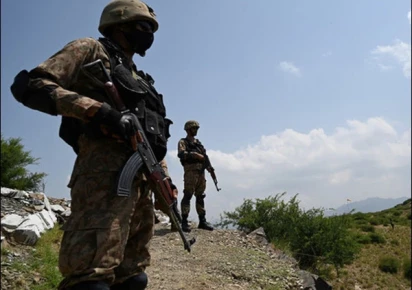
    Security forces have thwarted a suspected suicide attack on a security check post in South Waziristan, killing four terrorists, according to the military’s media wing. The Inter-Services Public Relations (ISPR) said terrorists attempted to target a security forces’ post on Saturday using a vehicle packed with explosives. The vehicle was intercepted before it could reach the check post. Security personnel destroyed the explosive-laden vehicle outside the post’s perimeter, killing the suicide bomber inside. The failed attack caused no damage to the check post, according to the military. The ISPR said three other attackers attempted to escape and took shelter in a nearby compound. Security forces subsequently launched a targeted clearance operation and killed all three terrorists. No security personnel were reported killed or injured during the operation. Following the engagement, security forces launched a sanitisation operation in the area to search for any remaining militants and ensure the area was secure. The military said the operation demonstrated the preparedness and professional response of security personnel against terrorist threats. It added that counterterrorism efforts would continue under the government’s broader security strategy. President Asif Ali Zardari praised the security forces for responding quickly and preventing the attack. He said security and law enforcement agencies would continue their operations against terrorism with determination. Interior Minister Mohsin Naqvi also commended the personnel involved in the operation. He said the nation was proud of the security forces and their continued efforts to counter terrorism. The latest incident comes amid heightened security concerns in Khyber-Pakhtunkhwa and Balochistan, where militant attacks have increased in recent years. Security forces have continued targeted operations in several areas to disrupt militant networks and prevent attacks on security personnel and civilians. The South Waziristan operation comes shortly after a deadly attack in Tank district in which several security personnel and a government official were killed. Another attack in Kohat also claimed the lives of government officials after militants ambushed a vehicle at a joint check post.

  • | |

    Singapore bans British band Massive Attack following pro-Palestinian display at concert

    The Singapore Police Force and the Infocomm Media Development Authority (IMDA) have issued a formal entry ban against British trip-hop band Massive Attack after band members unfurled a Palestinian flag and shouted “Free Palestine” on stage during their performance at The Star Performing Arts Centre. Following an investigation into the incident, authorities administered stern warnings to founding members Robert Del Naja and Grant Marshall for violating Section 3 of the Foreign National Emblems (Control of Display) Act 1949 and Section 16 of the Public Order Act. The regulatory body confirmed that the band will be denied future entry and performance permits in the country. IMDA is also evaluating potential licensing breaches against the local concert organiser for failing to enforce rules that strictly prohibit the display of political or foreign symbols. Singapore maintains stringent regulations regarding public demonstrations, political expression, and the display of foreign emblems to preserve racial and religious harmony within its multicultural population. Authorities reiterated that external geopolitical conflicts must not be imported into the country’s public sphere. Massive Attack, known for integrating political activism into their performances, continued their world tour with their next scheduled stop in Seoul.

  • |

    Govt hikes petrol by Rs4.4, diesel by Rs3.62 as gl…

    The federal government on Thursday increased the prices of petrol and high-speed diesel by Rs4.40 and Rs3.62 per litre, respectively, effective July 24. Following the latest revision, petrol now stands at Rs331.52 per litre, while HSD is priced at Rs378.66. The price hike comes amid a surge in global oil prices, with Brent crude jumping 6% to $100.50 a barrel following attacks on tankers in the Red Sea, which have choked off a second crucial Middle East artery for global oil supplies alongside Iran’s near-closure of the Strait of Hormuz. This is the fourth consecutive day the government has revised fuel prices after switching to a daily review mechanism last week to reflect volatility in international markets. The new system bases daily fuel prices on a seven-day average of international market rates, ensuring timely adjustments to align with global trends. The latest increase was anticipated as oil prices surged to their highest level since May, driven by escalating tensions in the Middle East. The price revision came after the government and the All Pakistan Petrol Pump Owners Association reached an agreement a day ago to postpone the association’s planned nationwide shutdown for two weeks. The agreement followed successful negotiations with Petroleum Minister Ali Pervaiz Malik, who assured dealers that their long-pending concerns, including demands for a monthly pricing mechanism and an increase in dealer commissions, would be addressed. The surge in global oil prices has been fueled by Houthi attacks on oil tankers in the Red Sea, which have raised fears of a wider regional conflict. The attacks have disrupted shipping through the Bab el-Mandeb strait, a vital alternative route for Saudi oil exports, adding to the supply concerns already triggered by the near-closure of the Strait of Hormuz. The dual disruptions have put energy markets on edge, with fears of a global supply crunch intensifying. The spike in oil prices has also impacted global stock markets, with major tech giants knocking US stocks lower and Europe’s borrowing costs spiking to long-term highs. The unsettling day across markets reflects the broader economic implications of the Middle East conflict, which continues to disrupt global energy supplies and threaten economic stability. As the situation remains volatile, further price revisions are likely in the coming days. The government has assured the public that it is monitoring the situation closely and will take necessary measures to mitigate the impact on consumers. However, with global oil prices expected to remain elevated, Pakistani consumers are likely to face continued pressure on fuel costs, affecting transportation, goods, and services across the country. The government’s daily price revision mechanism aims to provide transparency and responsiveness to market changes, but it also means that consumers will face more frequent price adjustments as global oil markets remain volatile. The coming days will be critical in determining whether the situation stabilizes or whether further hikes are needed to reflect global trends.

Leave a Reply

Your email address will not be published. Required fields are marked *