state bank considers
| |

State Bank considers scrapping Rs10 banknote

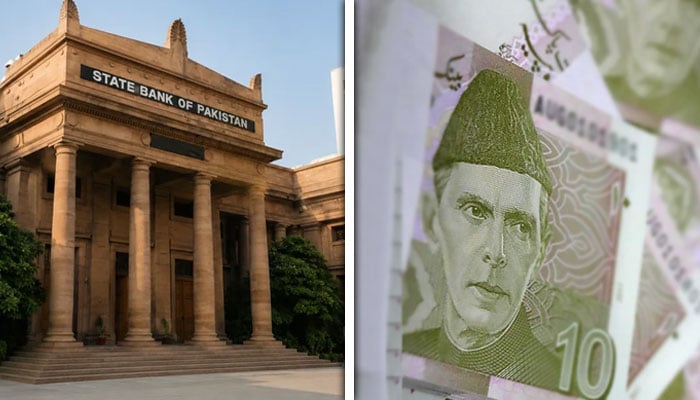
ISLAMABAD: The State Bank of Pakistan (SBP) is considering discontinuing the Rs10 currency note as part of plans to introduce redesigned banknotes with enhanced security features, officials told the Senate Standing Committee on Finance.

The committee met in Islamabad, where SBP Deputy Governor Dr Inayat Hussain briefed members on the proposed changes to the country’s currency notes.

According to the deputy governor, the central bank is considering withdrawing the Rs10 note because its production cost has increased. He said the Rs10 denomination had been targeted for discontinuation twice in the past, but the attempts were unsuccessful.

He clarified that the Rs10 note would be discontinued when the new series of currency notes is issued.

Committee Chairman Senator Saleem Mandviwalla said the committee had previously asked the State Bank to replace all currency notes. Dr Inayat Hussain said the existing currency series had been in circulation since 2005.

Officials told the committee that new banknotes would carry improved security features. The matter had been discussed twice by the federal cabinet. A committee formed by the cabinet had also proposed certain changes to the designs.

The issue of the process used to select the company for designing the new notes also came under discussion.

Chairman Saleem Mandviwalla questioned the decision to award the design work to the same company whose consultant had already been hired. He said no bidding process had been conducted before the design contract was awarded.

Mandviwalla said the State Bank was an autonomous institution, but it still had to follow relevant rules and procedures.

A State Bank executive director told the committee that the company associated with the consultant would carry out the entire assignment.

The committee also questioned claims regarding the circulation of counterfeit currency in Pakistan.

Dr Inayat Hussain said the circulation of counterfeit currency in the country was low. Mandviwalla asked the State Bank to provide data supporting the claim.

The deputy governor further said public preference regarding banknote designs was also being taken into consideration. Senator Anusha Rehman remarked that people generally liked currency notes regardless of their design.

Senator Shahzaib Durrani, however, said personal likes and dislikes should not be a factor in deciding currency designs.

Dr Inayat Hussain told the committee that a subcommittee of the federal cabinet was currently reviewing the proposed new banknotes. He said the cabinet had made significant changes to the designs.

The deputy governor said the new notes could only be introduced in the market after the proposed changes were finalised and approved.

He also informed the committee that the proposed currency designs had been sent to the Ministry of Finance about a year ago.


Similar Posts

  • |

    NTSB chief presses Congress to approve aviation safety reforms

    The head of the US National Transportation Safety Board has urged Congress to end months of legislative delays and pass a major aviation safety package aimed at reducing the risk of deadly midair collisions. NTSB Chair Jennifer Homendy said lawmakers already have clear recommendations from investigators and should move quickly to turn them into law. Homendy said the agency has provided Congress with a detailed plan to strengthen aviation safety and prevent another disaster like the one that claimed dozens of lives near Washington last year. She stressed that the necessary reforms have been discussed for months and that it is now time for lawmakers to take action. Her appeal comes after the January 2025 collision between an American Airlines regional passenger jet and a US Army helicopter near Washington, DC. The crash killed 67 people and became the deadliest aviation accident in the United States since 2001. Following the tragedy, the House of Representatives approved a broad aviation safety bill in April with overwhelming bipartisan support in a 396 to 10 vote. The legislation includes dozens of recommendations made by investigators after the crash. The Senate had earlier passed its own proposal, known as the ROTOR Act, but the measure failed to secure enough support in the House under fast track voting procedures, leaving the reforms stalled. According to the NTSB, the collision could have been prevented if both aircraft had been equipped with Automatic Dependent Surveillance Broadcast technology, commonly known as ADS-B. The system allows aircraft to continuously share their position with air traffic controllers and nearby aircraft, improving awareness in busy airspace and reducing the risk of collisions. Earlier this year, the NTSB concluded that failures within the Federal Aviation Administration contributed to the fatal accident. Investigators found that the FAA had allowed helicopters to operate too close to commercial flight paths near Washington’s airport without maintaining adequate separation. The agency was also criticized for failing to properly review safety data and for not acting on earlier recommendations to redirect helicopter traffic away from the area. The House approved legislation would require most US military aircraft to be fitted with collision prevention technology by 2031. Fighter jets, bombers and drones would be exempt from the requirement. The bill also introduces new standards for collision mitigation systems on civilian airplanes and helicopters to improve safety across the aviation sector. Lawmakers from both chambers are continuing negotiations to resolve differences between the House and Senate versions of the legislation before a final bill can be approved. FAA Administrator Bryan Bedford recently said the agency has been providing technical guidance to Congress throughout the legislative process. He noted that the FAA has the authority to expand the use of ADS-B technology without waiting for new legislation but said clear direction from Congress would provide a stronger framework for implementing long term safety improvements. The NTSB believes the proposed reforms would significantly strengthen aviation safety and reduce the chances of another catastrophic midair collision. With negotiations continuing in Congress, transportation officials are urging lawmakers to finalize the legislation as soon as possible to better protect passengers, flight crews and military personnel.

  • |

    Arab and Palestinian groups urge global action to protect Jerusalem and Al Aqsa Mosque

    Fourteen Arab and Palestinian organisations have issued an urgent appeal calling for immediate international action to protect occupied East Jerusalem and the Al Aqsa Mosque, warning that recent Israeli measures are threatening the city’s religious heritage and historic identity. The groups said the situation has reached a critical stage and argued that stronger global intervention is needed to prevent further escalation. In a joint statement released on Wednesday, the organisations expressed concern over what they described as increasing Israeli actions aimed at changing the existing status of Jerusalem and its holy sites. They said recent developments have targeted not only Al Aqsa Mosque but also the Palestinian residents of Jerusalem and the city’s Arab, Islamic, and Christian character. Al Aqsa Mosque is considered Islam’s third holiest site. The same area is also revered by Jews as the Temple Mount, believed to be the location of two ancient Jewish temples. Israel captured East Jerusalem during the 1967 Arab Israeli war and later declared the entire city its capital in 1980, a move that has not been recognised by most of the international community. According to the appeal, Israeli authorities have allowed an increase in visits to the Al Aqsa compound by Jewish groups under police protection. The organisations claimed these actions, along with restrictions placed on Muslim worshippers, are attempts to alter the long standing arrangements governing access to the holy site. The statement also raised concerns about attacks on worshippers, restrictions placed on religious leaders, and measures targeting guards responsible for protecting the mosque. The groups argued that these actions undermine freedom of worship and threaten the historical and legal status of one of Islam’s most important religious landmarks. Beyond the mosque itself, the organisations accused Israel of expanding settlements, demolishing Palestinian homes, revoking residency rights, carrying out excavations around the Old City, and increasing pressure on both Islamic and Christian religious sites. They warned that these policies are changing the city’s demographic and cultural landscape while placing Jerusalem’s diverse religious heritage at risk. The appeal also highlighted concerns over the city’s Christian community. It said restrictions affecting churches, religious institutions, and Christian leaders threaten the long established Christian presence in Jerusalem and weaken the city’s multicultural identity. The organisations argued that international statements of concern are no longer enough to address the situation. They called for coordinated political, legal, and human rights efforts to stop actions they consider violations of international law. They also urged governments and international institutions to ensure accountability and prevent further changes to the city’s status. The statement specifically called on Jordan, which holds custodial responsibilities for Jerusalem’s Islamic and Christian holy sites, to intensify diplomatic efforts and encourage stronger international engagement. The groups said Jordan’s role remains essential in defending the religious and historical significance of the city’s sacred places. Describing Jerusalem as a shared historical, cultural, and religious responsibility, the organisations stressed that protecting the city requires practical measures rather than symbolic declarations. They said preserving the rights of its residents and safeguarding its holy sites should remain an international priority. The appeal was signed by several organisations, including the Popular Conference for Palestinians Abroad, the Al Quds International Institution, the Arab National Congress, the European Palestinian Conference, and the Islamic National Conference. The statement comes as tensions continue to rise across the occupied West Bank, where Israeli military raids and settler related violence have increased since the start of the Gaza conflict in October 2023. Palestinian officials say thousands of people have been injured or arrested during this period, while violence has intensified further following recent deadly clashes near Nablus involving Palestinians, Israeli settlers, and Israeli forces.

  • | |

    Saudi Arabia makes food vouchers mandatory for Umr…

    Saudi Arabia has introduced mandatory Nusuk food vouchers for Umrah pilgrims from Pakistan and three other countries, introducing a new requirement that is expected to increase the cost of Umrah travel packages. Under the new policy, every eligible Umrah pilgrim will be required to purchase a food voucher valued at around 20 Saudi riyals per day. The amount will be added directly to the total Umrah visa fee, making it a compulsory part of the application process rather than an optional service. The decision is likely to affect thousands of Pakistanis planning to perform Umrah in the coming months. Travel operators believe the additional cost will increase the overall price of Umrah packages, especially for families and groups traveling for several days. Following the announcement, travel agencies in Pakistan and the other affected countries have started reviewing their existing Umrah packages. Many are expected to revise their prices to reflect the additional charges introduced under the new regulations. Industry representatives said tour operators will also update package details to ensure pilgrims are fully informed about the revised costs before making their bookings. They added that the inclusion of the food voucher in the visa fee will require agencies to adjust their pricing structures accordingly. The food vouchers will be issued through Saudi Arabia’s Nusuk system, the Kingdom’s official digital platform for Umrah services. The initiative is aimed at improving the organization of services provided to pilgrims and ensuring access to designated meal facilities during their stay. Saudi Arabia has introduced several reforms in recent years to modernize Umrah and Hajj services through digital platforms and standardized procedures. The latest measure is part of those broader efforts to enhance the overall experience for pilgrims while improving the management of religious tourism.

  • |

    Saudi Arabia forms 14-nation maritime defence alliance

    RIYADH: Saudi Arabia has announced the formation of a new multinational maritime defence alliance with 13 other countries to strengthen security along some of the world’s busiest shipping routes amid rising tensions in the Middle East. The Saudi Ministry of Defence said the coalition has been created to protect freedom of navigation through the Bab al-Mandeb Strait, the Red Sea and the Gulf of Aden. These waterways are critical for global trade and international energy supplies. The new alliance includes Saudi Arabia, Pakistan, Türkiye, Kuwait, Bahrain, Qatar, Jordan, Egypt, Djibouti, Somalia, Bangladesh, Yemen, Sudan and the Comoros. According to Saudi authorities, representatives from 43 of the 51 invited countries attended the meeting that led to the creation of the alliance. A delegation from the European Union also participated in the discussions. The ministry said the coalition aims to improve coordination among member states to address growing maritime security challenges. It will focus on intelligence sharing, joint operational planning, military exercises and coordinated maritime operations. Saudi officials stressed that the alliance is purely defensive and is not intended to target any country. They said its primary objective is to secure international shipping lanes and ensure the uninterrupted flow of global trade. The announcement comes as security concerns continue to grow across the region due to escalating tensions involving Iran and attacks on commercial vessels in strategic waterways. The Bab al-Mandeb Strait has become increasingly important for international shipping. It connects the Red Sea with the Gulf of Aden and serves as a vital link between the Indian Ocean and the Mediterranean through the Suez Canal. Experts estimate that around 10 to 12 percent of global maritime trade passes through the narrow waterway every year. Millions of barrels of crude oil and petroleum products are transported through the route daily, making it one of the world’s most strategically important sea lanes. Saudi Arabia has increasingly relied on the Red Sea route for oil exports through its East-West pipeline, which transports crude from the country’s eastern oil fields to the port of Yanbu on the Red Sea coast. However, ships departing from Yanbu must still pass through the Bab al-Mandeb Strait before reaching international markets. Regional instability has increased concerns over the safety of commercial shipping. Repeated attacks on vessels operating in the Red Sea have disrupted maritime traffic and raised fears of higher transportation costs and energy prices.

  • | |

    Nestle turns to AI to build products for weight lo…

    Nestle is working to convert the rapid rise of GLP-1 weight loss drugs from a business threat into an opportunity, deploying artificial intelligence and nutritional research to develop products aimed at the millions of consumers now taking medications like Ozempic and Wegovy. The fast growing adoption of drugs made by Novo Nordisk and Eli Lilly has raised concerns among investors that appetite suppressing medications could permanently dent demand for packaged foods, snacks and beverages. Nestle sees the same trend differently, believing the drugs are creating a new market for products that address the side effects associated with rapid weight loss. Chief Technology Officer Stefan Palzer told a foreign news agency that Nestle is using artificial intelligence and other technology to analyze clinical research, identify effective nutrient combinations and build products tailored specifically to GLP-1 users. He said the company believes its existing product portfolio positions it well to capture what he described as a major opportunity. Materials shown to reporters outlined side effects tied to rapid weight loss, including muscle loss and the loss of facial volume sometimes referred to informally as Ozempic face, along with areas where Nestle believes its products could help address those issues. The GLP-1 drug market remains dominated by Eli Lilly’s Mounjaro and Zepbound alongside Novo Nordisk’s Wegovy and Ozempic. Roughly 16 million Americans currently take GLP-1 medications, according to Boston Consulting Group, a number expected to grow significantly by the end of the decade. Nestle’s strategy centers on developing products suited to the needs of weight loss drug users while relying on AI to speed up research, product development and consumer analysis. Addressing side effects directly Palzer said Nestle scientists have spent time studying the downstream effects of rapid weight loss and building products intended to help consumers manage them. The company uses AI tools to process large volumes of clinical research and identify nutrient combinations that may support muscle health, hydration and overall nutritional intake. Nestle has already begun adding collagen protein to products under its Vital Proteins brand to address concerns about skin, hair and nail health linked to rapid weight loss. In the United States, Nestle’s business created the Boost Advanced Nutrition Shake, marketed as containing 35 grams of protein to support muscle health during weight loss. In Asia and Australia, the company introduced a higher protein version of its Milo malt drink called Milo PRO High Protein. Rival ice cream makers are grappling with similar pressures, shifting toward higher protein products, smaller portions and simpler ingredient lists. An AI powered recipe database Artificial intelligence plays an increasingly central role throughout Nestle’s product development process. The company has built internal systems to analyze scientific literature, simulate consumer behavior, spot emerging trends and help product developers navigate a database containing roughly 120,000 recipes. One such tool, an internal platform called Food Genie, helps scientists and developers predict how recipes might perform and identify opportunities for reformulation, according to Palzer. He said the scale of Nestle’s recipe database gives the company an advantage, noting that a smaller company with only a thousand recipes would struggle to model and predict outcomes using AI, since the technology depends heavily on large volumes of data. Nestle is also testing AI driven consumer simulations designed to predict how shoppers will respond to new products and health claims before they reach store shelves, and the company uses AI to monitor social media activity and identify emerging consumer trends. Palzer said the technology helps distinguish genuine, lasting trends from short term noise around particular topics, and said he expects AI to play a growing role in that kind of trend analysis going forward. Skepticism remains among some experts Not everyone is convinced specialized products offer meaningful advantages over conventional food. Amanda Avery, an associate professor of nutrition and dietetics at the University of Nottingham in central England, said it is unfortunate that consumers keep turning to new, more expensive products that often contain the same protein and nutrients found in whole, fresh foods. She noted that meat, fish, eggs, dairy, beans, nuts and pulses remain relatively affordable sources of protein and other nutrients. Even so, Avery said she expects products marketed specifically to GLP-1 users to find a ready customer base, acknowledging that marketing exerts significant influence over consumer choices and suggesting Nestle has likely done its homework before entering the space.

  • | |

    Quetta blast attack: One citizen killed, Four inju…

    A deadly explosion in Quetta claimed the life of one citizen and injured four others, including a child, after an attack occurred on Patel Road, according to initial reports from police officials.  The incident created panic in the area as emergency teams and law enforcement agencies rushed to the scene following the blast. Rescue officials shifted the injured victims to a nearby hospital for medical treatment, while security personnel cordoned off the area and began collecting evidence. Police officials confirmed that one person lost his life in the attack, while four people sustained injuries. Among the injured was a child who was reportedly present with family members near the site of the explosion. One injured victim, identified as Abrar Ahmed, said he had come to a hospital on Patel Road for medical treatment. He stated that he was leaving the hospital with his family when the explosion occurred, leaving him seriously injured. Another injured person, Wazir Khan, shared his account of the incident, saying he was returning home with friends after completing work at a workshop when he was caught in the blast. He said he lost consciousness after the explosion and regained awareness later at the hospital. Security agencies launched an investigation into the incident to determine the nature of the attack and identify those responsible. Officials are examining evidence collected from the site and reviewing available information as part of the investigation process. Authorities have expressed their commitment to maintaining security and preventing such attacks against civilians. Security officials have also urged citizens to remain alert and cooperate with law enforcement agencies during investigations. Quetta has witnessed several security incidents in the past, and law enforcement agencies have continued operations to counter militant activities and improve public safety across the province. The attack has renewed concerns over the targeting of civilian areas and the need for enhanced security measures. Further details regarding the investigation and the identities of those responsible are expected as authorities continue their probe. The government and security institutions have reiterated that efforts will continue to ensure peace and stability in Balochistan while taking action against elements involved in violence.

Leave a Reply

Your email address will not be published. Required fields are marked *