anutin charnvirakul secures

Anutin Charnvirakul Secures Second Term as Thailand’s 32nd Prime Minister

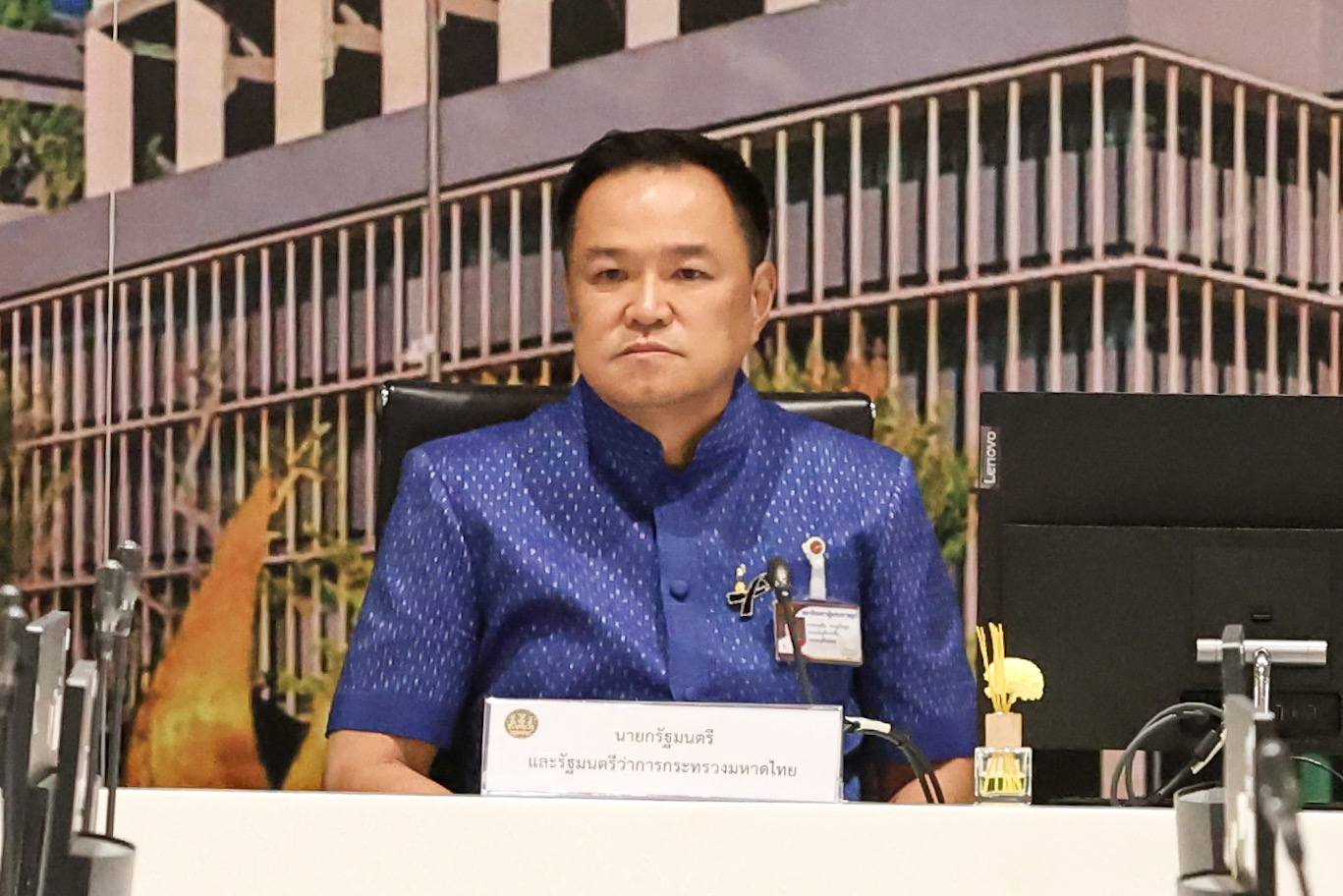
BANGKOK — Anutin Charnvirakul has been re-elected as Thailand’s prime minister after securing a decisive parliamentary majority on March 19, paving the way for his second consecutive term at the helm of the Southeast Asian nation .

Anutin Orders Thai Government Officials to Work From Home Amid Middle East Crisis

The House of Representatives convened a special sitting at 10am under Section 159 of the Constitution to select the new prime minister, with two candidates nominated for the position. Anutin, leader of the Bhumjaithai Party, faced off against Natthaphong Ruengpanyawut, leader of the People’s Party, in a vote widely watched as a defining moment in Thai politics following the February 8 general election .

When the results were tallied, Anutin had secured 293 votes, comfortably surpassing the required threshold of 250 votes from the 499 sitting members. Natthaphong received 119 votes, while 86 members abstained . House Speaker Sophon Saram officially announced the outcome at approximately 1.20pm before adjourning the session .

Vision of Unity

Before the vote, Anutin addressed the chamber, emphasising his commitment to collaborative governance. He expressed gratitude to MPs who endorsed his nomination while stressing that he regarded all representatives, regardless of their voting choice, as having equal dignity as representatives of the Thai people .

“I will be a prime minister who works with every representative of the Thai people to the fullest extent of my ability, so as to bring the greatest possible benefit and well-being to Thailand and its people,” Anutin pledged during his address .

He also referenced the royal address delivered by His Majesty the King at the opening of Parliament on March 14, stating that correctness and the well-being of the people must remain the highest priority to ensure parliamentary work proceeds in line with the constitutional path .

Coalition Strength

Anutin’s Bhumjaithai Party emerged as the strongest force in the February election, securing 192 seats, followed by the People’s Party with 120 seats and the Pheu Thai Party with 74 seats . The Bhumjaithai-led coalition now includes the Pheu Thai Party and 13 smaller parties, commanding an expected 292 seats in the 499-seat parliament .

Path to Endorsement

With the parliamentary vote complete, House Speaker Sophon Saram will now submit Anutin’s name for royal endorsement by King Maha Vajiralongkorn . Following formal appointment, the process of forming a new government will officially begin, including cabinet selection and qualification verification before submission for royal approval .

Under Article 162 of the Constitution, the new cabinet must deliver its policy statement to parliament within 15 days of assuming office .

Political Journey

The 59-year-old leader first entered politics in 1996 as an adviser to the foreign minister, later serving as deputy commerce minister and deputy public health minister from 2004 to 2006 . After a five-year political ban following the dissolution of the Thai Rak Thai Party, he returned in 2012 to lead the Bhumjaithai Party, succeeding his father Chavarat Charnvirakul .

Anutin previously served as prime minister from September 2025, succeeding Paetongtarn Shinawatra who was removed by court ruling over an ethics violation . He dissolved parliament in December following a threatened no-confidence motion, leading to the February snap election .

An engineer by training and heir to a major construction fortune, Anutin has also held portfolios as interior minister and public health minister, playing a key role in Thailand’s COVID-19 response .

Thai PM Anutin Orders Evacuation Flights for Thais in Mideast

Challenges Ahead

The incoming government faces immediate challenges including a fuel crisis driven by global energy price surges following the Middle East conflict, which has increased costs and raised concerns about potential shortages . Political uncertainty also looms, with the Constitutional Court accepting a petition that could potentially rule on whether last month’s election should be invalidated over ballot paper technicalities.

-Thailand News (TN)

Similar Posts

  • | |

    JI launches countrywide protests against inflation

    Jamaat-e-Islami (JI) is holding nationwide demonstrations on Friday against the petroleum levy, rising fuel prices and inflation. The party has announced protests and sit-ins in major cities and districts across the country. Demonstrations are scheduled to begin at 4pm. According to the party, protests will be held along hundreds of major roads and highways in around 170 districts. Karachi, Lahore, Islamabad, Quetta, Peshawar, Faisalabad and Rawalpindi are among the cities where demonstrations have been planned. Several major locations have also been selected for sit-ins. These include Qurtaba Chowk in Lahore, Stop No. 26 in Islamabad, Mian Ghundi Chowk in Quetta and the Toll Plaza in Peshawar. Other protest points include Bosan Road in Multan, the Indus Highway in Karak, CPEC Chowk in Bannu and the Chakdara interchange. JI leaders have warned that the protest campaign could be expanded if authorities attempt to prevent the demonstrations. The party said the number of roads and highways involved could increase significantly. In Karachi, JI leaders said protest caravans would begin moving from several locations at 4pm. These include Shahrah-e-Pakistan, Hub Road, National Highway, Super Highway, Orangi, Korangi, Pakistan Chowk and Sher Shah. The caravans are expected to gather at Mazar-e-Quaid before moving towards Shahrah-e-Faisal. Karachi JI chief Monem Zafar Khan said the demonstrations would continue until the petroleum levy was withdrawn. He said roads along some protest routes could remain closed during the demonstrations. He added that emergency vehicles, including ambulances, would be allowed to pass. JI Emir Hafiz Naeemur Rehman had called for the nationwide action a day earlier. In a video message, he urged citizens to join the peaceful demonstrations and asked motorists to park their cars and motorcycles on roads at 4pm. The JI leadership has criticised the government over fuel-related taxes and the rising cost of essential goods. The party says ordinary citizens are facing increasing financial pressure because of higher fuel prices and indirect taxation. Hafiz Naeem also claimed that prices of several food items had increased over the past month. He said motorcycle users and other low-income citizens were particularly affected by higher fuel costs. The JI chief argued that people who do not fall within the formal income-tax system are also paying taxes through fuel levies and other indirect charges. He claimed the government collected around Rs1.9 trillion through the petroleum levy during the past year. The party has warned that further taxation could increase the burden on households if the government does not reconsider its policies. JI leaders are calling on citizens to participate in the protests and press the government to withdraw the petroleum levy

  • | |

    Paramount delays Warner Bros. Discovery merger as …

      Paramount has agreed to delay its planned merger with Warner Bros. Discovery (WBD) after facing a major legal challenge from a coalition of 12 U.S. states and the Writers Guild of America (WGA). The move marks a significant development in one of Hollywood’s biggest proposed media mergers, with the companies now expected to wait until at least June 1, 2027—or until a federal court reaches a final decision on the case.  The proposed merger, valued at approximately $110 billion including debt, aims to combine two of the entertainment industry’s largest companies under Paramount Skydance. Supporters argue the deal would create a stronger competitor to streaming giants such as Netflix and Disney by bringing together major film studios, television networks, and streaming platforms. However, critics fear the merger would give the combined company too much power over film production, television licensing, and content distribution.  The legal challenge was filed by California and 11 other states, which claim the merger could significantly reduce competition in the entertainment industry. State attorneys general argue that fewer major studios could result in higher prices, fewer opportunities for creators, and reduced choices for consumers. Separately, the Writers Guild of America has also sued to block the transaction, expressing concerns that further consolidation could lead to fewer writing jobs and weaker bargaining power for creative professionals.  Rather than pushing ahead with the original timeline, Paramount and Warner Bros. Discovery agreed to pause the merger while the court considers the case. The agreement eliminates the need for an immediate injunction hearing and instead allows the dispute to move toward a full antitrust trial. Legal experts expect the process to take several months before a final ruling is issued.  The delay could prove costly for Paramount. Under the revised agreement, the company may face substantial financial penalties if the merger is not completed within the agreed timeframe, including daily “ticking fees” that could total billions of dollars if the case extends well beyond the original closing date. Investors have already reacted cautiously, with Paramount shares declining following news of the delay.  Despite the legal setback, Paramount remains committed to completing the acquisition and has vowed to defend the deal in court. The outcome of the case could reshape the future of Hollywood, determining whether another wave of media consolidation moves forward or whether regulators will succeed in placing stricter limits on mergers in the entertainment industry.

  • ‘Super El Niño’ Puts Thailand on Alert as Drought Threatens Crops and Water Supplies

    BANGKOK — The Agriculture and Cooperatives Ministry has unveiled a nationwide contingency plan to mitigate the potential impact of a looming Super El Niño, warning that hotter temperatures and below-normal rainfall could threaten crops, water supplies and rural incomes across the country this year. Super El Niño to Hit Thailand with Extreme Heat and Drought, […]

  • |

    China rejects Pakistan’s waiver request

    Chinese lenders and Independent Power Producers (IPPs) have turned down Pakistan’s request to write off nearly Rs 170 billion in late-payment surcharges. The refusal highlights the growing friction between the two long-standing allies as Pakistan struggles to navigate a staggering power-sector circular debt that continues to drag down its broader economy. The unpaid dues owed to 18 Chinese-backed power generation projects established under the CPEC have now increased to approximately Rs 423 billion. The financial bottleneck stems from a combination of structural inefficiencies within Pakistan’s domestic energy distribution network and systemic delays in clearing operational invoices. Under the original 2015 CPEC Energy Framework Agreement, Pakistan was legally obligated to ensure full and timely payments to power producers, backed by a designated revolving fund to cushion investors against domestic liquidity shortfalls. As payment deadlines were repeatedly missed over recent years due to severe foreign exchange constraints, contractual interest penalties accumulated to the tune of Rs 170 billion. While local power suppliers previously accepted debt-restructuring deals and fee write-offs to ease the burden on state coffers, Chinese energy firms have maintained a strict stance, citing global precedent and financial commitments to their own institutional lenders. This refusal creates an immediate impasse for Pakistan’s Ministry of Energy and financial regulators. The federal government had structured a massive Rs 1.225 trillion banking facility intended to retire the country’s broader circular debt stock. However, disbursement terms mandated that power producers accept renegotiated terms or offer discounts on late-payment fees before receiving principal clearances. Because the Chinese IPPs declined to waive the surcharges or offer similar concessions, billions in funds remain locked, leaving power plant operators facing severe liquidity squeezes that threaten regular fuel procurement and plant operation. Total Outstanding Dues: Rs 423 Billion. Requested Surcharge Waiver (Rejected): Rs 170 Billion. Principal Energy Cost Owed: Rs 253+ Billion. Pakistani negotiators are exploring alternative financial maneuvers to manage the expensive debt burden. Seeking low-interest bilateral funding including potential long-term loan packages in the range of $6 billion to $10 billion from partner nations like Saudi Arabia to retire high-cost Chinese energy loans. Requesting cabinet approval for extensions on expiring domestic banking facilities to prevent immediate default claims. Balancing the debt burden through structured tariff pass-throughs, though consumer capacity to absorb higher electricity prices remains extremely strained. The dispute underscores a delicate transition in the CPEC bilateral relationship. While both nations remain deeply committed to long-term strategic partnership and Phase-Two infrastructure development, commercial reality is setting a firmer baseline. Moving forward, resolving the sovereign debt backlog will require transparent structural reforms within Pakistan’s power distribution setup rather than relying on debt waivers from foreign investors.  

  • | |

    Doctor suspended after performing laparoscopic sur…

    Islamabad: The Medical Tribunal has upheld a one year suspension of Dr Irfan Ashraf after finding that he performed laparoscopic surgery despite not completing the required training for independent laparoscopic procedures and operated at a healthcare facility that lacked an Intensive Care Unit and other essential facilities needed to deal with serious complications. The Tribunal also upheld a Rs100,000 fine and a ban preventing Dr Irfan Ashraf from performing laparoscopic procedures until he completes proper certified training. The judgment, announced on July 8, 2026, came in an appeal filed by Muhammad Zahid Niaz, whose father Niaz Ahmad died after a chain of medical treatment that began with laparoscopic surgery at Saleem Polyclinic in Mian Channu on December 31, 2016. The case took a serious turn when the disciplinary inquiry examined the actual training record of Dr Irfan Ashraf. The inquiry found that although he had taken part in laparoscopic procedures during his postgraduate training, most of his experience was as an observer or assistant. According to the judgment, Dr Irfan Ashraf had not completed the required number of procedures at the higher training levels needed to show independent surgical ability. The record showed that he had not completed even a single Level V procedure, which represents the stage at which a trainee is expected to perform laparoscopic surgery independently without supervision. The Tribunal said this was not simply a case where a normal surgical complication had occurred. The main concern was that Dr Irfan Ashraf undertook an elective laparoscopic operation without having demonstrated the required independent competence and at a facility that did not have the necessary backup facilities. The patient, Niaz Ahmad, suffered an injury to the common bile duct and hepatic vascular structures during the surgery. He was later taken to Bahawal Victoria Hospital in Bahawalpur for further treatment. He subsequently received treatment at Sheikh Zayed Hospital in Lahore and underwent an interventional radiological procedure at Lahore Medical Complex. Despite prolonged treatment at several hospitals, he died on March 4, 2017. The Punjab Healthcare Commission had earlier investigated the matter. It found that Saleem Polyclinic did not have the required infrastructure, qualified human resources and licensing needed for such surgical procedures. The Commission imposed a financial penalty on the owner of the healthcare establishment and referred the conduct of Dr Muhammad Saleem Akhtar and Dr Irfan Ashraf to the medical regulator for disciplinary action. The medical disciplinary committee later appointed Prof Dr Tanwir Khaliq, an experienced general surgeon, as an independent medical expert. He examined the medical record and assessed the standard of care, the management of laparoscopic complications and the facilities available at the clinic. Prof Dr Tanwir Khaliq concluded that the operation had been performed at a relatively small healthcare facility without an ICU and other essential backup facilities. He also found that Dr Irfan Ashraf was not sufficiently proficient in laparoscopic surgery, particularly when dealing with complications. The Tribunal noted that Dr Irfan Ashraf himself acknowledged that Saleem Polyclinic did not have an ICU or the facilities required to manage serious complications from laparoscopic surgery. The Tribunal also noted that Dr Irfan Ashraf had been working as a Senior Registrar at Bahawal Victoria Hospital, where better surgical support was available. When questioned about why the operation was carried out at the private facility, the explanation was that the patient wanted the surgery there. The Tribunal rejected this reasoning. It said a patient’s preference cannot remove a surgeon’s professional responsibility to determine whether a healthcare facility is safe enough for the planned procedure. The case also raised questions about what doctors tell patients about their professional skills. The disciplinary committee found that Dr Irfan Ashraf had represented himself as independently competent to perform laparoscopic surgery even though his training record did not show that he had completed the required independent procedures. The Tribunal said the evidence supported three major findings against Dr Irfan Ashraf. He performed an elective laparoscopic operation at a facility that could not properly manage foreseeable complications. He represented himself as independently competent despite incomplete training. He also exposed the patient to avoidable risk by choosing a facility without the necessary support instead of a properly equipped tertiary hospital. However, the Tribunal did not hold every doctor involved in the patient’s treatment responsible. Dr Muhammad Saleem Akhtar, the owner of Saleem Polyclinic, received a warning rather than a disciplinary punishment. The Tribunal found that there was no evidence that he personally performed the operation or took part in the surgical decision making. The Tribunal said ownership of a healthcare facility alone was not enough to impose the same disciplinary punishment on Dr Muhammad Saleem Akhtar as the operating surgeon. However, the warning required him to ensure that his facility was not used for procedures beyond its capacity. Dr Khurram Shafiq Khan was also cleared of professional negligence. His involvement came later, after the patient had already suffered complications from the earlier surgery. His role was connected with an embolization procedure to control bleeding from the hepatic artery. After examining his role, the disciplinary committee found no clear connection between the procedure performed by Dr Khurram Shafiq Khan and the patient’s eventual death. The Tribunal found no reason to disturb that decision. Muhammad Zahid Niaz had appealed because he believed the punishment against Dr Irfan Ashraf was too weak considering that his father’s treatment ultimately ended in death. He also wanted stronger action against Dr Muhammad Saleem Akhtar and Dr Khurram Shafiq Khan. The Medical Tribunal, chaired by Justice (Retired) Safdar Saleem Shahid, rejected the request for harsher punishment. The Tribunal said a tragic medical outcome does not automatically mean that every doctor involved was negligent. It explained that medical procedures can have known complications even when reasonable care is taken. The important question is whether a doctor failed to meet the level of skill and care expected from a competent doctor in similar circumstances. In the case of Dr Irfan Ashraf, however, the Tribunal found that the disciplinary committee had enough evidence

  • | |

    Perez Hilton’s family gives update on celebrity …

    Perez Hilton’s family has shared an emotional update on the celebrity blogger’s condition following his devastating mental health crisis earlier this month. Hilton, whose real name is Mario Armando Lavandeira Jr., was hospitalized on August 4 after he appeared to harm himself during a TikTok livestream. The disturbing broadcast prompted viewers to contact authorities, who responded to his Miami home and took him to a hospital for medical treatment. (People.com⁠) Now, Hilton’s sister, Barbara Lavandeira, has spoken publicly about his condition and the difficult road ahead. In an emotional interview, Barbara revealed that her brother remains hospitalized and continues to receive treatment for both his physical injuries and mental health. She described the situation as extremely difficult for their family and emphasized that his recovery will not happen overnight. (Page Six⁠) “His physical and mental recovery is going to take a lot of time, but we remain hopeful,” the family has said, according to reports. Hilton reportedly suffered significant blood loss and injuries that required surgery after the incident. He remains under medical care while his doctors and loved ones focus on his recovery. His family has also asked the public to respect their privacy during this painful period. (People.com⁠) Barbara also described the shock of discovering her brother in serious distress. She said the experience was deeply traumatic for everyone involved, particularly because Hilton’s children were also affected by the crisis. The family has been working to protect the children while making sure Hilton receives the support he needs. The blogger’s recent struggles have come after a particularly difficult year. Before the August 4 incident, Hilton had experienced serious health problems, including a battle with sepsis and a blood clot. His sister also revealed that he had voluntarily sought treatment for severe depression just weeks before the livestream. (Page Six⁠) The family has urged people to show compassion rather than focus on Hilton’s controversial past. Barbara has defended her brother against harsh comments online, saying he had been making efforts to change and become a better person. (People.com⁠) For now, Hilton’s loved ones remain focused on his healing. His return home is uncertain, and his recovery is expected to be a long process. Despite the seriousness of his condition, his family says they are hopeful. They are asking fans and the public to give Hilton the time, privacy and support he needs as he continues receiving treatment. The family’s latest message makes one thing clear: the road ahead may be long, but they are standing by him throughout his recovery.

Leave a Reply

Your email address will not be published. Required fields are marked *