australian tourist spends
| | |

Australian Tourist Spends 13 Hours Drinking at Pattaya Bar, Then Refuses to Pay 32,540-Baht Bill

PATTAYA, Thailand

An Australian tourist allegedly spent nearly 13 hours drinking at a beer bar in Pattaya, buying rounds for staff throughout the day, before refusing to settle a bill of more than 32,000 baht after a staff member allegedly refused to go out of the bar with him, causing the bar owner to take him to the police.

Mr. Thompson, 53, a tourist from Australia, arrived at a beer bar in Soi Buakhao 15 at around 8 a.m. on August 12th, 2026. The bar had not yet opened for business. Staff said the man asked them to open early so he could start drinking. The owner and employees agreed, citing the man’s previous good payment record at other venues.
According to staff, the customer spent the entire day at the bar, repeatedly buying drinks for female employees he liked and ringing a bell to treat the whole staff. Many employees joined him in drinking and attended to him throughout the session, which continued until about 9 p.m.

The situation soured when the man invited one female staff member to go out with him after the bar closed. She declined. He then became upset and refused to pay the outstanding bill.

The total came to 32,540 baht. Bar owner Ms. Miliya, 46, said the amount covered not only the man’s own drinks but also all the rounds he ordered for staff over the long day and many bell rings. The bar had opened specially at 8 a.m. and remained open for about 13 hours, incurring both beverage costs and staff wages.

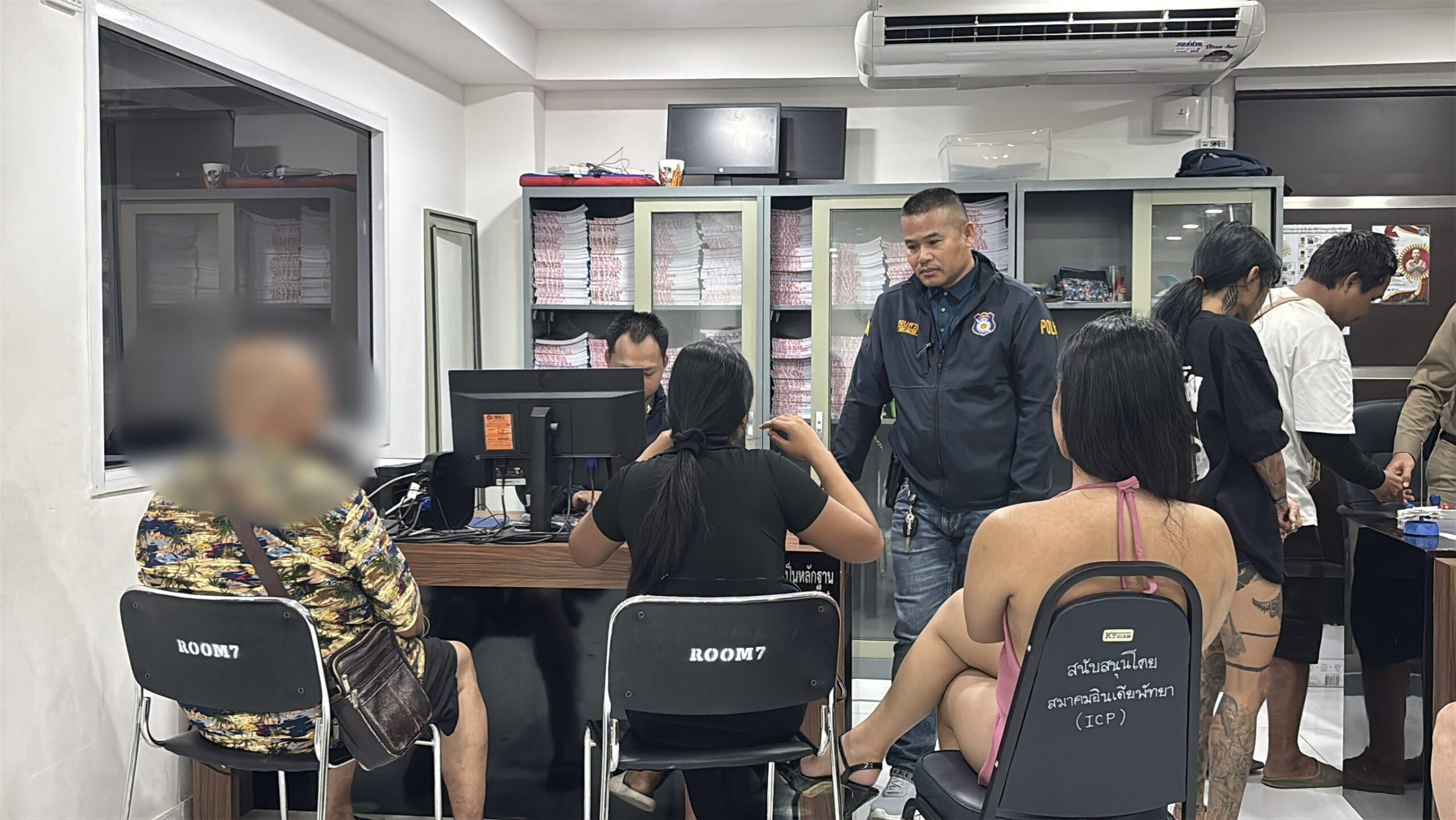
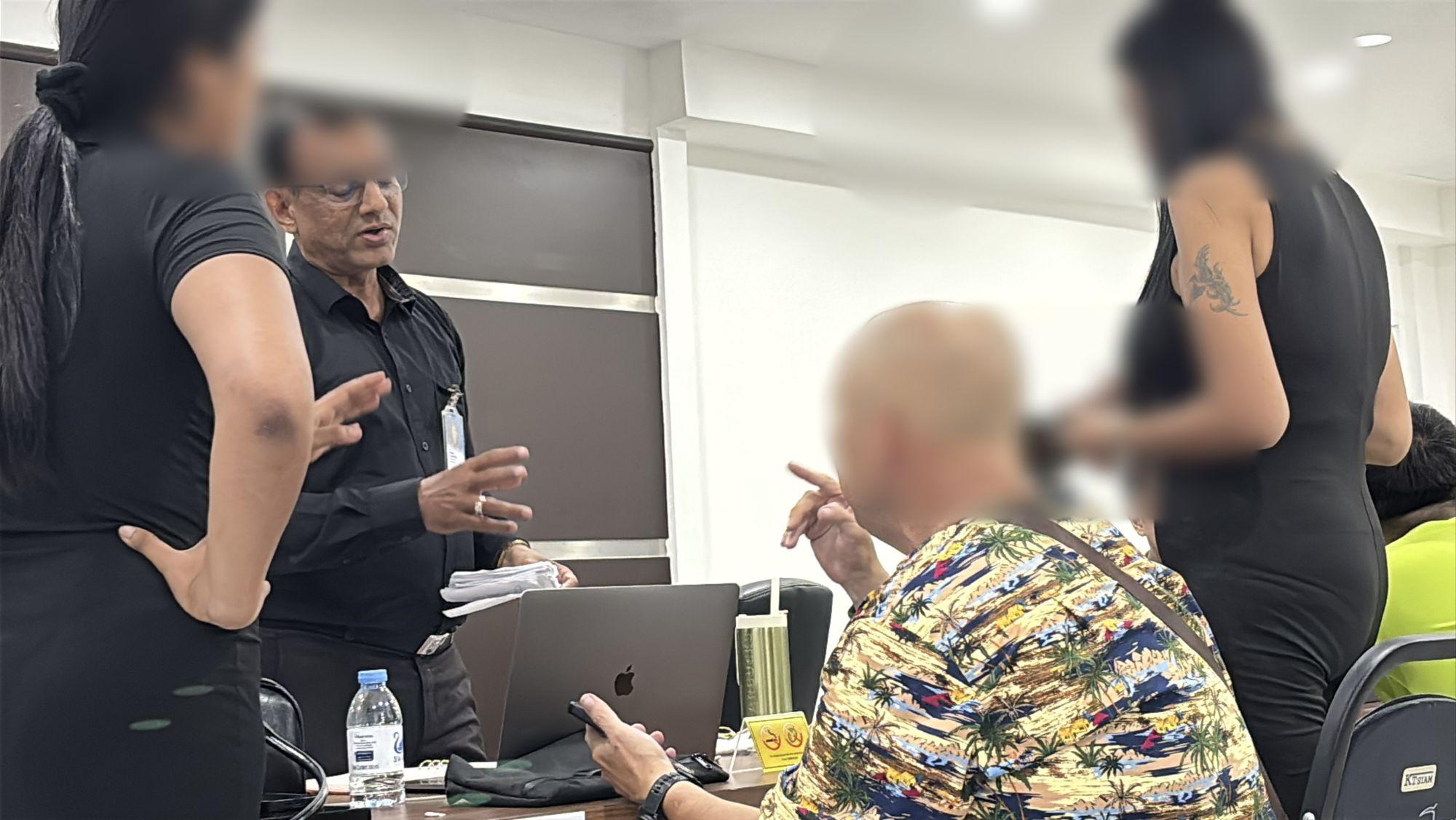
Attempts to resolve the matter at the bar failed. The owner and staff then escorted the tourist to Pattaya City Police Station around 11:30 p.m. They met with Police Lieutenant Colonel Kanoknan Suksri, an investigating officer, seeking mediation.

During talks at the station, the bar insisted on the full 32,540-baht amount. The Australian man disputed the total, claiming it was not that high, and continued to refuse payment, although was also reportedly heavily intoxicated.

Officers recorded the incident in the daily log and said they would examine the bill details and statements from both sides before deciding on further action.
Similar Posts

  • | |

    JI Chief Hafiz Naeem ur Rehman urges government to…

      Islamabad: Jamaat-e-Islami (JI) chief Hafiz Naeem ur Rehman has called on the government to focus on resolving the problems faced by the people instead of relying solely on the use of force to establish the writ of the state. He made these remarks in a statement criticizing the government’s economic policies and its handling of public affairs. According to Hafiz Naeem ur Rehman, a state’s authority cannot be maintained through coercive measures alone. He argued that the government should prioritize addressing the everyday concerns of citizens, including rising inflation, unemployment, and the increasing cost of essential services. He said that public trust is strengthened when governments respond to people’s needs rather than depending on administrative pressure or strict enforcement. The Jamaat-e-Islami leader strongly criticized the government’s electricity policies, alleging that the ruling authorities are placing an unbearable financial burden on the public through high electricity charges. He stated that ordinary citizens are struggling to pay their utility bills at a time when the cost of living continues to rise. According to him, households and businesses alike are being severely affected by expensive electricity tariffs, making it increasingly difficult for many families to manage their monthly expenses. Hafiz Naeem ur Rehman also criticized the government’s fuel taxation policy. Referring to the petroleum levy, he alleged that the government is effectively collecting money from the public in the form of what he described as “extortion.” He argued that increasing fuel-related taxes has a direct impact on transportation costs, which in turn raises the prices of food, consumer goods, and other essential commodities. As a result, he claimed, inflation continues to place additional pressure on the country’s middle- and lower-income groups. In his statement, the Jamaat-e-Islami chief further alleged that both the Pakistan Muslim League (Nawaz) and the Pakistan Peoples Party (PPP) came to power through what he referred to as “Form 47” This phrase has been used by some political parties in Pakistan to allege irregularities in the electoral process. His remarks reflect his party’s political stance regarding the legitimacy of the current governing coalition. Hafiz Naeem ur Rehman maintained that the country’s leadership should focus on providing relief to the public by reducing electricity prices, reviewing taxation policies, and introducing measures that improve the economic conditions of ordinary citizens. He emphasized that sustainable governance depends on public confidence, transparency, and policies that directly benefit the people. The government has previously defended its economic decisions by stating that measures such as electricity pricing and petroleum levies are necessary to meet fiscal requirements and maintain economic stability. However, opposition parties, including Jamaat-e-Islami, continue to argue that these policies have placed excessive financial pressure on the public. The latest remarks by Hafiz Naeem ur Rehman come amid ongoing political debate over Pakistan’s economic challenges, rising inflation, and governance. His statement highlights Jamaat-e-Islami’s continued criticism of the government’s economic policies and its call for greater public relief, while also reiterating the party’s political objections regarding the current administration’s mandate.

  • | |

    Govt advances PNSC privatisation, moves to sell 30…

    ISLAMABAD: The federal government has accelerated plans to transfer a 30 percent stake in the Pakistan National Shipping Corporation (PNSC) to the National Logistics Corporation (NLC), establishing two high-level committees to complete the financial, commercial, and legal framework for the transaction. According to a briefing presented by the Ministry of Maritime Affairs to the Economic Coordination Committee (ECC), the committees will determine key aspects of the deal, including the share price, payment schedule, dividend distribution, utilisation of sale proceeds, and the transfer of management control. The first committee, headed by the Prime Minister’s Adviser on Privatisation, includes senior officials from the Finance, Law and Justice, and Maritime Affairs ministries, along with the Chairman of the Securities and Exchange Commission of Pakistan (SECP) and the Director General of NLC. Its mandate is to finalise the financial and commercial structure of the agreement, including the valuation of shares, payment mechanism, dividend arrangements, and the injection of funds into PNSC. The second committee, led by the Secretary of the Law and Justice Division, will oversee the legal documentation required for the transaction. Its responsibilities include preparing the Share Purchase Agreement, Shareholders’ Agreement, and the legal framework governing the transfer of management control. The ECC endorsed the proposal and emphasised the importance of increasing private sector participation in future maritime initiatives to improve efficiency, strengthen governance, and unlock the sector’s economic potential. To ensure smooth implementation, the Ministry of Maritime Affairs has also proposed an Implementation Committee chaired by the Prime Minister’s Adviser on Privatisation and co-chaired by the Minister for Maritime Affairs. The committee will develop a roadmap and supervise the execution of the transaction. The government had previously granted in-principle approval for NLC to acquire a 30 percent stake in PNSC, along with management control and consolidation rights, subject to all applicable legal requirements. PNSC, a state-owned enterprise listed on the Pakistan Stock Exchange, remains majority-owned by the federal government, which holds 87.56 percent of its shares. Public investors own 10.87 percent, while the PNSC Employees Empowerment Trust holds the remaining 1.57 percent. The national shipping company currently operates a fleet of 14 vessels, including three recently added ships. Despite fluctuations in earnings, PNSC has maintained strong profitability, posting net profits of Rs30 billion in FY2022-23, Rs19.4 billion in FY2023-24, and Rs20.4 billion in FY2024-25. Established under the Pakistan National Shipping Corporation Ordinance, 1979, the organisation has undergone legislative reforms in recent years, with amendments introduced in 2023 and 2024 to align its governance framework with the State-Owned Enterprises Act, 2023. These changes are intended to improve transparency, accountability, and operational performance as the government advances its broader state-owned enterprise reform agenda.

  • ‘French’ Drug Smuggling Fugitive Arrested in Pattaya

    PATTAYA – A French fugitive of foreign origin, wanted on international drug smuggling charges was arrested in Pattaya on Monday by Thai immigration police. The suspect, identified only as “Bones,” 32, was the subject of an Interpol red notice issued at the request of French authorities. French Tourists Accused of Using AI-Edited Photos to Seek […]

  • | |

    PAAM finalizes policy draft for independent altern…

    Lahore: An important consultative meeting of the Core Committee of the Pakistan Association of Alternative Medicine (PAAM) was held, in which the “Policy Draft and Working Paper” was finalized to make the country’s alternative medicine sector namely Homeopathy, Herbal, and Unani economically self-reliant and to transform it into an international industry. During this meeting, PAAM Core Committee members Dr. Tariq Mahmood Chaudhry and former Director of Homeopathy at the Punjab Health Department, Dr. Jamil Akhtar Ghauri, met with PAAM President Kashif Aslam Malik and held deep consultations on the framework of the proposed federal ministry. According to the text of the policy draft, more than 80 percent of the world’s population relies on alternative and natural methods of treatment. China earns an annual export profit of 60 billion dollars from this sector, and India earns over 5 billion dollars in valuable foreign exchange. In contrast, despite having abundant natural resources and hundreds of thousands of qualified doctors, Pakistan accounts for less than 0.5 percent of the global market due to the lack of an independent federal ministry. The working paper prepared by PAAM highlights that establishing an autonomous federal ministry could be the fastest way to pull Pakistan out of its economic crisis and boost exports. The PAAM leadership has presented three-year economic targets to the government and parliament, setting the export target at 200 million dollars for the first year, 500 million dollars for the second year, and aiming to exceed 1.5 billion dollars in the third year through international trade agreements and Business-to-Business (B2B) partnerships. Another key feature of this policy draft is that commercial herb farming will be initiated nationwide under the new ministry, directly benefiting the rural economy and local farmers. Furthermore, this initiative aims to eliminate Pakistan’s reliance on expensive imported raw materials for the allopathic industry, making the country truly economically independent. During the meeting, the PAAM leadership emphasized that the alternative medicine sector is facing a severe crisis due to the Drug Regulatory Authority of Pakistan’s (DRAP) hyper-focus on allopathic brands and bureaucratic red tape. They noted that introducing a one-window operation under an autonomous ministry would ensure medicine quality complies with World Health Organization (WHO) and International Herb Pharmacopeia standards, while also reducing public healthcare expenditures at the government level by up to 50 percent through the provision of affordable alternative medicines. Following the completion of the policy draft, PAAM has demanded a joint emergency meeting of the Senate and National Assembly Standing Committees on Health and Commerce, the formation of a dedicated task force, and a special export package for alternative medicine manufacturers. The Chairman and Core Committee of PAAM reaffirmed their commitment to presenting this policy paper to the Prime Minister of Pakistan and the Federal Cabinet very soon to make the country self-sufficient on both economic and medical fronts.

  • | |

    KP government orders immediate closure of mines

      The Khyber Pakhtunkhwa (KP) government has ordered the immediate closure of all mines where explosive materials are used, as part of a broader effort to strengthen security and tighten oversight of potentially hazardous substances across the province. According to official directives issued by the Provincial Home Department in Peshawar, all district administrations have been instructed to take immediate action and ensure strict implementation of the government’s orders. The directive emphasizes the need for swift compliance and close coordination among local authorities to enforce the new measures without delay. The Home Department has also directed all districts to prepare and submit comprehensive lists of mines operating within their jurisdictions. These lists will distinguish between mines that use explosives and those that do not. Officials have been instructed to classify all mines using explosive materials under a Red List, indicating that they fall under stricter regulatory scrutiny and are subject to immediate closure or further action. On the other hand, mines extracting soft rock without the use of explosive materials will be placed on a Green List. These mines are considered comparatively safer from a security perspective and may continue operations in accordance with existing regulations, provided they comply with all relevant legal requirements. The department has instructed district administrations to submit both the Green List and the Red List as soon as possible. The reports are expected to provide a clear picture of mining activities across the province and help authorities monitor compliance with the latest directives. In addition to regulating mining operations, the Home Department has ordered strict monitoring of the purchase, sale, transportation, storage, and use of explosive materials. Authorities have also been instructed to closely monitor the movement and use of urea fertilizer, which can potentially be misused in the manufacture of improvised explosive devices if diverted from legitimate agricultural purposes. As part of these measures, all districts have been asked to compile and submit complete district-wise lists of licensed urea dealers. The purpose of collecting this information is to strengthen oversight of the distribution chain and prevent the illegal sale or diversion of urea for unlawful activities. The Home Department has further instructed all relevant officials to submit the required reports and lists without delay. Once these reports are received, the provincial government will review the findings and determine any additional actions that may be necessary. Relevant authorities are expected to take further administrative, regulatory, or legal measures based on the information collected from across the province. The latest directives reflect the KP government’s commitment to enhancing public safety, improving regulatory oversight of mining activities, and preventing the misuse of explosive materials. By introducing a district-wise classification system and increasing surveillance over explosives and urea distribution, the provincial administration aims to strengthen law enforcement efforts and reduce potential security risks associated with unauthorized use of hazardous substances. The implementation of these measures is expected to improve coordination among government departments and ensure greater accountability in the mining and chemical supply sectors across Khyber Pakhtunkhwa.

  • | |

    President and PM reaffirms support for Kashmir on …

    ISLAMABAD: President Asif Ali Zardari and Prime Minister Shehbaz Sharif reaffirmed Pakistan’s support for the people of Kashmir on Kashmir Exploitation Day, urging the international community to play a more active role in resolving the longstanding dispute. In his message, President Zardari said lasting peace in South Asia depends on a peaceful and just settlement of the Jammu and Kashmir issue. He stated that India’s actions cannot alter the internationally recognized status of the dispute or weaken the determination of the Kashmiri people, adding that Pakistan will continue to stand firmly with them. Prime Minister Shehbaz Sharif said the measures introduced by India since August 2019 have led to increased repression and restrictions on fundamental freedoms in the region. He also accused India of attempting to alter the demographic composition of the occupied territory. The prime minister called on the international community to move beyond expressions of concern and play a responsible role in achieving a fair and lasting resolution to the Kashmir dispute. He also urged India to end alleged human rights violations in the occupied valley and reverse the unilateral measures introduced in August 2019.

Leave a Reply

Your email address will not be published. Required fields are marked *