bilawal condemns killing
| |

Bilawal condemns killing of PPP worker in LA-31

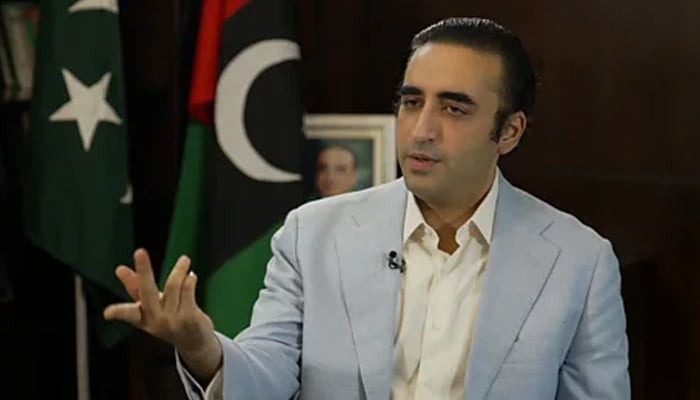
Pakistan Peoples Party (PPP) Chairman Bilawal Bhutto Zardari has strongly condemned the killing of party worker Mushtaq Shah in LA-31 during the second phase of the Azad Jammu and Kashmir (AJK) Legislative Assembly elections.

In a statement, Bilawal expressed his condolences to the bereaved family and said the incident was deeply tragic. He prayed for the deceased and extended sympathy to his relatives.

Bilawal alleged that the earlier attack on senior PPP leader Chaudhry Latif Akbar, followed by the killing of Mushtaq Shah, reflected what he described as the intentions of the Pakistan Muslim League-Nawaz (PML-N) during the election process.

He further claimed that if the elections were influenced through rigging, it would undermine public confidence in state institutions. According to Bilawal, the use of violence, intimidation and coercive tactics to influence voters was unacceptable.

The PPP chairman also accused the PML-N of attempting to influence the electoral process in Azad Kashmir through force and pressure. He called for a transparent, peaceful and fair election, urging the relevant authorities to ensure that every voter could exercise their democratic right without fear.

Polling is currently underway for the second phase of the AJK Legislative Assembly elections, covering nine general constituencies in Muzaffarabad Division and 12 refugee constituencies located across different parts of Pakistan.

Election authorities have deployed security personnel at polling stations to maintain law and order as voting continues across the constituencies. Meanwhile, the Election Commission has reiterated its commitment to ensuring a transparent electoral process and taking action against any violations of the election code of conduct.


Similar Posts

  • | |

    FCC to hear PTI ‘Release Force’ and May 9 case…

    The Federal Constitutional Court (FCC) has fixed July 29 for hearing two important petitions linked to Pakistan Tehreek-e-Insaf (PTI) founder Imran Khan. The hearings come at a time when PTI is preparing to launch a nationwide campaign demanding the release of its founding chairman. A three-member bench headed by Chief Justice Aminuddin Khan will hear a petition challenging the proposed formation of what has been described as the “Imran Khan Release Force.” On the same day, the bench will also hear another petition concerning the Khyber Pakhtunkhwa government’s decision to withdraw selected criminal cases related to the May 9, 2023 violence. The first constitutional petition argues that the formation or mobilisation of any organisation under the title of the “Imran Khan Release Force” would be unconstitutional and contrary to Pakistani law. The petitioner has requested the court to declare such an organisation illegal, arguing that private forces or militias are prohibited under the Constitution and relevant legislation. The petition also states that citizens and public office holders are constitutionally bound to remain loyal to the state and act within the framework of the law. It argues that any attempt to organise a private force would violate constitutional principles and existing legal provisions. The issue first came before the court after public statements were made earlier this year regarding the creation of a movement aimed at securing Imran Khan’s release. At that time, the court sought a response from the Khyber Pakhtunkhwa chief minister. The matter has now been scheduled for detailed hearing after several months. However, some legal experts have disputed the interpretation presented in the petition. They argue that the term “Release Force” refers to a political campaign or public movement seeking Imran Khan’s release rather than the creation of any armed organisation. According to their view, there is no proposal to establish a private militia, and the movement has no official connection with the provincial government. The same bench will also hear a petition filed by the Pakistan Broadcasting Corporation (PBC) concerning the attack on Radio Pakistan Peshawar during the May 9 unrest. The petition requests that the criminal case be transferred from Khyber Pakhtunkhwa to an anti-terrorism court in Islamabad or another province to ensure an impartial trial. The petitioner argues that political influence and executive interference could affect the fairness of judicial proceedings if the case continues within the province. Earlier, the Federal Constitutional Court issued an interim order preventing the withdrawal of certain May 9-related cases while the matter remains under consideration. Officials from the Khyber Pakhtunkhwa Law Department have questioned that interim order. They maintain that the provincial government had not yet filed any formal application before the anti-terrorism court seeking withdrawal of cases. According to provincial authorities, the cabinet had only approved the withdrawal of cases considered politically motivated or those lacking sufficient evidence. Provincial officials have stated that 23 out of 29 terrorism-related cases linked to the May 9 incidents have already been decided. They also said that 285 of the 319 cases registered in ordinary courts have been concluded, while the remaining cases are still under trial.

  • |

    ICC member states vote to dismiss Prosecutor Kari…

    Member states of the International Criminal Court voted on Friday to dismiss Karim Khan as prosecutor following allegations of sexual misconduct, two diplomatic sources told Reuters. According to the sources, 82 of the court’s 125 member states voted in favour of the prosecutor’s removal. Khan, 56, denies any wrongdoing, and his lawyers have called the decision by the court’s governing body unlawful, procedurally unfair, and unsupported by evidence. The vote comes amid renewed US criticism of the war crimes court, which Washington sees as a threat to its sovereignty. During a visit to the Philippines on Thursday, US Secretary of State Marco Rubio said there were “lunatics and crazies involved in the ICC,” reiterating previous criticism. The US, which is not a member of the ICC, has already imposed sanctions on 11 ICC judges and prosecutors, including Khan, citing the ICC’s arrest warrants against Israeli Prime Minister Benjamin Netanyahu and former defence minister Yoav Gallant, and a past probe into US troops in Afghanistan. Officials from the court’s governing body have said Khan should be dismissed because he committed serious misconduct by having an inappropriate sexual relationship with a junior staff member, according to documents seen by Reuters. Khan’s lawyers have denied the allegations, stating that he denied “any sexual relationship of any kind” with the staff member. France said on Thursday it would vote in favour of Khan’s removal. For Khan to be fired, an absolute majority of at least 63 of the court’s 125 member states had to agree in the secret ballot. The dismissal will be seen by his supporters as the result of political pressure after the prosecutor sought arrest warrants for senior Israeli officials for alleged war crimes. Even if Khan had survived the vote, his position would have been weakened, giving critics of the court another stick to beat it with. Khan’s firing immediately triggers the election process for a new ICC prosecutor, who is not expected to be voted in before next year. Any active ICC warrants will remain in place even if Khan is dismissed, as only ICC judges have the authority to withdraw warrants. The decision to dismiss Khan marks a significant moment for the ICC, which has faced growing scrutiny and criticism in recent years. The outcome of the vote reflects the deep divisions among member states over the court’s leadership and its role in international justice. As the process to select a new prosecutor begins, the ICC will need to navigate these challenges to maintain its credibility and effectiveness in prosecuting war crimes, genocide, and crimes against humanity. The dismissal of Khan also highlights the broader tensions surrounding the court’s operations and its relationship with powerful nations like the US, which has consistently opposed the ICC’s jurisdiction over its citizens and allies. The coming months will be critical in shaping the future of the ICC and its ability to deliver justice on the global stage.

  • | |

    Shahid Afridi faces backlash over fan video

    Former Pakistan cricket captain Shahid Afridi has come under criticism after a video showing him pushing away a fan went viral on social media. The incident reportedly took place as Afridi was being escorted through a crowd. In the circulating footage, a young fan can be seen approaching the former cricketer before Afridi appears to push him away. The video quickly gained attention online, with users expressing disappointment over the former cricketer’s apparent reaction. Several social media users questioned whether celebrities should treat fans more respectfully, particularly when people approach them out of admiration. Afridi remains one of Pakistan’s most recognisable former cricketers. During his playing career, he built a huge following because of his aggressive batting, powerful hitting and energetic personality. Even after retiring from international cricket, he has remained in the public eye through charity initiatives, television appearances and social media activity. However, the latest video has shifted attention toward his interaction with the fan. Some users called for Afridi to explain the situation or apologise, while others criticised what they described as an unfriendly attitude. At the same time, the short clip does not provide the full context of what happened before or after the incident. It is therefore unclear what prompted Afridi’s reaction or whether there were circumstances surrounding the encounter that are not visible in the footage. The video continues to circulate across social media platforms, generating mixed reactions among users. While some have strongly criticised Afridi, others have urged people not to judge the complete situation based solely on a brief clip.

  • |

    AI errors hit report behind Australia’s under-16 ban

    A government-commissioned report that helped support Australia’s plan to restrict social media access for children under 16 has come under scrutiny after several inaccurate and apparently fabricated academic references were identified. The report, produced as part of a $3.48 million government-funded trial examining age-assurance technologies, was prepared by the Age Check Certification Scheme (ACCS). The organisation has acknowledged that ChatGPT was used to rewrite parts of the document after initially denying that artificial intelligence had been involved. An analysis of the report found six problematic citations in a chapter examining emerging technologies. Some of the digital object identifiers, or DOIs, reportedly directed readers to research papers that did not exist. Other references contained combinations of authors, journals and publication dates that could not be verified in academic records. In another case, a DOI reportedly led to a genuine research paper, but the paper did not support the claim attributed to it in the report. The controversy intensified after ACCS was questioned about the use of artificial intelligence. A spokesperson initially said no AI had been used in producing the report. The organisation later acknowledged that ChatGPT metadata was present in four links across two sections of the document. ACCS maintained that the metadata effectively disclosed the use of the tool and said the references had been manually checked. However, efforts to correct the disputed citations reportedly resulted in further inconsistencies. One example involved a research paper that an ACCS source said had been accessed in March 2025. According to the paper’s lead author, however, the research was not published until June 2025, raising additional questions about the accuracy of the report’s references. The report has attracted attention because it was used in the policy process surrounding Australia’s planned restrictions on social media for under-16s. Communications Minister Anika Wells had previously praised the report for identifying potential approaches to age verification. The minister’s department told a Senate inquiry that it had discussed the citation problems with ACCS. However, the department was reportedly informed about faulty links rather than allegations that some references had been fabricated. Australian National University academic Christian Downie warned that unreliable references can have serious consequences regardless of whether they were generated by AI or resulted from human error. He said inaccurate citations could contribute to poor policymaking and weaken public confidence in government-commissioned research. Independent Senator Fatima Payman also compared the controversy with a separate case involving Deloitte, which refunded part of a $440,000 government contract after problems were identified with AI-generated references.

  • |

    Pakistan sets record with 5,438 companies registered in July

    Islamabad – A new business record has been set in Pakistan with thousands of new companies registered with the Securities and Exchange Commission of Pakistan (SECP) in a single month. Business activity in Pakistan’s corporate sector has witnessed a significant acceleration as the SECP set a new record for the registration of new companies during July. According to official figures, 5,438 new companies were registered across the country in July marking the highest number of registrations recorded in a single month. During the same period, five international companies also established their offices in Pakistan including companies from Malaysia, the United Arab Emirates and China. According to the report, 112 newly registered companies have foreign directors on their boards indicating growing foreign investment and international business interest in Pakistan. The newly registered companies include 3,148 private limited companies while Punjab remained at the top with 2,756 new companies registered. This was followed by Islamabad with 1,053, Sindh with 864, Khyber Pakhtunkhwa with 450, Gilgit-Baltistan with 180 and Balochistan with 135 newly registered companies. IT sector leads new registrations A sector-wise analysis shows that Information Technology (IT) remained the leading sector with 1,008 new companies registered. Other sectors also recorded significant registrations including 845 companies in trading, 638 in services, 348 in construction, 256 in food and beverages, 207 in tourism, 181 in e-commerce, 165 in education, 162 in real estate development and 145 in corporate agriculture. According to business experts, the increasing number of new company registrations reflects growing private-sector investment, business confidence and new economic activity in the country. The rapid growth in registrations in the IT sector is also being viewed as a positive sign for the expansion of Pakistan’s digital economy.

  • | | | |

    Police General Samran Orders Expanded Nominee Crackdown as 250+ Officers Raid 18 Locations in Chiang Mai to Dismantle Foreign Nominee Network Involving 633 Million Baht in Assets

    Chiang Mai, Thailand – July 20th, 2026 In a major escalation of Thailand’s nationwide campaign against illegal foreign business ownership, Police General Samran Nuanma (known as “บิ๊กราญ” or “Big Ra”), Deputy Commissioner-General of the Royal Thai Police, ordered the expansion of Operation “Dismantling Foreign Nominee Networks Phase 5” in Chiang Mai province. On July 20th, […]

Leave a Reply

Your email address will not be published. Required fields are marked *