builders discover gold
|

Builders discover Gold hoard worth €9 million hidden inside Belgian house


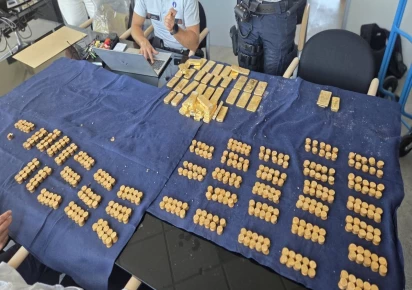
Construction workers renovating a property in Belgium have made an extraordinary discovery after uncovering a large collection of gold bars and coins estimated to be worth around €9 million, or approximately Rs2.89 billion. The valuable hoard was reportedly hidden inside the walls of a cellar at a house in East Flanders.

According to Belgian media reports, the workers discovered the treasure earlier this week while carrying out renovation work on the property. They were drilling into the building as part of preparations to install new sewage pipes when they unexpectedly came across the hidden collection.

The discovery immediately attracted attention because of its enormous value and raised an unusual legal question: who will eventually be entitled to the gold? Both the construction workers who found the treasure and the charity that owns the property could potentially have a claim, depending on the outcome of the investigation.

Police have launched an inquiry into the discovery and have warned members of the public to stay away from the construction site. Authorities said the property had effectively been searched and disturbed after news of the discovery spread. The gold has since been removed from the building and placed in a secure location while officials investigate its origin and ownership.

The workers reportedly found the treasure while carrying out work around the foundations of the house. Among those involved was an 18-year-old student named Kobe, who was working a summer job at the construction site.

Speaking to Belgian public broadcaster . He described the moment as one of disbelief and excitement. He initially thought some of the objects they had uncovered might simply be ordinary €1 coins. However, when the workers noticed what appeared to be a gold nugget among the items, they realised they had discovered something far more valuable.

The workers quickly contacted police rather than attempting to take the treasure for themselves. Site manager Mario explained that the sheer quantity of gold made it impossible to secretly keep the discovery. He also acknowledged that taking it would amount to theft.

Kobe similarly said that an amount worth around €9 million could not realistically be hidden.

The property is currently owned by CAW Oost-Vlaanderen, an organisation that provides welfare and social support in the Dendermonde area, a Flemish community with a population of around 47,000 people.

CAW Oost-Vlaanderen director Geert Hillaert said the organisation was shocked and amazed by the discovery. He expressed hope that, if the charity eventually receives part of the treasure, the money could be used to help people in need and support its welfare programmes.

Police have appealed to the public not to visit the site in search of additional valuables. Authorities said they hoped the unusual discovery would eventually be placed in the hands of the rightful owner or used in a way that could benefit society.

Under Belgian law, a legitimate owner has up to five years to come forward and claim hidden treasure. Prosecutors are currently investigating the circumstances surrounding the hoard, including whether it could be connected to criminal activity.

If no owner is identified, Belgian civil law may allow the treasure to be divided between the person who discovered it and the owner of the property. However, this rule applies only if authorities determine that the gold is not connected to a crime.

For now, the builders and the charity must wait while investigators determine who has the legal right to the extraordinary fortune. If no rightful owner appears within the five-year period, the discovery could transform an ordinary renovation project into a life-changing event.
Similar Posts

  • |

    US Senate moves forward with bipartisan Russia sanctions bill

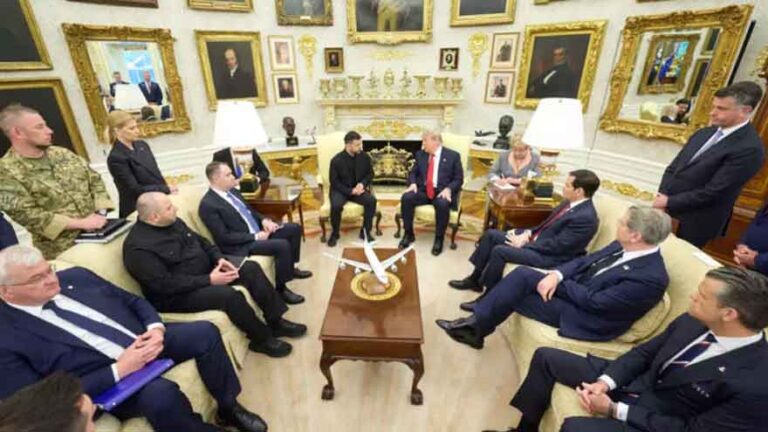
    The US Senate has taken the first major step toward approving a bipartisan sanctions package aimed at increasing pressure on Russia by targeting its energy sector and financial network. The legislation advanced with strong support on Tuesday as Ukrainian President Volodymyr Zelensky visited Washington to urge American lawmakers to strengthen measures against Moscow and continue backing Ukraine. Senators voted 86 to 12 to begin formal debate on the bill, allowing it to clear its first procedural stage. Although the proposal still requires further discussion and a final vote before becoming law, the overwhelming support highlighted broad agreement in the Senate on increasing economic pressure against Russia as the war in Ukraine continues. The proposed legislation would expand sanctions on Russian government officials, wealthy business figures, financial institutions and the network of ships often referred to as the shadow fleet. These vessels have been used to transport Russian oil while avoiding existing international restrictions. Lawmakers believe cutting off these channels would reduce Russia’s ability to earn revenue from energy exports. Another major feature of the bill would give President Donald Trump the authority to impose tariffs of up to 100 percent on imports from countries that continue buying large amounts of Russian oil and natural gas. Nations such as China and India could be affected if the measure is implemented. Supporters argue that reducing demand for Russian energy is one of the most effective ways to weaken Moscow’s financial resources and limit its ability to fund military operations in Ukraine. The Senate vote came only hours after Zelensky met President Trump at the White House during his visit to the United States. The Ukrainian leader also attended the funeral of Republican Senator Lindsey Graham in Washington. Graham had been one of Ukraine’s strongest supporters in Congress and spent more than a year helping build bipartisan backing for the sanctions proposal before his death earlier this month. After meeting with lawmakers, Zelensky urged senators to maintain strong support for Ukraine and approve tougher sanctions against Russia as fighting on the battlefield continues and diplomatic efforts led by the United States remain at a standstill. Ukrainian officials have repeatedly argued that increasing economic pressure on Moscow is necessary to reduce Russia’s ability to continue the conflict. The legislation has been named in honor of Senator Graham, whose work played a key role in shaping the proposal. Shortly before his death, he reached an agreement with the White House on a revised version of the bill. In a joint statement, six Republican and Democratic senators said moving the legislation forward was the best way to recognize Graham’s commitment to supporting Ukraine and strengthening sanctions against Russia. The updated measure also includes provisions requested by President Trump to extend existing sanctions authority related to Iran’s energy and weapons sectors. Lawmakers said the changes broaden the scope of the legislation while maintaining its primary focus on increasing pressure on Russia. Despite receiving strong bipartisan backing, the proposal has faced some criticism from Democratic lawmakers. Some have expressed concern that allowing the president to impose high tariffs gives the White House too much authority. Others warned that such tariffs could increase costs for American consumers and create economic difficulties for European allies that maintain trade relationships with countries affected by the measure. Even if the Senate approves the bill, it will not become law immediately. The House of Representatives has already begun its summer recess and is not expected to return to Washington until September. As a result, final congressional action on the legislation is likely to be delayed for several weeks before lawmakers can decide whether to send it to the president for approval.

  • | |

    Pogacar on verge of Fifth Tour de France title aft…

    Defending champion Tadej Pogacar is on the verge of winning a record-equalling fifth Tour de France after taking a storming victory on stage 19 to Alpe d’Huez. The UAE Team Emirates-XRG rider pulled more than three minutes back on a breakaway group on the hors category final climb up to the famous ski resort, which was flanked by thousands of spectators from around the world. Pogacar, 27, is aiming to become the joint-most successful rider in the Tour’s history with five wins, alongside legends Jacques Anquetil, Eddy Merckx, Bernard Hinault, and Miguel Indurain. He holds a dominant lead over Belgium’s Remco Evenepoel of seven minutes 11 seconds, despite the Belgian’s improved climbing form this year. Pogacar’s Mexican teammate Isaac del Toro remains third and in the white young riders’ classification leader’s jersey, nine minutes 42 seconds down. The peloton will take on Alpe d’Huez once again on Saturday for the three-week race’s mountainous ‘queen’ stage, which includes an extra 2,000 metres of climbing. “It was very cool to win up here – it was a crazy atmosphere all climb and I’m thankful for the team that I could pull it off,” said Pogacar. “When I heard some of the guys [were] dropped when [teammate] Felix [Grosschartner] set a super good pace at the beginning of the climb, I was already going full gas, as the breakaway was so strong. Every kilometre of Alpe d’Huez I had good legs and not many could follow [me].” Pogacar crossed the line six seconds ahead of France’s Lenny Martinez of Bahrain-Victorious, who thumped his handlebars several times in frustration as he crossed the line. Ecuador’s in-form rider Richard Carapaz of EF Education-Easypost, who won Thursday’s stage to Ocieres Merlette, finished a further three seconds behind in third. A 40-plus strong breakaway had established a lead over the peloton and yellow-jersey wearer Pogacar by several minutes mid-stage, but the main pack began to slowly reel them in. It was Martinez, the USA’s Sepp Kuss of Visma-Lease a Bike, and a typically animated Carapaz who eventually emerged as the three seemingly set to battle for victory as they began Alpe d’Huez’s legendary twisting ribbons of tarmac. But Pogacar had other ideas and set a record time on the final climb of 35 minutes 27 seconds, beating the time set by Italy’s legendary Marco Pantani in 1997. The victory puts Pogacar in a commanding position heading into the final stages of the Tour. With a lead of over seven minutes, he is all but assured of his fifth title, provided he avoids any mishaps in the remaining stages. The Slovenian rider has been in dominant form throughout the race, winning multiple stages and showcasing his incredible climbing ability. As the Tour enters its final days, fans will be eagerly watching to see if Pogacar can cement his place among the legends of the sport. His performance on Alpe d’Huez has already etched his name into Tour history, and a fifth victory would confirm his status as one of the greatest riders of all time. The final stages promise more excitement as the peloton battles for stage wins and final classification positions, but the spotlight remains firmly on Pogacar as he closes in on another historic achievement.

  • |

    Sri Lanka strengthens prison security after deadly riot at overcrowded jail

    Sri Lankan authorities have stepped up security measures at prisons across the country after a violent riot at Mahara Prison left one person dead and six others injured. The latest unrest has once again highlighted the serious overcrowding and growing pressure within the country’s prison system. The violence broke out on Saturday at Mahara Prison, located about 15 kilometres from the capital Colombo. According to police sources, the disturbance began during family visiting hours when a group of inmates climbed onto rooftops, set fire to a building inside the prison compound and damaged several facilities. The unrest also resulted in the destruction of documents kept in administrative offices, while parts of the prison hospital, training centre and kitchen suffered extensive damage. Law enforcement agencies, supported by the military and other security personnel, were deployed to regain control of the situation. Officials said the operation successfully ended the riot and prevented further violence from spreading within the prison. The Sri Lankan Air Force also assisted by deploying helicopters and drones to monitor the prison complex during the emergency. The incident has renewed concerns about the country’s overcrowded prisons. Mahara Prison currently holds around 4,100 inmates despite having space for only about one quarter of that number. Similar conditions exist throughout Sri Lanka’s prison network, where more than 41,000 convicted prisoners are housed in 22 facilities built to accommodate only around 11,000 inmates. In addition to convicted prisoners, thousands of remand prisoners awaiting trial are also being held in these facilities, adding to the strain on available space and resources. The latest violence comes only weeks after another deadly prison clash in the coastal town of Negombo. In early July, fighting between rival inmate groups resulted in the deaths of 10 prison officials and 20 prisoners over two days. Authorities described that incident as the country’s worst prison violence since 2012, prompting the deployment of police special forces, the military and navy to restore order. Senior Deputy Inspector General of Police Sajeewa Medawatta said security has now been increased at major prisons across the country, particularly those located near Colombo, including Negombo Prison. He said officials have transferred inmates back to their cells and are ensuring they receive food and water as normal while security operations continue. According to Medawatta, the combined efforts of police, military and prison authorities were crucial in bringing the Mahara situation under control. Outside the prison, dozens of worried relatives gathered on Saturday evening seeking information about family members inside. Police established security cordons to prevent crowds from approaching the prison during the operation. To maintain public order, authorities also imposed a temporary curfew in three nearby villages. The restrictions remained in place overnight before being lifted by midday on Sunday after officials confirmed the situation had stabilised. The repeated outbreaks of violence have intensified calls for reforms within Sri Lanka’s prison system. Human rights groups and legal experts have long warned that severe overcrowding, ageing infrastructure and limited resources have created dangerous conditions that increase the risk of unrest. The latest incident has added further pressure on the government to address these long standing challenges while ensuring the safety of both prison staff and inmates.

  • | | | |

    Francis Halzen wins Nobel physics prize for Antarctic ‘ghost particle’ hunt

    (1st UPDATE) Halzen, 82, realized that pristine ice at the South Pole could be used to track such neutrinos, sometimes known as ‘ghost particles’ for the way they pass through the Earth without a trace, only interacting with matter extremely rarely

  • |

    Gulf nations back Omani plan for voluntary transit payments to resolve Hormuz maritime crisis

    Gulf Cooperation Council member states have formally endorsed a diplomatic initiative proposed by Oman to introduce voluntary service fees for commercial vessels transiting the Strait of Hormuz, seeking to restore global energy shipments disrupted by the broader conflict involving the United States, Israel, and Iran. The framework, modeled after the cooperative navigation safety mechanism used in Asia’s Malacca Strait, allows shipowners to make optional financial contributions toward environmental protection, search-and-rescue services, and navigational maintenance rather than paying mandatory tolls. Designed as a compromise between Tehran’s demand for administrative authority over shipping lanes and Washington’s insistence on unimpeded international transit, the Omani proposal explicitly prevents Iran from exercising exclusive operational control over the waterway while offering a structured path toward reopening commercial transit routes. The diplomatic breakthrough coincides with a temporary lull in direct aerial bombardments after US President Donald Trump called off a two-week bombing campaign following advice from military commanders. Despite the pause in direct strikes between Washington and Tehran, regional tensions remain elevated due to ongoing proxy drone activity across Jordan, Saudi Arabia, and Iraq, alongside continued US naval enforcement actions against non-compliant commercial vessels. While market reactions to the suspension of airstrikes sent global crude prices down sharply, formal resolution remains subject to upcoming diplomatic negotiations in Washington and the broader implementation of the bilateral framework agreement.

Leave a Reply

Your email address will not be published. Required fields are marked *