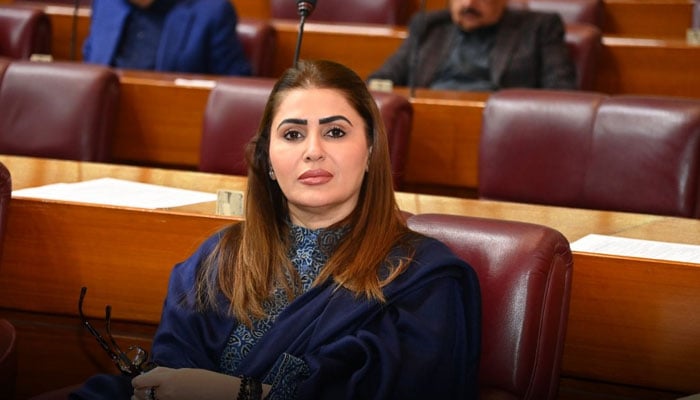
bunny levine dies
|

Bunny Levine dies at 97 after Hollywood career

Bunny Levine, the beloved character actress known for her memorable appearances in popular television shows and films, has died at the age of 97.

Levine’s death was announced on Thursday, August 20, with news of her passing bringing an end to a remarkable life and entertainment career that began much later than most actors. She reportedly died peacefully at her home in Tarzana, California, while she was asleep.

According to reports, authorities received a call on Thursday regarding an unresponsive person at a residence in Tarzana. Responding officials later identified the woman as Levine. Her death marked the loss of an actress who spent several decades quietly building an impressive list of television and film credits.

Before entering Hollywood, Levine had a very different professional life. She worked as a school librarian and teacher in Teaneck, New Jersey, for approximately 25 years. Acting eventually became her second career, with Levine taking her first steps into the entertainment industry when she was around 60 years old.

Despite beginning her acting journey later in life, Levine quickly established herself as a reliable character actress. She appeared in numerous well-known television productions, often playing warm, humorous or memorable supporting characters.

Among her notable credits was the hit series Gilmore Girls, where she appeared as Mrs. Thompson. She also featured in Everybody Loves Raymond, portraying a friend of Ray’s mother, Marie. Her character became memorable for repeatedly dropping things while admiring Ray’s appearance, creating one of the show’s lighter comic moments.

Extensive Hollywood career

Throughout her long acting career, Levine appeared in an impressive range of television shows. Her credits included Law & Order, Ugly Betty, Private Practice, Criminal Minds, 2 Broke Girls, Raising Hope, Southland, New Girl, The Mindy Project, Fuller House and Shameless.

She also appeared alongside actor James Van Der Beek in an episode of Friends with Better Lives. The project became another notable entry in a career that allowed Levine to work across different genres and alongside numerous established performers.

One of her most recognizable movie appearances came in the Oscar-winning musical La La Land. Released in 2016 and starring Ryan Gosling and Emma Stone, the film featured Levine as a movie theatre cashier.

Although many viewers may not have known her name, Levine’s ability to bring authenticity and personality to smaller roles made her a familiar face across television and film.

Bunny Levine reflected on acting

In a past interview, Levine opened up about her decision to pursue acting later in life. She suggested that the desire to perform could be difficult to explain, describing it as something that simply exists within a person.

Levine also explained that she continued working on her craft rather than waiting for a single defining moment to transform her career. She studied, practiced and continued trying to improve, eventually developing a successful career that lasted for decades.

Her journey was particularly remarkable because she entered the entertainment world at an age when many people are already considering retirement. Instead, Levine began a new chapter and went on to appear in dozens of productions.

Family remembers late actress

Levine is survived by five immediate family members. Her surviving loved ones include her three children, Marty, Francie and Joe, as well as her two grandchildren.

Her death marks the end of an extraordinary journey from educator and librarian to a familiar face on Hollywood screens. Bunny Levine’s career serves as a reminder that it is never too late to pursue a passion, and her memorable supporting roles will continue to be part of the television and film projects she helped bring to life.


Similar Posts

  • |

    Petrol prices may bring relief in two days if global oil rates stay stable

    LAHORE: Federal Petroleum Minister Ali Pervaiz Malik has indicated that consumers could receive some relief in petroleum prices within the next two days if international crude oil rates remain stable, while acknowledging that elevated fuel costs continue to place pressure on households and the wider economy. Speaking in Lahore, the petroleum minister said the government was closely monitoring developments in the international oil market and would take the prevailing global prices into account during the next petroleum price review. Malik explained that petroleum prices in Pakistan are linked to international market trends and are calculated on the basis of a seven-day average. He said the Oil and Gas Regulatory Authority (OGRA) is responsible for determining the prices under the existing mechanism. He added that the movement of global oil prices during the next couple of days would be particularly important in determining whether consumers could receive positive news in the upcoming review. Government averts fuel supply crisis The minister said Pakistan had managed to maintain uninterrupted supplies of petroleum products despite severe pressure created by regional tensions and volatility in international energy markets. According to Malik, Prime Minister Shehbaz Sharif and his team took measures on both the economic and diplomatic fronts to ensure that the country did not experience a fuel shortage. He said the government had continued supplying petroleum products across the country even during a period when uncertainty in the region was creating serious risks for energy-importing nations. “There was no shortage of petroleum products in Pakistan during the tension,” Malik said, stressing that maintaining fuel supplies remained one of the government’s key priorities. He acknowledged, however, that preventing a shortage did not eliminate the financial burden caused by high international oil prices. International oil market remains a major concern Malik said the recent regional conflict created extraordinary volatility in global energy markets. He pointed to sharp increases in crude oil, petrol and diesel prices during the period of heightened tensions. He said crude oil prices had at one stage climbed as high as $170 per barrel, while diesel prices reached around $280 and petrol prices also touched $170. The minister further referred to periods when market expectations pointed towards even more dramatic increases, with petrol and diesel prices moving towards levels of around $500. Such volatility, he said, demonstrated the difficulties faced by countries that rely heavily on imported energy to meet domestic requirements. Pakistan, being an energy-importing country, remains particularly vulnerable to sudden increases in international oil prices because changes in global rates can quickly affect domestic fuel prices, transportation expenses and industrial costs. Expensive fuel putting pressure on people The petroleum minister conceded that high fuel prices are creating difficulties for ordinary citizens and businesses. He said an increase in petroleum prices does not remain confined to fuel stations, as higher transportation and energy costs eventually affect the prices of goods and services throughout the economy. According to Malik, expensive petroleum products increase the cost of moving agricultural produce, industrial raw materials and finished goods, thereby adding to inflationary pressure. “The people are suffering” because petroleum products are expensive, he said, while maintaining that the government was making efforts to provide relief within its available financial capacity. Petroleum levy collection exceeds target Malik also disclosed that the government collected around Rs1,900 billion through the petroleum levy during the previous year, exceeding the official target of Rs1,700 billion. The collection represents an important source of government revenue, but the minister acknowledged the broader economic implications of relying on petroleum-related revenues while consumers are already facing high fuel costs. He said the government had to balance revenue requirements with the need to protect consumers from excessive increases in petroleum prices. Prices cut when conditions allowed The minister said the government reduced petroleum prices whenever international market conditions and other relevant factors created room for downward revisions. He said Prime Minister Shehbaz Sharif had ordered reductions when an agreement was reached and circumstances permitted the government to pass on the benefit to consumers. Malik said the administration was attempting to manage fuel prices within the limits imposed by international markets and domestic economic conditions. He also recalled the prime minister’s commitment to introducing greater transparency in the petroleum pricing mechanism. The minister said the government had been required to make difficult decisions as part of broader efforts to stabilise the economy and place Pakistan on a sustainable development path. Heavy reliance on imported energy questioned Malik also raised concerns over Pakistan’s longstanding dependence on imported energy. He questioned why the country had continued relying on overseas energy supplies for decades despite having significant potential for developing domestic oil and gas resources. The minister said Pakistan obtains around 90% of its energy requirements from foreign sources, leaving the economy exposed to fluctuations in global energy prices and geopolitical developments. He argued that reducing this dependence should be treated as a long-term national priority. According to Malik, Pakistan has promising gas resources in areas such as Waziristan and Balochistan, and greater efforts are required to explore, develop and utilise domestic reserves. He said increasing local production could eventually reduce pressure on the country’s import bill and provide greater protection against international price shocks. Focus shifts towards domestic energy development The minister said Pakistan could not continue responding to every international energy crisis after it had already occurred. Instead, he stressed the need for long-term investment in exploration, infrastructure and domestic energy production. He said the government wants to move the country away from a cycle in which international price increases immediately translate into domestic economic difficulties. Malik described development of local energy resources as an important component of Pakistan’s broader economic strategy. He said the government was working towards an environment in which energy availability could support industrial expansion, investment and economic growth. Major energy infrastructure initiative planned Malik also referred to a new infrastructure initiative, saying the prime minister and the field marshal had assigned a major internationally recognised company to undertake energy infrastructure work within a

  • | |

    Qudsia Ali, Abbas Ashraf on unhealthy gender dynamics

    Pakistani dramas have long been a mirror to the society they come from, and Aik Mohabbat Aur is doing exactly that. The ongoing drama, in which Qudsia Ali plays Maham and Abbas Ashraf Awan plays Faris, explores the painful reality of marriages where women find themselves trapped with narcissistic partners. In a candid conversation with Fuchsia Magazine, the two actors stepped out of their fictional roles and spoke plainly about the dynamics they believe are damaging real relationships in Pakistan today. Abbas Ashraf was direct about where he believes the problem begins, and it is not with men themselves but with how they are raised. He said the narcissistic complex in men is a product of parenting, specifically the way sons are conditioned from childhood to feel superior to everyone around them. Parents, he argued, tell their sons they are the inheritors, the ones who matter, the ones who carry the family forward, while daughters are quietly assigned a lesser place. That imbalance, repeated across generations, plants the seeds of the entitlement and control that later destroys marriages. His prescription was as straightforward as his diagnosis. “Make both your sons and daughters feel equal if you want to stop your sons from becoming negative narcissists,” he said. It is a simple idea that carries enormous weight precisely because of how rarely it is practised. Qudsia Ali brought a different but equally sharp perspective to the same conversation, turning her focus toward the women who stay in difficult marriages long past the point of reason. Her explanation was rooted not in weakness but in a specific emotional wound. She said that many women are deprived of parental love from the very beginning of their lives. When they finally encounter even a fragment of affection from a partner, however temporary or conditional it may be, they hold on to it with everything they have because they have never known anything different. “Women are deprived of parental love and when they get even a glimpse of love, they lie down and take everything,” she said. “They take even a temporary love as they are extremely insecure.” The image is striking and uncomfortably accurate for anyone who has watched a woman accept treatment that from the outside looks impossible to justify. Qudsia did not offer this observation from a distance. She acknowledged that she herself had carried insecurities of her own, and that she had done the work to understand and overcome them. It was a moment of personal honesty that gave her words additional weight. Together, their observations form a connected picture of how the same system of unequal parenting produces both the men who expect everything and the women who accept anything. The drama they are appearing in explores exactly this territory on screen. But in this conversation, they chose to name it plainly off screen too, and that directness is what has made their remarks resonate beyond the usual boundaries of a promotional interview.

  • |

    WestJet agrees to $4.5 million settlement in long-running flight attendant harassment suit

    Canadian airline WestJet has agreed to pay 4.5 million Canadian dollars to settle a decade-long class-action lawsuit brought by thousands of female flight attendants over workplace harassment. A British Columbia Supreme Court judge approved the final agreement on Monday, concluding negotiations that began in June. The settlement funds will be distributed among 3,452 current and former flight attendants after deducting legal fees and administrative costs. The lawsuit was initially filed in 2016 by former flight attendant Mandalena Lewis, who alleged that a pilot sexually assaulted her during a 2010 layover in Hawaii and that the company failed to take appropriate investigative action after she reported the incident. Lewis criticized the final terms, stating that the agreement failed to deliver complete justice for the victims. The settlement contains no admission of guilt by WestJet, nor does it mandate compulsory anti-harassment training for flight crews. However, the carrier agreed to commission an independent inquiry to review its reporting procedures, workplace culture, and underreporting issues, affirming its commitment to strengthening employee safety measures.

  • |

    PCB unveils commentary panel for Champions Cup 2026

    MULTAN: The Pakistan Cricket Board (PCB) has announced a star-studded commentary panel for the National Champions Cup 2026, adding further excitement to a tournament that could prove important in shaping Pakistan’s future international squad. The seven-match competition will be played at Multan Cricket Stadium from August 11 to 18, with four teams — Pakistan Greens, Pakistan Whites, Pakistan Blues and Pakistan Gold — competing in a single round-robin format. Former Pakistan captain Salman Butt will headline the commentary team alongside Ali Younis, Tariq Saeed, Aimen Anwar and Raja Asad. Their experience and analysis are expected to provide viewers with deeper insight into the performances of established players and emerging prospects. Under the tournament format, each team will face the other three sides once. The two teams collecting the most points at the end of the league stage will advance to the final. The Champions Cup carries added significance as the PCB looks ahead to the ICC Men’s Cricket World Cup 2027. Selectors will use the competition to closely monitor players competing for national recognition, while younger cricketers will have an opportunity to make a strong impression. The PCB has selected 44 players across the four squads, with another 13 players included in a reserve pool. Reserve players can replace members of the main squads only in cases involving injury or concussion. With established internationals sharing the field with promising domestic talent, the tournament is expected to offer a revealing look at Pakistan’s emerging cricketing depth. For selectors, every match could become an audition. For players, the Champions Cup may represent a crucial step towards earning a place in Pakistan’s plans for the 2027 World Cup, to be jointly hosted by South Africa, Zimbabwe and Namibia. Squads Pakistan Greens Playing XI: Shadab Khan (c), Faheem Ashraf, Fakhar Zaman, Farhan Yousuf, Mehran Mumtaz, Mohammad Hasnain, Mohammad Salman Mirza, Naseem Shah, Omair Bin Yousuf, Saad Baig (wk) and Sameer Minhas. Pakistan Whites Playing XI: Saim Ayub (c), Akif Javed, Ali Raza, Haris Rauf, Hasan Nawaz, Khushdil Shah, Mohsin Riaz, Mohammad Wasim Jnr, Saad Masood, Shahzaib Khan and Usman Khan (wk). Pakistan Blues Playing XI: Sahibzada Farhan (c), Abdullah Shafique, Ahmed Daniyal, Arafat Minhas, Hasan Ali, Hussain Talat, Jahandad Khan, Rohail Nazir (wk), Shamyl Hussain, Sufyan Moqim, Taimur Khan (wk). Pakistan Gold Playing XI: Shaheen Shah Afridi (c), Abdul Samad, Abdul Subhan, Faisal Akram, Haider Ali, Kamran Ghulam, Maaz Sadaqat, Mohammad Nawaz, Muhammad Akhlaq (wk), Muhammad Imran and Saad Khan.

  • |

    UK government and police launch comprehensive review into jurisdiction handling for US military personnel

    The UK government and senior police chiefs have initiated a multi-departmental review to determine why British police forces have routinely ceded primary jurisdiction to the United States military in cases involving serious crimes committed on British soil. Under long-standing legal frameworks governing visiting forces, UK authorities hold primary jurisdiction over off-duty offences committed against local citizens. However, recent investigative revelations exposed multiple instances where forces such as Cambridgeshire and Suffolk Constabulary transferred investigations involving serious sexual assaults to US military prosecutors within days of receiving reports, often without consulting the Crown Prosecution Service. This systemic practice has drawn severe criticism from ministers, cross-party lawmakers, and legal experts due to the significant disparities between the British justice system and the US Uniform Code of Military Justice. Victims tried under US military courts martial face narrower legal definitions of sexual offences, lesser statutory charges, and fewer victim protection measures than those guaranteed in British Crown Courts. The high-profile prosecution of US fighter pilot Captain Jacob Wulfson at RAF Lakenheath, where an all-male military panel acquitted him of sexual assault, prompted Home Office and justice ministers to meet with victims and promise full accountability. Concurrently, the National Police Chiefs’ Council has issued updated guidance to all forces in England and Wales to enforce proper legal referral protocols, while individual constabularies have launched audits into their historic case transfer decisions.

  • | | |

    SBP reserves climb to $17.26bn

    Pakistan’s foreign exchange reserves held by the State Bank of Pakistan (SBP) posted a slight increase during the week ending July 17. However, the country’s overall liquid reserves recorded a small decline as commercial banks’ holdings decreased. According to the latest figures released by the central bank, SBP’s foreign exchange reserves increased by $33 million, taking the total to $17.26 billion. The increase reflects a gradual improvement in the country’s external financial position. Despite the rise in the central bank’s reserves, Pakistan’s total liquid foreign exchange reserves slipped by $5.9 million to $22.67 billion. The decline was caused by a fall in the reserves held by commercial banks. Commercial banks’ net foreign exchange reserves dropped by $38.7 million, bringing their total holdings to $5.41 billion. As a result, Pakistan’s total foreign reserves now provide import cover for nearly 2.5 months, highlighting the need for further improvement in external inflows. The Pakistani rupee remained stable in the interbank market. It closed at Rs277.90 against the US dollar, compared with Rs277.91 a day earlier. The slight gain came as the US dollar also remained mostly steady in global markets despite continued geopolitical tensions. Meanwhile, gold prices in Pakistan declined sharply after international bullion prices fell by more than two percent. The price of 24-karat gold per tola dropped by Rs1,800 to Rs432,036. The price of 10 grams of gold fell by Rs1,543 to Rs370,401. Silver prices also moved lower, with the per tola rate declining by Rs33 to Rs6,370. The decline followed a strong rally in the previous trading session when gold prices had increased significantly in the domestic market. Internationally, gold prices fell after investors shifted their focus to rising oil prices and expectations that the US Federal Reserve may continue raising interest rates to control inflation. Spot gold traded near $4,047 per ounce, while US gold futures also recorded noticeable losses. Global energy markets remained under pressure as Brent crude oil climbed to around $100 per barrel. Rising tensions in the Middle East and concerns over disruptions to oil supplies supported higher crude prices. Analysts believe that increasing oil prices could push inflation higher around the world. This may encourage central banks, particularly the US Federal Reserve, to maintain a tighter monetary policy. Higher interest rates generally reduce the appeal of gold because the precious metal does not provide any interest or fixed return to investors. As borrowing costs increase, investors often shift towards interest-bearing assets.

Leave a Reply

Your email address will not be published. Required fields are marked *