can climate diplomacy
| | | |

Can climate diplomacy build on the collapse of COP31? 

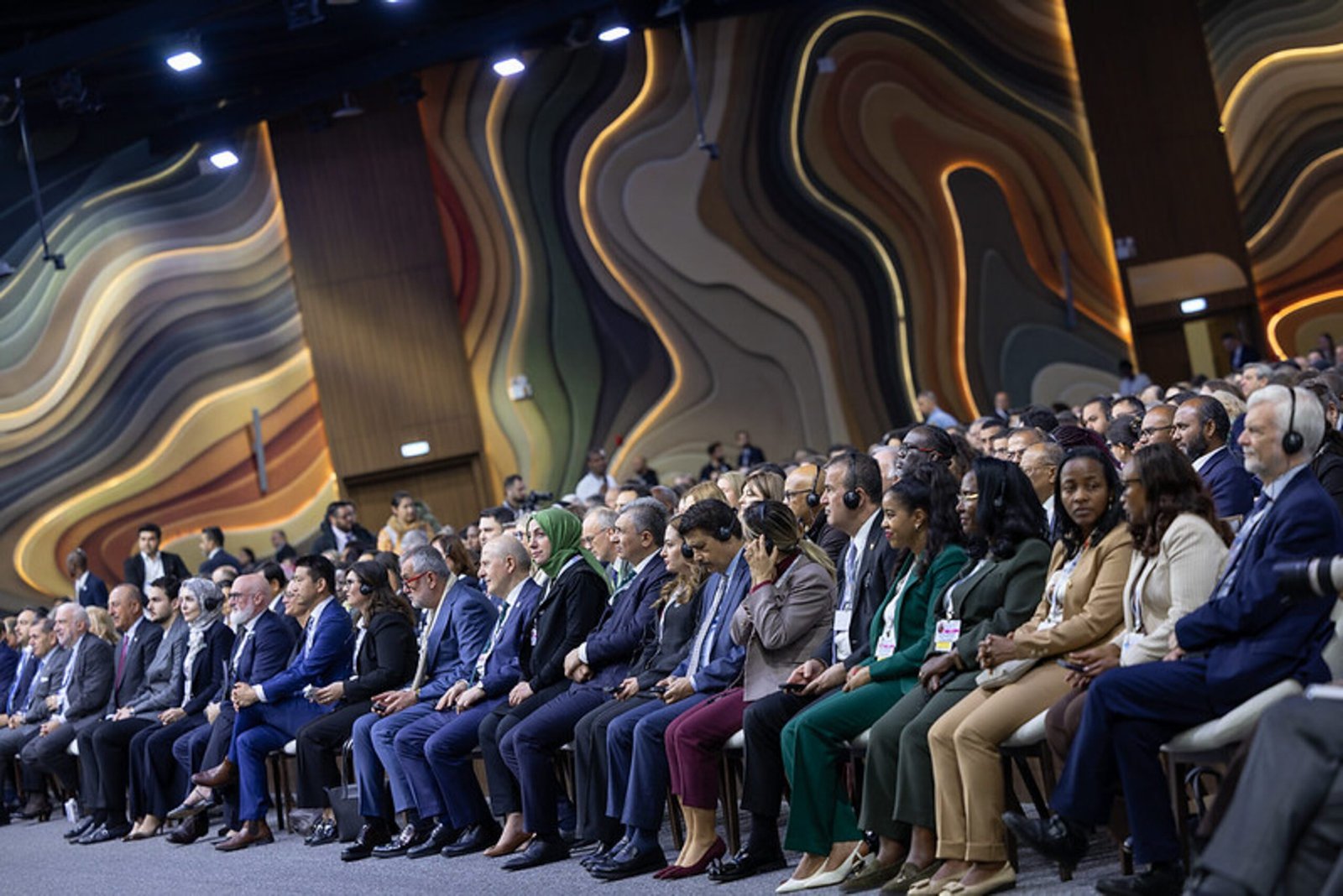
ANTALYA, Turkey – The collapse of COP31 talks in Turkey on Sunday, November 22, without a political agreement left exhausted negotiators questioning the future of a process that for three decades has led the global fight against climate change.

For the small, vulnerable countries most exposed to rising sea levels and the increasingly extreme weather scientists link to rising carbon emissions, annual UN conferences are their chance to draw the world’s attention to their plight and seek financial help.

But the failure of the Turkish talks, which follows on from weak outcomes at other COPs in recent years, lays bare the need for change.
Must Read

COP31 climate talks collapse as EU and others reject deal


COP31 climate talks collapse as EU and others reject deal

Andres Martin Garrido Sanchez, director of environment in Peru’s Ministry of Foreign Affairs, said “the credibility of the process” was at stake.

“This system needs in-depth reforms,” he said.

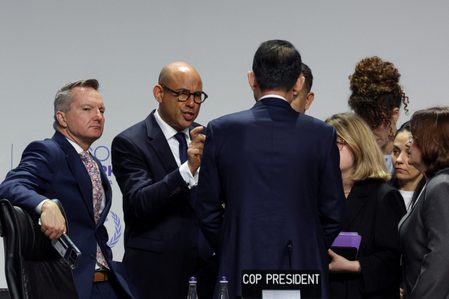
Simon Stiell, the UN climate chief representing the UN convention that underpins international climate talks, said the consensus-based system can still function, but work was needed.

“I have taken steps in engaging external knowledge leaders in advising on areas of potential reform. That is something I will be championing with considerable effort as we leave here,” he said as the talks ended on Sunday.

3 decades of seeking a global solution

Two stand-out victories for UN climate diplomacy were the 1997 Kyoto Protocol, when the world for the first time agreed on legally binding targets to curb climate emissions and the 2015 Paris agreement, which established an aspiration to limit global warming to no more than 1.5 degrees Celsius.

A major difference in Paris compared with Antalya was that the US was still engaged in the climate process in 2015.

The Antalya talks, the first since a UN report saying the world was set to breach the 1.5 C threshold that can prevent the worst consequences of warming, marked the second climate conference since US President Donald Trump withdrew from the UN climate process.

China, the world’s biggest carbon emitter, but also a major part of the solution as a provider of low-carbon technology, has attended the talks but sought to be low profile.

James Fletcher, who led the CARICOM group of Caribbean nations in Antalya, cited the lack of a major power backing a positive outcome as a big issue.

“There isn’t that one party that has sufficient gravitas that can get parties that may be far apart to come together,” he said.

Delegates said, however, the need for a multilateral deal to direct the shift toward renewable energy has become less necessary as renewable energy becomes economically compelling.

China’s clean energy exports last year alone, for example, will help the Global South avoid 257 million metric tons of carbon dioxide emissions per year once deployed — an amount equal to the emissions of France, according to analysis by Lauri Myllyvirta, co-founder of the Helsinki-based Centre for Research on Energy and Clean Air.

The business world as a result is less dependent on COPs to guide investment decisions.

“It used to be that you’d worry about how these (COP) decisions might affect the investment signal,” said Chris Dodwell, co-head of the sustainability centre at Impax Asset Management.

“I don’t think they really have that impact anymore …. the economics have taken over and are driving the transition.”

And bad as the absence of a deal was, some saw a hint of the positive in the wider refusal to accept a weak deal.

The determination of big oil producers, led by Saudi Arabia, to block language on fossil fuel, arguably reflected the scale of progress that has been achieved.

“The fact that they are blocking so much is also an expression of the fact that we are accelerating the transition,” Mattias Frumerie, Sweden’s chief negotiator, said.

“They’re seeing the direction of travel and this is the forum where they can express their frustration.”

Smaller groups find common cause

Like-minded governments, meanwhile, have focused on smaller groups to get things done. They have formed alliances to push together for faster emissions cuts and to rally finance, forestry initiatives, and efficiency programs.

Such forums include the Conference on Transitioning Away from Fossil Fuels, or TAFF, the Green Grids Initiative, the Global Methane Pledge and the Beyond Oil and Gas Alliance.

“There is growing interest in how can we work together to move, not through consensus, but through a coalition of people that are willing to work together,” said Maina Talia, climate minister of Tuvalu, which will next year host TAFF. As one of the low-lying Pacific island nations, Tuvalu is particularly keen for rapid action to address climate change.

He said he expected roughly 90 countries to send representatives including Britain, Mexico and Nigeria.

Fiji, another Pacific island, voiced its exasperation with COP.

“It is exhausting and frustrating and disappointing when you come year in, year out and there is no movement,” Lynda Tabuya, Fiji’s climate minister, said.

The country’s chief negotiator, Sivendra Michael, however, said the consensus-driven process of COPs remained vital to ensuring the progress achieved by previous conferences was maintained.

“I do not know how else we are going to bring together all the parties that have committed legally to a legally binding agreement, hold up to their commitments, and discuss how they implement these commitments,” he said. – Rappler.com

Similar Posts

  • |

    Police arrest suspect in the murder of British woman

      Authorities in Greece have detained a suspect in connection with the brutal murder of 38-year-old British national Elizabeth Jane Ross, whose body was discovered inside a suitcase in Athens. The case has attracted significant public attention due to the disturbing circumstances surrounding the crime and the victim’s humanitarian work. According to police, Elizabeth Jane Ross had been visiting Greece for several years and was well known for her involvement with organizations that supported refugees and other vulnerable communities. Through her humanitarian efforts, she worked with various charities and non-governmental organizations dedicated to assisting people in need. Friends and colleagues described her as a compassionate and caring individual who devoted much of her time to helping disadvantaged groups. The investigation began after a homeless man discovered a suspicious suitcase in a car park in the Kypseli district of Athens on 18 July. After noticing the abandoned luggage, he alerted the authorities, who responded to the scene and opened the suitcase. Police were shocked to find the body of a woman inside. The victim was later identified as Elizabeth Jane Ross through official procedures. Following the discovery, Greek police launched an extensive investigation involving forensic experts, detectives, and crime scene specialists. Investigators collected evidence from the suitcase and surrounding area in an effort to determine the identity of the perpetrator and reconstruct the events leading up to the murder. According to reprts, the suspect is a 26-year-old Afghan national who was taken into custody in central Athens. Police believe he may have been directly involved in the killing of Elizabeth Jane Ross. During the initial stages of

  • | |

    2,300 Israeli settlers storm Al-Aqsa

    Around 2,300 Israeli settlers entered the Al-Aqsa Mosque compound in occupied East Jerusalem on Wednesday morning, according to Palestinian officials and international media reports. Palestinian authorities described the mass entry as one of the largest such incursions this year. The incident took place as Jewish settlers marked Tisha B’Av, a religious day of mourning that commemorates the destruction of ancient Jewish temples, according to Jewish tradition. The site holds deep religious significance for both Muslims and Jews. Muslims refer to it as the Al-Aqsa Mosque compound, while Jews call the area the Temple Mount. Israel’s far-right National Security Minister Itamar Ben-Gvir also entered the compound under heavy police protection. His presence at the sensitive holy site has previously drawn strong criticism from Palestinians and sparked concerns over rising tensions in Jerusalem. The Jerusalem Governorate said the number of Israeli settlers entering the compound could increase further by sunset. Palestinian officials also reported that Israeli forces imposed tight security restrictions around the entrances to Al-Aqsa and across the Old City of Jerusalem. Large numbers of Israeli security personnel deployed throughout the area, while Palestinian worshippers faced restrictions on accessing the mosque. According to the governorate, only a limited number of Palestinians managed to reach Al-Aqsa for the dawn prayer. Palestinian officials further alleged that Israeli forces assaulted several worshippers and local residents during the heightened security measures. The latest incident comes amid continued tensions surrounding access to and control of the Al-Aqsa Mosque compound, one of the most sensitive religious and political flashpoints in the Israeli-Palestinian conflict.

  • |

    Saudi must recognise Israel, says Trump

    US President Donald Trump has reaffirmed that Saudi Arabia must establish diplomatic relations with Israel before Washington moves ahead with a civilian nuclear cooperation agreement with the kingdom. Speaking at the White House on Friday, Trump said the proposed nuclear partnership remains linked to Saudi Arabia joining the Abraham Accords, the US-backed agreements that normalized relations between Israel and several Arab states. Trump dismissed suggestions that the US Department of Energy had announced the nuclear deal without the Israel-related condition. He said there had been no misunderstanding within his administration and insisted the requirement had always been part of the discussions. “I have always said that Saudi Arabia must become part of the Abraham Accords for the deal to move forward,” Trump told reporters, adding that the accords had been successful and that the time had come for Riyadh to join them. The latest remarks came just days after the United States and Saudi Arabia signed a framework for cooperation on a civilian nuclear programme. While the initial announcement focused on energy cooperation and economic benefits, Trump later clarified that the agreement would only proceed if Saudi Arabia formally normalized ties with Israel. Saudi Arabia has not officially responded to Trump’s latest comments. However, the kingdom has consistently maintained that it will not establish diplomatic relations with Israel until meaningful progress is made toward the creation of an independent Palestinian state. Israeli leaders have repeatedly rejected international calls for a Palestinian state under current conditions. The proposed agreement is expected to create a long-term partnership between the two countries in the peaceful use of nuclear energy. It would involve the transfer of American technology, technical expertise and investment aimed at supporting Saudi Arabia’s civilian nuclear programme. Trump also rejected reports suggesting the agreement would allow Saudi Arabia to enrich uranium domestically. He stressed that no uranium enrichment would be permitted under the arrangement. US officials have argued that the partnership is designed to strengthen bilateral relations while ensuring strict oversight of nuclear activities. They say American companies will play a central role in developing the programme, allowing Washington to maintain close monitoring and prevent nuclear proliferation.

  • Global humanitarian crisis

    Across multiple war zones around the globe, military hostilities and direct attacks on aid workers are pushing millions of civilians to the brink. Frontline personnel operating in Ukraine, the Middle East and Sudan are struggling to deliver basic survival services under increasingly perilous conditions. Strikes on Essential Infrastructure and Relief Assets in Ukraine Violence across Ukraine continues to inflict heavy civilian casualties. It claimed lives and injuring children across nine major regions, including Kyiv, Kharkiv, Odesa and Zaporizhzhia. The intense shelling has directly hindered humanitarian operations beyond damaging residential neighborhoods and essential municipal utilities. A recent strike in the city of Dnipro destroyed a primary World Health Organization (WHO) supply warehouse. The attack wiped out crucial medical inventory earmarked for frontline healthcare facilities. Meanwhile, emergency personnel in the Kherson region reported damage to a civilian evacuation transport and a direct hit on a World Food Programme (WFP) partner truck carrying essential food supplies. Despite these continuous risks, relief organizations remain active on the ground, delivering immediate trauma care, psychological support, and essential survival provisions to impacted communities. Rising Hostilities and Explosive Hazards Across the Middle East The security landscape in southern Lebanon and Gaza remains extremely volatile. Peacekeepers with the UN Interim Force in Lebanon (UNIFIL) monitored hundreds of artillery rounds and dozens of airspace incursions by Israeli forces over a single weekend. Direct fire incidents were recorded near UN observer positions in Meiss ej Jebel, alongside sightings of naval activity along the coast. Crucially, peacekeepers are working to clear hazardous remnants of war, having uncovered loaded rocket launchers, unexploded shells, and improvised explosive devices scattered across southern villages. In Gaza, ongoing military activity continues to imperil non-combatants and expand basic survival needs. Unexploded ordnance represents one of the most severe long-term dangers to returning residents and reconstruction crews. Specialist teams have identified and marked more than 1,000 explosive items across the Gaza Strip since late 2023. These clearance operations are vital for allowing workers to clear heavy rubble, restore water infrastructure, and safely access damaged facilities. To prevent further civilian casualties, mine safety specialists conducted targeted educational workshops reaching over 63,000 individuals in the past month alone. Sudan’s Escalating Displacement and Extreme Budget Drought In Africa, Sudan’s protracted conflict is driving mass displacement while relief budgets rapidly dry up. Severe insecurity around El Obeid in North Kordofan State has uprooted thousands of residents seeking sanctuary, forcing aid agencies to scramble to supply two million liters of drinkable water to roughly 133,000 displaced individuals facing acute shortages. Further west, intense fighting in the Sirba locality of West Darfur displaced around 18,000 civilians in a single week, sending thousands fleeing across the border into neighboring Chad. Compounding the human toll is a crippling financial deficit. The global humanitarian appeal for Sudan remains underfunded at just 41 percent, having received only $1.2 billion of the required $2.9 billion. This severe shortage has already forced the closure of multiple health centers in Central Darfur, leaving an estimated 75,000 displaced people completely cut off from basic healthcare services. Growing Risks of Regional Spillover in Yemen   The fragile stability in Yemen is also facing its most precarious moment since the 2022 truce. UN Envoy Hans Grundberg warned that recent escalations risk dragging the nation into a broader regional conflict, erasing years of diplomatic progress. Relief agencies emphasize that without immediate de-escalation, sustained diplomacy, and dedicated financial backing from international donors, global humanitarian networks will remain severely stretched, leaving millions of vulnerable civilians without access to life-saving assistance.

  • | |

    2 students killed in Philippines school shooting, …

    Philippines: Two students were killed in a shooting at a high school in the southern Philippines on Tuesday, with authorities confirming that the suspected shooter was among the dead. The incident occurred at a school affiliated with Ateneo de Zamboanga University in Zamboanga City. Police said a Grade 9 student brought both a pistol and a rifle onto the campus and opened fire inside a classroom. A Grade 10 male student was killed in the attack, while the alleged shooter later took his own life. University President Ernald Andal said the situation had been brought under control and that there were no further deaths or reported injuries. He said the institution’s immediate priority was ensuring the safety of students and staff. Security personnel, including police and soldiers, were deployed around the school as investigators arrived to examine the scene. Students and parents were also seen gathering outside the campus following the incident. The shooting comes less than two months after another deadly attack at a public high school in Tacloban City. In that incident in June, at least three students were killed and around 20 others were injured after two students reportedly opened fire on the school grounds. School shootings are relatively uncommon in the Philippines, where firearm ownership is subject to regulations including background checks and psychological assessments. Authorities, however, continue to face challenges posed by the circulation of illegal weapons. The latest incident also comes less than 10 days after a separate school shooting in Thailand, adding to concerns over violence involving students in the region.

  • |

    Xi backs Brazil against foreign interference in call with Lula

    Chinese President Xi Jinping expressed support for Brazil’s efforts to protect its sovereignty and resist foreign interference during a phone conversation with Brazilian President Luiz Inacio Lula da Silva, according to Chinese state media. The discussion took place just months before Brazil’s closely watched presidential election and against the backdrop of growing trade and diplomatic tensions with the United States. According to China’s Xinhua news agency, Xi praised Brazil’s role on the international stage and said Beijing values the country’s influence in global affairs. He stated that China supports Brazil in defending its independence, rejecting outside interference, and contributing to regional and international peace and stability. The phone call comes less than three months before Brazilians head to the polls in an election expected to be highly competitive. President Lula is seeking another term and faces a challenge from right wing candidate Flavio Bolsonaro, the son of former president Jair Bolsonaro. The Brazilian presidency said the two leaders also discussed strengthening economic cooperation. Both sides agreed on the importance of accelerating negotiations for a trade agreement between China and Mercosur, the South American trade bloc that includes Brazil, Argentina, Paraguay, and Uruguay. Such an agreement could expand trade opportunities between the region and the world’s second largest economy. During the conversation, which lasted more than an hour, Lula reaffirmed his commitment to expanding Brazil’s international trade network. He said his government is working to diversify export markets and reduce dependence on a limited number of trading partners, particularly as Brazil faces increased tariff pressure from the United States. Relations between Brasilia and Washington have become more strained in recent months. The United States introduced two additional rounds of tariffs on a range of Brazilian products this month, following a significant tariff increase imposed last year. The measures were linked to political tensions surrounding the legal case that resulted in former president Jair Bolsonaro being sentenced to prison over an alleged coup plot. Lula has strongly criticized the tariffs, arguing that they amount to political pressure during an election year. He has accused Washington of attempting to influence Brazil’s domestic affairs through economic measures, an allegation the United States has rejected. Diplomatic tensions have also surfaced over election related issues. According to diplomatic sources, Brazil recently refused entry visas for two American officials who planned to visit the country’s election authorities ahead of the October vote. The move reflected growing sensitivity within the Brazilian government over foreign involvement in electoral matters. Meanwhile, Flavio Bolsonaro has continued to question the reliability of Brazil’s electronic voting system despite repeated assurances from election officials that it is secure. His claims have echoed similar allegations made by US President Donald Trump regarding American elections, although no credible evidence has supported those accusations. While the Chinese government highlighted Xi’s support for Brazil in resisting external interference, the official statement released by the Brazilian presidency did not specifically mention that part of the discussion. Instead, it focused on economic cooperation and the importance of strengthening trade ties between Brazil, China, and the Mercosur bloc. The conversation underscores the increasingly close relationship between Beijing and Brasilia at a time when Brazil is balancing political challenges at home with shifting economic and diplomatic dynamics on the global stage.

Leave a Reply

Your email address will not be published. Required fields are marked *