تازہ ترین

  • | |

    PMDC approves seat increase for 19 Private College…

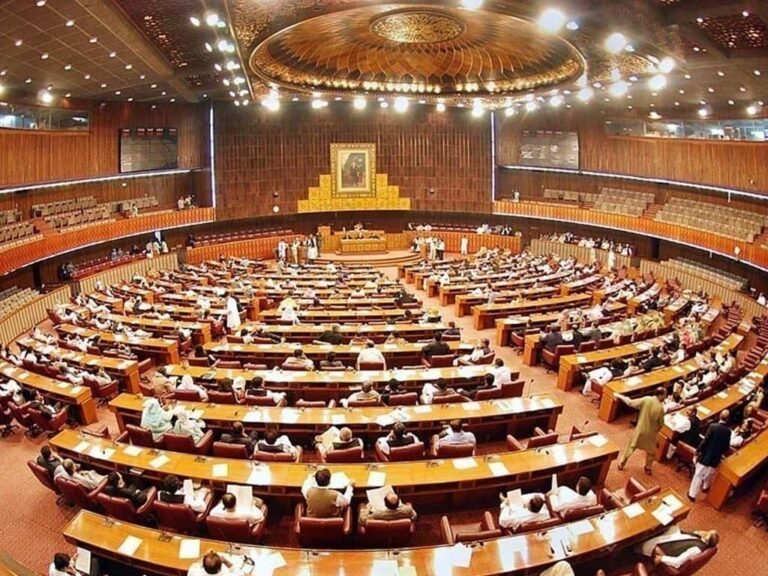
    Islamabad: A major debate has erupted over medical college seat expansion in Pakistan after the Pakistan Medical and Dental Council (PMDC) announced new seat enhancements for private medical colleges, while hundreds of existing private sector seats remain vacant due to the high cost of medical education. During a meeting of the Sub Committee of the Senate Standing Committee on National Health Services, Regulations and Coordination, the PMDC President informed lawmakers that seat enhancement approval has so far been granted to 19 private medical colleges. However, the exact number of additional seats approved for these 19 private medical colleges has not yet been disclosed. The announcement came as the committee was already discussing the serious shortage of affordable medical education opportunities for students who want to become doctors. PMDC officials also informed the committee that the government has increased public sector medical college seats by 780 additional seats, creating more opportunities for students seeking admission in public institutions. The committee was told that the increase in seats was part of efforts to expand medical education opportunities and address the growing student demand. At the same time, officials highlighted a major contradiction in the current system. While authorities are increasing the number of medical seats, hundreds of private medical college seats remain empty because many students cannot afford the fees. PMDC officials also informed the committee that hundreds of private medical college seats remained vacant this year because many students were unable to afford the high fee structure of private institutions. They stated the main reason was the high fee structure of private medical colleges, where many students could not afford fees ranging from Rs18 lakh to Rs25 lakh annually. Senator Anusha Rahman questioned why qualified students were unable to enter medical colleges when seats were available. She asked officials whether any seats in public medical colleges were vacant. PMDC officials replied that public medical college seats were completely filled. The senator questioned the situation, saying that thousands of students who had successfully passed MDCAT were still unable to become doctors because of limited seats and financial problems. She pointed out that around 70,000 to 75,000 students who cleared the admission test were left without medical college opportunities. The committee questioned whether enough steps were being taken to protect these students’ futures. During the discussion, Officials suggested a large scale expansion plan and proposed adding 10,000 more medical seats in the Medical sector through government supported loans and scholarship programmes. Senator Shahzaib Durrani said such an initiative could help thousands of students and would require around Rs15 billion annually, which he described as a manageable amount for the government. The committee also discussed whether increasing seats could affect the quality of medical education. PMDC officials explained that medical education requires proper clinical training facilities, including hospitals and patient exposure. Officials said there are specific requirements for increasing medical seats because colleges must have enough hospital beds for students. According to PMDC standards, colleges with 100 students require around 500 hospital beds, while institutions with 200 students need around 750 beds and colleges with 300 students require around 1,000 beds. A PMDC member said medical education cannot be expanded without improving clinical facilities because doctors need practical training, not only classroom education. However, Senator Anusha Rahman argued that increasing seats could encourage institutions to expand their healthcare facilities. She said medical graduates are also a national resource and many Pakistani doctors contribute internationally. The senator directed PMDC to prepare recommendations explaining why private medical college seats remained vacant and what should be done for thousands of qualified students who are unable to secure admission.

  • | | |

    AJK election first phase concludes, vote counting …

    Polling for the first phase of the Azad Jammu and Kashmir (AJK) Legislative Assembly elections concluded on Monday, with vote counting now underway across 13 constituencies in Mirpur Division. The first phase covered three districts — Mirpur, Kotli and Bhimber. Polling was initially scheduled to end at 5pm but was extended by one hour. Voting continued until 6pm to provide voters with additional time to cast their ballots. More than 1.4 million registered voters were eligible to participate in the first phase. The Election Commission had established 2,454 polling stations across the three districts. Of these, 597 polling stations were set up across four constituencies in Mirpur district. Kotli had 1,107 polling stations across six constituencies, while 608 polling stations were established in three constituencies of Bhimber. A total of 296 candidates, including nominees from the Pakistan Peoples Party (PPP), Pakistan Muslim League-Nawaz (PML-N), Istehkam-e-Pakistan Party and independent candidates, contested the 13 seats. Polling disrupted at some stations Although polling remained largely peaceful, some polling stations reported disruptions. In Kotli’s Aghaar Colony, voting continued at Polling Station 38. However, polling could not begin at Stations 36 and 37 because voters did not arrive. PPP AJK Election Cell in-charge Sardar Abdul Shakoor claimed that disturbances occurred at polling stations 119, 120 and 121 in LA-5 Barnala. He said polling was affected for some time. According to Shakoor, voting resumed after security forces reached the area. However, he said the polling process remained slow. The PPP also established a central election monitoring cell in Islamabad. Senior party leaders, including Sherry Rehman, Nadeem Afzal Chan, Shazia Marri, Sharjeel Memon and Saeed Ghani, monitored developments and remained in contact with election officials, district administrations and party candidates. Former National Assembly speaker Raja Pervez Ashraf expressed concern over alleged irregularities at different polling stations. He called for additional security personnel at sensitive locations, including Gulpur, Thurochi and Muhajir Camp. He urged the Election Commission to immediately and impartially investigate all complaints and ensure free, fair and transparent elections. Political leaders urge voters to participate PML-N candidate Chaudhry Tariq Farooq cast his vote at Polling Station 161 in Bhimber’s LA-7 constituency. Speaking after voting, Farooq said voter turnout was expected to be higher in rural areas than in cities. He also expressed confidence in the security and election arrangements in Bhimber. PPP Chairman Bilawal Bhutto Zardari, accompanied by his sister Aseefa Bhutto Zardari, appealed to voters in Mirpur to participate in the elections. In a video message, Bilawal urged people to leave their homes and exercise their right to vote if they wanted Kashmir’s future to be decided by its people. He also asked voters to support PPP candidates. PPP Karachi Division President Saeed Ghani described the election as a contest between the genuine issues of Kashmiris and what he called false promises. Ghani said Kashmiris needed political rights, ownership rights and employment opportunities. He criticised the focus on providing a limited number of buses, saying development should address wider public needs. PPP leader Nadeem Afzal Chan also raised concerns about alleged federal interference and the use of government resources during the elections. He demanded that the polls remain free, fair and transparent. He also called on the federal government to avoid any involvement that could influence the electoral process. PPP spokesperson Shazia Marri said the people of Kashmir would deliver their verdict through their votes. She said the party’s election symbol, the arrow, represented hope for the people of Mirpur. Police praise peaceful polling AJK police said the first phase of polling remained peaceful across Mirpur Division. A spokesperson for the AJK police chief said voters had rejected calls for unrest and instead chose to exercise their democratic right. Voters began arriving at polling stations soon after voting opened at 8am. AJK Inspector General of Police Liaquat Ali Malik thanked residents for cooperating with law enforcement agencies and helping maintain peace during the election. He warned that no individual, including political workers, would be allowed to take the law into their own hands. Mirpur Commissioner Raja Tahir Mumtaz and DIG Kamran Ali also visited Ward 16/17 in LA-3 to review the polling arrangements. The commissioner said polling had remained peaceful across Mirpur, Kotli and Bhimber. He urged voters to come out without fear and assured them that the administration had made arrangements for a secure environment. Security arrangements strengthened Authorities made extensive security arrangements for the elections. AJK Chief Election Commissioner Justice (retd) Ghulam Mustafa Mughal said legal action would be taken against anyone attempting to disrupt the voting process. AJK Chief Secretary Khushal Khan said state institutions were fully prepared to maintain peace during the elections. He said the people had rejected attempts to create disorder and demonstrated confidence in the democratic process.

  • | |

    Ukraine targets mid-2027 for prototype of new Euro…

    Ukraine is pushing to have a working prototype of a European anti-ballistic missile system, codenamed Freyja, ready by the middle of next year, as Kyiv presses its allies to accelerate development of a weapon capable of intercepting Russian ballistic missiles. Davyd Aloian, deputy secretary of Ukraine’s National Security and Defence Council and the official overseeing the Freyja project, said an international steering committee responsible for estimating research and development costs is set to meet for the first time soon. The project was formally launched two weeks ago at a summit in Paris, where leaders from ten European nations, including Ukrainian President Volodymyr Zelenskiy, joined roughly a dozen defense manufacturers to establish the anti-ballistic coalition. Aloian said the tight timeline reflects an ambitious target. He described the goal as producing a minimum viable product within the first half of next year, meaning a prototype capable of demonstrating early practical results. Ukraine currently relies heavily on American made Patriot systems, which remain the only weapon in its arsenal able to reliably shoot down Russia’s ballistic missiles, capable of traveling at multiple times the speed of sound. Deliveries of Patriot systems have been hampered by shifting political circumstances, limited stockpiles and lengthy manufacturing timelines. Russia has intensified ballistic missile strikes this month on Kyiv and the southern port city of Odesa, launching dozens of missiles that Ukraine was largely unable to intercept due to a shortage of interceptor missiles. Ukraine has offered to contribute a launcher and an interceptor missile to the Freyja project, which Zelenskiy said this month essentially needs testing at this stage. He has said he hopes to see the system operational within a year. Kyiv is counting on its allies to supply key technology, including modern radar systems, sensors and expertise in missile guidance and control electronics. Defense companies that have joined the initiative so far include Eurosam, maker of the SAMP-T interceptor, along with Leonardo, Thales and Saab. Ukrainian missile and drone manufacturer Fire Point, known for developing the Flamingo cruise missile, has said it will serve as the lead industrial partner on the project and recently struck a deal with German firm Hensoldt to supply radar technology. The Freyja system is designed as a lower cost alternative to the Patriot, a system many European nations also depend on. Other existing air defense platforms, including the Franco Italian SAMP/T and Germany’s IRIS-T, have not yet demonstrated the ability to down ballistic missiles. Zelenskiy has compared the Freyja coalition to a Lego set, describing it as a system built by combining components supplied by different defense industry leaders. Aloian said manufacturers have been asked to build a framework that allows interchangeable parts from different countries. He explained that the system’s open architecture means individual nations can select their preferred components, whether that means Denmark opting for a Danish made Weibel radar or Sweden choosing Saab’s technology. Organizers are also considering setting up a dedicated body, potentially structured as a fund, to manage contributions and ensure the project receives stable financing over time. Aloian said involving private companies directly alongside governments should help cut through bureaucratic delays, adding that the coalition is meant to function as a practical effort rather than a political one. The push for a homegrown European missile defense capability reflects a broader shift underway across the continent, as governments reassess their reliance on American weapons systems amid growing pressure to build independent defense industrial capacity in the face of a prolonged war on Europe’s eastern border.

  • | |

    Cockroach movement demands release of detained pro…

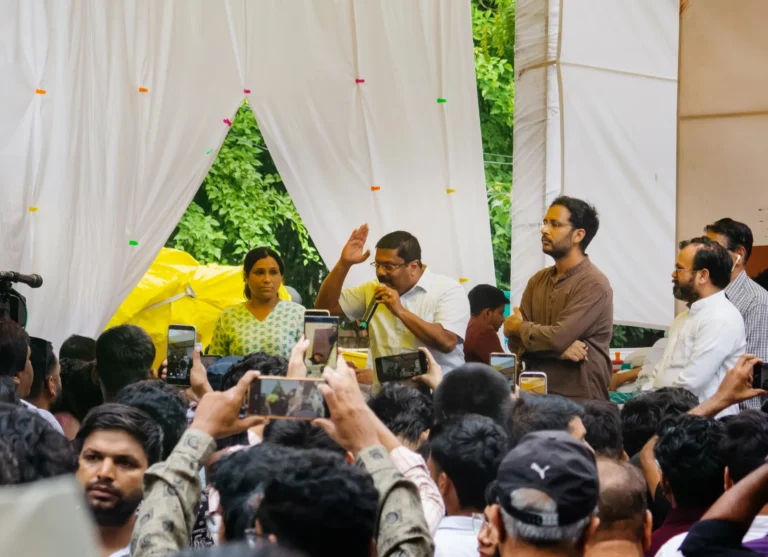
    India’s youth led Cockroach protest movement called on authorities Monday to release all demonstrators detained during weeks of nationwide rallies, days after the campaign succeeded in forcing the resignation of the country’s education minister. The Cockroach Janta Party, an online organized group that has driven weeks of protests over exam paper leaks and other irregularities in India’s competitive examination system, said it had received reports of students being held in custody, particularly across the states of Assam, West Bengal and Bihar. In a statement, the group said any failure to release detained protesters or drop criminal cases against them would represent a breach of public trust, and warned it would take further action if its demand was not met. The statement followed the resignation two days earlier of Dharmendra Pradhan as education minister, a move that came after repeated failures in the administration of competitive exams fueled widespread anger among young Indians. The Cockroach Janta Party accused the government of going back on earlier assurances that protesters would not face punitive action. The movement has attracted millions of followers on social media since it launched in May under the leadership of Abhijeet Dipke, a 30 year old public relations graduate. Tens of thousands of demonstrators, most of them students, rallied last week in New Delhi and other cities across the country to demand Pradhan’s resignation and broader changes to the examination system. Protests in the capital turned violent on July 20 when demonstrators attempted to march from the Jantar Mantar protest site toward parliament. Police responded with tear gas and batons to break up the crowd, setting off clashes that led to a wave of detentions. The fallout from the crackdown carried into parliament on Monday, where opposition lawmakers repeatedly disrupted proceedings while demanding that the government address last week’s police response. Despite the disruptions, the government pressed ahead with introducing legislation in the lower house aimed at imposing tougher penalties for examination paper leaks. The protest movement has emerged as one of the most significant youth led political mobilizations in India in recent years, drawing comparisons to earlier waves of student activism that used social media to rapidly organize large scale demonstrations. Analysts say the swift resignation of a sitting cabinet minister underscores the growing influence such movements can wield when they combine online organizing with sustained street pressure, though the outcome of the current standoff over detained protesters remains uncertain as both sides continue to weigh their next steps.

  • | |

    Pakistan faces population planning crisis, Senate …

    Islamabad: Pakistan’s population planning system has come under serious criticism after a Senate committee expressed concern over the absence of updated population data, warning that outdated information could damage government planning and decision making. The Senate Standing Committee on Planning, Development and Special Initiatives questioned why the country’s latest population and health information was still based on the Pakistan Demographic and Health Survey conducted in 2017 and 2018, despite the survey being planned every five years. The committee said that without fresh population data, it becomes difficult for the government to properly plan healthcare services, allocate resources and create policies according to people’s needs. The issue was discussed during a meeting chaired by Senator Quratulain Marri at Parliament House, Islamabad, where the committee reviewed the implementation of the National Action Plan on Population 2021 to 2026. Officials from the Ministry of National Health Services informed the committee that the population action plan was approved in May 2021 with a total cost of Rs1,996.683 million. The project covers areas including Azad Jammu and Kashmir, Gilgit Baltistan, and the Islamabad Capital Territory. The committee was informed that a major portion of the project budget, around Rs1,679.6 million, has been allocated for purchasing contraceptives. Officials said these contraceptives are being imported for population welfare programmes. For the financial year 2026 and 2027, Rs250 million has been allocated mainly for awareness campaigns and procurement of contraceptives. However, the committee questioned the effectiveness of these efforts and demanded complete details on resource allocation and the number of beneficiaries. Senator Quratulain Marri expressed concern that the Ministry’s briefing did not fully answer the questions raised by the committee. She directed the ministry to provide a detailed presentation in the next meeting covering the purchase, distribution, usage and challenges related to contraceptives. The chairperson said that population planning decisions must be based on accurate and updated information. She questioned why the Pakistan Bureau of Statistics had not completed the population and health survey within the expected timeframe. Officials informed the committee that the Pakistan Bureau of Statistics is currently conducting the next survey to update population and health indicators for the period up to 2025 and 2026. The committee said delays in collecting population data create serious problems because the government cannot accurately estimate the needs of hospitals, schools, employment opportunities and public services. Members stressed that a growing population requires proper planning to ensure that citizens receive enough healthcare, education and basic facilities. The committee reviewed the National Action Plan on Population as part of wider discussions about Pakistan’s future development challenges. Lawmakers said population growth is directly connected with economic pressure, healthcare demand and availability of public resources. The committee directed officials to improve monitoring and provide clearer information about the progress of population related programmes. Senator Quratulain Marri emphasized that government projects must deliver real results and that public money should be used effectively. The committee decided to continue reviewing the population action plan in future meetings and seek further details from relevant departments.

  • | |

    Oil prices tumble after US and Iran halt strikes, …

    Oil prices fell sharply on Monday after the United States and Iran paused military strikes over the weekend, ending two weeks of attacks and raising hopes that diplomacy could de escalate the conflict and allow shipping through the Strait of Hormuz to resume. Brent crude futures dropped by around 5.9 percent to just above 91 dollars a barrel, briefly slipping below the closely watched 90 dollar mark earlier in the session. US West Texas Intermediate crude fell roughly 5.4 percent to settle near 84.50 dollars a barrel. Both benchmarks touched their lowest levels in almost a week, reversing three straight weeks of gains driven by the conflict. Brent had climbed as high as 100 dollars a barrel as fighting disrupted oil shipments through the Strait of Hormuz and spread to the Red Sea, complicating exports from Saudi Arabia, the world’s largest oil exporter, through the Bab el Mandeb strait toward Asian markets. US Ambassador to the United Nations Mike Waltz said President Donald Trump had opted to pause American strikes to give diplomatic efforts more room to work, a message he delivered across several US television appearances Sunday. Market analysts remained cautious despite the price drop. PVM analyst John Evans said markets continue to search for encouraging signals from a region that has offered little reassurance so far, and cautioned that a pause in strikes carries no guarantee that oil shipments will resume quickly. He said prices are more likely to keep falling if elevated costs curb demand rather than because of a fragile ceasefire. Shipping data from Kpler showed fewer than ten commodity vessels passed through the Strait of Hormuz per day over the weekend. MST Marquee analyst Saul Kavonic said any recovery in traffic through the strait will likely be gradual and incomplete, since many shipping operators remain cautious and will want stronger safety assurances before sending empty vessels back into the waterway. Traffic through the Bab el Mandeb strait also declined Sunday after Yemen’s Houthi movement struck Saudi oil facilities along the Red Sea coast, though one additional Chinese supertanker managed to exit through the strait. Analysts at Societe Generale estimate that every month the Red Sea situation remains unresolved could add at least 10 dollars to the price of a barrel. Some analysts expect prices to stay supported if supply disruptions continue across the Middle East and in connection with Russia’s war in Ukraine. Analysts at UOB noted that the widening Middle East conflict, combined with Ukrainian drone strikes on Russian ships and refineries, could sustain supply disruptions that keep oil prices elevated and add upward pressure to global inflation. Ukraine said it struck several Russian oil facilities over the weekend as part of that ongoing campaign. The volatility underscores how closely global energy markets remain tied to geopolitical developments in the Middle East, where even temporary pauses in fighting can trigger significant price swings as traders weigh the likelihood of a lasting resolution against the risk of renewed escalation.

  • | |

    Iran and Oman hold talks on Strait of Hormuz as re…

    Diplomatic efforts to stabilize the Strait of Hormuz intensified this week even as tensions across the wider Middle East remained high, with Israeli Prime Minister Benjamin Netanyahu traveling to Washington for talks with President Donald Trump and multiple countries reporting drone interceptions linked to the ongoing conflict. An Omani delegation traveled to Tehran to discuss a possible mechanism for managing future shipping through the Strait of Hormuz. Iran continues to reject the idea of alternative shipping corridors through the waterway, while Omani officials have proposed a regional consortium to oversee the mechanism without charging tolls. Iranian officials, however, are still pushing for what they describe as a service fee and want the arrangement placed under Tehran’s control. Iran’s Foreign Ministry spokesman, Esmaeil Baghaei, said talks with Oman over the strait took place over the weekend and described the discussions as useful, though he stressed that the situation in the strait itself remains unchanged and closed, and that the talks are unrelated to the United States. Baghaei also said Tehran has not requested a resumption of direct talks with Washington, calling that approach out of character for Iran. He said some Gulf countries had played a role in the American campaign against Iran without elaborating further, and added that Iran would not allow the United States to dictate how the conflict ends. Shipping data reviewed by analytics firm Kpler showed traffic through both the Strait of Hormuz and the Bab el Mandeb strait remained severely reduced over the weekend. Eleven commodity vessels passed through Bab el Mandeb on Sunday, the lowest level recorded in months, following Houthi attacks on Saudi oil installations along the Red Sea coast and the group’s declared naval blockade against Saudi Arabia. Seven of those vessels were oil tankers. Meanwhile fewer than ten vessels per day moved through the Strait of Hormuz over the weekend despite the pause in US and Iranian strikes, with several transiting vessels reportedly operating with their transponders switched off. President Trump rejected suggestions that US forces were running low on munitions after two weeks of strikes on Iran, saying American stockpiles far exceed what the country needs. His comments followed reports that US military officials had privately warned the bombing campaign had exhausted its pre selected target list, and that General Dan Caine, chairman of the Joint Chiefs of Staff, had cautioned Trump about the risk of depleting munitions stocks, including interceptors used by American air defenses in the region. US Ambassador to the United Nations Mike Waltz said the military has everything it needs, while acknowledging that Defense Secretary Pete Hegseth had inherited a depleted situation upon taking office. A senior Iranian official said Tehran would continue to hold fire as long as the United States does the same, describing the country’s position as strictly reciprocal. A separate Iranian source said there is more skepticism than optimism in Tehran about the pause, describing it as likely tactical rather than a genuine shift, given what the source called Iran’s extensive experience with perceived American deception. The pause followed a Friday meeting in which senior US military and political advisers, including Vice President JD Vance and Admiral Brad Cooper, the top American commander in the Middle East, reportedly urged Trump to scale back the bombing campaign. The renewed strikes had already unraveled an interim agreement reached the previous month aimed at ending the conflict. Against this backdrop, Netanyahu departed for Washington for his eighth meeting with Trump since the start of his second term, more than Trump has held with any other foreign leader. Netanyahu said Iran would top the agenda and described the trip as both an honor and a responsibility, saying his goal remains protecting Israel’s security and expanding regional peace. He also said he planned to visit Senator Lindsey Graham during the trip, calling him one of Israel’s closest allies. The visit comes as Netanyahu remains subject to an International Criminal Court arrest warrant issued in November 2024 over alleged crimes against humanity connected to the war in Gaza. Elsewhere, Saudi Arabia’s Ministry of Defence said its air defenses intercepted and destroyed several drones aimed at petroleum facilities in the Eastern Region and Riyadh, attributing the attempted strikes to Iranian backed militias operating from Iraqi territory. Jordan’s armed forces separately said they intercepted two drones without identifying the source, while Israel’s military said it intercepted two additional drones near the Jordanian border and is investigating their origin. Baghaei also addressed Iran’s nuclear program, saying Israel would attempt to block the transfer of nuclear technology to countries in the region while insisting that peaceful nuclear development remains every nation’s right. He said Washington has previously expected Iran to collapse quickly under pressure but argued that the United States remains entangled in the conflict months later. He further claimed Washington tends to return to negotiations whenever global energy prices rise. Separately, Iran summoned the French ambassador over the detention of two French diplomats earlier this month by Iranian security forces. Baghaei said Iran demanded that the French government halt what he called interference in Iran’s internal affairs conducted under the guise of civil society engagement. He said the diplomats were detained and questioned for several hours before being released, and said one of them was physically mistreated. French Foreign Minister Jean Noel Barrot condemned the incident as a serious act of intimidation. For residents of Iran, the uncertainty surrounding the pause has become part of daily life. One Tehran business owner said the entire country feels stuck in limbo, describing the shifting pattern of strikes and pauses as exhausting and accusing Washington of neither ending the conflict nor pursuing it decisively.

  • | |

    Muhammad Ahmed recalls being humiliated by fellow actor

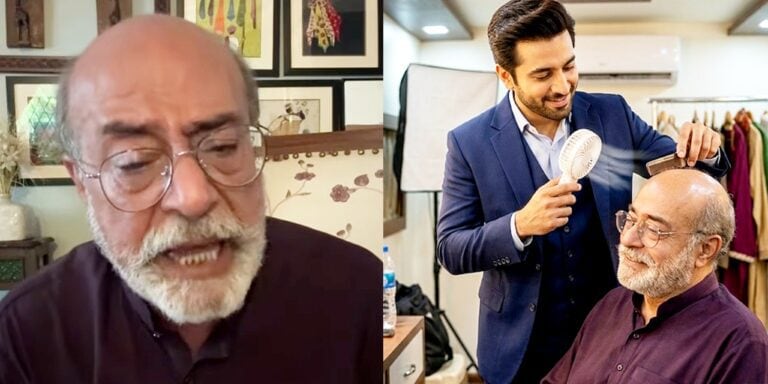
    Veteran Pakistani actor and writer Muhammad Ahmed has opened up about an upsetting experience in which he says he was repeatedly humiliated by a younger male actor on a drama set. Speaking on Sheeba Khan’s podcast Dareecha, the seasoned artist became emotional as he recalled the incident, saying that some actors behave very differently behind the scenes than they do in public. Muhammad Ahmed began by reflecting on how private interactions often reveal a person’s true nature. He said, “Actors show their true colours in private meetings, as I have experienced multiple times. Most recently, I remained calm when I was bullied because I know everyone has mobile phones, and they can record and post videos online with captions like, ‘See the reality of Muhammad Ahmed.’” He then explained why the remarks hurt him deeply. “I know I am bald, tanned, and short. I know this reality and often make fun of it myself, but what if you are told this by an actor who is 40 years younger than you?” He added that the actor frequently tried to attract attention by making loud comments in front of others. Recalling one such moment, Muhammad Ahmed said the actor mocked him for carrying a leather bag. “He said, ‘Oh Muhammad Ahmad, you are carrying a leather bag with you, it’s pure leather.’ He was shouting in front of everyone so that people would notice him because he was doing the lead role.” He further claimed that the actor also referred to comments Muhammad Ahmed had made years earlier about his performance. “Then he again said, ‘This man, Muhammad Ahmed, rated my acting four or five years ago and judged my future on the basis of it, whether I would survive in the industry or not,’ which is true because I had told the producer that this guy is good, and yes, that drama became a hit.” According to Muhammad Ahmed, he later reunited with the same actor on another project. Although he had expressed concerns to the producer beforehand, he was assured that the actor had changed. However, he said the behaviour continued. He recalled the actor saying, “I don’t know why people cast Muhammad Ahmed. He acts the same and has the same hairstyle.” Describing another incident, Muhammad Ahmed said the actor took a handheld fan from a female co-star, held it over his head like a hairdryer and joked, “Look, I am making his hairstyle.” He said he chose not to respond because he did not want to lower himself to that level or create unnecessary conflict on set. The veteran actor admitted that the experience left him deeply hurt. “I was humiliated, I completed my work and came home. I thought, ‘Am I that weak that I should be humiliated by an actor who joined the industry only eight years ago?’” He added that he remained silent out of respect for the producers and the rest of the team. Muhammad Ahmed concluded by saying that maintaining his composure was a conscious decision. “I didn’t say anything because the producers were so respectful. I maintained my calm because of my team. Nowadays, no one takes a stand for anyone.” His candid remarks have sparked discussion on social media, with many viewers expressing support for the veteran actor and calling for greater respect and professionalism within the entertainment industry.

  • | |

    UNESCO raises questions over Pakistan’s Taxila h…

    Islamabad: Pakistan’s ancient heritage sites have come under scrutiny after UNESCO raised questions over conservation work carried out at the historic Taxila archaeological sites of Mohra Moradu and Sirkap, prompting a Senate committee to seek detailed explanations from government officials. The Senate Standing Committee on National Heritage and Culture reviewed UNESCO’s concerns during a meeting at Parliament House and questioned whether restoration work at Pakistan’s internationally recognised heritage sites was being carried out according to global preservation standards. Officials informed the committee that UNESCO had asked for additional information regarding the conservation work conducted by the Directorate General of Archaeology, Punjab, at the Taxila sites. The committee was told that the required details had already been provided to UNESCO by the provincial authorities and no further objections had been received after the submission. Officials assured lawmakers that the restoration work followed UNESCO conservation guidelines and international standards. The meeting was chaired by Senator Hidayatullah Khan and attended by Senators Abdul Wasay, Bushra Anjum, Sarmad Ali and Syed Waqar Mehdi along with senior officials from the Ministry of National Heritage and Culture. During the briefing, officials explained that after the 18th Constitutional Amendment, responsibility for heritage conservation was transferred to provincial governments. They said the Government of Punjab started conservation activities at the Taxila archaeological sites and followed recommendations provided by UNESCO, ICOMOS and other expert organisations. Officials said the conservation strategy focused on protecting the original structure of the ancient remains while using scientific methods. They explained that the work included repairing damaged walls, improving drainage systems, protecting old structures from weather damage and using materials compatible with the original construction. Senator Syed Waqar Mehdi asked officials about the exact concerns raised by UNESCO. Officials explained that UNESCO’s observations mainly focused on the materials used during restoration, the method for rebuilding certain walls and the height of reconstructed structures. They said these issues were reviewed and addressed through detailed documentation submitted to UNESCO. The committee was informed that scientific cleaning and repair methods were used to protect the archaeological remains while maintaining international conservation principles. Pakistan currently has six sites listed as UNESCO World Heritage Sites, while documents for 24 more locations have been prepared for possible future inclusion. Officials told the committee that UNESCO usually considers only one nomination from each country annually.   They said Pakistan has requested UNESCO to give priority to its pending nominations so more historical locations can receive international recognition. The committee also discussed plans to develop Taxila as a major heritage and tourism destination.   Officials informed members that around Rs100 million had already been spent during the current year on conservation activities. They said further projects, including an open air museum and improved visitor facilities, were being considered to attract tourists while protecting ancient sites.   Senator Bushra Anjum stressed that stronger federal monitoring was needed despite heritage being mainly managed by provinces. She said Pakistan must improve tourism facilities around heritage sites, including better visitor services, accommodation options and a sustainable system that creates income while preserving history.   She warned that inappropriate materials or poor restoration methods could permanently damage important archaeological sites.   The committee directed the ministry to provide UNESCO’s official response once received and recommended that members visit the Taxila archaeological sites personally to review the conservation work. The meeting also discussed another major heritage issue involving the recovery of smuggled Pakistani archaeological artefacts from the United States. Officials informed the committee that 513 valuable archaeological artefacts had been returned to Pakistan through cooperation with US authorities. They said the recovered objects mainly belonged to the ancient Gandhara civilisation and had been seized after being illegally taken out of Pakistan over several decades. Officials described the artefacts as priceless national treasures representing Pakistan’s thousands of years of history. The committee was informed that plans were underway to establish a new museum where these recovered items could be safely preserved and displayed to the public. Officials said efforts were being made to acquire land for the museum in coordination with the Capital Development Authority and public private partnership options were also being explored. Committee members demanded details about the people involved in the smuggling network, the investigation process and the estimated value of the recovered artefacts. They directed the ministry to submit a complete report explaining how the artefacts were recovered and what action had been taken against those involved in illegal trafficking. The committee also discussed reports about the demolition of a historic Mughal era arch near Rohara Village for a housing development project. The chairman directed officials to collect complete information about the incident and present a detailed report at the next meeting.

  • |

    Tom Holland admits he had to fake enthusiasm for bad movies

    Tom Holland has opened up about a time when he had to be less than honest while promoting certain films. He admitted those projects simply were not worth recommending to audiences. The 30-year-old actor is currently deep into promotional duties for his upcoming film, “Spider-Man: Brand New Day.” During a recent conversation on the Dish Podcast with host Nick Grimshaw, Holland explained that talking to press about this particular project has felt refreshingly genuine and effortless. He described how promoting a film he is genuinely proud of removes any pressure to stretch the truth. When journalists ask why audiences should watch the movie, he said, there is no need to fabricate enthusiasm because he authentically believes people will enjoy it. Holland contrasted this with earlier experiences in his career, revealing that he sometimes privately doubted whether certain projects deserved an audience at all. He admitted that in the past, when reporters asked him to justify why viewers should see a particular film, he sometimes had to hold back his true opinion, quietly acknowledging to himself that the honest answer would have been far less flattering. The actor did not specify which films prompted these private doubts, but his comments suggest that not every project in his filmography has met his own standards of quality, even if he could not say so publicly at the time. Holland’s candid remarks come as he gears up for his next major role, returning as Peter Parker in the latest installment of the Spider-Man franchise. He will be joined once again by Zendaya, continuing their on-screen partnership from previous films in the series. The upcoming movie, which blends action and science fiction elements, is scheduled to hit theaters on July 31. Alongside Holland and Zendaya, the cast includes several notable additions, Jon Bernthal, Mark Ruffalo, and Sadie Sink round out the ensemble for this fourth sequel in the ongoing Spider-Man saga. Given the franchise’s massive popularity and the strong cast lineup, expectations are already running high for this latest chapter. Holland’s honesty about past promotional experiences also offers a rare, unfiltered glimpse into the pressures actors face when discussing projects publicly, regardless of how they privately feel about the final product. Fans will get to judge for themselves whether this new installment lives up to the hype when it arrives in theaters later this month.