تازہ ترین

  • |

    FPCCI seeks industry consultation before revision of incremental power package

    ISLAMABAD: The Federation of Pakistan Chambers of Commerce and Industry (FPCCI) has called on the National Electric Power Regulatory Authority (Nepra) to consult industry representatives before making any changes to the Incremental Package for industrial electricity consumers. The business community has warned that revising the package without taking major industrial stakeholders into confidence could create market distortions, undermine the intended benefits of the scheme and potentially transfer additional costs to industries that do not qualify for incremental consumption incentives. In post-hearing comments submitted to Nepra on August 12, 2026, FPCCI said the regulator had already directed that the proposed changes to the Incremental Package should first be presented to and discussed with industry representatives before being brought back for approval. The federation welcomed the direction, describing meaningful stakeholder participation as essential for developing a workable electricity pricing mechanism for industrial consumers. FPCCI highlights delayed review FPCCI also raised concerns over the failure to conduct the package’s scheduled quarterly review. According to the federation, the Incremental Package was specifically designed to undergo a review every three months. However, no review had been conducted for approximately eight months. The federation said the prolonged delay had created uncertainty for industrial consumers and prevented the timely identification and correction of issues within the package. FPCCI urged Nepra to immediately carry out the overdue review and ensure that the quarterly review mechanism is followed consistently in the future. The federation argued that regular reviews were particularly important because industrial electricity consumption, production conditions and operating costs can change significantly over time. Major industry bodies seek participation FPCCI requested Nepra to formally engage leading industry organisations before the next hearing on the proposed revision. The organisations named by the federation include the Karachi Chamber of Commerce and Industry (KCCI), Korangi Association of Trade and Industry (KATI), All Pakistan Textile Mills Association (APTMA), as well as other major chambers and industrial associations. FPCCI said the participation of these organisations would allow the regulator to understand the practical challenges faced by different categories of industrial consumers. It stressed that the revised package should be based on actual industrial requirements and should not discriminate against existing consumers who are unable to qualify as incremental users. Warning against cost shifting The federation expressed concern that changes to the package could result in an unintended transfer of costs to non-incremental industrial units. FPCCI said any revised mechanism should ensure that incentives provided to additional electricity consumption do not create a financial burden for other consumers. It also called for clear safeguards to ensure that only genuine incremental electricity consumers receive the benefits of the package. According to the federation, the regulator should introduce mechanisms capable of preventing existing consumption from being presented as new or incremental demand merely to obtain preferential electricity rates. FPCCI maintained that a transparent verification system would be necessary to protect the integrity of the package and prevent potential misuse. Requests submitted to Nepra In its submission, FPCCI made a series of requests to the power regulator. The federation asked Nepra to formally consult FPCCI, KCCI, KATI, APTMA and other major industry bodies before the next hearing. It also requested the authority to provide sufficient advance notice of the date and time of any consultation, along with an online meeting link, so that FPCCI could coordinate participation by relevant chambers, associations and industrial representatives. The federation further sought a formal opportunity to present detailed recommendations on the proposed redesign of the Incremental Package. It called for safeguards restricting benefits to genuine incremental units and urged Nepra to immediately conduct the quarterly review that has remained pending for the past eight months. FPCCI also proposed making consultation with major industrial chambers and associations mandatory before any future revision or review of the Incremental Package or similar electricity pricing schemes. Invitation to power-sector institutions In a further effort to promote direct dialogue, FPCCI invited Nepra, the Power Planning and Monitoring Company (PPMC) and the Central Power Purchasing Agency-Guaranteed (CPPA-G) to visit its head office in Karachi. The federation proposed holding detailed discussions with the relevant institutions in the presence of industry representatives. FPCCI said direct engagement would provide an opportunity for all stakeholders to examine the existing mechanism, identify practical shortcomings and develop solutions based on actual operating conditions in the industrial sector. It maintained that consultation could help bridge the gap between regulatory objectives and the realities faced by industrial consumers. Industry seeks predictable power policy The dispute over the Incremental Package comes amid continued concerns among industrial consumers over electricity costs, competitiveness and the predictability of power-sector policies. For export-oriented and energy-intensive industries, electricity pricing is a major component of production costs. Business representatives have therefore repeatedly called for stable and transparent tariff mechanisms that allow companies to plan production and investment decisions. FPCCI said any changes to the Incremental Package should balance the objective of increasing electricity consumption with the need to maintain fairness among different categories of industrial consumers. The federation believes that a properly designed package, supported by regular reviews and meaningful industry consultation, could encourage additional industrial electricity consumption without imposing unintended costs on existing consumers.

  • |

    Government plans major reforms to modernise Pakistan’s construction sector

    ISLAMABAD: The federal government has stepped up efforts to reform Pakistan’s construction industry, with a comprehensive package under consideration to improve regulation, financing, taxation, procurement practices and construction quality. Federal Minister for Economic Affairs and Establishment Division Senator Ahad Khan Cheema chaired a high-level meeting on Saturday to review proposed reforms aimed at strengthening the construction sector and bringing national practices closer to modern standards. The meeting was attended by Minister of State for Finance Bilal Azhar Kayani, Federal Secretary for Housing and Works Captain Mahmood (retd), Managing Director of the Public Procurement Regulatory Authority (PPRA), representatives of the Construction Association of Pakistan (CAP) and senior government officials. The discussions focused on developing a coordinated policy framework capable of addressing longstanding regulatory, operational and financial challenges faced by the construction industry. Construction Industry Development Board proposed As part of the proposed reform package, the government is considering the creation of a Construction Industry Development Board (CIDB) to serve as both a development and regulatory body for the sector. The proposed board would be responsible for supporting the growth of the construction industry while also establishing and enforcing standards for contractors, consultants and other stakeholders. According to the plan discussed at the meeting, the CIDB would include representatives from both the public and private sectors, creating a platform for cooperation between government institutions and industry stakeholders. Senator Ahad Cheema said there was broad agreement between the federal government and CAP on the need for such an institution. He said the government would prepare the proposed framework and present it to the prime minister for approval. The proposed regulatory mechanism is expected to address gaps in the existing system, particularly those relating to professional standards, project quality and accountability. Consultants may face greater accountability One of the major issues discussed during the meeting was the lack of a clear accountability mechanism for consultants involved in public infrastructure projects. Cheema noted that contractors could face penalties for delays, defaults and poor performance, but similar legal and financial consequences were not adequately available for consultants when design or technical shortcomings resulted in project failures. Under the proposed CIDB framework, consultants would come under a more formal regulatory structure. The objective would be to ensure that professionals responsible for project design and technical supervision could also be held accountable for serious errors, design deficiencies or technical mistakes. CAP representatives supported the proposal, maintaining that stronger oversight of consultants would improve the quality of project designs and help safeguard public funds. Defect liability period to be extended The government is also preparing to increase the Defect Liability Period (DLP) for public development projects. At present, the standard liability period is one year. The government plans to initially extend it to three years and subsequently work towards increasing it to five years. Cheema said public infrastructure should remain durable for a considerable period after completion and should not begin deteriorating soon after being handed over. He argued that extending the liability period would create stronger incentives for contractors and executing agencies to maintain quality standards throughout construction. Under a longer liability period, contractors would remain responsible for addressing defects for an extended period, potentially discouraging the use of substandard materials or poor construction practices. The government views the proposed change as an important step towards improving the long-term value of public development spending. Construction development package under consideration The proposed construction industry development package is expected to address several financial and policy constraints currently affecting the sector. The package could include targeted tax reforms, revised import and export policies and incentives aimed at encouraging the adoption of modern construction technologies. Officials also discussed the need to strengthen domestic construction capacity by facilitating access to modern machinery, equipment, materials and technical expertise. The government believes that a more predictable policy environment could encourage greater private investment while supporting the development of local construction companies and suppliers. Proposal for Construction Development Bank Financing challenges faced by construction companies also came under discussion. CAP representatives highlighted difficulties encountered by contractors in obtaining banking facilities, particularly when arranging financial and performance guarantees required for government projects. The industry also proposed establishing a dedicated Construction Development Bank (CDB) to address the sector’s specialised financing needs. In response, Cheema directed Minister of State for Finance Bilal Azhar Kayani to consult the State Bank of Pakistan (SBP) and the Pakistan Banks Association (PBA). The feasibility of creating a dedicated construction development bank will be assessed after obtaining feedback from the central bank and commercial banking sector. Officials will also examine the financial implications and potential structure of such an institution before any decision is taken. Import and export policies to be reviewed The government is also considering changes to import and export policies affecting construction-related businesses. The proposed review is intended to facilitate access to modern technologies and equipment while simultaneously encouraging greater domestic production and development of local industrial capacity. The authorities are expected to examine existing duties, procedures and policy barriers to determine whether adjustments could help improve competitiveness without undermining domestic manufacturing. Focus on value for public money During the meeting, Cheema stressed that improving construction quality was directly linked to protecting public finances. He said the government’s objective was not simply to complete infrastructure projects but to ensure that they delivered value over their intended lifespan. The minister emphasised the importance of cost-effectiveness, durability and accountability at every stage of public construction projects. The proposed reforms, if approved, could introduce significant changes to the way construction contractors and consultants are regulated, how public projects are monitored and how construction companies access financing. The government is now expected to consolidate the proposals into a broader policy framework and seek approval for the proposed measures.

  • |

    Sindh plans PPP model to transform Keti Bandar into deep-sea port and economic hub

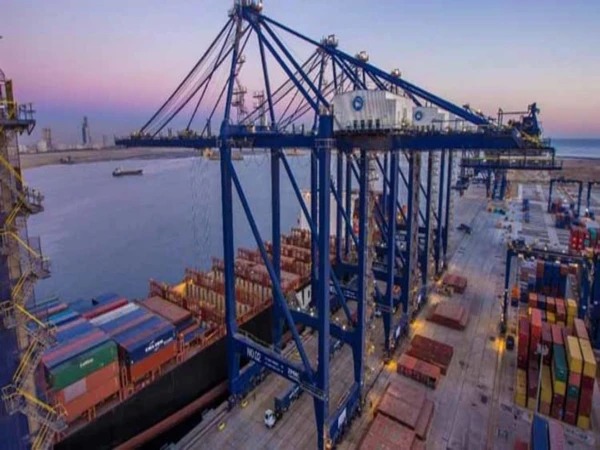
    KARACHI: Sindh Chief Minister Syed Murad Ali Shah has directed the provincial Investment Department to urgently formulate a comprehensive public-private partnership (PPP) framework for transforming Keti Bandar into a modern deep-sea port and a major commercial, industrial and energy centre. The directive was issued during a meeting held at the Chief Minister’s House on Saturday, where officials discussed a broader plan to develop Sindh’s coastal belt and unlock the economic potential of the Indus Delta. The proposed project is being planned in line with the vision associated with Shaheed Mohtarma Benazir Bhutto and aims to establish Keti Bandar as an important maritime gateway connecting port operations with industrial, logistics, fisheries and energy-related activities. Integrated economic corridor planned Chairing the meeting, Chief Minister Murad Ali Shah said Keti Bandar should be developed as part of an integrated maritime and economic corridor rather than as a standalone port project. He directed the relevant departments to prepare detailed proposals covering port infrastructure, industrial estates, transportation and logistics networks, fisheries, energy facilities and tourism. The chief minister also called for a phased implementation strategy that would identify the project’s immediate, medium-term and long-term development requirements. According to the proposed plan, the Keti Bandar Integrated Corridor would become a major engine for economic activity, employment generation and investment in Sindh. The project is also expected to provide a platform for attracting domestic and foreign investors to the province’s coastal areas. PPP framework to attract private investment The Sindh government intends to develop the project through a PPP model, allowing private-sector investors to participate in financing, construction, development and operation of various components. Under the proposed framework, Keti Bandar could eventually host a deep-sea port alongside logistics and warehousing facilities, industrial zones, energy infrastructure, fisheries-related businesses and tourism projects. The government believes that bringing private capital and expertise into the development process could help accelerate infrastructure construction while reducing the immediate financial burden on the provincial government. Officials have been directed to develop an investment-oriented model that clearly identifies potential projects, financing requirements, revenue opportunities and possible areas of private-sector participation. $1 billion to $2.5 billion investment potential According to the Sindh budget 2026-27, the proposed Keti Bandar Maritime, Fisheries and Petroleum Economic Corridor has an estimated investment potential of between $1 billion and $2.5 billion. The planned corridor would include a modern fishing harbour, seafood processing and export facilities, petroleum-handling terminals, logistics infrastructure and industrial support zones. The development of seafood-processing facilities is expected to create opportunities for value addition and increase the potential for exports from Sindh’s coastal areas. Similarly, improved port and logistics infrastructure could facilitate the movement of goods and provide industries with better access to domestic and international markets. Keti Bandar as future energy gateway Chief Minister Shah has also instructed officials to explore the potential of Keti Bandar as a future energy gateway. The proposed energy infrastructure would include facilities for the import and handling of LNG, RLNG and LPG, along with other supporting infrastructure required for energy-related operations. The development of such facilities could allow Keti Bandar to play a role in meeting future energy requirements while creating opportunities for investment in storage, transportation and related industries. A feasibility study has already identified approximately 4,000 acres of land for the proposed development. Officials have been asked to incorporate the identified land into the broader planning process and determine the infrastructure requirements for different components of the corridor. Focus on coastal and industrial development The proposed project is expected to have a broader impact beyond port operations. The provincial government plans to combine maritime infrastructure with industrial development, logistics, fisheries, energy and tourism to create an integrated economic zone. The Indus Delta and surrounding coastal areas have significant potential for fisheries and other maritime activities, but inadequate infrastructure has historically limited their commercial development. The government believes that modern transport links, processing facilities, storage infrastructure and port connectivity could help unlock this potential and generate new employment opportunities for local communities. The development of tourism facilities is also being considered as part of the wider strategy, with officials tasked with identifying suitable investment opportunities along the coastal belt. Long-term economic vision The proposed Keti Bandar project forms part of Sindh’s broader ambition to strengthen its position as a maritime and logistics centre in the region. The provincial government aims to use the coastline’s strategic location to attract investment, expand trade-related infrastructure and promote industrial activity. For the plan to succeed, however, authorities will need to complete detailed feasibility studies, establish an effective PPP structure, address infrastructure and connectivity requirements and ensure that environmental and coastal considerations are incorporated into the development process. The chief minister has directed the Investment Department and other relevant agencies to move quickly on the project and prepare a comprehensive roadmap. If successfully implemented, the Keti Bandar Integrated Corridor could transform the coastal area into a major maritime gateway while creating new opportunities in port operations, logistics, fisheries, energy, manufacturing and tourism.

  • | | |

    Security forces eliminate 7 militants in Kharan op…

    Security forces have killed seven militants during an intelligence-based operation in Balochistan’s Kharan district. According to security sources, the operation was conducted in the Lajay area of Kharan. The action was carried out on the basis of intelligence reports about the presence of militants in the area. Seven militants linked to Fitna al-Khawarij were killed during the operation. Several other militants were also wounded, according to the sources. Security forces conducted a search of the militants’ hideouts after the operation. A large quantity of modern weapons and ammunition was recovered. Other military equipment was also found at the sites. Security forces also recovered a motorcycle and two vehicles from the militants’ hideouts. The security forces subsequently destroyed the militants’ positions. The hideouts were completely dismantled during the operation. According to security sources, the militants were involved in several serious criminal and terrorist activities. These included extortion, kidnapping and target killings. The militants were also allegedly involved in planning suicide attacks. Their activities posed a security threat in the region, the sources said. The operation was conducted as part of Operation Radd-ul-Fitna 3. Security forces have been carrying out intelligence-based operations under the campaign to eliminate terrorist networks. Officials said such operations are aimed at disrupting militant activities before attacks can be carried out. Security forces are continuing operations against militant groups in different areas of Balochistan. Intelligence-based actions are being used to identify militant hideouts and target terrorist networks.

  • | |

    Polling begins in PS-30 Khairpur by-election

    Polling has begun for the by-election in Sindh Assembly constituency PS-30 Khairpur. Pakistan Peoples Party (PPP) candidate Barrister Asfandyar Khan Kharral is contesting the election against seven independent candidates. The constituency has a total of 254,980 registered voters. The Election Commission has established 164 polling stations for the by-election. Officials have classified several polling stations as sensitive due to security concerns. A total of 64 polling stations have been declared highly sensitive. Another 68 polling stations have been classified as sensitive. Security arrangements have been strengthened at these locations. Around 2,500 police personnel have been deployed across the constituency. They have been assigned duties at polling stations and other important locations. Security personnel are also monitoring the polling process to prevent any untoward incident. Authorities have directed officials to ensure a peaceful environment for voters. The by-election was necessitated by the death of PPP MPA Naeem Kharral. His death left the PS-30 Khairpur seat vacant. The contest is being closely watched because the PPP candidate is facing multiple independent candidates. Voters in the constituency will decide who will represent them in the Sindh Assembly. Polling officials have been instructed to facilitate voters and ensure that the electoral process remains orderly. Security personnel will remain deployed throughout the polling process. Authorities have also taken measures to protect polling staff and voters.

  • |

    Cockroach Janta Party Instagram account suspended, restored hours later

    The official Instagram account of India’s Cockroach Janta Party (CJP) was temporarily suspended on Sunday. The account was restored several hours later. CJP founder Abhijit Dipke claimed that Instagram had suspended the party’s official account. He shared a screenshot on X showing that the account was unavailable. Dipke criticised Instagram over the suspension. He questioned the platform’s decision and drew attention to the account becoming inaccessible. The account was later restored. The party regained access to its official Instagram profile after several hours. CJP also confirmed the development in a statement posted on X. The party said its Instagram account had been suspended in the morning. It added that the account was successfully restored later in the day. The temporary suspension triggered reactions on social media. Several users discussed the incident and questioned why the account had been taken down. Some social media users linked the incident to youth-led protest movements in India. They also accused the government of attempting to silence political opponents. These claims were made by users on social media and were not independently established. Other users criticised India’s ruling Bharatiya Janata Party (BJP). Some called for an explanation from Instagram over the suspension. The party did not provide details about the reason given by Instagram for the action. It also did not say whether any specific post or activity had led to the suspension. The restoration means the party can once again access and use its official Instagram account

  • |

    Four K-P Heritage sites added to UNESCO tentative list

    PESHAWAR: Khyber-Pakhtunkhwa has gained further international recognition for its cultural and historical heritage after four important sites from the province were included in the UNESCO World Heritage Centre’s Tentative List. Khyber-Pakhtunkhwa Information and Public Relations Minister Shafi Jan described the development as a significant achievement for the provincial government, saying the recognition would help draw international attention to the province’s diverse archaeological, architectural and cultural legacy. The sites added to the tentative list include Bhamaala in Haripur, Sethi House and Gor Gathri in Peshawar, and Barikot in Swat. According to the minister, the inclusion of these locations on the UNESCO list would provide greater international visibility to K-P’s historic sites and highlight their importance as part of the region’s rich cultural heritage. Recognition of K-P’s historical legacy Shafi Jan said Khyber-Pakhtunkhwa possessed a heritage that reflected centuries of civilisation, cultural interaction and historical development. He noted that the newly listed sites represented different aspects of the province’s past, ranging from archaeological remains to historic buildings and urban heritage. The minister said the addition of the four sites was not only a source of pride for Khyber-Pakhtunkhwa but could also contribute to efforts aimed at preserving the province’s heritage for future generations. He said the provincial government was committed to protecting historical locations from deterioration and ensuring that their cultural significance was properly documented and promoted. Focus on preservation and promotion Shafi Jan said the government was working to strengthen measures for the preservation, restoration and promotion of historical and archaeological sites across the province. He emphasised that cultural heritage should be viewed as a valuable national and provincial asset rather than simply as remnants of the past. “Our rich cultural heritage is our pride and a trust for future generations,” he said, stressing the need for sustained efforts to protect historic sites. The minister added that the provincial government wanted to improve the visibility of K-P’s heritage at both national and international levels. Potential for cultural tourism The inclusion of the sites on UNESCO’s Tentative List could also provide an opportunity to promote cultural tourism in Khyber-Pakhtunkhwa. The province is home to numerous archaeological and historical locations associated with different periods and civilisations. Greater international recognition could help attract researchers, historians, archaeologists and tourists interested in the region’s history. Officials believe that improved preservation and promotion of these sites could also support local economies by creating opportunities for tourism-related businesses and services. However, greater recognition also places additional responsibility on authorities to ensure that the sites are properly protected, maintained and presented to visitors. Government commitment The minister said the provincial administration, under the vision of founding chairman Imran Khan and the leadership of Chief Minister Sohail Afridi, would continue efforts to preserve and promote Khyber-Pakhtunkhwa’s cultural assets. He maintained that protecting historical sites required long-term planning, proper conservation measures and cooperation between government institutions, heritage experts and local communities. The latest additions to the UNESCO Tentative List have therefore been welcomed by the provincial government as an important step towards placing K-P’s historical heritage on the international cultural map.

  • |

    Bangladesh create history with first Test win over Australia

    DARWIN: Bangladesh have created cricketing history by defeating Australia by nine wickets in a Test match on Australian soil for the first time, securing a memorable victory in the opening match of the series. Chasing a modest target of 57 runs, Bangladesh completed the job with just one wicket down, sending a strong message to the hosts and producing one of the most significant Test victories in the country’s history. Shadman Islam remained unbeaten on 25, while Mominul Haque finished on 30 not out as Bangladesh comfortably reached the winning target. The victory sparked celebrations among the Bangladesh camp after a determined performance throughout the match. Australia had earlier been dismissed for 284 in their second innings, with Cameron Green producing a fighting century of 104. However, his effort could not prevent Bangladesh from taking control of the contest. Bangladesh’s bowling attack played a crucial role in restricting the hosts. Mehidy Hasan Miraz was the standout performer, claiming five wickets for 66 runs. Hasan Mahmud took three wickets, while Taskin Ahmed and Taijul Islam picked up one each. Australia had scored 198 in their first innings, while Bangladesh responded strongly with 426 to establish a commanding lead. The result marks a landmark moment for Bangladesh cricket and gives them a 1-0 lead in the series. More importantly, the victory demonstrates that Bangladesh can compete—and win—against one of Test cricket’s traditional powerhouses on their own home turf.

  • |

    Bangladesh shock Australia, trigger Test selection crisis

    DARWIN: Bangladesh’s historic nine-wicket victory over Australia on home soil has been labelled one of the biggest upsets in Australian Test cricket, leaving former players and the country’s media questioning the future of the team. Former Australia batter Mark Waugh described the defeat as a massive upset and warned that selectors may need to make difficult decisions after another disappointing batting performance. “When the batting keeps failing, selectors have to make big calls,” Waugh said, stressing that Australia had entered the match with a full-strength squad. The defeat, he suggested, was therefore even more concerning. Former opener David Warner also raised serious questions about Australia’s batting line-up ahead of the team’s upcoming tour of South Africa. Warner questioned whether Australia could approach such a challenging tour with confidence given the current state of its batting. He pointed out that South Africa possess an experienced bowling attack and said selectors would need to seriously consider changes. Australian media outlets have also intensified scrutiny following the unexpected defeat. Questions have emerged over Jack Wetherald’s future, while doubts have been raised about whether Travis Head can succeed as an opener. However, the concerns are not limited to batting. Analysts have also questioned Australia’s bowling combination and suggested that the squad needs fresh faces. With many members of the current team aged over 30, Australian cricket faces an important transition period. Bangladesh’s victory has therefore done more than rewrite a piece of cricket history—it has exposed vulnerabilities in a team accustomed to dominating at home. The selectors now face pressure to respond before Australia’s next major Test challenge.

  • | |

    ML-1 railway modernisation project moves closer to…

    LAHORE: Pakistan’s long-delayed Main Line-1 (ML-1) railway modernisation project has entered a crucial stage, with the government setting October 30, 2026, as the deadline for completing the ongoing review process and announcing plans to begin the second round of market consultations next month. The latest developments are expected to help resolve outstanding technical, financial and procedural matters and move the country’s largest railway infrastructure initiative towards formal implementation. The second round of market consultation is scheduled to commence on September 8. International experts, prospective investors and other relevant stakeholders will be consulted during the process to seek their views on project preparation, implementation arrangements, financing and the future course of the scheme. The consultations are considered an important step before the government proceeds towards the execution stage of the project, which has faced repeated delays over the years because of financing, technical and procedural challenges. Weekly reviews ordered Pakistan Railways Chairman Syed Mazhar Ali Shah chaired a high-level meeting at the railway headquarters on Saturday to review progress on ML-1. During the meeting, the chairman directed international design consultants, review consultants and senior railway officials to maintain close coordination and ensure that work on the project continues without unnecessary interruptions. He also ordered weekly progress reviews, instructing officials to identify unresolved matters at an early stage and take immediate steps to remove bottlenecks. The Karachi-Rohri segment received particular attention during the meeting as it has been identified as the first section to be developed under the revised ML-1 plan. Karachi-Rohri section According to official documents presented before the National Assembly, the Karachi-Rohri portion covers approximately 480 kilometres and has an estimated cost of $2.04 billion. Construction of the section is expected to take around three years once the project moves into the implementation phase. The government has engaged the Asian Development Bank (ADB) to arrange financing for this segment. Pakistan has also secured a $10 million Project Readiness Financing loan to support preparatory work required before full-scale implementation. The Karachi-Rohri corridor is strategically significant because it handles a substantial volume of both passenger and freight traffic. Its modernisation is therefore expected to provide an immediate improvement to the efficiency of the national railway network while creating a foundation for upgrades on the remaining sections. Government optimistic about launch Federal Minister for Railways Hanif Abbasi has expressed optimism that the flagship project could finally enter the implementation phase during the current year. The minister said progress on ML-1 had improved and that the government was working to ensure that the remaining requirements were completed within the agreed timelines. He said Prime Minister Shehbaz Sharif was closely monitoring the project and had directed the relevant authorities to ensure its completion according to schedule. According to the minister, ML-1 represents the foundation of Pakistan Railways’ long-term modernisation strategy. He said upgrading the railway corridor would help increase train speeds, improve passenger services and enhance the overall operational efficiency of the rail network. The minister also stressed that transparency, merit and competitive procedures would be followed during the project. He added that recommendations from international experts, market participants and technical consultants would be considered while finalising the implementation strategy. 1,726-km railway corridor The ML-1 project covers the modernisation of the 1,726-kilometre Karachi-Peshawar railway corridor, which serves as the backbone of Pakistan’s railway system. Under the rationalised plan, the corridor has been divided into five major sections:  Karachi-Rohri  Rohri-Multan Multan-Lahore Lahore-Rawalpindi Rawalpindi-Peshawar The government has estimated the total cost of the rationalised ML-1 project at approximately $6.66 billion. The scheme is intended to transform the existing railway infrastructure by improving track quality, signalling systems, operational capacity and train speeds. Higher speeds and improved capacity Earlier official plans for ML-1 envisaged allowing passenger trains to operate at speeds of up to 160 kilometres per hour on upgraded portions of the corridor. The project also includes improvements in axle-load capacity, rehabilitation and strengthening of railway tracks, modern signalling and communications systems, as well as doubling of single-track sections wherever necessary. These improvements are expected to reduce journey times and increase the number of trains that can operate on the corridor. For Pakistan Railways, the project is also viewed as an opportunity to strengthen freight operations and improve the movement of goods between the country’s major commercial centres and ports. Financing remains crucial Despite the renewed momentum, financing remains one of the most important requirements for taking ML-1 into full-scale construction. The government has been working with international development partners to secure funding for different components of the project, while the completion of technical studies, project documentation and financial arrangements remains essential before construction can begin. The ADB-backed Karachi-Rohri section is expected to serve as the starting point for the wider modernisation programme. Officials have previously indicated that preparatory work for the section could begin in 2026, provided the remaining financial and documentation requirements are completed. A long-awaited railway overhaul ML-1 has been discussed for years as a transformative project for Pakistan’s railway sector, but its implementation has repeatedly been delayed because of the scale of investment involved and disagreements over financing and project structure. The government’s decision to set a firm deadline for completing the review phase and hold another round of market consultations signals an effort to bring the project back on track. Regular monitoring by Pakistan Railways, engagement with international consultants and consultation with potential stakeholders are now expected to play a central role in finalising the project. If the remaining technical and financial hurdles are addressed according to the new schedule, the Karachi-Rohri section could become the first major construction phase of the broader ML-1 programme. The government believes that successful implementation of ML-1 would not only modernise the country’s ageing railway infrastructure but also improve passenger connectivity, strengthen freight transportation, reduce travel times and enhance the competitiveness of Pakistan Railways.