تازہ ترین

  • |

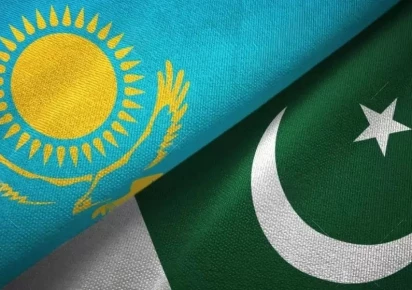
    Pakistan, Kazakhstan agree to accelerate trade and agricultural cooperation

    ISLAMABAD: Pakistan and Kazakhstan have agreed to speed up the implementation of previously signed agreements and memorandums of understanding (MoUs), with both sides seeking to convert existing commitments into practical trade, investment and business opportunities. The understanding was reached during a meeting between Federal Minister for National Food Security and Research Rana Tanveer Hussain and Kazakhstan’s Ambassador to Pakistan Yerzhan Kistafin in Islamabad, where the two sides reviewed a broad range of issues related to agriculture, food security, connectivity, farm mechanisation and private-sector cooperation. According to the Ministry of National Food Security and Research, the meeting focused on identifying areas where bilateral cooperation could produce commercially viable projects and contribute to stronger economic relations between the two countries. Rana Tanveer Hussain said agriculture represented one of the most promising areas for expanding Pakistan-Kazakhstan relations, particularly given the potential for increased trade in agricultural commodities, machinery and technology. The minister stressed that bilateral agreements should move beyond formal commitments and result in concrete projects that could benefit businesses and farmers in both countries. He also called for closer coordination among government departments, research institutions, agricultural organisations and the private sector to facilitate investment and technology transfer. Joint agriculture working group to meet in Kazakhstan Pakistan and Kazakhstan also agreed to hold the next meeting of their Joint Working Group on Agriculture in Kazakhstan. The forum is expected to assess progress on previously identified areas of cooperation and explore additional opportunities in agricultural trade, food security, mechanisation and related fields. The proposed meeting is also expected to provide a platform for officials and private-sector representatives to discuss practical barriers to trade and develop proposals aimed at increasing agricultural exchanges between the two countries. Kazakhstan, meanwhile, showed interest in supplying wheat to Pakistan. Pakistani authorities agreed to examine the proposal while taking into account factors including the prevailing price, quality standards and reliability of supply. The development comes as Pakistan continues to explore ways to diversify its sources of food commodities and strengthen trade relationships with Central Asian economies. Pakistan seeks greater access for agricultural exports During the discussions, Pakistan highlighted the export potential of several agricultural products, including mangoes, guava, dates, bananas, potatoes and onions. The Pakistani side expressed interest in securing greater access for these products in Kazakhstan and other Central Asian markets. Improved market access, the officials noted, could create new opportunities for Pakistani growers, exporters and agribusinesses. The two sides also discussed the importance of improving transport and logistics infrastructure to support agricultural trade. Connectivity was identified as a critical factor in expanding commercial relations, particularly through proposed rail and regional transportation routes linking Central Asian countries with Pakistan. Better transport links could reduce freight and transit costs, improve the movement of perishable agricultural goods and provide businesses in both regions with access to new markets. Mechanisation offers new area of cooperation Agricultural mechanisation was also identified as an area with considerable potential for joint ventures and investment. Particular attention was given to affordable tractors and agricultural machinery that could be used by small and medium-sized farmers. Cooperation in this field could help improve farm productivity while creating opportunities for manufacturers and investors from both countries. The Pakistani side also emphasised the importance of exchanging agricultural technology and research expertise, saying stronger institutional links could support innovation and improve agricultural productivity. The minister underscored the need for closer engagement between research organisations, agricultural institutions and business communities so that technical cooperation could be translated into commercially sustainable ventures. Kyrgyzstan supports stronger Pakistan business ties Separately, Pakistan’s private sector has also taken steps to deepen economic engagement with another Central Asian country, Kyrgyzstan. Kyrgyzstan’s Chargé d’Affaires Aibek Tilebaliev held a meeting with Federation of Pakistan Chambers of Commerce and Industry (FPCCI) President Atif Ikram Sheikh, during which the two sides discussed bilateral trade, investment and direct business-to-business contacts. The participants agreed that stronger interaction between companies from Pakistan and Kyrgyzstan would be essential for expanding bilateral commerce and identifying new investment opportunities. Atif Ikram Sheikh welcomed the increasing high-level engagement between the two countries, saying that considerable potential existed to expand trade and investment but that greater efforts were needed to convert this potential into actual business activity. He suggested that a Pakistani business delegation could visit Kyrgyzstan under the FPCCI platform to explore commercial opportunities, establish direct contacts with local companies and develop partnerships in different sectors. Joint Business Council proposed A key outcome of the meeting was agreement to accelerate the establishment of a Joint Business Council between Pakistan and Kyrgyzstan. The proposed council is expected to provide a formal platform for representatives of the two countries’ business communities to discuss trade barriers, investment opportunities, market access and potential joint ventures. Both sides agreed to expedite the necessary steps for setting up the council. Sheikh also highlighted the importance of regional forums, particularly the Shanghai Cooperation Organisation (SCO), in facilitating greater economic integration among member states. He said the platform could be used more effectively to promote trade, investment and business-to-business cooperation across the region. Tilebaliev reaffirmed Kyrgyzstan’s interest in strengthening economic and commercial relations with Pakistan. He stressed that more frequent and direct interaction between business communities would be important for translating political goodwill into tangible economic gains. The parallel initiatives involving Kazakhstan and Kyrgyzstan reflect Pakistan’s broader efforts to deepen economic engagement with Central Asia. Improved connectivity, stronger private-sector links and greater agricultural and industrial cooperation could provide new avenues for Pakistani exporters while opening opportunities for investment and regional trade.

  • |

    Pakistan posts Rs3.6tr primary surplus as fiscal position improves in FY2025-26

    ISLAMABAD: Pakistan closed the financial year 2025-26 with a primary budget surplus of around Rs3.6 trillion, marking the third consecutive year of a surplus and allowing the country to comfortably meet a key fiscal condition agreed with the International Monetary Fund (IMF). The improvement came despite the government falling short of its tax collection targets, with stronger petroleum levy receipts, tighter expenditure controls and lower-than-expected debt servicing costs helping offset the revenue shortfall. According to the latest fiscal operations data released by the Ministry of Finance, the unadjusted primary surplus reached Rs3.63 trillion, equivalent to 2.6% of the country’s gross domestic product (GDP). The figure was approximately Rs464 billion higher than the IMF’s target of Rs3.16 trillion. The primary balance is considered an important indicator under Pakistan’s IMF programme because it measures the government’s fiscal position before interest payments on public debt. The latest figures indicate that the government maintained fiscal discipline despite continued pressure on revenues and expenditure. Overall fiscal deficit below target Pakistan’s overall budget deficit, after accounting for provincial cash surpluses, stood at approximately Rs3.3 trillion during FY2025-26. This was around Rs1.7 trillion lower than the amount initially projected in the federal budget. The federal government’s own deficit was recorded at Rs4.8 trillion, also significantly below the budgeted level. The better-than-expected outcome was primarily attributed to lower interest payments, stronger petroleum levy receipts and restrained development expenditure. Interest payments were around Rs1.3 trillion below the amount originally allocated in the budget. The government also collected approximately Rs101 billion more than its petroleum levy target, while federal development spending remained Rs82 billion below the initially approved allocation. The fiscal improvement also contributed to a moderation in the growth of public debt. Public debt increased by around 7% during the year, bringing some relief after several years of double-digit debt expansion. Provinces narrowly miss IMF cash surplus target The four provincial governments collectively generated a cash surplus of around Rs1.45 trillion during the fiscal year. Although the amount fell marginally short of the IMF’s combined requirement, the shortfall was only around Rs14 billion. Punjab contributed the largest share, recording a cash surplus of approximately Rs914 billion. Sindh posted a surplus of around Rs350 billion, followed by Khyber-Pakhtunkhwa with Rs165 billion and Balochistan with approximately Rs21 billion. Provincial governments, meanwhile, performed slightly better on revenue collection. Their combined tax receipts exceeded the IMF condition by around Rs18 billion, with collections crossing Rs1.2 trillion. FBR misses tax target Despite the overall improvement in the fiscal position, tax collection remained a major area of concern. The Federal Board of Revenue collected approximately Rs13 trillion during FY2025-26, falling nearly Rs1 trillion short of the IMF’s revised target. FBR tax receipts increased by about 11% compared with the previous year. However, this increase was broadly in line with nominal GDP growth, indicating that the tax-to-GDP ratio remained largely unchanged at around 10.3%. The figures suggest that additional revenue expected from new taxation and enforcement measures did not fully materialise. The government had anticipated around Rs700 billion in additional revenue from such measures. Non-tax revenue also remained below expectations by approximately Rs63 billion. Total non-tax receipts stood close to Rs5.1 trillion, including around Rs2.4 trillion in profits transferred by the central bank. Petroleum levy becomes key revenue source A major contributor to the stronger fiscal outcome was the petroleum levy. Collections under the petroleum levy climbed to around Rs1.567 trillion, representing an increase of approximately 28% over the previous year. The amount was also Rs101 billion above the target agreed with the IMF. The additional collection effectively represented roughly 25 days of petroleum price relief at a levy rate of Rs80 per litre on petrol and high-speed diesel. For the current financial year, the government has committed to collecting approximately Rs1.7 trillion through the petroleum levy. Meeting this objective is expected to require maintaining the levy at around Rs80 per litre, subject to the applicable petroleum pricing mechanism and market conditions. Development spending remains restrained The government’s fiscal consolidation strategy also affected development expenditure. Federal development spending was recorded at around Rs918 billion, approximately Rs82 billion below the originally approved budget allocation. However, the amount was still around Rs100 billion higher than the subsequently revised allocation. The figures reflect the government’s efforts to contain expenditure and prioritise fiscal targets amid pressure from debt servicing and revenue mobilisation. Debt servicing costs fall Lower-than-expected debt servicing provided another significant boost to the government’s fiscal position. The Ministry of Finance reported that debt servicing remained around Rs6.95 trillion during the year, compared with the budgeted amount of approximately Rs8.2 trillion. The government attributed the savings to tight fiscal management, improved cash handling and the early retirement of around Rs1.9 trillion in domestic debt. These measures helped reduce domestic debt servicing costs by nearly Rs1.97 trillion compared with the original estimates. Statistical discrepancy highlighted The fiscal operations report also identified a statistical discrepancy of around Rs853 billion across the federal and provincial accounts. According to the Ministry of Finance, the discrepancy was linked largely to changes in cash balances and differences in the recording and reporting of financial data. The negative discrepancy indicated that cash inflows were higher than recorded outflows. At the federal level, the discrepancy stood at approximately Rs448 billion. The ministry attributed the difference mainly to changes in commercial bank deposits as well as variations in reporting and accounting adjustments involving the State Bank of Pakistan, FBR and Economic Affairs Division. Provincial accounts showed a combined statistical discrepancy of approximately Rs405 billion. Punjab accounted for around Rs266 billion, Khyber-Pakhtunkhwa Rs95 billion, Balochistan Rs72 billion and Sindh around Rs28 billion. The ministry said movements in commercial bank deposits were among the principal factors behind the provincial differences. IMF review ahead The improved fiscal performance is expected to strengthen Pakistan’s position ahead of the next IMF assessment. An IMF mission is expected to visit Islamabad in the third week of September to review Pakistan’s economic performance during the previous fiscal year. The mission is also expected to

  • |

    Oil prices climb on fears of prolonged Middle East supply disruptions

    LONDON: Global oil prices moved higher on Friday and remained on course for weekly gains as fresh threats from the United States to maintain an indefinite naval blockade of Iran heightened concerns over the security of crude shipments from the Middle East. Brent crude futures gained $1.43, or 1.64%, to reach $88.50 a barrel by 0810 GMT. US West Texas Intermediate (WTI) crude also advanced, rising $1.56, or 1.92%, to $82.81 a barrel. The latest rally reflected growing market anxiety that the conflict in the region could persist for an extended period, potentially placing further pressure on one of the world’s most important oil supply routes. Bjarne Schieldrop, chief analyst at SEB Research, said the prospect of prolonged US pressure on Iran had increased uncertainty in the oil market. He noted that the latest developments offered little indication of a quick return to normal conditions in the region. US pressure raises supply concerns Oil markets reacted strongly after the United States warned on Thursday that its naval blockade of Iran could continue indefinitely while Washington considers additional economic measures against Tehran. US Treasury Secretary Scott Bessent said the administration was preparing further measures aimed at increasing economic pressure on Iran, signalling that Washington could take steps beyond those already announced. The comments added to concerns that tensions between the United States and Iran could remain elevated, making it more difficult for shipping and energy companies to operate normally in the region. Schieldrop said expectations for a rapid restoration of regular shipping through the Strait of Hormuz had weakened significantly as a result of the latest developments. The waterway is particularly important to global energy markets. Before the current conflict began in late February, roughly one-fifth of the world’s daily oil and liquefied natural gas supplies passed through the Strait of Hormuz. Any prolonged disruption could therefore have consequences far beyond the Middle East, potentially affecting crude availability, transportation costs and fuel prices in major consuming markets. Strait of Hormuz traffic under pressure Shipping activity through the strategic waterway declined below the monthly average toward the end of the week as tensions increased and both sides issued competing claims regarding control of the passage. The situation escalated further on Thursday when two vessels belonging to Abu Dhabi National Oil Company were attacked while travelling through the strait, according to the UAE’s state news agency WAM. The UAE government condemned the incident and attributed the attack to Iran, adding another layer of uncertainty for commercial shipping operators using the vital route. Market participants are closely monitoring developments in the strait because even a partial disruption could force vessels to take longer and more expensive alternative routes. Demand outlook limits oil gains Despite the immediate supply concerns, expectations of weaker global oil demand growth are acting as a counterweight to the price rally. Recent forecasts from the Organisation of the Petroleum Exporting Countries (OPEC) and the International Energy Agency (IEA) have pointed towards slower growth in oil consumption, suggesting that demand may not be strong enough to absorb a prolonged increase in prices without affecting economic activity. US inventory data also provided a bearish signal. American crude stockpiles recorded their biggest weekly increase in more than three and a half years, indicating that supplies in the world’s largest oil-consuming economy remain relatively comfortable. Norbert Rucker, head of economics and next-generation research at Julius Baer, said recent reports from the IEA and US Energy Information Administration showed that oil storage levels were holding up better than markets had initially feared. According to Rucker, stronger-than-expected inventories could eventually put downward pressure on crude prices if geopolitical risks ease. For now, however, the possibility of further escalation between Washington and Tehran is keeping traders focused on supply risks. The market is expected to remain highly sensitive to developments surrounding the Strait of Hormuz, particularly any signs of prolonged restrictions on tanker movements. Analysts said the direction of oil prices in the coming sessions would depend on whether geopolitical tensions intensify further or whether diplomatic efforts succeed in restoring more predictable shipping and energy flows from the region.

  • |

    SBP to maintain focus on price stability, reforms and sustainable economic growth

    KARACHI: State Bank of Pakistan (SBP) Governor Jameel Ahmad has said the central bank will continue to prioritise price stability, structural reforms and the creation of a business-friendly economic environment aimed at boosting productivity, exports and employment. Addressing a flag-hoisting ceremony held at the SBP headquarters in Karachi to mark Pakistan’s 79th Independence Day, Governor Ahmad said the country had made notable progress towards macroeconomic stability over the past year. He attributed the improvement to disciplined fiscal and monetary policies, better economic management and continued efforts to strengthen financial and economic institutions. Inflation remains within medium-term range Speaking about the inflation outlook, the SBP governor said average inflation during fiscal year 2025-26 stood at 7.1 percent. He said the central bank believed that the prevailing monetary policy stance was appropriate for keeping inflation within its medium-term target range of 5 to 7 percent. According to Ahmad, the current policy framework also provides sufficient space for economic activity to continue, while supporting investment and employment generation. The governor said maintaining price stability would remain a central objective of the SBP as Pakistan seeks to move from short-term stabilisation towards sustained economic expansion. Growth expected to strengthen Ahmad said Pakistan’s economy recorded growth of 3.7 percent in FY26, reflecting the impact of improved macroeconomic conditions and greater fiscal and monetary discipline. Looking ahead, he projected economic growth in the range of 3.5 to 4.5 percent during FY27. He described the outlook as encouraging, saying the economy was gradually moving towards a more sustainable growth path after going through a difficult period of economic stabilisation. The governor stressed that maintaining policy discipline would be important to ensure that the gains achieved in recent years translate into durable economic development. Remittances strengthen external position The SBP chief also highlighted improvements in Pakistan’s external sector, particularly the performance of workers’ remittances. He said overseas Pakistanis had demonstrated confidence in the country by sending record amounts of money home, with remittances surpassing $41 billion during FY26. The inflow is expected to increase further, with remittances projected to reach around $44 billion in FY27, according to the governor. Ahmad said stronger remittance inflows, combined with a relatively low current account deficit, had helped improve Pakistan’s foreign exchange position. The country’s foreign exchange reserves reached $18.4 billion by the end of FY26, while the SBP expects reserves to rise above $21 billion during FY27. He said strengthening the external position would help improve economic resilience and provide greater capacity to withstand external shocks. SBP pushes digital transformation The governor also outlined measures taken by the central bank to modernise Pakistan’s financial infrastructure and expand the use of digital payment channels. He pointed to the successful launch of PRISM+, saying the upgraded payment and settlement infrastructure had brought Pakistan’s large-value payment system closer to international standards. The system has improved the speed, security and efficiency of large-value payments and settlements, he said. Ahmad added that SBP initiatives aimed at encouraging digital payments had resulted in a substantial increase in the use of electronic channels. Retail digital transactions increased from approximately 10 billion to 12 billion over the past year, reflecting growing adoption of technology across the financial system. According to the governor, the shift towards digital payments is more than a technological development. It is also contributing to greater documentation, transparency and efficiency within the economy. Self-reliance and institutions vital for progress Governor Ahmad said Pakistan’s long-term economic success would depend not only on financial and monetary policies but also on stronger institutions, economic self-reliance, respect for the rule of law and national unity. He emphasised that the country’s journey towards sustainable development required continued commitment and collective efforts from institutions, businesses and citizens. While acknowledging the progress achieved during the past year, he cautioned that Pakistan continued to face economic challenges that required sustained attention, policy consistency and determination. He said the objective should now be to convert the gains from economic stabilisation into a durable foundation for investment, productivity, exports and employment. The governor reaffirmed that the SBP would continue playing its role in supporting monetary and financial stability while contributing to broader efforts aimed at improving the welfare of the Pakistani people.

  • | | |

    US, China, Russia hail Pakistan on Independence Da…

    ISLAMABAD: Pakistan received warm Independence Day greetings from the United States, China, Russia, the European Union and several other countries on Friday, as the nation marked its 79th Independence Day with ceremonies, prayers and patriotic celebrations. US Secretary of State Marco Rubio congratulated the people of Pakistan on behalf of the United States and highlighted the growing cooperation between the two countries. He said Washington and Islamabad were working together in areas including trade and investment, energy, critical minerals, counterterrorism, cultural heritage and regional mediation. Rubio said the two countries were turning their shared capabilities into practical progress and reaffirmed the longstanding friendship between the American and Pakistani peoples. He also expressed confidence that bilateral cooperation would continue to expand. Russian President Vladimir Putin also conveyed his greetings to President Asif Ali Zardari and Prime Minister Shehbaz Sharif. He said relations between Moscow and Islamabad were developing positively, with both sides cooperating in political, economic, trade and humanitarian fields. Putin said Russia and Pakistan were also working together on important regional and international matters. He expressed confidence that the two countries would continue strengthening their partnership in the interests of their peoples and international stability, while wishing Pakistan peace and prosperity. China also extended its traditional goodwill to Pakistan. Chinese Ambassador to Pakistan Jiang Zaidong conveyed congratulations to the Pakistani leadership and people, reaffirming the close and longstanding relationship between the two countries. The European Union congratulated Pakistan on its 79th Independence Day and described the occasion as a celebration of unity, freedom and national solidarity. The bloc also expressed its commitment to further strengthening its friendship and partnership with Islamabad. France similarly conveyed its greetings to the Pakistani people and expressed its desire to deepen bilateral cooperation across areas of mutual interest. Azerbaijan also extended heartfelt wishes to Pakistan, describing the Pakistani people as brothers and reaffirming its friendly ties with the country. The United Kingdom sent Independence Day greetings to Pakistanis living in Pakistan, Britain and around the world, while Gulf countries also joined the celebrations. The United Arab Emirates conveyed congratulations to Pakistan’s leadership, while Qatar’s Amir sent greetings to President Asif Ali Zardari. Oman’s Sultan Haitham bin Tarik also sent a congratulatory message to the Pakistani president. Meanwhile, Pakistan marked the national day with traditional celebrations across the country. A 31-gun salute was held in Islamabad and 21-gun salutes were conducted at provincial headquarters. Special prayers were offered for the country’s peace, unity and prosperity. Flag-hoisting ceremonies were organised at government offices and public institutions, while streets, buildings and markets were decorated with national flags, buntings and lights. Pakistan’s embassies abroad also marked the occasion. The Pakistan Embassy in Tajikistan held a flag-hoisting ceremony where messages from the president, prime minister and deputy prime minister/foreign minister were read out.

  • |

    Former boxing star Prichard Colon dies at 33 after brain injury

    Former professional boxer Prichard Colon, once regarded as one of boxing’s most promising young talents, has died at the age of 33, years after suffering a devastating brain injury during a fight. Colon, who was born in Puerto Rico, sustained severe trauma during his October 2015 bout against American boxer Terrel Williams. The injury left him in a coma and ultimately brought a sudden and heartbreaking end to a career that had appeared destined for success. Before the fight, Colon had built an impressive unbeaten record. He won all 16 of his professional bouts, including 13 victories by knockout, and had emerged as a rising name in the sport. However, the contest against Williams changed his life forever. Following the bout, Colon required emergency brain surgery after doctors discovered the seriousness of his injuries. He later regained consciousness, but the neurological damage was severe. Colon needed round-the-clock care for the remainder of his life and was unable to return to the professional career that had once promised so much. His family had remained by his side throughout the difficult years. His father, Richard Colon, announced his son’s death on Facebook, expressing his sorrow while also saying that Prichard was now in a better place. Colon had been living with his family in Florida, where he died. His story has remained one of boxing’s most painful reminders of the risks fighters face inside the ring. His rapid rise, unbeaten record and promising future were abruptly overshadowed by a single fight and its devastating consequences. For fans who followed his career, Colon’s legacy extends beyond his record. He will be remembered as a talented young boxer whose career was cut tragically short and whose long battle after his injury drew attention to the potentially life-changing dangers of combat sports.

  • |

    Saudi, US officials discuss rising regional tensions

    Saudi Crown Prince Mohammed bin Salman and US Central Command chief Admiral Brad Cooper have discussed efforts to contain escalating tensions in the Middle East, with the two sides also reviewing defence cooperation and regional security. According to Saudi state media, the meeting focused on developments across the region and measures aimed at reducing tensions. Officials also discussed ways to strengthen security and stability amid the continuing US-Iran conflict and growing concerns over maritime traffic. The talks came as Saudi Arabia announced progress toward activating a multinational defensive maritime alliance. Representatives from 39 countries attended the alliance’s latest planning meeting in Jeddah, while 13 countries have joined the initiative. Saudi authorities described the meeting as an important step toward putting the maritime alliance into operation. The initiative comes as security concerns continue to grow around the Strait of Hormuz, one of the world’s most important energy routes. Tensions around the strategic waterway have intensified during the US-Iran conflict. Disruptions to shipping have raised concerns about global supplies of oil and liquefied natural gas, while diplomatic efforts to secure freedom of navigation remain uncertain. US Vice President JD Vance has said that keeping energy prices affordable for American consumers is currently Washington’s top priority in the conflict. Vance said the administration wanted to maintain lower oil and gas prices while also ensuring that Iran could not acquire a nuclear weapon. His remarks came as the prolonged conflict continued to affect energy markets and increase pressure on the US economy. Meanwhile, US Treasury Secretary Scott Bessent warned that Washington was preparing unprecedented economic measures against Tehran. He said the United States would combine intensified economic pressure with restrictions linked to Iran’s control of the Strait of Hormuz. US Defence Secretary Pete Hegseth also said Washington had the military capability to maintain its naval blockade of Iran for an extended period. He said American ships could be rotated to sustain the operation. The confrontation has severely affected Iran’s economy and disrupted its access to international trade. Tehran, meanwhile, has sought to use the Strait of Hormuz as leverage in negotiations with Washington. Iran has demanded the removal of economic sanctions and the release of frozen assets as part of conditions for restoring normal maritime traffic. Commercial traffic through the Strait has fallen sharply since the conflict began. The decline has heightened fears that a prolonged disruption could further affect global energy supplies. Two vessels linked to Abu Dhabi National Oil Company were reportedly attacked while passing through the waterway, prompting condemnation from the UAE. The situation has also kept oil markets volatile. Although crude prices declined recently amid concerns over weaker demand and rising US inventories, renewed attacks and threats of further escalation have continued to unsettle investors. The International Energy Agency has revised its forecast for global oil supply, projecting a larger decline than previously expected. Economists have warned that a prolonged conflict could weaken global economic growth and increase the risk of recession in some regions. US President Donald Trump has faced growing domestic pressure over the conflict, particularly as higher fuel costs weigh on American consumers. Washington has continued imposing sanctions on Iran, while efforts to bring Tehran back to negotiations have so far produced limited results.

  • | |

    Balochistan home minister survives Mastung convoy …

    QUETTA: Balochistan Home Minister Mir Ziaullah Langove remained safe after armed attackers targeted his convoy in Mastung on Friday. The attack took place in the Khad Kocha area. Langove was travelling from Kalat to Quetta when his convoy came under fire. The minister was not injured in the attack. However, six people sustained bullet wounds. Three of the injured were police personnel accompanying the convoy. The injured were immediately taken to Nawab Raisani Memorial Hospital for treatment. Hospital officials said six wounded people were brought to the facility. Two injured people were in serious condition. Two others were later referred to Quetta for further medical treatment. Security forces quickly surrounded the area after the attack. A search operation was launched to trace the attackers and determine their whereabouts. Security personnel also began collecting evidence from the site. The authorities are investigating how the attackers targeted the convoy and managed to escape. No group has so far claimed responsibility for the attack. The incident has raised fresh security concerns in Mastung and surrounding areas. Balochistan has witnessed several attacks in recent years, with security forces frequently conducting operations against armed groups. Langove belongs to the Balochistan Awami Party. He assumed the provincial home ministry in March this year. He has previously served as Balochistan’s home minister. His earlier appointment was later declared invalid after he was removed from the provincial cabinet in August 2024. The latest attack has prompted authorities to review security arrangements for senior government officials travelling through sensitive areas.

  • | |

    94 injured in Karachi aerial firing on Independenc…

    KARACHI: At least 94 people were injured in separate incidents of aerial firing in Karachi during Independence Day celebrations. According to police, 30 suspects involved in aerial firing have been arrested and weapons have been recovered from their possession. Police conducted operations in several areas of the city, including SITE Super Highway, Sachal, Gulistan-e-Johar and Gulshan-e-Iqbal. Ten suspects were arrested during these operations. Police in District West also arrested four suspects allegedly involved in aerial firing. In District Central, 16 people were arrested for allegedly firing shots into the air. The injured included 56 men, 15 women, 15 boys and eight girls. The injured were shifted to major hospitals across the city for medical treatment. A total of 27 injured people were brought to Civil Hospital, 36 to Jinnah Hospital and 32 to Abbasi Shaheed Hospital. Police said further action was being taken against those involved in aerial firing. Authorities have also increased security measures to prevent further incidents during Independence Day celebrations.

  • | |

    Spider-Man, Brand New Day faces boycott calls over…

    Pro-Palestinian campaigners in Lebanon, Jordan and other parts of the Arab world are calling for a boycott of Spider-Man: Brand New Day, turning the release of the highly anticipated superhero film into a wider debate over politics, culture and entertainment. The campaign is focused on producer Avi Arad, an Israeli and US citizen and former Marvel Studios chief, whose public statements and past military service have drawn criticism from activists opposed to Israel’s conduct during the war in Gaza. In Lebanon, the Campaign to Boycott Supporters of Israel urged audiences not to buy tickets for the film, arguing that spending money on productions involving individuals who have publicly supported Israel amounts to cultural normalisation. The group called on the public to avoid paid screenings and questioned whether audiences should financially support a production involving people with political ties to Israel. A separate anti-normalisation group in Jordan, Taharrak, also called for the movie to be boycotted and urged cinemas not to include it in their schedules. The group appealed to Jordanian artists, cinema operators and other organisations to take a position against its screening. The boycott calls have subsequently been shared by activists and online content creators in other Arab countries. The film, which stars Tom Holland as Peter Parker, was released internationally on July 31. Directed by Destin Daniel Cretton, it is produced by Arad alongside Kevin Feige, Amy Pascal and Rachel O’Connor. Campaigners have specifically targeted Arad rather than the film’s storyline or its wider cast and production team. Arad served in the Israeli military from 1965 to 1968 and has previously spoken publicly about his connection to Israel. In a 2024 letter published by TheWrap, he criticised former US Senate Majority Leader Chuck Schumer after Schumer criticised Israeli Prime Minister Benjamin Netanyahu and called for new Israeli elections. Arad argued that American politicians should not interfere in Israel’s electoral affairs and described himself as a proud former member of the Israeli military. Campaigners say such statements justify their call for a boycott, arguing that ticket purchases could provide financial support to a production involving Arad. However, the impact of the campaign on the film’s commercial performance remains uncertain. Despite the boycott appeal, Spider-Man: Brand New Day continued screening in Lebanon, while a representative of Grand Cinemas told L’Orient Today that audience demand remained strong shortly after its release. The controversy highlights how major Hollywood releases can become entangled in geopolitical debates, with audiences increasingly examining the political positions and backgrounds of figures behind popular entertainment.