saudi officials discuss
|

Saudi, US officials discuss rising regional tensions

Saudi Crown Prince Mohammed bin Salman and US Central Command chief Admiral Brad Cooper have discussed efforts to contain escalating tensions in the Middle East, with the two sides also reviewing defence cooperation and regional security.

According to Saudi state media, the meeting focused on developments across the region and measures aimed at reducing tensions. Officials also discussed ways to strengthen security and stability amid the continuing US-Iran conflict and growing concerns over maritime traffic.

The talks came as Saudi Arabia announced progress toward activating a multinational defensive maritime alliance. Representatives from 39 countries attended the alliance’s latest planning meeting in Jeddah, while 13 countries have joined the initiative.

Saudi authorities described the meeting as an important step toward putting the maritime alliance into operation. The initiative comes as security concerns continue to grow around the Strait of Hormuz, one of the world’s most important energy routes.

Tensions around the strategic waterway have intensified during the US-Iran conflict. Disruptions to shipping have raised concerns about global supplies of oil and liquefied natural gas, while diplomatic efforts to secure freedom of navigation remain uncertain.

US Vice President JD Vance has said that keeping energy prices affordable for American consumers is currently Washington’s top priority in the conflict.

Vance said the administration wanted to maintain lower oil and gas prices while also ensuring that Iran could not acquire a nuclear weapon. His remarks came as the prolonged conflict continued to affect energy markets and increase pressure on the US economy.

Meanwhile, US Treasury Secretary Scott Bessent warned that Washington was preparing unprecedented economic measures against Tehran. He said the United States would combine intensified economic pressure with restrictions linked to Iran’s control of the Strait of Hormuz.

US Defence Secretary Pete Hegseth also said Washington had the military capability to maintain its naval blockade of Iran for an extended period. He said American ships could be rotated to sustain the operation.

The confrontation has severely affected Iran’s economy and disrupted its access to international trade. Tehran, meanwhile, has sought to use the Strait of Hormuz as leverage in negotiations with Washington.

Iran has demanded the removal of economic sanctions and the release of frozen assets as part of conditions for restoring normal maritime traffic.

Commercial traffic through the Strait has fallen sharply since the conflict began. The decline has heightened fears that a prolonged disruption could further affect global energy supplies.

Two vessels linked to Abu Dhabi National Oil Company were reportedly attacked while passing through the waterway, prompting condemnation from the UAE.

The situation has also kept oil markets volatile. Although crude prices declined recently amid concerns over weaker demand and rising US inventories, renewed attacks and threats of further escalation have continued to unsettle investors.

The International Energy Agency has revised its forecast for global oil supply, projecting a larger decline than previously expected. Economists have warned that a prolonged conflict could weaken global economic growth and increase the risk of recession in some regions.

US President Donald Trump has faced growing domestic pressure over the conflict, particularly as higher fuel costs weigh on American consumers. Washington has continued imposing sanctions on Iran, while efforts to bring Tehran back to negotiations have so far produced limited results.

Similar Posts

  • | |

    Women who helped shape the Pakistan movement

      When the history of Pakistan’s independence is discussed, the narrative often focuses on the male political leaders who negotiated with the British, addressed large public gatherings and worked toward the creation of a separate homeland. However, women also played an important and often overlooked role in the Pakistan Movement. They organised political activities, mobilised communities, created awareness, participated in protests, assisted refugees and challenged traditional expectations about women’s place in public life. Among the prominent women of the movement, Fatima Jinnah remains one of the most widely recognised figures. However, her contribution extended far beyond her relationship with Muhammad Ali Jinnah as his sister. She worked closely with her brother and played an active role in encouraging Muslim women to participate in political activities. At a time when women’s involvement in public politics was socially restricted, Fatima Jinnah’s visibility carried considerable significance. Her participation demonstrated that the struggle for Pakistan was not intended to be limited to men. She became an important symbol of women’s political participation and helped encourage Muslim women to take an active interest in the future of the community. Following Partition in 1947, Fatima Jinnah continued her public service. She became involved in efforts to support refugees and assist with their rehabilitation. She also continued to speak for greater participation of women in the political and social development of Pakistan. Another important figure was Abadi Bano Begum, popularly known as Bi Amma. Long before the demand for Pakistan became the central political objective of Indian Muslims, Bi Amma had already demonstrated that Muslim women could play a role in political movements. She was the mother of prominent leaders Maulana Muhammad Ali Jauhar and Maulana Shaukat Ali and became actively involved in the Khilafat Movement. Bi Amma addressed public gatherings and encouraged people to support the political struggle against British rule. Her involvement was significant because political activism was still considered unusual for many Muslim women. By entering the public sphere, she helped challenge the idea that politics was exclusively a man’s responsibility. Begum Jahan Ara Shah Nawaz was another influential woman associated with Muslim League politics. Rather than remaining a passive supporter, she actively participated in political mobilisation and worked to increase women’s involvement in the Pakistan Movement. During the politically tense period of 1946–47, Muslim League women participated in protests in Punjab, with some even facing arrest. Her political involvement had begun well before Pakistan was established. She participated in the First Round Table Conference and raised concerns about discrimination against women in political rights, government employment, business and professional opportunities. After independence, Begum Jahan Ara Shah Nawaz became one of the two women members of Pakistan’s first Constituent Assembly. Alongside Shaista Ikramullah, she worked to bring women’s rights and legal equality into discussions about the new state. The contributions of these women show that Pakistan’s independence was not achieved through the efforts of men alone. Women participated in political mobilisation, social reform and nation-building, helping establish the principle that they had a legitimate and important role in Pakistan’s public life.

  • | |

    Olivia Munn reveals the style shift that helped he…

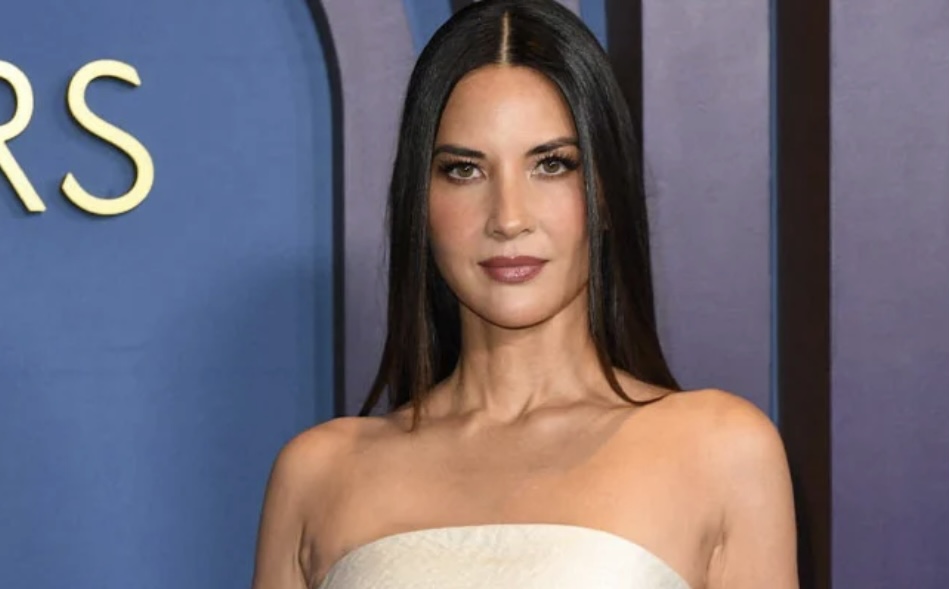
    Olivia Munn is opening up about how she found her personal style again after navigating motherhood, postpartum anxiety and a difficult breast cancer journey. The 46-year-old actress recently spoke with USA Today about how her experiences changed the way she viewed her body, clothing and identity. For Munn, fashion became more than choosing an outfit. It became a way to reconnect with herself after years of major changes. (People.com⁠) Munn first struggled with her changing body after welcoming her son, Malcolm, in 2021. She said she had expected her body to return to how it looked before pregnancy, but that did not happen. Breastfeeding, weight changes and a larger bust also meant many of her clothes no longer fit. At the same time, Munn was dealing with postpartum anxiety, which she described as an isolating experience. Instead of immediately replacing her entire wardrobe, she began making more intentional choices. Comfort, simplicity and clothing that made her feel confident became more important than following every new trend. Her style journey took another turn after she was diagnosed with breast cancer in 2023. Munn underwent multiple surgeries, including a double mastectomy and later reconstruction, as she focused on her health and recovery. (People.com⁠) After going through what she described as years of “back-to-back battles,” Munn reached a turning point. She realized she was tired of feeling disconnected from the way she dressed and decided she wanted to reclaim that part of herself. Rather than allowing her experiences to dictate what she could wear, Munn began figuring out what made her feel comfortable and authentic again. Her approach became less about dressing according to expectations and more about dressing for herself. That mindset also influenced her recent partnership with fashion brand Anne Klein. Munn has embraced clothing that feels polished while still fitting her lifestyle and changing body. Her story highlights how personal style can become part of rebuilding confidence after major life changes. For Munn, finding the right clothes was not simply about looking good. It was about recognizing herself again. After years of physical and emotional challenges, she is choosing to make room for joy, confidence and self-expression. Munn’s style shift is ultimately a story about reclaiming identity. She is no longer waiting to feel like her old self. Instead, she is discovering who she is now—and dressing for that woman.

  • | | | | |

    Hlun Solo’s Death Devastates Fans, We Explain Why He Was The Exact Opposite of Most Influencers and YouTubers and Why He Was So Beloved by Thais

    Thailand/Georgia His real name was Bowornthat Pengsuk, born in 1999 in Kalasin province in northeastern Thailand, he grew up in modest circumstances. After his father died, he was raised primarily by his grandmother, who focused on education and practical values. He attended local schools that offered scholarships and support, then worked factory jobs in Bangkok, […]

  • | | |

    Tax ombudsman flags flaw in FBR refund system

    Pakistan’s Federal Tax Ombudsman has identified a major flaw in the Federal Board of Revenue’s (FBR) FASTER sales tax refund system and directed the tax authority to take immediate corrective measures. The ombudsman said the issue is affecting exporters and undermining the effectiveness of the automated sales tax refund mechanism, which was introduced to ensure quicker processing of refund claims. The observations were made in a ruling issued by Federal Tax Ombudsman Zafar Hijazi while deciding complaints filed by a company regarding delays and issues in the refund process. According to the decision, the FASTER system is unable to distinguish between commercial export goods declarations and non-commercial sample exports. As a result, exporters may face unnecessary delays or complications in obtaining legitimate sales tax refunds. The ombudsman directed the FBR to address the technical shortcomings in the system without delay to ensure that genuine exporters receive timely refunds and the automated mechanism functions efficiently. The ruling emphasized that improving the FASTER system is essential for protecting exporters’ interests and maintaining confidence in Pakistan’s tax refund process

  • |

    Muslim student in Russia named in India protest case 

      A Muslim student from India’s Bihar state has claimed that he was named in a police case related to protests against the alleged NEET examination paper leak, despite having lived in Russia for the past four months. The student, identified as Mohammad Sadaqat, belongs to Kishanganj district in Bihar. He alleged that his name was included in a First Information Report (FIR) registered after demonstrations held on July 24 against the alleged NEET paper leak, even though he was not in India at the time of the protest. In a video message shared on social media, Sadaqat said he has been residing in Russia for the last four months for educational purposes and therefore could not have participated in the protest. According to him, the case relates to a demonstration that took place at LRP Chowk, where people gathered to protest against the alleged irregularities surrounding the NEET examination. The student maintained that he was shocked to learn that his name had been included among those accused in the case. He said his passport and travel records clearly show that he was outside India when the protest occurred. He urged the authorities to verify the facts and remove his name from the police case, arguing that it was impossible for him to have taken part in the demonstration while living abroad. Sadaqat appealed to the district administration and police officials to conduct a fair investigation and correct what he described as an error. He emphasized that he was not present in India during the protest and requested that the allegations against him be withdrawn after proper verification. Meanwhile, Kishanganj Superintendent of Police Hari Mohan Shukla neither confirmed nor denied whether the student had been named in the FIR. Responding to questions from the media, the police chief said that anyone who has concerns regarding the protest-related cases is welcome to approach the police. He stated that authorities would examine any complaint submitted by an affected individual and review the available evidence before taking an appropriate decision. However, he did not specifically address Sadaqat’s claim or comment on the contents of the FIR. The Bihar Police’s official account on X (formerly Twitter) initially responded to the student’s viral video by assuring the public that the matter would be investigated. The response suggested that the allegations raised in the video would be looked into by the relevant authorities. However, the police later deleted the post without providing any explanation, prompting further discussion on social media. The deletion has raised questions among users, although officials have not commented on why the statement was removed. The controversy comes amid widespread protests in Bihar over the alleged NEET paper leak, an issue that has sparked public outrage and demands for accountability. During a statewide strike organized in connection with the controversy, police reportedly detained 694 people for allegedly participating in protests and violating public order. According to reports, nearly half of those detained were minors. The incident involving Mohammad Sadaqat has drawn significant attention online, with many social media users calling for a transparent investigation into his claims. Authorities have not yet released further details regarding the case, and the matter remains under official review.

Leave a Reply

Your email address will not be published. Required fields are marked *