Life & Style

  • |

    Pari and Haroon’s bond stealing the show in the lastest episodes of Aik Muhabbat Aur

    Aik Mohabbat Aur, written by Faiza Iftikhar and directed by Farooq Rind, continues to win hearts with its story of love finding a second chance. Starring Maya Ali and Ahad Raza Mir in the lead roles, the drama has slowly built one of its most touching subplots around the growing bond between Haroon Malik and little Pari, the daughter of Khushbakht Naz. Ahad Raza Mir’s portrayal of Haroon has struck a chord with viewers, especially in how he treats Pari, a child who isn’t biologically his, with the same warmth and care as any father would. Haroon has fully welcomed her into his life, spending time with her in a way that feels natural rather than performed. The most recent episodes gave fans a scene that’s now spreading widely online. Interestingly, it is Pari who accepts Haroon into her world first, even before her mother Khushbakht fully processes the shift. In the scene, Haroon gently asks Pari what he means to her, and without hesitation, she calls him “Baba.” The moment has been praised for feeling genuine rather than staged, with both Ahad Raza Mir and the young actress playing Pari delivering performances that landed emotionally with audiences. Since airing, the scene has become one of the standout talking points from the show, with viewers flooding social media to share how it made them feel. Fans did not hold back their reactions. One viewer wrote that hearing Pari say “Baba” brought them to tears. Another said the moment gave them goosebumps the second the word left her mouth. A third pointed out how well Ahad captured the emotional weight of the moment through his expression alone, calling it one of his most affecting scenes yet in the drama. The scene’s popularity speaks to how invested audiences have become in Haroon and Pari’s relationship, a storyline that’s quietly turned into one of the drama’s emotional anchors. As Aik Mohabbat Aur moves forward, this father-daughter dynamic looks set to remain one of its most talked-about elements, with fans eager to see how their bond continues to grow. Here is the reaction:
  • |

    Rakhi Sawant slams Kangana Ranaut over student protest remarks

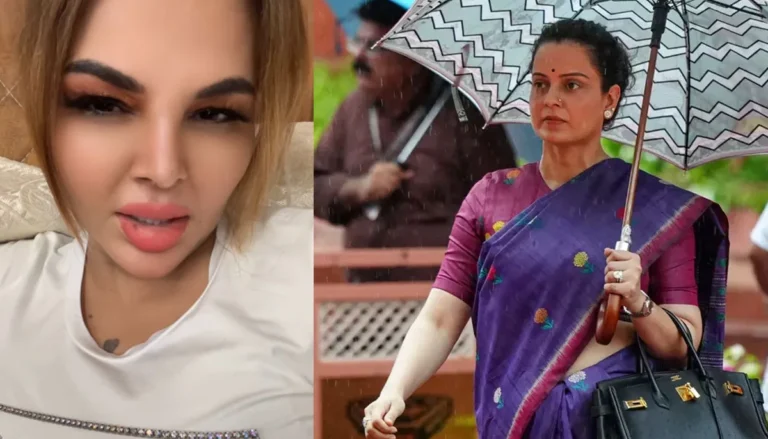
    Actor and television personality Rakhi Sawant has strongly criticized fellow actress and politician Kangana Ranaut following her controversial remarks about student protesters. Kangana’s comments, made after the resignation of former Education Minister Dharmendra Pradhan, have sparked widespread outrage on social media, with many accusing her of insulting young people who participated in the demonstrations. The controversy began when Kangana reacted to the protests by sharing a message on Instagram in which she referred to the student protesters using derogatory language. Her comments quickly drew criticism from internet users, who described the remarks as offensive and disrespectful toward the country’s youth. Among those speaking out against Kangana was Rakhi Sawant, who publicly condemned the actress in a video shared on Instagram. Rakhi did not hold back her criticism, calling Kangana a “chudail,” a Hindi word that translates to “witch,” while accusing her of repeatedly making insulting statements about ordinary people. In her video, Rakhi defended the students and questioned Kangana’s comments about young women participating in the protests. She said that the daughters and students of the country deserve respect rather than criticism and urged public figures to choose their words responsibly. Rakhi also questioned Kangana’s political standing and challenged her popularity among the public. She argued that true leadership comes from earning people’s trust and support instead of making controversial statements that offend citizens. Addressing Kangana directly, Rakhi said, “What did you do to become an MP? If you ever contest elections again, you may not receive people’s support. Why are you speaking like this about the girls of our country? Why are you insulting our students and our daughters?” The outspoken actress further alleged that such remarks damage the image of public representatives and create unnecessary divisions. She insisted that celebrities and politicians should encourage young people instead of discouraging or insulting them. Rakhi also referred to the incident that took place at Chandigarh Airport in 2024, when Kangana was slapped by a security staff member following her controversial comments about farmers. While condemning violence, Rakhi suggested that repeated provocative statements could continue to attract strong public reactions if such behavior does not change. She warned Kangana that making inflammatory remarks against different sections of society could lead to growing public anger, adding that respect for citizens is essential for anyone holding public office. The exchange has generated intense debate across social media platforms, with users expressing divided opinions. While many supported Rakhi’s criticism and defended the student protesters, others argued that public disagreements between celebrities should remain respectful despite political differences. As the controversy continues, neither Kangana Ranaut nor her team has issued a fresh response to Rakhi Sawant’s latest comments. However, the incident has once again placed both actresses at the center of a heated online discussion, highlighting the growing scrutiny surrounding statements made by public figures on political and social issues.

  • | |

    Jared Leto faces sexual misconduct allegations

    American actor and musician Jared Leto is facing new public allegations of sexual misconduct after 10 women came forward in a BBC documentary titled _Jared Leto: Hollywood’s Dark Secret_. The film focuses on claims that span more than a decade, between 2002 and 2016. During that period Leto was in his 30s and 40s. He is now 54. The women allege they encountered Leto when they were teenagers or in their early 20s. Four of the women detail what they describe as criminal sexual conduct. One woman said she was sexually assaulted in a motel bathroom when she was 17. Another said Leto threatened her with sexual assault when she was 19. A third alleged she had sex with Leto in California at age 17. In California the legal age of consent is 18, meaning the act would be classified as statutory rape. She told the BBC that when she raised the issue of age, Leto dismissed it. A fourth woman alleged she was groomed by Leto from age 16, including receiving multiple sexually explicit phone calls in which he suggested they have sex. Beyond those four, four other women told the BBC they received repeated phone calls from Leto that were strange and often sexual in nature while they were still young. They said the calls left them uncomfortable and confused at the time. The BBC said it attempted to verify the accounts. According to the broadcaster, friends and family members of several women confirmed they were told about the encounters with Leto at the time they happened. In some cases the BBC said it had reviewed photographs and messages that supported parts of the women’s statements. The documentary also includes testimony from two men who worked with Leto’s band, Thirty Seconds to Mars, for many years. Both described an uneasy atmosphere among crew members regarding Leto’s interactions with young female fans. They said staff observed Leto inviting teenage girls backstage to his dressing room and to the house where the band was recording. “I think everyone thought the age gap was way too big,” one of them said in the film. Leto did not respond to the BBC’s requests for comment ahead of the documentary’s release. Representatives for the actor have not issued a public statement as of press time. The program also references the broader conversation around Leto online. The BBC reported it had counted more than 120 separate allegations posted online over the years relating to Leto’s behavior toward women, some of them dating back more than a decade. Leto is a well-known Hollywood actor and Academy Award winner. His credits include _Dallas Buyers Club_, for which he won Best Supporting Actor, _Suicide Squad_, and the recent _Masters of the Universe_. He is also the lead singer of the rock band Thirty Seconds to Mars. No criminal charges have been filed in connection with the allegations detailed in the documentary.

  • | |

    Gohar Rasheed criticises Aurat March posters

    Actor Gohar Rasheed, known for his versatility and outspoken nature, has sparked a fresh round of public debate after sharing his views on Aurat March during a recent podcast appearance, taking particular issue with what he described as vulgar posters that appear at the annual women’s rights march. Rasheed drew a comparison between two things he sees as similarly problematic. He said that women should not be objectified, and in that spirit, item numbers in films should not exist because they reduce women to objects. He then extended that same logic to certain placards that appear at Aurat March, arguing that some posters cross a line into vulgarity and do not represent an appropriate way to communicate ideas or demands. He said the same points could be made in a more sophisticated manner without resorting to language or imagery that he found objectionable. The remarks touched on one of the most consistently contested topics in Pakistani public life. Aurat March, held annually on March 8 in major cities across Pakistan to mark International Women’s Day, has been a flashpoint for debate since its earliest editions. Supporters argue it is a necessary and long-overdue platform for women to voice demands around safety, equality and rights. Critics, including Rasheed, have frequently taken issue with specific posters that appear at the marches, arguing that certain slogans or images do not reflect the broader values of Pakistani society. The response online was immediate and divided, as it tends to be whenever the march becomes the subject of public commentary. Some users agreed with Rasheed. One person wrote: “He is right. Now Aurat Marchers will go against him,” anticipating the backlash while expressing support for the sentiment. Others pushed back sharply. One commenter wrote: “I wish he was this offended by violence against women and child rape,” arguing that the energy directed at posters would be better channelled toward the far graver issues women face daily. Another said: “Three men mansplaining what women should do or not do,” pointing to the irony of male voices deciding what is and is not an appropriate mode of feminist expression. The division in the comments reflects the genuine complexity of the debate. For those who support Aurat March unconditionally, the criticism of posters is a distraction from the march’s core purpose and represents the kind of policing of women’s expression that the march itself is pushing back against. For those who share Rasheed’s view, the concern is that certain forms of communication within the march alienate potential allies and hand critics easy ammunition to dismiss the broader cause. What is clear from the reaction is that this is a conversation Pakistan has not finished having, and that every public voice that enters it, whether from the entertainment industry or elsewhere, adds another layer to a debate that touches on deeply held values about gender, expression and what it means to advocate for change.

  • | |

    Syed Mohammad Ahmed on Kya Drama Hai judges

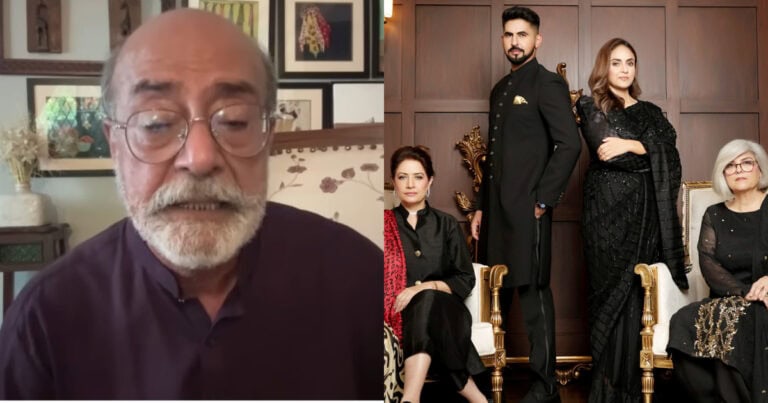
    Syed Mohammad Ahmed has been a pillar of Pakistani television for decades. As an actor and writer, he has built a reputation not only for his craft but for the kind of honest, unhurried perspective on the industry that comes from having seen it evolve over a very long time. In a recent podcast appearance, he offered exactly that kind of perspective, speaking candidly about Kya Drama Hai and the three respected actresses who serve as its judges. The context for his remarks was a controversy that had recently surfaced around Nadia Khan, the show’s host, who had mimicked Sajal Aly in a segment that drew significant criticism from audiences who felt the impression was mocking rather than affectionate. Ahmed addressed this directly and did not tread lightly around it. He said that in earlier times, mimicry was an art form conducted with permission and done tastefully, with genuine respect for the person being imitated. What he saw in Nadia Khan’s impression of Sajal Aly fell outside those boundaries. His discomfort was rooted in what he perceived as a mismatch in calibre. He said he did not understand how someone who was not even in Sajal’s league could presume to mock her in that manner. It was a pointed observation, delivered without hostility but with unmistakable clarity. He then turned his attention to the judges themselves, Marina Khan and Atiqa Odho, and what he had to say about them was warm but carried its own kind of candour. Of Marina Khan, he spoke with genuine admiration. He described her as someone who simply does not backbite, a quality he clearly values greatly, and said she is a truly great person. His comment about why she would participate in a show like Kya Drama Hai was not unkind but it was honest. He said he understood that running a household requires income, and that Marina simply has to work, framing it as a practical reality rather than a criticism of the show itself. He was equally warm toward Atiqa Odho, describing her as well-learned and well-read. But again he expressed genuine puzzlement about why someone of her intellect and standing would join such a programme. The thread connecting both observations was his broader view of why channels produce the kind of content they do. He was clear that it comes down to ratings. Channels run this content because it works commercially, and individuals participate because participation keeps them working. He was not condemning anyone, but he was naming a dynamic that many in the industry understand but rarely state plainly. For an actor of Syed Mohammad Ahmed’s stature, the willingness to speak this honestly about a format that involves three of his respected contemporaries is itself notable. He managed to criticise a system without diminishing the people within it, which is a harder balance to strike than it looks.

  • |

    Samay Raina reacts after India’s Got Latent episode leak

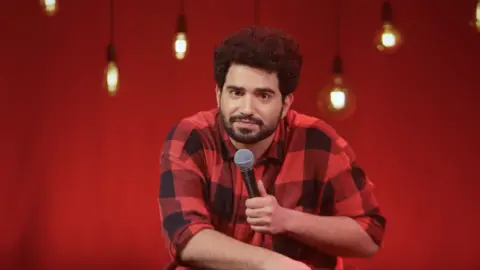
    Comedian Samay Raina has appealed to fans to support creators through official platforms after a members-only bonus episode of India’s Got Latent Season 2 was leaked online just hours after its release. The exclusive episode, which was made available only to paid YouTube members, reportedly surfaced on multiple unauthorized platforms shortly after it went live. Clips from the show, as well as the complete episode, quickly spread across social media and file-sharing websites, allowing many users to watch it without purchasing a membership. The bonus episode features a star-studded lineup, including actor and television host Raghav Juyal, comedian and reality TV winner Munawar Faruqui, content creator Niharika NM, and comedian-writer Rohan Joshi. It was intended to be exclusive content for paying subscribers who support the show through YouTube memberships. Following the leak, Samay Raina addressed the issue through his Instagram stories, asking viewers not to consume pirated versions of the episode. Instead, he encouraged fans to watch the content through official channels so that the creators and everyone involved in producing the show receive proper support. In his message, Samay admitted that he understood why some people rely on piracy because he had done the same during his college years. He revealed that when he was a student and could not afford to pay for entertainment, he often downloaded movies and other content through torrent websites. However, the comedian explained that his perspective changed after he started earning his own income. He said that now he prefers to purchase games through official platforms like Steam and watches movies and shows on legitimate streaming services because he believes creators deserve to be compensated for their work. Speaking directly to his audience, Samay said that anyone who wants to watch the complete bonus episode can subscribe to his YouTube membership through the link available in his Instagram bio. He emphasized that purchasing a membership is the right way to access exclusive content and helps support the people behind the production. The comedian also shared that many fans had informed him they had already watched the episode through torrent websites or Google Drive links. Responding to those messages, Samay reiterated that while he once depended on piracy due to financial limitations, he now makes a conscious effort to pay for the content he enjoys because it supports the entertainment industry and encourages creators to continue producing quality work. The incident has once again highlighted the ongoing challenge of digital piracy faced by online creators and streaming platforms. Despite the availability of subscription-based services and exclusive memberships, leaked content continues to spread rapidly across the internet, often within hours of release. Samay Raina’s response has drawn attention for its balanced approach, as he acknowledged his own past experiences while encouraging fans to make ethical choices if they are financially able. His message serves as a reminder that paying for official content directly supports creators, performers, editors, and production teams who invest significant time and effort into bringing entertainment to audiences.

  • | |

    Pakistani content creators demand justice in Azad Kashmir

    A wave of digital voices is rising from Azad Jammu and Kashmir and from across Pakistan as deeply disturbing reports emerge of violence following elections held in the region. Content creators, local witnesses and public figures have taken to social media to share footage, demand accountability and appeal for international attention as claims of civilian killings spread rapidly online. The unrest followed elections in AJK, after which protests erupted amid allegations of election rigging. Demonstrators took to the streets demanding protection of their mandate, and the situation deteriorated sharply when clashes broke out between security forces and protesters. According to locals sharing updates on social media, heavy firing continued throughout the night and cellular services were shut down in parts of the region, limiting the flow of information. Reports from the ground claim that more than 200 people have been killed, though these figures have not been independently verified. Among the most widely shared voices was young digital creator Laibaro Manak, who addressed her message directly to PPP chairman Bilawal Bhutto Zardari. “My video is for Bilawal Bhutto,” she said. “I asked him about the internet shutdown and the situation, and he responded that everything should be handled peacefully. But soon after the election, countless people died due to open firing by forces. You took votes and are celebrating your victory, but Kashmir is bleeding. My appeal is to stop the firing. Mothers are waiting for their sons, unaware that their children are being killed by direct gunfire.” Another content creator broke down in tears while addressing the camera, describing scenes of chaos and death he had personally witnessed. He said that after watching his friends die, he stood before the camera and demanded that forces open fire on him too, a raw and anguished act of protest against what he described as indiscriminate killing of innocent people. A third creator spoke directly to the camera from the site of what he described as a long march that was met with force. “Today we were doing a long march, and security forces opened direct fire on us. Countless people are injured, and many are dead. Cellular services are shut down, and they are committing genocide in Kashmir. I request international humanitarian organizations to take action against the oppressors and share this news as much as you can.” Actress Mishi Khan was among the Pakistani public figures to raise her voice. “Please have mercy on the people of Azad Kashmir and Balochistan,” she wrote. “They are citizens of Pakistan who are being treated in the most inhumane manner just because they wanted their rights as citizens. This kind of treatment is so cruel. Have mercy on your own people.” Content creator Anumta Imran also shared footage documenting the deaths, as a growing number of digital voices from within and outside AJK worked to bypass the communication blackout and ensure the situation reached a wider audience. The voices emerging from AJK are not simply asking for sympathy. They are asking to be seen, heard and counted at a moment when the tools that might otherwise amplify their cries have been deliberately switched off.

  • | |

    Kangana Ranaut attacks Gen Z protesters, targets young women

    Actress and BJP Member of Parliament Kangana Ranaut has sparked widespread outrage after sharing a series of inflammatory Instagram Stories targeting the Gen Z-led Cockroach Janta Party movement, which has been demanding accountability over exam paper leaks that rocked India’s education system. Her remarks, which took direct aim at young women protesters and described them in deeply offensive terms, have drawn sharp condemnation from across the country. The political context for her comments is significant. The CJP protests, which began in New Delhi and spread to other cities, were triggered by widespread allegations of paper leaks in competitive examinations. The movement gained considerable momentum after Education Minister Dharmendra Pradhan resigned, intensifying public debate around the protesters’ demands for systemic reform and accountability. Ranaut chose not to address those demands. Instead, she used her platform to launch a sweeping attack on the character of the people participating in the protests. “They don’t do this at the cost of their parents or families,” she wrote. “Here is a new generation of so-called westernised Indian women. I call them generational gutter. Some of them have nothing to offer to the system. They are not good at studies but they are so ugly and corrupt that they can’t be home makers either. But they probably flaunt their freedom to have drugs, drinks or endless body counts.” She went on to specifically criticise young Hindu women whom she accused of aspiring to a form of independence they had not earned. “Most appalled is the behaviour of young Hindu women who want to imitate the lives of independent career women, without earning that freedom,” she said. “Women who are truly independent, they make rebellious choices, bold opinions, unconventional career moves and they take accountability for their actions.” She also addressed those who had faced physical confrontations during the protests, framing the violence as a natural consequence of their own behaviour. “Protesters who are getting beaten and abused on the roads by the common people because of their filthy and abusive roles, must understand that once you post, you will be criticised and once you damage public property, the public will damage you.” She concluded with a statement she presented as philosophical but which read to many as dismissive. “Now is not a time to cry. If you receive the opposite reaction, it is due to cause and effect. You will understand soon if you have not already.” The remarks have landed with considerable force at a moment when Indian celebrities are already divided over whether and how to support the CJP movement. While figures including Diljit Dosanjh, Arijit Singh and actor Imran Khan have expressed solidarity with the protesters, Ranaut has positioned herself firmly on the opposite side, in a manner that has gone well beyond political disagreement into personal attack. The language she used about young women in particular has drawn the most intense criticism, with many pointing out the specific ugliness of describing protesting citizens in the terms she chose.

  • | |

    Shahid Afridi voices concern over Karachi’s decline

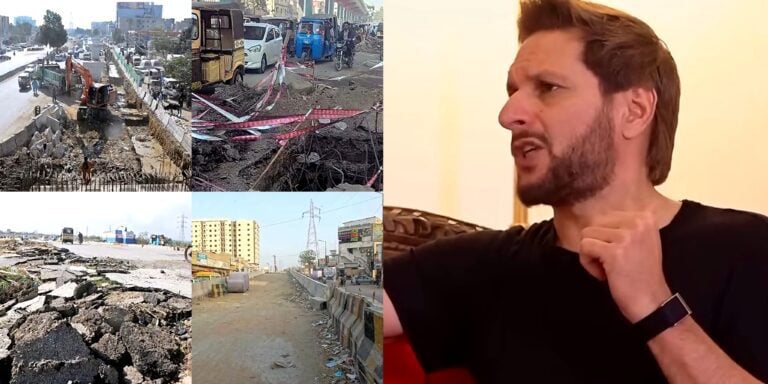
    Shahid Afridi has always had a complicated relationship with Karachi, the city of his origins and the one he eventually left behind. He now lives in Islamabad with his family, a decision he has attributed to the worsening state of roads and cleanliness in the city. But a recent visit to Karachi, his first in several months, brought those feelings rushing back with full force, and he did not hold them in. In a video shared on social media following his visit, Afridi spoke directly to his followers about what he saw during a trip to the Korangi area, and his disappointment was palpable from the very first word. “Day before yesterday, I was visiting the Korangi area,” he said. “Friends, I don’t understand this. We give you billions of rupees’ business and this city provides millions of jobs, but I feel embarrassed seeing the condition of Karachi.” He then described the particular disillusionment that comes from returning to a place with hope, only to find it unchanged. “I came to Karachi after years, thinking there must have been some construction work or development, but it is still the same. It disappoints me.” He named specific areas to illustrate his point, places that residents have long complained about and that appear to have remained in a state of perpetual half-construction. “The areas around Korangi, the side area, university road have been under construction for years,” he said. “The city needs a lot of development, and the authorities need to work on it. Please do something. I hope Karachi gets better.” The appeal was genuine and the frustration behind it real, coming from a man who grew up in the city and clearly retains a deep affection for it even in its current condition. The contrast between Karachi’s economic significance and the state of its infrastructure is one that has been raised by residents, civic activists and public figures for years. Afridi’s remarks gave fresh voice to that long-running complaint. The public reaction, however, was not entirely sympathetic. While some supporters agreed with the substance of his concerns, many commenters pointed to what they saw as a glaring contradiction. Afridi has been vocal in his political commentary and has aligned himself publicly with certain political figures and parties over the years. For many Karachiites, the individuals and systems he has supported are the very ones responsible for the neglect he was now condemning. The criticism was pointed: it is easier to express disappointment from Islamabad than to have consistently held accountable those who could have made a difference. The response reflects a broader frustration that many Pakistanis feel when public figures with platform and influence choose to react rather than act. Shahid Afridi’s concern for Karachi appears genuine. Whether that concern translates into sustained accountability for those in power over the city’s administration is the question his critics were loudly putting back to him.

  • |

    Malaika Arora spotted with mystery man at airport

    Malaika Arora has once again become the center of attention after being spotted with a mystery man at an airport, fueling fresh speculation about her personal life. A video of the actress and television personality walking together has gone viral across social media, with fans eagerly discussing whether she has found love again following her split from Arjun Kapoor. In the widely shared clip, Malaika is seen exiting the airport dressed in a relaxed and stylish casual outfit. Walking alongside her was an unidentified man wearing a black T-shirt, blue jeans, a matching cap, and glasses. The two appeared comfortable in each other’s company as they made their way through the airport. The mystery companion was seen greeting people around them while staying close to Malaika throughout the walk. Their easy interaction quickly caught the attention of onlookers and social media users, leading many to speculate about the nature of their relationship. However, neither Malaika nor the man has commented on the rumors, and there has been no official confirmation regarding their connection. During the airport appearance, Malaika appeared visibly uncomfortable with the photographers gathered to capture the moment. As cameras continued to follow her, she seemed annoyed and gave a stern look toward the paparazzi, signaling that she did not want more photographs taken. Despite her reaction, the video continued to circulate online, attracting thousands of views and comments within a short time. The clip sparked a wave of reactions on social media, with users sharing both humorous and curious responses. One person jokingly wrote that silence can sometimes be the best review, while another claimed the mystery companion was rumored to be her boyfriend. Several others simply wondered about the identity of the man and whether the actress had indeed moved on. Malaika’s personal life has often remained a topic of public interest. She was previously in a high-profile relationship with Bollywood actor Arjun Kapoor. The pair first sparked dating rumors in 2018 after they were seen together on several occasions. Over the years, they made numerous public appearances and frequently shared glimpses of their relationship, eventually becoming one of Bollywood’s most talked-about couples. Reports of their separation surfaced in 2024, bringing an end to their long-term relationship. Since then, Malaika has largely kept her private life away from the spotlight, choosing not to address speculation surrounding her relationships. Her latest airport appearance has once again ignited discussions among fans and entertainment followers. While the identity of the mystery man remains unknown, the viral video has left many wondering if Malaika has entered a new chapter in her personal life. Until she chooses to speak publicly, the dating rumors remain purely speculative.