National

  • |

    Rain forecast for several parts of Pakistan as flood risk rises

    LAHORE: Rain is expected in several parts of Punjab, Balochistan, upper Khyber Pakhtunkhwa, Gilgit-Baltistan and Kashmir on Sunday, with authorities warning of possible flooding in urban centres and watercourses following increased rainfall. According to the latest weather forecast, scattered showers are likely to affect different areas of the country, while parts of Punjab may experience intermittent rain during the day. The weather in Lahore turned pleasant on Sunday morning after rainfall was reported in various parts of the provincial capital. The early-morning showers brought temporary relief from the prevailing heat and humidity, with residents experiencing relatively cooler conditions. Rain was reported in several localities, adding to the likelihood of water accumulation on roads and low-lying areas if the spell continues. Meanwhile, the National Emergency Operation Center has warned that rainfall could lead to a rise in water levels and flows in major rivers across the country. The situation has prompted authorities to remain vigilant and closely monitor river channels, drains and vulnerable urban areas. Officials have also highlighted the possibility of low to moderate-level urban flooding in several Punjab cities, including Rawalpindi, Gujranwala, Sialkot, Narowal, Faisalabad, Okara and Lahore. Heavy or persistent rainfall in these areas could result in water accumulating on roads, underpasses and other low-lying locations, potentially disrupting traffic and routine activities. Relevant departments have been advised to remain prepared to respond to any emergency arising from the weather system. The risk is not limited to Punjab. In Khyber Pakhtunkhwa, low to moderate flooding has also been forecast in rivers, streams and rain-fed waterways in Chitral, Upper Dir, Abbottabad, Shangla, Khyber, Orakzai, Kohat, Tank and North and South Waziristan. Authorities have urged local administrations and disaster-management agencies in vulnerable districts to maintain close coordination and monitor developments, particularly in areas located near rivers, streams and seasonal rain drains. Residents in low-lying and flood-prone areas have been advised to exercise caution, avoid unnecessary travel during heavy rainfall and stay informed about weather and flood alerts issued by the relevant authorities. The latest warnings come as the country continues to monitor the impact of the ongoing monsoon activity, which can cause sudden increases in river flows and urban flooding in areas receiving intense or prolonged rainfall.

  • | |

    15 terrorists killed in Balochistan intelligence-b…

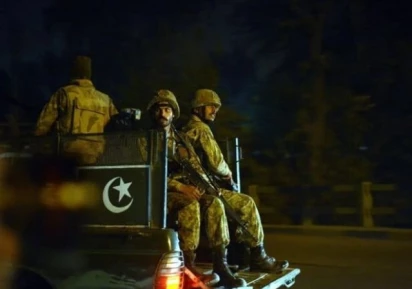
    QUETTA: Security forces have killed 15 terrorists during a series of intelligence-based operations conducted across several districts of Balochistan, security sources said on Sunday. The operations were carried out under the ongoing Operation Rad-ul-Fitna-3, targeting militant networks in Mastung, Bolan, Washuk, Awaran, Sibi, Khuzdar, Harnai and Noshki. According to security sources, the operations were launched following intelligence about the presence and movement of militants in the targeted areas. A significant quantity of weapons and ammunition was also recovered during the actions. Officials said the operations dealt a major blow to militant networks and disrupted their ability to move and operate across parts of the province. Security forces, they added, remain committed to continuing intelligence-driven operations until terrorist activity is eliminated. Interior Minister Mohsin Naqvi praised the security forces for what he described as successful operations against militant groups. He commended the personnel for their professionalism and said the government would continue supporting efforts to counter terrorism. The latest operations come amid heightened security concerns in Balochistan, where militant attacks have targeted both civilians and security installations. Security forces have continued intensified operations in the province following a series of deadly attacks. Earlier, security forces reported killing 12 militants during intelligence-based operations in the Washuk and Mastung districts. Authorities have also launched joint operations involving the Pakistan Army, Frontier Corps and Balochistan Police following recent attacks on security personnel and civilians. Pakistan has witnessed a significant rise in militant violence in recent years, with Balochistan and Khyber-Pakhtunkhwa remaining among the most affected regions. Security agencies say intelligence-led operations will continue as part of broader efforts to prevent further attacks and dismantle militant networks.

  • | |

    Wild Monkey captured in Indonesia after attacks, f…

    A wild monkey that reportedly injured 17 people and sparked fear across a community in Indonesia’s Riau province has been captured following a coordinated operation involving several government agencies. The adult male monkey had been attacking residents in the Tembilahan area for nearly two weeks, with victims reportedly including children and elderly people. Authorities said the animal targeted people outside their homes and on public streets, raising concerns among local residents. The repeated attacks prompted police, military personnel, firefighters and wildlife officials to launch a joint effort to capture the animal. According to Police Chief Doni Aco Listanto, the Riau Natural Resources Conservation Agency placed three traps in areas where the monkey was active. One of the traps eventually succeeded in capturing the monkey alive, bringing an end to the weeks-long ordeal. The incidents had caused widespread anxiety in Tembilahan, with authorities taking additional precautions to protect residents. Schools in the district were closed for three days, while students were instructed to continue their lessons through online classes. Officials are now expected to assess the monkey and determine the appropriate measures following its capture.

  • | |

    Bans on baajas, firecrackers and one-wheeling ahea…

    PESHAWAR: The Peshawar district administration has imposed restrictions on several Independence Day activities, banning baajas, firecrackers, toy pistols, aerial firing and one-wheeling under Section 144. According to an official notification, the restrictions will remain in effect until August 15 as authorities prepare for Pakistan’s Independence Day celebrations on August 14. The administration has prohibited the sale and purchase of toy horns, toy pistols and firecrackers, while fireworks and aerial firing have also been restricted to prevent accidents and maintain public order. Authorities have particularly warned young people against one-wheeling, describing the stunt as a serious threat to public safety that can endanger both riders and other road users. Officials said the measures are intended to protect lives and property and prevent festive gatherings from turning into incidents involving reckless driving, injuries or public disorder. Residents have been urged to celebrate Independence Day responsibly and comply with the restrictions, with authorities warning that violations could result in legal action.

  • | |

    New team formed to probe Mir Raza Ali’s death

    The investigation into the death of 25-year-old businessman Mir Raza Ali has taken a new turn after police added a murder charge to the case and reconstituted the team handling the probe. Ali’s body was discovered in bushes in Karachi’s Gulistan-i-Jauhar on July 29, a day after he was reported missing. His family has maintained from the outset that he was abducted, subjected to torture and killed, while the initial police investigation had considered the possibility of suicide. The latest development came after a second post-mortem examination produced findings that differed from the initial medical report. According to an order issued by the Sindh Inspector General of Police’s office, the investigation team has been reorganised following the findings of the second autopsy. The first information report (FIR), initially registered under Section 365 of the Pakistan Penal Code for kidnapping, now also includes Sections 302 and 201. Section 302 deals with murder, while Section 201 relates to causing evidence of an offence to disappear or providing false information to protect an offender. A five-member team has now been assigned responsibility for the investigation. It is headed by Sindh Deputy Inspector General (Crime and Investigation) Amir Farooqui and includes senior police officers from different investigative units. The new team has been directed to conduct a thorough and impartial investigation and examine the case from every relevant angle. Police have also been instructed to identify, secure and analyse any new evidence, including physical, forensic, technical and circumstantial material. The team has been asked to make every effort to determine what happened to Ali and submit its findings to the relevant court within the required timeframe. Investigators will also provide daily updates on the progress of the case. The development follows demands from Ali’s family for a change in the investigation. Family lawyer Jibran Nasir had called for the original probe to be replaced after the businessman’s body was exhumed for a second post-mortem examination. According to the family’s legal representative, the fresh examination found evidence indicating that Ali had been shot in the back. He argued that the finding contradicted the earlier possibility of suicide and supported the family’s allegation that Ali had been murdered. Nasir has further alleged that Ali was tortured before his death, describing him as a young and ambitious businessman whose death had left his family seeking answers. The lawyer has also criticised the handling of the case by senior police officials, claiming that the family faced harassment and pressure instead of receiving a satisfactory investigation.

  • | |

    Police constable martyred, another wounded in Lakk…

    A police constable was martyred and another sustained injuries after unidentified gunmen opened fire on a police patrol in Khyber Pakhtunkhwa’s Lakki Marwat district on Sunday. The attack took place near the old police lines within the jurisdiction of Lakki City police station, where the officers were performing patrol duties as part of the City Rider Squad. Police officials said Constable Sajidullah received critical injuries during the firing. He later succumbed to his wounds. Constable Muhammad Waqas was also injured and was taken to a hospital, where he is receiving medical treatment. Following the incident, police teams immediately sealed off the area and launched a search operation to locate those responsible for the attack. Security personnel are also examining the crime scene and collecting evidence that could help investigators identify the attackers. Lakki Marwat District Police Officer Shehbaz Elahi visited the site and reviewed the situation with senior officers. He was briefed about the circumstances surrounding the attack and the steps taken by police following the incident. The DPO directed investigators to use modern forensic and investigative methods and mobilise all available resources to track down the suspects. He also ordered authorities to strengthen security arrangements to protect both law-enforcement personnel and civilians. Officials said attacks against police officers would not be tolerated and that every effort would be made to bring those behind the assault to justice. The latest incident comes amid a series of attacks against security personnel in Khyber Pakhtunkhwa. The province has witnessed a rise in militant violence in recent weeks, prompting security forces and police to intensify operations against armed groups. Earlier this month, several police personnel were killed in a suicide attack outside a police station in Swat. In separate incidents in Hangu and Dera Ismail Khan, police officers were also targeted in attacks. The continuing violence has increased concerns over the security situation across parts of the province, particularly areas close to the former tribal districts and the Afghan border. Security officials have maintained that intensified intelligence-based operations are being conducted to prevent militant attacks and dismantle networks involved in violence against law-enforcement agencies.

  • | |

    Transport crisis threatens to disrupt economic act…

    The economists and business experts have warned that the nationwide suspension of goods and oil transportation could create serious disruptions across Pakistan’s supply chains if the dispute is not resolved quickly, adding that prolonged interruption in cargo movement would increase operating costs, disrupt industrial production and put further pressure on exports. Experts said the ongoing situation should not be viewed merely as a dispute between transporters and the government, as the uninterrupted movement of goods is essential for manufacturing, agriculture, wholesale and retail trade, imports, exports and the distribution of essential commodities. They said the suspension of a large portion of the country’s freight fleet could create a chain reaction across the economy. Factories dependent on regular supplies of imported and locally produced raw materials could face interruptions, while manufacturers with completed consignments could experience difficulties in moving goods to ports, warehouses and domestic markets. According to economic experts, any prolonged disruption in freight movement could raise costs at multiple stages of the supply chain, ultimately increasing prices for businesses and consumers. They urged the government to give immediate priority to negotiations with transport representatives and ensure restoration of normal cargo movement, while simultaneously addressing the structural issues that have contributed to growing tensions in the transport sector. Experts said the introduction of daily petroleum price adjustments had added another layer of uncertainty to an already difficult operating environment. Fuel represents a major component of freight costs, and daily changes make it difficult for transport operators to determine charges for journeys that may take several days. The resulting uncertainty also affects manufacturers and traders because businesses cannot accurately forecast the cost of moving raw materials and finished products. For exporters, the issue is particularly significant as freight costs are often incorporated into orders and contracts agreed weeks or months before shipment. Economists said Pakistan needed a petroleum pricing framework that reflected international market movements while providing sufficient predictability for businesses. They noted that frequent changes in fuel prices could complicate production planning, inventory management and commercial contracting. They further cautioned that heavy reliance on petroleum taxes and levies could become counterproductive if it substantially increased transportation and production costs. Higher fuel prices raise the delivered cost of raw materials, machinery, food products and finished goods and also increase the cost of moving agricultural inputs and crops between production areas and markets. According to experts, the current disruption has also exposed weaknesses in Pakistan’s logistics infrastructure. The country needs better freight facilities, rationalised toll charges, adequate parking for heavy vehicles around ports and industrial zones, streamlined licensing procedures and a taxation framework that does not place excessive pressure on formal transport operators. They stressed that logistics costs should be considered an integral part of Pakistan’s export strategy. Export competitiveness depends not only on the cost of manufacturing a product but also on the expense and reliability of moving raw materials to factories and finished goods to ports. Experts said Pakistani exporters already face intense competition from regional economies where supply chains are becoming more efficient and predictable. Any additional increase in domestic transportation costs could further reduce the price competitiveness of Pakistani products in international markets. They recommended establishing a permanent consultation mechanism involving transporters, chambers of commerce, manufacturers, exporters, oil-sector representatives and relevant government agencies. Such a platform could identify emerging problems and develop solutions before individual disputes escalate into economy-wide disruptions. Economists also called for a review of withholding tax arrangements affecting goods transporters, saying the taxation system should encourage formalisation, investment and expansion of the logistics sector rather than create additional working-capital pressures. They said all transport-related taxes, tolls, fees and regulatory charges should be reviewed collectively to determine their overall impact on freight costs.

  • |

    Two tribal elders killed in South Waziristan

    Two tribal elders were shot dead by unidentified armed men in the Zarmilan area of Toi Khulla tehsil in Lower South Waziristan on Sunday, according to police District Police Officer (DPO) Shah Hassan identified the victims as Haji Gul and Malik Badshah, both members of the Suleman Khel tribe. Police said the two elders were travelling from Gul Kach towards Zarmilan when gunmen opened fire on their vehicle near Darozanda. Both men sustained multiple bullet wounds and died at the scene, while the attackers escaped. Police registered a preliminary case at Toi Khulla police station and launched an investigation. DPO Hassan said officers were examining all possible aspects of the incident and working to identify and arrest the suspects. The killings come amid growing concerns over the deteriorating security situation in Lower South Waziristan. The district has witnessed a rise in targeted killings, bomb attacks, kidnappings for ransom, extortion and attacks on police and security personnel over the past 18 months. Tribal elders and their relatives have increasingly become targets of violence. The trend has raised concerns about the safety of influential tribal figures, who have traditionally helped resolve disputes and maintain peace through jirgas and other local mechanisms. In May, prominent tribal elder and chief of the Ahmadzai Wazir tribe, Malik Tariq Wazir, was among three people killed in an IED blast near Gulshan Plaza in Wana’s busy Rustam Bazaar. Four others suffered injuries in the explosion. Police said explosives had allegedly been planted near the plaza overnight and detonated in the morning as Malik Tariq passed through the market in a vehicle. He was considered an influential figure who played an active role in tribal jirgas and local dispute resolution. He had also been abducted by armed men in December 2024 but was later released following efforts by tribal elders and local mediators. In another incident in June 2026, unidentified gunmen killed two sons of prominent tribal elder Malik Jamil Wazir near Kari Kot Bazaar in Wana tehsil. The brothers were identified as Naveed Wazir and Moeenuddin Wazir.

  • | |

    Attack on one is an attack on all’: Ishaq Dar ex…

    Pakistan’s Deputy Prime Minister and Foreign Minister Ishaq Dar has highlighted the key provisions of the landmark Makkah Joint Defence Agreement, stressing that any external armed attack on Pakistan, Saudi Arabia or Türkiye will be considered an attack on all three countries. Dar said the agreement, signed in Makkah Mukarramah on 7 August 2026, reflects the depth of the brotherly relations between the three nations and is the culmination of years of consultations and strategic coordination. Under the accord, an external armed attack against any one of the three countries will be considered an attack against all, consistent with the right of individual and collective self-defence under Article 51 of the UN Charter. The Foreign Minister stressed that the agreement is purely defensive in nature and is not directed against any country. He said the accord is intended to strengthen cooperation in confronting shared peace and security challenges while promoting regional stability and prosperity. Dar also clarified that the Makkah Accord does not replace or abrogate any existing bilateral or multilateral agreements between Pakistan, Saudi Arabia and Türkiye, or their agreements with other countries and international organisations. Another significant provision, he said, is that the agreement remains open to other countries in the region willing to uphold its fundamental principles and resolve differences through mutual respect, cooperation and peaceful means. Dar reaffirmed that the agreement is consistent with Pakistan’s foreign policy and said Islamabad would continue working with all brotherly countries towards lasting peace and stability. He reiterated Pakistan’s commitment to the peaceful resolution of conflicts and to building a more secure, stable and prosperous future for the peoples of the region.

  • | |

    Pakistan rejects Afghan claim over alleged weapons…

    ISLAMABAD: Pakistan has rejected claims by the Afghan Taliban that weapons are being smuggled from Pakistan into Afghanistan, calling the allegation baseless and contrary to established facts. In a statement, Pakistan’s Ministry of Information and Broadcasting said the allegation appeared to be an attempt to divert international attention from the more serious security concerns emerging from Afghan territory. The ministry said Afghanistan already possesses a large quantity of modern weapons and military equipment left behind after the withdrawal of US and allied forces. According to the ministry, the value of the abandoned military equipment has been estimated at around $7.2 billion. Pakistan also pointed to Afghanistan’s large stockpiles of Soviet-era weapons. These weapons, it said, accumulated during decades of conflict in the country and remain another major source of arms available on Afghan soil. The ministry argued that attributing such weapons to Pakistan was misleading. It said the claim could shift attention away from the presence of militant groups operating from Afghanistan. Pakistan has repeatedly raised concerns over militant activity originating from Afghan territory. Islamabad maintains that terrorist groups continue to find shelter and operational space there. The ministry said these groups were allegedly using Afghan territory to plan, support and carry out attacks against Pakistan. It urged the Afghan Taliban authorities to focus on addressing militant safe havens instead of making what Pakistan described as unsupported allegations against Islamabad. “Afghan Taliban” authorities, according to the statement, should take effective measures against terrorist groups operating from their territory. Pakistan also called on Afghan authorities to honour their commitments and ensure that Afghan soil is not used for terrorism against Pakistan or any other country. The latest statement comes amid continued tensions between Pakistan and Afghanistan over security and cross-border militancy. Islamabad has repeatedly demanded concrete action against groups that it says are involved in attacks inside Pakistan. Pakistan has also stressed that the issue should be addressed through practical measures rather than accusations. The ministry maintained that Afghanistan’s existing weapons stockpiles and the continued presence of militant groups are important factors in the regional security situation. It said efforts to blame Pakistan for the presence of weapons in Afghanistan should not distract the international community from addressing terrorism and militant activity based in the region.