National

  • | |

    Rana Sanaullah says sit-in protesters failed to st…

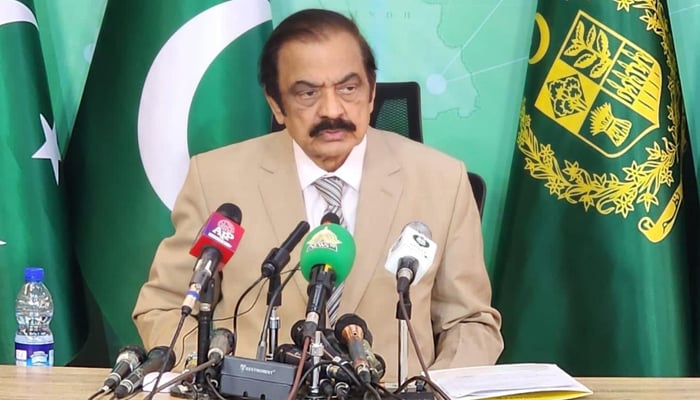
    Prime Minister’s Adviser on Political Affairs Rana Sanaullah has said that the groups holding sit-ins had attempted to disrupt the Azad Jammu and Kashmir elections but failed to achieve their objective. Speaking to the media in Islamabad, Rana Sanaullah said the people of Azad Kashmir had exercised their right to vote and given a mandate to their chosen representatives. He said the process of government formation in Azad Kashmir would begin after the completion of the third phase of the elections. Rana Sanaullah expressed hope that the groups staging protests would now recognise the situation and end their sit-ins. He said the government was willing to review the legitimate demands of the protesters. However, he warned that individuals who take up arms or act against the state would have to face legal action. The adviser also rejected allegations of widespread election rigging. He said those making such claims had so far failed to present evidence to support their allegations. Rana Sanaullah accused the Pakistan Peoples Party of using allegations of rigging to cover up what he described as its electoral defeat. He said the PPP was still raising concerns about alleged rigging, but the intensity of its claims had decreased compared with earlier stages of the election. He expressed hope that PPP leaders would eventually accept the results and congratulate the Pakistan Muslim League-Nawaz on its performance. Polling in the third phase of the Azad Kashmir elections was continuing, while authorities reported that the overall voting process remained peaceful. Rana Sanaullah said elements that had attempted to prevent people from casting their votes had failed in their efforts. He maintained that voters were freely exercising their democratic right and choosing their representatives through the ballot. The prime minister’s adviser also expressed confidence about the formation of the next government in Azad Kashmir. He claimed that the results available so far indicated that the PML-N was on course to form the government with a two-thirds majority. Rana Sanaullah described the elections as free, fair and transparent. He said the democratic process had allowed the people of Azad Kashmir to give a clear mandate to their representatives. He added that the government would focus on addressing public issues after the elections. According to Rana Sanaullah, the completion of the third phase will pave the way for the formal process of government formation in Azad Kashmir. The remarks came amid political tensions surrounding the elections and protests. The government has repeatedly called for the continuation of the democratic process, while opposition groups have raised concerns over the conduct of the polls.

  • | |

    Sindh Colleges ban Ajrak, caps and gifts for visit…

    KARACHI: The Sindh College Education Department has directed government colleges across the province to stop presenting traditional gifts and souvenirs to the Secretary College Education during official visits. The directive, issued on August 6, instructs the Director General Colleges and regional directors in Karachi, Hyderabad, Mirpurkhas, Shaheed Benazirabad, Sukkur and Larkana, along with principals of government colleges, to ensure that no gifts are presented to the secretary during his visits. The department has specifically prohibited the presentation of Ajrak, Sindhi caps and bouquets. It has also made clear that commemorative shields, souvenirs and other ceremonial items should not be offered. Officials have been asked to strictly follow the instructions and ensure that the directive is implemented in both letter and spirit. The department has warned that any failure to comply with the orders will be taken seriously, signalling a move away from the customary practice of presenting traditional gifts to senior officials during official visits.

  • | |

    2 arrested at Multan Airport over Umrah visa traff…

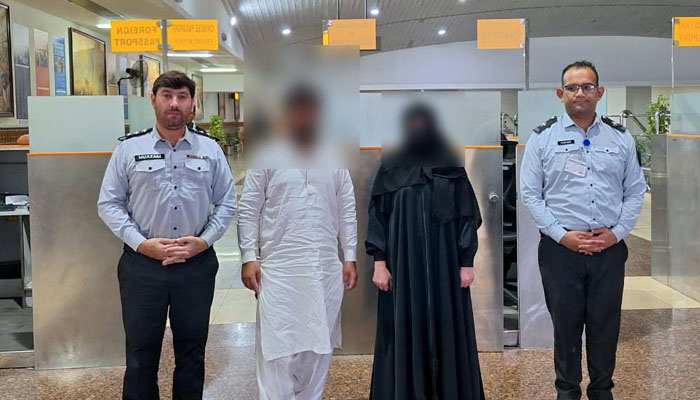
    MULTAN: The Federal Investigation Agency (FIA) has arrested two passengers, including a woman, at Multan International Airport for their alleged involvement in a human trafficking network linked to sexual exploitation in Saudi Arabia. According to an FIA spokesperson, the passengers were intercepted during immigration clearance after officials noticed suspicious behavior. Both had reportedly travelled to Saudi Arabia on Umrah visas. During the subsequent examination of their mobile phones and digital communications, investigators allegedly found material indicating their possible involvement in a scheme involving commercial sexual exploitation. The FIA said its preliminary investigation revealed that an agent had arranged the passengers’ travel to Saudi Arabia under the pretext of performing Umrah. Investigators suspect that the actual purpose was to subject them to commercial sexual exploitation after their arrival in the country. The agency seized the passengers’ mobile phones and other relevant material for further investigation. The two suspects, along with the recovered evidence, were subsequently transferred to the FIA Anti-Human Trafficking Circle in Multan. The FIA has expanded its investigation to trace the alleged agent and identify other individuals connected to the suspected trafficking network. Officials said legal action would be taken against all those found involved in the organized operation.

  • | |

    Court orders Azma Bukhari to appear in person over…

    LAHORE: The Lahore Sessions Court has directed Punjab Information Minister Azma Bukhari to appear in person and record her statement in a case involving the alleged circulation of a fake video on social media. The matter was heard by Additional Sessions Judge Nusrat Ali Siddiqui, who rejected Bukhari’s request to record her statement through video link. The court ordered her to personally appear at the next hearing to record her statement. Bukhari had challenged an earlier order issued by a judicial magistrate requiring her to appear before the court in person. The case relates to allegations surrounding the circulation of a fabricated video attributed to the provincial minister. Bukhari had approached the authorities against the alleged dissemination of the video and lodged a complaint with the National Cyber Crime Investigation Agency (NCCIA) against Falak Javed. The court’s latest order means Bukhari will have to appear before the Sessions Court at the upcoming hearing as proceedings in the case continue.

  • | |

    Terrorist killed in joint operation in Bannu

    A terrorist was killed during a joint intelligence-based operation in Bannu, Khyber Pakhtunkhwa, police said on Monday. The operation was carried out by district police, the Counter-Terrorism Department, the Quick Response Force and security forces. The operation took place in the Miryan area after intelligence reports indicated the presence of suspected terrorists. Security personnel conducted searches in Khani Kalay, Barakzai and nearby areas. The areas fall within the jurisdiction of Miryan police station. An exchange of fire took place during the operation. One unidentified terrorist was killed. Police said the identity of the deceased was being established. A Kalashnikov was recovered from the scene. Three magazines and a bandolier were also found in the possession of the killed terrorist. Security personnel later conducted search operations in surrounding areas. Several suspected individuals were detained for questioning. Bannu District Police Officer Captain (retd) Muhammad Furqan Bilal praised the personnel who participated in the operation. He described the security and police personnel fighting terrorism as the country’s real heroes. The DPO said intelligence-based operations would continue across Bannu. He said the objective was to eliminate terrorism and crime from the district. He also urged local residents to cooperate with law-enforcement agencies. Citizens were asked to report suspicious individuals and activities to police. The latest operation is part of intensified security efforts in Bannu. The district has witnessed several terrorist incidents and counterterrorism operations in recent months. On July 20, another joint intelligence-based operation was conducted in Bannu. Police said one suspected terrorist was killed and eight others were detained during that operation. The operation involved district police, the Elite Force, CTD personnel and Pakistan Army troops. Security forces had also established checkpoints and cordoned off the area during the operation. Police said the killed suspect was allegedly attempting to plant an improvised explosive device. A Kalashnikov, magazines and ammunition were recovered. Security concerns in Bannu have increased following several attacks targeting police and security installations. On July 15, terrorists attacked the Miryan police station using an explosives-laden vehicle. A prolonged exchange of fire followed the attack. Six police officers and four civilians were injured in the incident. The attackers also damaged a bridge leading to the police station. Authorities believed the move was intended to slow the arrival of reinforcements. The wider security situation in Khyber Pakhtunkhwa has remained challenging. Balochistan has also witnessed an increase in militant activity. Security forces have responded with intelligence-based operations against suspected militant networks. Authorities have repeatedly stressed the need for public cooperation to counter terrorism. Officials have also raised concerns about militant groups operating from across the Afghan border. The latest operation in Bannu reflects the continued efforts of law-enforcement and security agencies to prevent further attacks.

  • | |

    Mir Raza’s father raises new questions over son?…

    The father of businessman Mir Raza Ali has raised fresh concerns about the investigation into his son’s death. Speaking to the media on Monday, Mir Hassan claimed that his son’s business partner went missing after being questioned by police. He said police had questioned the business partner once. The man was allegedly not seen again after the questioning. Hassan said the family had not been informed about the investigation involving employees of the guest house in Gulistan-e-Johar. Mir Raza’s body was found near the guest house. “We have not been told what investigations were conducted with the employees,” he said. The victim’s father also questioned why CCTV footage from the guest house had not been made public. The latest concerns have emerged as investigators continue to review the circumstances surrounding Mir Raza’s death. The case took a new turn after the businessman’s body was exhumed for a second post-mortem examination. The second medical examination found a firearm injury and several wounds that had occurred before death. It also reported signs of internal bleeding. According to the findings, a bullet entered the upper right side of Mir Raza’s back and exited through the left side of his chest. The bullet fractured his sixth rib and caused internal bleeding. The report also documented injuries to different parts of his head, face, neck and chest. Following the medical findings, police added Section 302 of the Pakistan Penal Code to the case. The section relates to murder. The original FIR had been registered under Section 365, which concerns kidnapping. Mir Raza, 25, was allegedly abducted from the PECHS area. His body was later found in bushes near a wedding hall in Gulistan-e-Johar. Police had earlier suspected that he may have been tortured before being shot. The case initially faced uncertainty over whether Mir Raza had been murdered or had died by suicide. His family, however, consistently rejected the suicide theory. The second post-mortem has strengthened the family’s claim that Mir Raza was killed. Questions had also been raised about the first post-mortem report. Karachi Police Surgeon Dr Summaiya Syed had pointed out several issues in the initial examination. She had questioned why the body was not X-rayed and why hand swabs were not collected for gunshot residue testing. She had also raised concerns over the scientific measurement and photography of firearm injuries. Questions were further raised about the documentation of the bullet’s path and the examination of the entry and exit wounds. Following these developments, police dissolved the previous investigation team. A new team was formed under the leadership of DIG Crime and Investigation Amir Farooqi. The new team was tasked with conducting a fresh investigation based on the latest medical findings. Investigators were also expected to revisit the crime scene. They were directed to re-question the victim’s family and other relevant individuals. The team was also expected to examine forensic, technical, physical and circumstantial evidence. Mir Raza’s family has repeatedly criticised the handling of the case. They have maintained that he was murdered and demanded that those responsible be identified and brought to justice. The family’s lawyer, Jibran Nasir, had also alleged that investigators pressured the family to accept a suicide theory. He called for an independent and impartial investigation. The Sindh government has meanwhile decided to establish a judicial commission headed by a Sindh High Court judge. The commission is intended to oversee a transparent and impartial investigation into Mir Raza’s death.

  • | |

    HEC Chief calls for education, research to become …

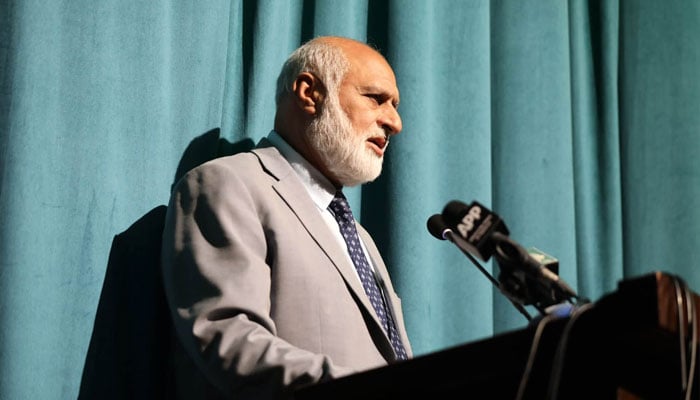
    ISLAMABAD: Higher Education Commission (HEC) Chairman Dr Niaz Ahmed has called for a major shift in Pakistan’s approach to higher education and research, saying universities must become central to the country’s economic, technological and social development. Speaking about his recent nearly two-week visit to China, Dr Niaz Ahmed said Pakistan could learn valuable lessons from China’s development model, particularly its close cooperation among universities, industry, research institutions and the government. The HEC chairman visited China with a delegation of senior vice chancellors from leading Pakistani universities on the instructions of the prime minister and at the invitation of Chinese education authorities and academic institutions. During the visit, Pakistani and Chinese universities discussed joint and dual-degree programmes, faculty and student exchanges, collaborative research and greater opportunities for Pakistani students to pursue higher education in China. He said efforts were also underway to strengthen the CPEC Consortium of Universities and establish 10 Sinology Centres in Pakistan. The Higher Education Commission has been asked to nominate 10 Pakistani universities for the initiative. Dr Niaz said his meetings with Chinese universities and research organisations showed that universities there function as more than degree-awarding institutions. They are closely connected with industry and government, helping develop new technologies, solve industrial problems, support startups and prepare skilled workers for emerging economic needs. He noted that research in China is increasingly focused on turning knowledge into practical solutions, new products and economic opportunities rather than simply increasing the number of research publications. The HEC chairman said China’s rapid progress in artificial intelligence, robotics, automation and digital technology was particularly striking. These technologies, he observed, have moved beyond laboratories and are now being used in factories, transportation, hotels and urban services. He also highlighted China’s rapidly expanding electric vehicle industry, saying the transformation demonstrated the importance of developing technology rather than simply consuming it. According to him, countries that build their own technological capabilities will be better positioned to compete in the future. Dr Niaz attributed China’s progress not only to investment and technology but also to discipline, punctuality, hard work and a clear national vision. He said the country’s experience demonstrated how coordinated efforts by government institutions, universities, industries and citizens could produce lasting national development. Reflecting on Pakistan’s traditional focus on Western academic models, he said his visit had strengthened his belief that China offers an important Asian development experience that Pakistan should study carefully. He stressed, however, that Pakistan should adapt successful practices to its own circumstances rather than simply copy the Chinese system. The HEC chairman said Pakistani universities now needed to examine whether they were merely producing degree holders or actually developing human capital capable of contributing to the national economy. He called for curricula to be aligned with future employment needs, with greater emphasis on artificial intelligence, data science, automation and other emerging fields. Universities, he said, must also strengthen faculty capabilities and build closer relationships with industry. Dr Niaz further stressed that research should focus on solving national and industrial problems, developing technologies and creating business opportunities rather than remaining limited to academic publications. After returning from China, he said, he shared his observations with university leaders across Punjab, Sindh, Balochistan, Azad Jammu and Kashmir, Gilgit-Baltistan and the federal capital. The objective was to encourage universities to reconsider their approaches to curriculum development, research, faculty training and industry partnerships. He said Pakistan already possesses a large network of universities, talented researchers and a young population, but these strengths need to be supported by a clear national strategy and sustained investment. “The real strength of a nation lies not only in roads, buildings and factories, but also in knowledge and human capital,” Dr Niaz said, stressing that Pakistan’s journey towards developed-country status must begin in university classrooms and research laboratories and eventually translate into stronger industries, a more productive economy and greater national prosperity.

  • | |

    PTI march aims to reach Imran Khan, not secure rel…

    PESHAWAR: Khyber Pakhtunkhwa Chief Minister Sohail Afridi has said the Pakistan Tehreek-e-Insaf (PTI) long march planned for September 27 will focus on reaching party founder Imran Khan rather than demanding his immediate release. Speaking in an interview with private media, Afridi said he would personally lead the march and stressed that it would not be a one-day activity. He indicated that the participants would remain engaged in the movement rather than simply travelling to Islamabad and returning. Afridi said the decision to launch the march was taken after consultations with PTI leadership and representatives of the Tehreek Tahafuz Aain-e-Pakistan. He added that Aleema Khan, Imran Khan’s sister, would also participate in the campaign. Explaining the objective of the protest, the chief minister said the immediate goal was to gain access to Imran Khan, while any decision regarding his release would have to be made in accordance with the Constitution and the law. Afridi also addressed questions about announcing the march several weeks in advance. He said September 27 was selected after considering weather conditions and allowing sufficient time for preparations. The announcement comes as PTI continues to mobilise its supporters around the issue of Imran Khan’s imprisonment, with the party seeking greater political and legal pressure over his continued detention.

  • | |

    Mohsin Naqvi orders faster immigration at Lahore A…

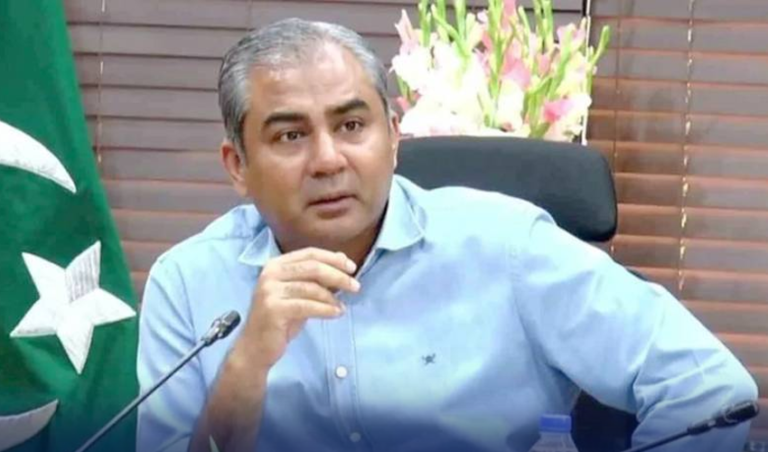
    LAHORE: Federal Interior Minister Mohsin Naqvi has ordered authorities at Allama Iqbal International Airport to speed up the immigration process after passengers complained about delays during his visit to the facility. Naqvi inspected immigration counters and spoke with officials and passengers to assess how long travellers were taking to clear immigration. Several passengers told him that the process was taking around 30 minutes and urged authorities to improve arrangements. Taking immediate notice of the complaints, the minister directed airport officials to keep all immigration counters operational so that passenger queues could be cleared more quickly. He assured travellers that the additional counters would help reduce waiting times and make the process more convenient. During the visit, Naqvi also acted on a passenger’s complaint that an agent had demanded money. He referred the matter to the Federal Investigation Agency (FIA) director and ordered action against the agent. The interior minister further directed authorities not to allow passengers to travel on incomplete documents. At the same time, he stressed that travellers carrying complete and valid documents should not be unnecessarily stopped from boarding their flights. Naqvi said modern technology had made immigration procedures more efficient but warned that strict action would continue against people attempting to travel using fake or fraudulent documents. The minister’s visit comes as authorities face growing pressure to improve passenger facilitation and reduce waiting times at Pakistan’s major international airports.

  • | |

    Flood alert as rivers rise, Sukkur, Marala and Bal…

    ISLAMABAD: Pakistan is bracing for another spell of flood-related risks as heavy monsoon rains, rising river levels and high water storage at major dams put several parts of the country on alert. The National Disaster Management Authority (NDMA), through its National Emergencies Operation Centre, has warned of possible low to moderate flooding in vulnerable areas of Khyber Pakhtunkhwa, Punjab, Balochistan and Azad Jammu and Kashmir. According to the latest assessment, the Indus River has already reached low flood levels at Kalabagh, Chashma, Taunsa and Guddu. While the Ravi, Chenab, Jhelum, Kabul and Sutlej are currently within normal ranges, officials expect water flows in several major rivers to increase on August 8 and 9. The NDMA has identified Sukkur on the Indus, Marala on the Chenab and Balloki on the Ravi as areas where low-level flooding could occur. The Jhelum downstream of Mangla Dam and the Kabul River near Adezai are also being closely monitored. Several districts in Khyber Pakhtunkhwa, including Chitral, Upper Dir, Abbottabad, Shangla, Khyber, Orakzai, Kohat, Tank and North and South Waziristan, face the possibility of low to moderate flooding. In AJK, Bagh and Kotli are also considered vulnerable, while Zhob, Musakhel, Kohlu, Barkhan and Dera Bugti in Balochistan remain under watch. Punjab is facing risks from hill torrents, particularly in Dera Ghazi Khan and Rajanpur. The NDMA has also warned of possible urban flooding in Rawalpindi, Gujranwala, Sialkot, Narowal, Faisalabad, Okara and Lahore. Water storage at the country’s major reservoirs remains high. Tarbela Dam’s water level has reached 1,548 feet, with storage at 97.94 per cent, compared with 95.98 per cent during the same period last year. Mangla Dam is at 1,205.2 feet, with storage recorded at 62.99 per cent, slightly above last year’s 62.80 per cent. Authorities have urged residents, tourists and travellers in mountainous and flood-prone areas to remain vigilant, as intense monsoon rainfall can trigger flash floods, landslides and debris flows with little warning. People have been advised to avoid riverbanks, streams and other vulnerable locations and to check weather forecasts and road conditions before travelling as the monsoon system continues to affect the country.