National

  • | |

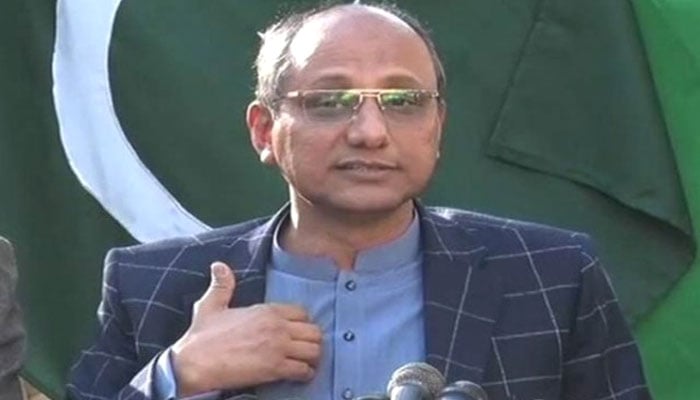
    Saeed Ghani says ethnic voting trend Is fading in …

    Pakistan Peoples Party (PPP) leader Saeed Ghani has said that the trend of securing votes in Karachi primarily on the basis of ethnicity is gradually losing its influence. Addressing a PPP public gathering in Union Council 8 of Korangi, Ghani said voters were increasingly making political choices based on a party’s performance, ideology and vision rather than ethnic identity. He claimed that the PPP government had carried out extensive development work in District Central and Korangi, arguing that these projects had strengthened the party’s connection with residents and addressed long-standing civic needs. Ghani said Karachi’s political landscape was changing as people became more focused on issues that directly affected their daily lives. According to him, voters now paid greater attention to development, public services and the performance of political representatives when deciding which party to support. The PPP leader maintained that political parties could no longer rely solely on traditional ethnic or linguistic loyalties to win elections. He said improved performance and engagement with local communities would play a more important role in shaping voters’ decisions in the future. Ghani also highlighted the importance of development initiatives in strengthening public confidence, saying continued work in areas such as infrastructure and civic facilities could help political parties earn lasting support from Karachi’s residents.

  • | |

    Quetta connectivity outage disrupts routine life

    QUETTA: A sudden suspension of mobile phone and internet services has disrupted daily activities across Quetta, leaving residents struggling to communicate, conduct business and access essential online services. The connectivity shutdown affected a wide range of people, including students, healthcare professionals, traders, delivery workers and journalists. Many residents were unable to make calls, send messages or use internet-based services. Students were among those facing major difficulties. Those relying on online classes and digital learning platforms could not access study material or communicate with teachers and classmates. The disruption also affected students preparing assignments and completing other academic tasks online. The outage created problems for healthcare workers as well. Doctors, medical staff and patients often depend on mobile phones and internet services for communication. The interruption made it harder to coordinate with colleagues, contact patients and exchange important medical information. Businesses and traders also faced disruptions. Many shops and small businesses now depend on digital payments, online orders and messaging applications. The suspension affected their ability to communicate with customers and manage routine transactions. Delivery riders were particularly affected because they rely heavily on mobile applications and phone calls to receive orders, locate customers and coordinate deliveries. The loss of connectivity made these routine tasks considerably more difficult. The shutdown also created challenges for journalists reporting from Quetta. Reporters faced difficulties contacting sources, verifying information and sending updates from the field. The lack of reliable communication can slow down coverage, particularly when events are developing quickly. For ordinary residents, the disruption meant difficulty staying in touch with family members, friends and colleagues. People who depend on mobile services for work and other essential activities were forced to deal with additional inconvenience.

  • | | |

    Rising fuel taxes add to motorists’ burden

    Consumers are facing a growing burden of taxes and other charges on petrol and high-speed diesel. Official documents show that the difference between the basic cost and retail price of petrol is Rs139.93 per litre. For high-speed diesel, the difference stands at Rs116.10 per litre. The documents show that the basic cost of one litre of petrol is Rs197.69. However, consumers are currently paying Rs327.62 per litre. Several taxes, levies and margins are included in the retail price. These charges significantly increase the amount paid by consumers at fuel stations. Petrol carries a petroleum levy of Rs80 per litre. A climate support levy of Rs5 is also imposed. The price also includes Rs21.24 in customs duty. An Inland Freight Equalisation Margin of Rs7.48 is charged per litre. Oil marketing companies receive a margin of Rs7.87 per litre. Dealers are paid a margin of Rs8.64 per litre. As a result, consumers pay Rs130.23 per litre in combined levies, taxes and margins on petrol. The situation is similar for high-speed diesel. Its basic cost is Rs264.76 per litre. However, its retail price has been fixed at Rs380.86 per litre. According to the documents, consumers pay around Rs116 per litre in levies, taxes and different margins on high-speed diesel. The petroleum levy on high-speed diesel is Rs74.28 per litre. The fuel also carries a climate support levy of Rs5 per litre. Customs duty accounts for another Rs15.68 per litre. The Inland Freight Equalisation Margin stands at Rs4.63. Oil marketing companies receive a margin of Rs7.87 per litre. Dealers receive Rs8.64 per litre as their margin. The figures show that taxes, levies and various margins form a significant portion of the final prices of both fuels. The additional charges directly affect motorists and consumers. They also increase transportation and operating costs for businesses that depend heavily on fuel. The rising cost of petrol and diesel can also put pressure on the prices of goods and services. Transport operators, traders and other businesses often pass higher fuel costs on to consumers.

  • | | |

    AJK polling enters third phase amid tight security

    MUZAFFARABAD: Voting in the third phase of the Azad Jammu and Kashmir general elections began on Monday in four constituencies of Bagh and Haveli districts. Polling started at 8am and will continue until 5pm. Security has been tightened across the constituencies due to concerns over possible clashes and disturbances. Authorities have declared most of the 803 polling stations sensitive or highly sensitive. A large security contingent has been deployed to maintain law and order. Around 10,300 additional security personnel have been sent to Bagh and Haveli. Officials said the deployment was aimed at providing a safe environment for voters and election staff. The third phase was originally planned for all 11 constituencies of Poonch Division. However, voting was restricted to Bagh and Haveli after authorities reviewed the security situation. The remaining seven constituencies are expected to be polled later this month. Election officials have indicated that voting could take place on August 20 or 21, depending on the security situation. The current phase has attracted considerable political attention. Several prominent leaders are contesting the four seats. AJK Prime Minister Faisal Mumtaz Rathore is seeking to retain his constituency. Two former prime ministers, Sardar Tanveer Ilyas and Sardar Attique Ahmed Khan, are also in the electoral race. A total of 460,371 voters are eligible to cast their ballots. They include 238,664 men and 221,707 women. The election is being held at 803 polling stations. These stations have 1,254 polling booths. As many as 82 candidates are competing in the four constituencies. LA-14 Dhirkot has the highest number of candidates. Thirty candidates are contesting the seat. LA-17 Haveli has nine candidates, the lowest number among the four constituencies. In LA-17 Haveli, Prime Minister Rathore is facing PML-N candidate Engineer Mohsin Aziz and independent contender Khawaja Tariq Saeed. Rathore and Saeed were previously political allies. They had reportedly agreed to contest the seat alternately. Their political relationship changed after Rathore became prime minister. Rathore sought Saeed’s withdrawal from the contest. Saeed refused to step aside. The two former allies are now competing against each other. Mohsin Aziz is also running an active campaign. His father, Chaudhry Mohammad Aziz, had won the constituency several times in the past. The PML-N candidate is expected to receive support from sections of the Gujjar community. Saeed is believed to have support among parts of the Kashmiri community and several smaller clans. Rathore has expressed confidence about retaining the seat. He has highlighted the performance of his government during his tenure. The constituency has also witnessed allegations of electoral irregularities. Claims circulated on social media about alleged manipulation by two presiding officers. Election officials rejected the allegations as presented on social media. However, they confirmed receiving complaints against the two officials. Both were subsequently removed from election duties. In LA-15 Wasti Bagh, former prime minister Sardar Tanveer Ilyas is facing several strong contenders. The candidates include PML-N nominee and former minister Mushtaq Ahmed Minhas. PPP candidate and sitting minister Sardar Ziaul Qamar is also contesting. Jamaat-i-Islami candidate retired Brigadier Dr Mohammad Khan is another key contender. Ilyas had initially announced a boycott of the third phase. He later reversed the decision and returned to the election campaign. He has described the contest as important for his political future. He has also linked his campaign to the possibility of securing a senior constitutional position after the election. Ilyas and Ziaul Qamar belong to the same Madiyal tribe. Brigadier Khan belongs to the Narma clan. He is backed by several influential Jamaat-i-Islami figures and local supporters. Mushtaq Minhas is benefiting from the PML-N’s position as the leading party in the elections held so far. The party has secured the largest number of seats in the previous phases and is expected to play a major role in forming the next government. In LA-16 Sharqi Bagh, former ministers Sardar Mir Akbar and Sardar Qamar Zaman are among the main contenders. Mir Akbar is contesting on the PML-N ticket. Qamar is representing the PPP. The LA-14 Dhirkot contest has also emerged as one of the closely watched races. Sardar Attique Ahmed Khan, head of the Muslim Conference, is seeking another victory from the constituency. He has represented the seat for several years and previously served as AJK prime minister. He is facing a strong challenge from Sajid Iqbal Abbasi of the Awam Dast-o-Bazu Party. Abbasi is a contractor and philanthropist. He has reportedly spent substantial personal resources on welfare and development projects in the constituency. His supporters believe his community work has helped him build a strong voter base. The contest has become more interesting because Attique and Abbasi belong to the same tribe. PML-N candidate Raja Faisal Azad and PPP nominee Raja Mubashar Ejaz are also contesting Dhirkot. However, the main competition is expected to remain between Attique and Abbasi. The results of the third phase could influence the political balance in AJK. The PML-N has already emerged as the strongest party in the earlier phases. The PPP and other political groups will now seek to strengthen their position in the remaining contests.

  • | | |

    Kuwait welcomes Pakistan-Saudi-Türkiye Makkah def…

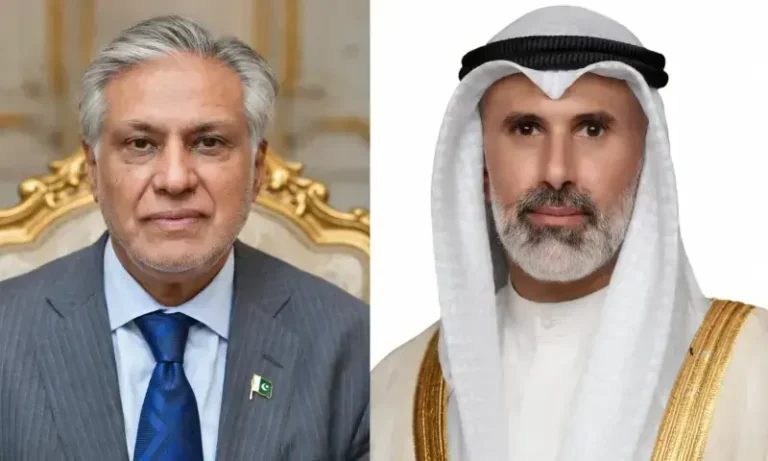
    ISLAMABAD: Kuwait has congratulated Pakistan on the signing of the Makkah Joint Defence Agreement with Saudi Arabia and Türkiye, signalling growing regional interest in the new security arrangement. Pakistan’s Deputy Prime Minister and Foreign Minister Ishaq Dar received a telephone call from Kuwaiti Foreign Minister Sheikh Jarrah Jaber Al-Ahmad Al-Sabah late on Sunday, during which the two officials discussed the agreement as well as the wider regional situation. According to Pakistan’s Foreign Office, the Kuwaiti foreign minister felicitated Dar on the agreement signed in Makkah on Friday. The two ministers also exchanged views on developments in the region, including the situation in occupied East Jerusalem. Their conversation also covered bilateral relations and ways to expand cooperation between Pakistan and Kuwait, particularly in investment and other key sectors. The officials also discussed follow-up to Sheikh Jarrah’s recent visit to Pakistan. “The two sides agreed to remain closely engaged,” the Foreign Office said. The development comes as Pakistan continues to explain the objectives and scope of the landmark defence pact, which brings Pakistan, Saudi Arabia and Türkiye closer together on security matters. Dar has stressed that the agreement is defensive in nature and is not directed against any particular country. Under the pact, an armed attack against any one of the three signatories would be treated as an attack against all three. The foreign minister said the arrangement was designed to strengthen collective deterrence while supporting regional peace, stability and security. He also maintained that the agreement was consistent with the right of individual and collective self-defence recognised under Article 51 of the United Nations Charter. Importantly, Dar clarified that the Makkah agreement does not replace or cancel existing bilateral or multilateral defence arrangements involving the three countries. The pact could also have a broader regional dimension. Dar said the agreement remains open to other countries in the region that are willing to respect its principles and resolve differences through dialogue, cooperation and peaceful means. His comments came amid reports that Egypt could potentially join the arrangement. Earlier, Dar also spoke with Canadian Foreign Minister Anita Anand, with the two officials discussing regional developments and the newly signed agreement. Pakistan has presented the Makkah accord as part of its broader foreign-policy objective of promoting regional stability and peaceful conflict resolution. With Kuwait now extending its congratulations, attention is increasingly turning to how the new defence framework could influence cooperation and security across the wider region.

  • | | |

    5 terrorists killed in Panjgur operation

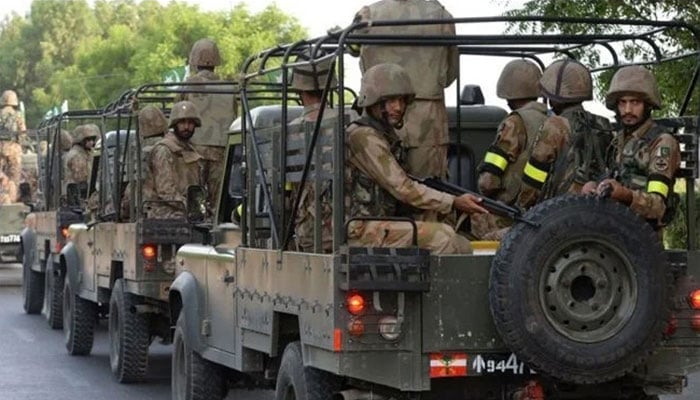
    Security forces have killed five suspected terrorists, including a key commander of Fitna al-Hindustan, during an intelligence-based operation in Balochistan’s Panjgur district, according to security sources. The operation took place in the Sarkini and Chhedgi areas of Panjgur under Operation Radd-ul-Fitna 3. Security forces conducted the raid after receiving intelligence about the presence of armed militants in the area. According to the sources, the operation resulted in the death of Fitna al-Hindustan commander Wazir, son of Jamal, along with four other militants. The security forces also recovered four motorcycles, machine guns, other heavy weapons and a large quantity of ammunition from the militants’ possession. Security sources said the militants had allegedly been involved in a range of criminal and terrorist activities, including extortion, kidnapping, robbery and attacks against traders and local residents. Their activities had created fear and insecurity among people in the area. Following the successful operation, security forces have launched a clearance operation in the surrounding areas to locate and eliminate other members of the militant network. Officials said the security operation would continue until the area was fully cleared of remaining threats. Interior Minister Mohsin Naqvi praised the security forces for their successful intelligence-based operation in Panjgur and commended their professional capabilities. Naqvi said the country’s security personnel remained a source of pride for the nation and were working to eliminate terrorism from Balochistan. He said the entire nation stood united against terrorism and supported the security forces in their efforts to restore peace and stability. The latest operation comes as security forces continue intelligence-led actions against militant groups across Balochistan as part of broader counterterrorism efforts.

  • | |

    Punjab bans manual receipts

    The Punjab Revenue Authority (PRA) has banned the issuance of handwritten or manual receipts by businesses operating in the province, according to a notification issued by the authority. Under the new directive, hotels, restaurants, coffee shops and marriage halls must use the Electronic Invoice Management System (EIMS) for issuing customer receipts. The system aims to ensure that businesses properly record their transactions and comply with provincial sales tax regulations. A PRA spokesperson said businesses covered by the directive must generate receipts through EIMS instead of providing handwritten slips or informal receipts to customers. The authority will monitor compliance and take action against businesses that fail to follow the requirement. Businesses that do not issue receipts through the EIMS may face fines ranging from Rs400,000 to Rs1 million, the spokesperson said. The PRA has also warned that repeated violations could lead to stricter action. Authorities may seal the business premises for up to one month if an establishment continues to disregard the rules despite previous enforcement measures. The move forms part of the Punjab government’s efforts to strengthen digital documentation of commercial transactions, improve tax compliance and reduce the possibility of underreporting sales and tax liabilities. The authority has urged businesses in the affected sectors to ensure that their invoicing systems comply with the new requirements to avoid financial penalties and other enforcement action.

  • | |

    Sindh High Court seeks record in Mustafa Amir murd…

    The Sindh High Court has expressed concern over delays in the trial of Mustafa Amir’s murder case. The court has sought the complete case record from the trial court. Mustafa Amir’s mother approached the high court against what she described as slow progress in the case. During the hearing, the court questioned why the proceedings had not moved forward. The court also asked whether Section 302 had been added to the case. The complainant’s lawyer said several cases were pending against suspect Armaghan. He alleged that different delaying tactics were being used to slow the proceedings. According to the lawyer, the defence had given several reasons for the delays. At times, disagreements reportedly occurred between the suspect and his parents. On other occasions, the defence lawyer did not appear in court. The suspect had also expressed a lack of confidence in the trial court. The court questioned why the cases were not proceeding despite the suspect being in jail. It observed that continued delays could keep him behind bars for years if he failed to secure bail. The complainant’s lawyer said the case was highly important. However, he claimed that the proceedings were mainly resulting in new hearing dates. The court said the trial should move forward quickly if the accused was using delaying tactics. It said the trial court and prosecution would be given directions to ensure the case proceeds without unnecessary delays. Justice Abdul Rahman also asked whether a medical board had been formed to conduct a psychological examination of the suspect. The complainant’s lawyer said the board had not yet been constituted. Justice Iqbal Kalhoro asked whether charges had been formally framed in the case. The court also directed the complainant to file an application seeking an early trial. The judges warned that prolonged delays could affect the evidence of witnesses. They said witnesses could forget important details if the proceedings remained pending for a long period. Meanwhile, CIA police have also started investigating the alleged drug-related aspect of the Mustafa Amir murder case. The complainant’s lawyer told the court that an application had already been submitted. He said the relevant material was available in the case diary. The court directed the authorities to submit a report at the next hearing. The report will include details of the case’s progress and the adjournments that have taken place. Speaking outside the Sindh High Court, Mustafa Amir’s mother said the case had been delayed for around one and a half years. She alleged that unnecessary delays were affecting the proceedings.

  • | |

    Rs65m Edhi robbery triggers outrage as workers dem…

    KARACHI: A Rs65 million robbery at an Edhi Foundation centre in Karachi has sparked protests, with families of affected employees demanding the recovery of the stolen money and the immediate arrest of those responsible. The demonstration was held outside the Karachi Press Club on Sunday, where relatives of Edhi Foundation workers, labour representatives, civil society activists and citizens gathered to voice their anger. Protesters carried placards and chanted slogans calling for justice and the safe recovery of funds intended to pay workers’ salaries. Edhi Foundation Chairman Faisal Edhi joined the protest and expressed concern over the financial hardship faced by employees from low-income families. He said the money stolen from the foundation’s Sohrab Goth centre had been kept specifically for salary payments. According to Faisal Edhi, four armed men entered the centre, took the Rs65 million and escaped. He said no arrests had been made so far and urged Sindh Chief Minister to take immediate action to ensure the suspects were arrested and the stolen funds recovered. “These workers come from poor families, and their households have been left without financial support,” Faisal Edhi said, assuring employees that the foundation would stand by them during the difficult situation. Human Rights Commission of Pakistan Chairman Asad Iqbal Butt also condemned the incident, saying the robbery at a humanitarian organisation raised serious concerns about security and law enforcement. He called on the Sindh government to provide immediate financial assistance to the Edhi Foundation and compensate it for the stolen amount. National Trade Union Federation Secretary General Nasir Mansoor, Pakistan Peoples Party Labour Bureau leader Habibuddin Junaidi and other representatives also attended the demonstration in support of the affected workers. Family members of the employees appealed to the provincial government to ensure that salaries were paid without further delay. They also demanded stronger security at Edhi Foundation centres across Karachi and called for the arrest and prosecution of the robbers. The protesters further questioned the Sindh police leadership over the lack of arrests and demanded an explanation for the delay in bringing the suspects to justice. The robbery has left many Edhi employees and their families facing immediate financial uncertainty, turning the incident into not only a major security concern but also a humanitarian issue for the workers who depend on their salaries to support their households.

  • | |

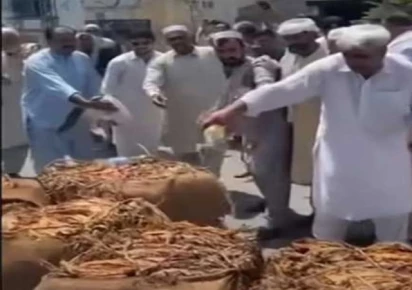
    Swabi Tobacco growers burn crop over disputed pric…

    SWABI: Tobacco growers in Swabi took to the streets on Monday, protesting against what they described as unfairly low purchase prices for their crop and demanding enforcement of the official rate announced by the Pakistan Tobacco Board. The protest was held outside the Swabi Press Club, where farmers were joined by political and social activists as well as members of the local community. Growers said they were being offered as little as Rs350 per kilogram, despite the official rate of Rs750 per kilogram. During the demonstration, tobacco grower and former ANP district general secretary Haji Tameez Khan burned around 500 kilograms of his tobacco crop to highlight the financial pressure facing farmers. Speaking at the protest, Khan said the cost of producing tobacco had reached nearly Rs750 per kilogram, making offers of Rs350 to Rs400 per kilogram unsustainable for growers. He said farmers had already suffered substantial losses in the previous season and were now struggling to clear debts owed to labourers and suppliers. Khan said tobacco was a major cash crop and generated significant revenue for the cigarette industry, yet farmers remained uncertain about receiving a price that covered their production costs. He warned that continued failure to address the issue could lead more growers to adopt similar forms of protest. The protesters also criticised the Pakistan Tobacco Board and tobacco companies for failing to resolve the pricing dispute. They called on the authorities to ensure that tobacco-buying companies adhere to the officially approved rate and protect farmers from losses. National Awami Party district chairman Masood Jabbar said tobacco was a key source of income for Swabi’s farming community. He warned that failure to address growers’ grievances could lead to wider protests across the district, with more farmers expected to join future demonstrations.