saeed ghani says
| |

Saeed Ghani says ethnic voting trend Is fading in …

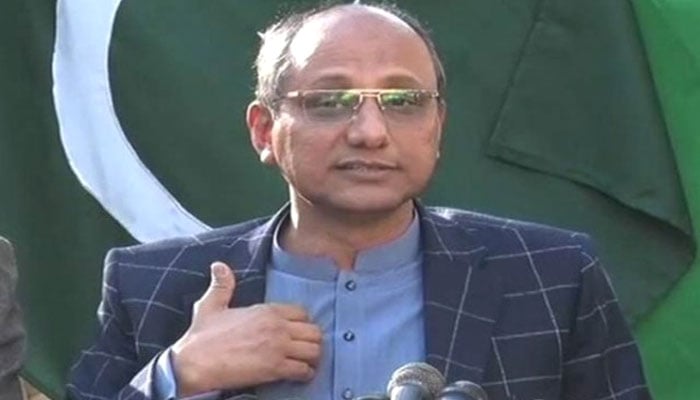
Pakistan Peoples Party (PPP) leader Saeed Ghani has said that the trend of securing votes in Karachi primarily on the basis of ethnicity is gradually losing its influence.

Addressing a PPP public gathering in Union Council 8 of Korangi, Ghani said voters were increasingly making political choices based on a party’s performance, ideology and vision rather than ethnic identity.

He claimed that the PPP government had carried out extensive development work in District Central and Korangi, arguing that these projects had strengthened the party’s connection with residents and addressed long-standing civic needs.

Ghani said Karachi’s political landscape was changing as people became more focused on issues that directly affected their daily lives. According to him, voters now paid greater attention to development, public services and the performance of political representatives when deciding which party to support.

The PPP leader maintained that political parties could no longer rely solely on traditional ethnic or linguistic loyalties to win elections. He said improved performance and engagement with local communities would play a more important role in shaping voters’ decisions in the future.

Ghani also highlighted the importance of development initiatives in strengthening public confidence, saying continued work in areas such as infrastructure and civic facilities could help political parties earn lasting support from Karachi’s residents.

Similar Posts

  • | |

    AJK assembly to elect prime minister on August 27

    MUZAFFARABAD: The Azad Jammu and Kashmir (AJK) Legislative Assembly will elect the new prime minister on August 27, with the Pakistan Muslim League-Nawaz (PML-N) in a strong position to secure the top office. The election schedule was issued on Wednesday, setting out the timeline for nomination papers, scrutiny, withdrawal and polling. Under the schedule, candidates will submit their nomination papers between 9:30am and 10:30am. The scrutiny process will take place from 10:30am to 10:45am. The list of candidates will be displayed at 11am. Candidates will have 30 minutes, from 11am to 11:30am, to withdraw their nominations. The final list of candidates will be issued at noon. Polling for the office of prime minister will begin at 12:30pm in the Legislative Assembly. The newly elected prime minister is scheduled to take the oath between 4pm and 5pm on the same day. The PML-N has nominated party president Shah Ghulam Qadir for the position. Based on the current strength of the assembly, he is considered the leading candidate for the office. The recent AJK elections were conducted in three phases between July 27 and August 10. Polling was held in 38 of the 45 directly contested constituencies. The PML-N emerged as the largest parliamentary group by winning 25 seats, while the Pakistan Peoples Party (PPP) secured 12 seats. The PML-N’s position was further strengthened after the lone elected member of the Awami Dast-o-Bazu party joined the ruling alliance. The PML-N currently has the backing of 32 members, compared with 14 members supporting the PPP. The numbers give the PML-N a clear advantage ahead of the prime ministerial election. The political balance was also reflected in the recent elections for the assembly’s top offices. PML-N AJK Secretary General Chaudhry Tariq Farooq was elected speaker with 32 votes. Ahmed Raza Qadri also secured 32 votes to become deputy speaker. PPP nominee Qasim Majid received 13 votes in the speaker’s election, while PPP candidate Amir Abdul Ghaffar Lone secured 13 votes in the deputy speaker’s contest. One PPP vote was declared invalid. The new assembly formally began its parliamentary term on August 24, when 46 newly elected members took their oaths. Outgoing Speaker Latif Akbar administered the oath during the inaugural sitting.

  • | |

    Interior Minister Talal Chaudhry says government&#…

      ISLAMABAD: Minister of State for Interior Talal Chaudhry has asserted that the ruling coalition will complete its full five-year constitutional term, even as he acknowledged that political speculation intensifies after the two-and-a-half-year mark. The minister addressed a range of pressing political questions, from the possibility of an opposition alliance to the stability of the current government. Chaudhry began by offering a pragmatic observation about Pakistan’s political rhythm. “After two and a half years, the countdown for any government effectively begins,” he said. However, he quickly dispelled any notion that this countdown implies an early end for the present administration. “The five years will be completed in full,” he emphasized, “and the coalition will continue to function in exactly the same manner as it does today.” He expressed complete confidence that the ruling alliance, led by the Pakistan Muslim League-Nawaz (PML-N), remains cohesive and resilient against any internal or external pressures. When questioned about the Pakistan Peoples Party (PPP) – a key coalition partner – Chaudhry delivered a nuanced response. He acknowledged that the PPP possesses a certain political awareness, or “ehsas”, regarding its current position within the alliance. He went further to state that this awareness will only deepen with time. “The PPP has this feeling today, and more feeling will also come,” he remarked, suggesting that as the government progresses, all partners will increasingly recognize the mutual benefits of remaining united. He framed this evolving consciousness not as a threat, but as a natural part of political maturity within a multi-party democratic setup. One of the most emphatic parts of Chaudhry’s interview was his categorical dismissal of any potential alliance between the PPP and the Pakistan Tehreek-e-Insaf (PTI). He stated, “There is no possibility of an alliance between the PPP and the PTI,” calling such speculation unfounded and politically motivated. He further reassured the public and investors alike that the government faces no existential threat from the opposition. According to the minister, the opposition remains fragmented and lacks the numerical strength or public mandate to destabilize the elected administration. Chaudhry then elevated his argument beyond mere political expediency, framing the continuity of the coalition as a national imperative. “It is in the best interest of Pakistan and the entire political system that the current alliance continues to function as it is,” he declared. He warned that any premature disruption of the government would create a dangerous power vacuum at a time when the country is grappling with economic stabilization, security challenges, and the need for institutional reforms. He called on all political stakeholders to prioritize national unity over partisan scores. The minister also took the opportunity to defend the government’s performance on key issues, including inflation management, anti-terrorism operations, and diplomatic engagements. While conceding that difficulties persist, he argued that the government has set the foundation for long-term recovery and that the opposition’s role should be constructive criticism rather than obstructionism. He urged political parties to rise above personal rivalries and focus on the greater good of the nation. In his concluding remarks, Talal Chaudhry made it clear that while the government is not afraid of early elections, it is also not shirking its responsibilities. “We were elected for five years, and we will serve for five years,” he said firmly. He expressed confidence that the public will ultimately judge this administration on its tangible achievements, not on opposition rhetoric. He dismissed the “two-and-a-half-year countdown” as a political cliché rather than a prophecy, reiterating that the coalition will not only survive but thrive until the very last day of its term. Overall, the interview projected an image of a self-assured government determined to see through its tenure, while subtly reminding its coalition partners – especially the PPP – that their long-term political futures are best secured within the existing fold. Whether this confidence will translate into political reality remains to be seen, but for now, Chaudhry’s message was unambiguous: the alliance is stable, the system is strong, and the government is here to stay.

  • | |

    Qalb conference urges youth to explore, connect an…

      MANSEHRA: Young people were encouraged to expand their perspectives, develop stronger social networks and turn their ideas into practical actions at the ninth annual Qalb Conference, held on August 8 and 9 at Sirin Resort in Naran. The two-day event was organised by the District Youth Office Mansehra in partnership with the Qalb Welfare Foundation under the Directorate of Youth Affairs, Government of Khyber Pakhtunkhwa. The conference brought together young people, volunteers, social workers and tourism enthusiasts from different parts of Pakistan to discuss youth leadership, community participation, volunteerism and the role of young people in the country’s social development. The conference was held under the theme “Explore, Connect, Change,” which encouraged participants to discover new opportunities, establish meaningful connections and contribute towards positive change in their communities. Adviser to the Chief Minister of Khyber Pakhtunkhwa for Sports and Youth Affairs, Taj Muhammad Khan Tarand, attended the event as the chief guest. Chairman of the District Development Advisory Committee (D-DAC) Mansehra Ikramullah Ghazi, along with other officials and guests, also participated in the gathering. Speaking at the conference, Mr Tarand highlighted the importance of young people in the social and economic development of the province. He said youth represented a valuable part of Khyber Pakhtunkhwa’s social capital and needed greater opportunities to improve their skills, exchange ideas and participate in productive activities. He also stressed that young people should be actively involved in community-based initiatives. According to him, meaningful participation could help youth transform their abilities, creativity and ideas into practical contributions that benefit society. Director Youth Affairs Khyber Pakhtunkhwa Abbas Khan Afridi said the Directorate was working to provide young people with platforms where they could strengthen leadership abilities, meet people from different backgrounds and discuss challenges faced by their communities. He emphasised that youth development should not be limited to occasional conferences or events. Instead, young people should have continuous opportunities for learning, collaboration, skill development and practical involvement in social activities. The conference took place in the scenic surroundings of Naran, providing participants with an environment that combined learning and interaction with personal development. Various activities focused on teamwork, leadership, communication and learning. Participants also shared their experiences in areas including social welfare, voluntary blood donation and tourism promotion. The presence of participants from different regions of Pakistan added diversity to the discussions and allowed attendees to exchange experiences and perspectives. Speakers and participants highlighted the potential of Pakistani youth to contribute to community welfare, promote volunteerism and create a more positive image of the country. The organisers said the main purpose of the conference was not only to encourage discussion but also to motivate young people to take practical steps towards bringing positive change to their communities. The two-day conference concluded on August 9 with participants reaffirming the message of “Explore, Connect, Change.” The event emphasised the importance of discovering new possibilities, building meaningful networks and empowering young people to play an active role in shaping a better future for Pakistan.

  • | | |

    Second phase of AJK elections kicks off

    The second phase of the Azad Jammu and Kashmir (AJK) general elections began on Sunday with polling underway in Muzaffarabad division and all 12 refugee constituencies located across Pakistan. Polling started at 8am and will continue until 5pm without any break. Election officials opened polling stations early in the morning, while voters began arriving to cast their ballots. Security personnel were deployed across sensitive areas to ensure a peaceful voting process. This phase of the elections covers nine constituencies in Muzaffarabad division. These include five constituencies in Muzaffarabad district and two each in Neelum and Jhelum Valley districts. At the same time, polling is also being held for 12 refugee constituencies representing refugees from the Kashmir Valley and Jammu region. More than 340 candidates are contesting the elections in this phase. According to election authorities, 207 candidates are in the race for the nine seats in Muzaffarabad division, while another 137 candidates are contesting the refugee constituencies. More than 809,000 registered voters are eligible to vote in Muzaffarabad division. The refugee constituencies have over 438,000 registered voters. Thousands of election staff have been deployed to conduct polling and oversee the voting process. Authorities have established 1,483 polling stations across Muzaffarabad division. Among them, 533 have been declared highly sensitive, 741 sensitive and 209 normal. In addition, 1,057 polling stations have been set up for refugee constituencies in different provinces. The refugee constituencies are spread across Punjab, Khyber Pakhtunkhwa, Sindh, Balochistan and Islamabad. Polling arrangements have been completed in all regions where registered refugee voters are residing. In Rawalpindi and Islamabad, around 27,000 registered voters are casting their votes for three refugee seats. Election officials have established 175 polling stations, while enhanced security has been provided at sensitive locations. In Gujrat, Wazirabad and Mandi Bahauddin, nearly 2,000 police personnel have been deployed to maintain law and order during polling. More than 50,000 registered voters are expected to elect their representative in the constituency. Polling is also taking place in Karachi and several districts of Sindh for two refugee constituencies. Election officials have made arrangements to facilitate voters across the province. In Balochistan, polling stations have been established in Quetta, Pishin, Qila Saifullah, Hub, Loralai, Sibi, Mastung, Zhob and Barkhan for refugee voters. Similar arrangements have been made in Khyber Pakhtunkhwa, particularly in Swat and Mansehra, where polling is being held for another refugee seat. The second phase of the elections is taking place amid heightened political tensions between the Pakistan Peoples Party (PPP) and the Pakistan Muslim League-Nawaz (PML-N). Relations between the coalition partners have remained strained since the first phase of polling, with both parties accusing each other of electoral irregularities in several constituencies. Senior leaders from both sides held multiple meetings in recent days in an effort to resolve the dispute. However, the talks failed to produce an agreement before the second phase of voting. The PPP has demanded legal action and re-polling in selected constituencies, while the PML-N has rejected allegations of organized rigging and maintained that the election results reflect the will of the voters. Meanwhile, Prime Minister Shehbaz Sharif met PML-N President Nawaz Sharif to review the political situation and discuss developments related to the AJK elections. Senior party leaders also attended the meeting and discussed the coalition’s future strategy.

  • | |

    Preparations complete for 2nd phase of AJK legisla…

    Lahore: Preparations are in full swing for the second phase of the elections to the Azad Jammu and Kashmir (AJK) Legislative Assembly, during which polling will also be held for 12 seats reserved for Kashmiri refugees residing in Pakistan. These refugees migrated to Pakistan following the Partition of British India in 1947 and continue to elect their representatives to the AJK Legislative Assembly. Election authorities are set to distribute polling materials and election-related equipment to polling staff today. Polling for two refugee constituencies in Lahore will take place on Sunday, with thousands of registered Kashmiri refugee voters expected to cast their ballots. LA-34 Jammu Constituency For LA-34 Jammu, a total of 15 polling stations have been established in Lahore. These include one male polling station, one female polling station, and 13 combined polling stations. The constituency has a total of 5,965 registered voters, comprising 3,175 male and 2,790 female voters. Election authorities have set up 30 polling booths to facilitate voting. A total of 17 candidates are contesting the seat. Among the prominent candidates, Bilal Mukhtar Butt of the Istehkam-e-Pakistan Party (IPP) has been allotted the Eagle symbol, Chaudhry Abdul Qadir Chauhan of the Pakistan Peoples Party (PPP) will contest on the Arrow symbol, Raja Muhammad Sohail of Jamaat-e-Islami has been assigned the Scales symbol, while Nasir Hussain Dar of the Pakistan Muslim League-Nawaz (PML-N) will contest on the Lion symbol. LA-41 Valley Constituency Polling for LA-41 Valley will also be held on Sunday. The constituency has 6,410 registered voters in total. Out of these, 5,708 voters are registered in Lahore, 583 in Sheikhupura, 117 in Nankana Sahib, and two voters in Kasur. Election authorities have established 19 polling stations for the constituency, including 13 in Lahore, four in Sheikhupura, and one each in Nankana Sahib and Kasur. Notably, a dedicated polling station has been established in Kasur for just two registered voters, ensuring that every eligible voter is able to exercise their constitutional right. A total of nine candidates are contesting the LA-41 seat. The main contest is expected between PML-N candidate Muhammad Amir Shah and independent candidate Saba Diwan, who is backed by Pakistan Tehreek-e-Insaf (PTI). PPP candidate Ghulam Abbas Mir and IPP candidate Saeed Ahmad Dar are also among the contestants. Polling across both constituencies will be held from 8:00 a.m. to 5:00 p.m. on Sunday, with election officials making arrangements to ensure a smooth, transparent, and peaceful voting process.

  • | | |

    Sindh assigns Rs8.5bn karachi projects to FWO

    The Sindh government has handed over four major infrastructure projects worth around Rs8.5 billion in Karachi to the Frontier Works Organisation (FWO), with work on three of the projects scheduled to begin on the ground in August. One of the key projects involves the construction of a flyover or interchange near the Northern Bypass on the M-9 Motorway. The Sindh Local Government Department has started the process of obtaining a no-objection certificate (NOC) from the National Highway Authority (NHA) because the project will be built over the motorway. The new interchange aims to improve traffic flow between Jinnah Avenue and Malir Cantonment Road and the routes connecting Hyderabad and Sohrab Goth Vegetable Market with Jinnah Avenue. Once completed, the facility will allow motorists to cross between both sides of the motorway without taking lengthy U-turns. Authorities have estimated the cost of this project at Rs2.3 billion. The budget also covers the rehabilitation and beautification of Jinnah Avenue, which is expected to improve the overall appearance and connectivity of the area. Another major project will see the construction of a flyover at an intersection on the M-9 near Al-Asif Square, providing a direct link to Abul Hasan Isphahani Road. The project carries an estimated cost of Rs2.1 billion, and construction is expected to formally begin in August. The flyover will facilitate traffic arriving from different directions and is expected to ease congestion at one of the city’s busy intersections. The government has also included the rehabilitation and improvement of roads along the Hawksbay corridor. The project covers an 8.5-kilometre stretch from the Y Junction to Machli Chowk, as well as the road extending from Machli Chowk towards Kaka Pir. Authorities have estimated the combined cost of these works at Rs4.162 billion, with construction also scheduled to begin in August. In addition, the Sindh government plans to launch work on another major project at the Malir Halt Underpass soon. The initiative forms part of the provincial government’s broader efforts to upgrade Karachi’s road infrastructure, improve traffic movement and address congestion at key entry and exit points across the city. The four projects, collectively worth approximately Rs8.5 billion, are expected to enhance connectivity and provide motorists with safer and more efficient routes across several important parts of Karachi.

Leave a Reply

Your email address will not be published. Required fields are marked *