heatwave breaks 1995
| |

UK heatwave breaks 1995 record as fifth heatwave h…

London: Britain is facing another spell of intense summer heat, with the country’s fifth heatwave of the year pushing the number of days above 30°C beyond a record set more than three decades ago.

According to media reports, temperatures have exceeded 30°C across several parts of the UK, adding to growing concerns over the health and environmental impact of prolonged hot weather.

The UK has now recorded 35 days with temperatures above 30°C this year, surpassing the 1995 total of 34 such days. The development highlights the unusual persistence of hot weather this summer.

The Met Office is forecasting further rises in temperatures, with East Anglia and southeast England expected to experience particularly hot conditions on Thursday. Temperatures in some areas could climb to around 36°C.

The prolonged heat has also prompted health authorities to issue warnings. The UK Health Security Agency has placed heat-health alerts across several regions, including London, the East Midlands, West Midlands, Yorkshire and the Humber, urging people to take precautions during the hottest periods.

The heat is not the only concern. Britain is also dealing with increasingly dry conditions, putting additional pressure on water supplies, agriculture and natural habitats. Government assessments have previously warned that repeated heatwaves and low rainfall are increasing drought risks, while wildfires have affected several parts of the country.

Dry grass, parched fields and shrinking water resources have become visible signs of the changing conditions. Authorities are urging residents to stay hydrated, avoid unnecessary exposure to extreme heat and remain cautious in areas vulnerable to fires.

With another hot spell approaching, attention is now focused on how long the latest heatwave will last — and whether Britain is heading toward another summer of unprecedented weather extremes.

Similar Posts

  • | | |

    The rise of Gen Z activism in India: A digital era…

    India’s younger generation is increasingly shaping public debate through digital platforms, demonstrating how social media has become a powerful tool for civic engagement and political participation. Unlike previous generations that relied heavily on traditional media or established political organizations, many members of Generation Z use platforms such as X, Instagram, and YouTube to share information, organize campaigns, and amplify public concerns. The growing influence of digital activism reflects a broader global trend. Young people are more connected than ever before, enabling them to discuss social, educational, economic, and political issues in real time. Social media allows ideas to spread rapidly, encourages public participation, and provides a space where diverse opinions can be expressed. As a result, youth-led campaigns can attract national and even international attention within a short period. Peaceful civic participation remains one of the most effective ways for citizens to express their views. When protests and public campaigns remain non-violent and focused on dialogue, they can encourage discussions between governments, institutions, and the public. Digital platforms complement these efforts by helping organizers communicate with supporters, share updates, and raise awareness about issues that affect young people. At the same time, digital activism also presents challenges. Information shared online may not always be accurate, and misinformation can spread quickly if claims are not verified. For this reason, responsible use of social media is essential. Participants, journalists, and readers alike should rely on credible sources, verify facts, and encourage respectful discussion rather than polarization. The increasing involvement of Gen Z in public affairs highlights the importance of youth voices in a democratic society. Young citizens often bring fresh perspectives on education, employment, governance, and social justice. Their participation can contribute to meaningful conversations about policy and accountability while encouraging greater civic engagement among their peers. As digital technology continues to evolve, the relationship between social media and public participation is likely to become even stronger. Governments, civil society organizations, and educational institutions will need to adapt to this changing landscape by promoting digital literacy, transparency, and constructive dialogue. Regardless of political viewpoints, the rise of digitally connected youth demonstrates that technology is transforming how citizens engage with public issues, making informed participation and responsible communication more important than ever.

  • | |

    Saudi-US talks focus on easing regional tensions, …

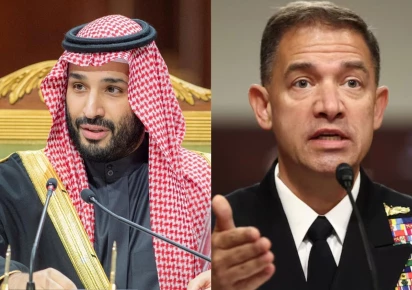
    Saudi Crown Prince Mohammed bin Salman and US Central Command chief Admiral Brad Cooper have held talks on regional security and efforts to ease tensions, as the conflict involving Iran continues to threaten stability and global energy supplies. According to Saudi state media, the two officials discussed defence cooperation between Riyadh and Washington, developments across the region and diplomatic efforts aimed at reducing tensions and strengthening security. The meeting came as concerns surrounding the Strait of Hormuz intensified. The strategic waterway remains a major route for global oil and liquefied natural gas shipments, and disruptions caused by the conflict have raised fears of further pressure on international energy markets. Saudi Arabia also announced the launch of a multinational defensive maritime alliance, with 13 countries joining the initiative. Representatives from 39 countries attended a planning meeting held at the Western Fleet Command in Jeddah, which Saudi authorities described as an important step towards putting the alliance into operation. Meanwhile, Washington has signalled that its economic and military pressure on Tehran could intensify. US Treasury Secretary Scott Bessent said the United States was preparing measures against Iran on a scale not previously seen in efforts to economically isolate a country. Bessent said the strategy would combine tougher economic restrictions with continued pressure surrounding the Strait of Hormuz. He indicated that further announcements could come next week as Washington seeks to increase pressure on Tehran. US Defence Secretary Pete Hegseth also said the US Navy could maintain a blockade of Iranian ports and shipping routes for an indefinite period, arguing that American forces had sufficient capacity to rotate vessels and sustain the operation. The standoff has already severely affected shipping through the Strait of Hormuz. Traffic has fallen sharply compared with levels recorded before the conflict, when roughly 130 to 140 vessels passed through the waterway each day. The decline has raised concerns about disruptions to international energy supplies. Tensions escalated further after two vessels operated by Abu Dhabi National Oil Company were reportedly attacked while travelling through the strait. The UAE condemned the incident and blamed Iran for the attacks. Iran has rejected US claims over control of the waterway and has indicated that normal shipping will not resume until its demands are addressed. Tehran has called for the removal of economic sanctions and the release of frozen Iranian assets. The conflict is also putting increasing pressure on global oil markets. The International Energy Agency has revised its estimate for the decline in global oil supply, projecting a reduction of about 4.3 million barrels per day this year, equivalent to around 4% of global supply. Although oil prices fell by more than 2% on Thursday amid concerns over weaker demand and rising US crude inventories, renewed reports of attacks linked to Iran-backed forces have continued to fuel uncertainty in energy markets. The economic consequences are spreading beyond the region, with economists warning that a prolonged conflict could significantly weaken global growth and increase the risk of recession in some economies. US President Donald Trump has faced growing domestic pressure to bring the conflict to an end as higher fuel prices weigh on American consumers and threaten his political standing ahead of November’s midterm elections. While Trump has repeatedly warned that military action against Iran could escalate, he has so far avoided deploying ground troops or launching attacks against some of the region’s most sensitive strategic targets. More recently, he has indicated a greater reliance on economic pressure. Hegseth, meanwhile, said Washington’s priority remained preventing Iran from acquiring a nuclear weapon and declined to comment on whether previous ceasefire decisions had been mistakes. With diplomatic efforts struggling and tensions around the Strait of Hormuz continuing, Saudi-US security coordination is emerging as a key factor in attempts to contain the wider regional crisis and protect vital international shipping routes.

  • | |

    Jacob Elordi details real snake ordeal in Euphoria scene

    Actor Jacob Elordi has candidly opened up about the grueling, claustrophobic reality behind filming his character Nate Jacobs’ gruesome death scene on Euphoria, revealing he spent two full days locked in a coffin with a live reptile. ​During an appearance on Jimmy Kimmel Live!, hosted by his co-star Colman Domingo, Elordi discussed the extreme measures taken by series creator Sam Levinson to write off his polarizing character. Nate’s storyline reached a dark conclusion when he was buried alive by a gangster over a debt and subsequently killed by a snake bite while confined underground. ​Elordi joked about the demanding nature of his final weeks on set, quipping that Levinson brought him back specifically to torture him after weeks of continuous physical beatings and action sequences. ​”I got locked in a coffin for two days straight with prosthetics and a fake tongue, and I couldn’t see out of my eyes. And then Sam put snakes into the coffin.” ​The sequence involved a real snake slithering down an air pipe into the tightly enclosed space. While the scene portrayed a deadly, aggressive rattlesnake on screen, the production actually utilized a docile boa constrictor fitted with a prosthetic rattler for the close-up interactions. ​Despite the sensory deprivation and intense claustrophobia required for the shot, Elordi admitted he surprisingly found the experience somewhat peaceful, noting that his serpentine scene partner proved far less threatening than anticipated. The actor revealed the snake was so calm that he had to physically nudge it during takes to get it to move and act menacingly for the camera. ​”He had a very nice personality. He was very docile and very sleepy… He just kept curling up at my feet.” ​Elordi added that performing non-verbal reactions while trapped in the box made the physical strain easier to manage, calling the dramatic send-off a unique and memorable way to close his time on the hit series.

  • |

    Emi Martinez hints at Argentina retirement after World Cup final

    BUENOS AIRES: Argentina goalkeeper Emiliano “Emi” Martinez has hinted that his international career could be nearing its end following Argentina’s heartbreaking 1-0 extra-time defeat to Spain in the FIFA World Cup 2026 final. The 33-year-old shot-stopper shared an emotional message on social media after the loss, suggesting it may be time to consider stepping away from international football after years of success with La Albiceleste. “I dreamed we’d win it again. I dreamed of bringing the trophy back to Argentina and making history once more,” Martinez wrote on Instagram. The Aston Villa goalkeeper admitted the defeat was one of the most painful moments of his career, saying he had given everything to help Argentina defend the world title they won in Qatar in 2022. “The truth is, the pain is hard to explain. There are many things to reflect on and how to move forward, and if it’s time to step aside,” he said, adding, “I’m so sorry. I truly tried my best to help my country and my teammates.” Martinez featured in all eight matches of Argentina’s World Cup campaign, keeping two clean sheets while conceding eight goals. Despite the final defeat, he was widely regarded as one of Argentina’s standout performers throughout the tournament. In the final against Spain, Martinez produced a series of crucial saves to keep his side in contention as Spain dominated large periods of the match. However, his resistance was finally broken in extra time when Ferran Torres scored the decisive goal in the 106th minute, sealing Spain’s victory. Martinez has earned 67 international caps since making his Argentina debut and has played a central role in one of the country’s most successful eras. Alongside the 2022 FIFA World Cup triumph, he helped Argentina win multiple major international titles and claimed the Golden Glove award as the best goalkeeper at the Qatar World Cup. The experienced goalkeeper has also been recognised at club level, winning the prestigious Yashin Trophy in both 2023 and 2024 as the world’s best goalkeeper. Although Martinez remains under contract with Aston Villa until 2029, he has recently been linked with a potential move to Italian giants Juventus. His emotional message has sparked speculation over whether the World Cup final marked the end of an unforgettable chapter with Argentina, though no official retirement decision has yet been announced.

  • |

    Delani century gives Sri Lanka 1-0 lead against Pakistan

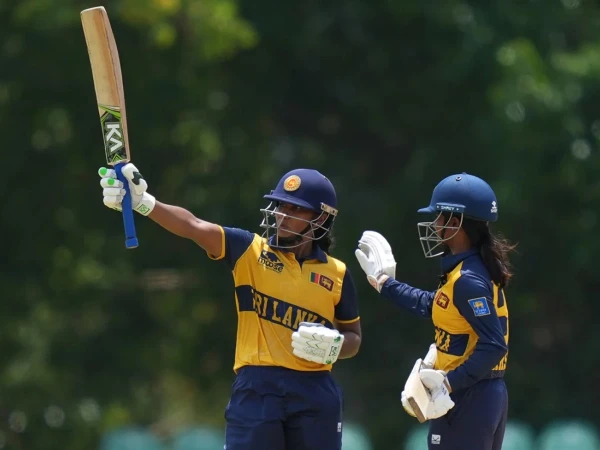
    DAMBULLA: A sensational unbeaten century from opener Ameesha Delani powered Sri Lanka Women to a commanding six-wicket victory over Pakistan Women in the opening T20 International of the three-match series on Friday, overshadowing impressive batting performances from Pakistan captain Muneeba Ali and Shawaal Zulfiqar. After winning the toss, Sri Lanka elected to bowl first, allowing Pakistan to make a confident start. Captain Muneeba Ali led from the front with a blistering 42 off just 24 balls, striking nine boundaries during a 66-run opening partnership that gave the visitors early momentum. Following Muneeba’s dismissal, Shawaal Zulfiqar anchored the innings with a composed 63 runs, while Iman Nasir contributed 21 during a valuable 61-run stand for the second wicket. However, Pakistan lost wickets at regular intervals in the closing overs and finished on 176 for 7 from their allotted 20 overs. For Sri Lanka, Kavisha Dilhari claimed two wickets, while Kavya Kavindi, Sugandika Kumari and Chamudi Praboda picked up one wicket each to restrict Pakistan from crossing the 180-run mark. In reply, Sri Lanka produced an even stronger batting display. Opener Ameesha Delani stole the spotlight with a magnificent unbeaten 101, combining aggressive stroke play with calm composure to guide her team to victory with an over to spare. Sri Lankan captain Chamari Athapaththu provided excellent support with 39 runs as the hosts comfortably chased down the 177-run target, finishing on 177 for 4 in 19 overs. Pakistan’s bowlers struggled to contain the Sri Lankan batters despite efforts from Nashra Sandhu, who claimed two wickets. Humna Bilal and Umm-e-Hani took one wicket each but were unable to prevent the hosts from taking a 1-0 lead in the series. The defeat leaves Pakistan needing a strong response in the second T20I, scheduled for August 2, to keep the series alive before the final match on August 4. Sri Lanka, meanwhile, will head into the next game full of confidence after a dominant all-round performance led by Delani’s match-winning century.

  • | | |

    Pakistan seeks to revive Iran-US mediation efforts

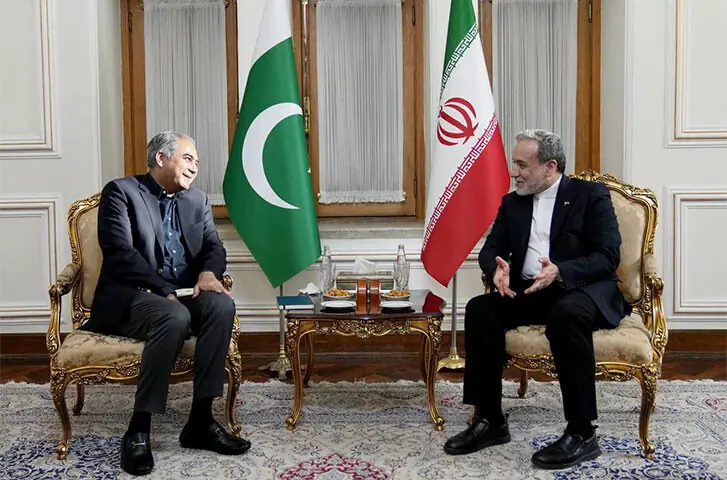
    ISLAMABAD: Pakistan is making fresh diplomatic efforts to revive its role as a mediator between Iran and the United States. Interior Minister Mohsin Naqvi travelled to Tehran on Tuesday for talks with senior Iranian officials. During his visit, he met Iranian Foreign Minister Abbas Araghchi and President Masoud Pezeshkian. The visit is aimed at keeping Pakistan’s mediation channel active. Islamabad is seeking progress on the Islamabad Memorandum of Understanding (MoU), which emerged from earlier efforts to ease tensions between Iran and the United States. Naqvi was received in Tehran by Iranian Interior Minister Eskandar Momeni. He later held discussions with Araghchi on bilateral relations and regional developments. Pakistan’s diplomatic efforts had slowed after Oman became more directly involved in talks concerning arrangements for navigation through the Strait of Hormuz. However, recent contacts between Oman and Iran appear to have created an opportunity for Islamabad to renew its broader mediation initiative. A diplomatic source said Pakistan wants to follow up on the Islamabad MoU and encourage both sides to return to a wider diplomatic process. The situation around the Strait of Hormuz remains particularly sensitive. The waterway is vital for international energy and trade routes. Iran has maintained that the Islamabad MoU remains the key framework for resolving the wider dispute. Tehran has also linked the full reopening of the Strait of Hormuz to implementation of the commitments contained in the agreement. Iran and Oman have been discussing arrangements for safer passage through the strategic waterway. Their discussions include possible shipping routes and mechanisms for managing navigation. However, Tehran has indicated that any understanding with Oman would initially address technical matters. It would not necessarily represent a complete resolution of the wider dispute. Iran has also called for concrete assurances from Washington before moving towards the next stage of negotiations. Tehran wants guarantees that can be verified rather than verbal commitments. Pakistan has continued to encourage dialogue between the two sides. Defence Minister Khawaja Asif also indicated that Washington and Tehran could be moving closer to an understanding. He said recent signals suggested that the two countries were again moving towards a possible peace arrangement or deal. Meanwhile, Pakistan has invited Iranian Foreign Minister Araghchi and Iranian Parliament Speaker Bagher Ghalibaf to visit Islamabad. Iranian officials have said the visit would take place at an appropriate time. Naqvi’s trip to Tehran is therefore significant because Islamabad is maintaining direct engagement instead of waiting for the Iranian delegation to visit Pakistan. During his meeting with President Pezeshkian, Naqvi described Pakistan-Iran relations as strong and longstanding. He conveyed Islamabad’s intention to further strengthen ties with Tehran. Pezeshkian also stressed the importance of bilateral relations. He said stronger cooperation between Pakistan and Iran could serve their national interests and contribute to regional stability. The discussions come amid broader diplomatic and security developments in the region. Pakistan recently signed a trilateral defence agreement with Saudi Arabia and Turkiye. Islamabad has maintained that the arrangement is defensive and is not directed against any country. Deputy Prime Minister and Foreign Minister Ishaq Dar also discussed the agreement with his Iranian counterpart. He briefed Araghchi on its objectives and stressed its focus on strategic cooperation and regional peace. At the same time, US President Donald Trump has adopted a tougher tone towards Iran’s negotiating team. Trump described Iranian negotiators as difficult and accused them of making commitments privately and later presenting them differently in public. He also warned that Iran’s economic problems and inflation were becoming increasingly difficult to sustain. Trump said Washington could continue applying economic pressure on Tehran. He also suggested that the United States could take stronger measures if necessary. The contrasting positions underline the difficulties facing diplomatic efforts. Pakistan is now attempting to keep communication channels open with Tehran while encouraging a broader political process involving Iran and the United States.

Leave a Reply

Your email address will not be published. Required fields are marked *