hec chief calls
| |

HEC Chief calls for education, research to become …

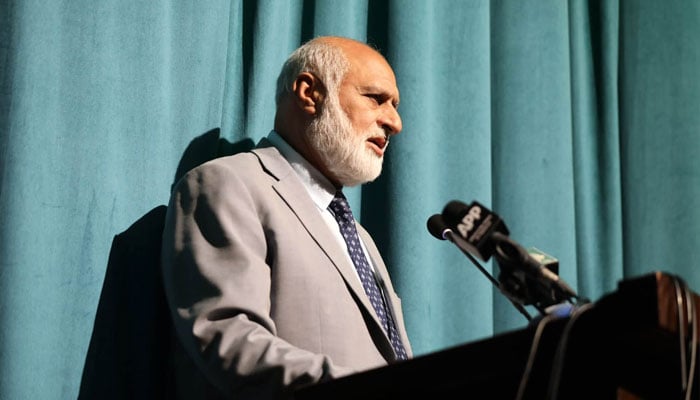
ISLAMABAD: Higher Education Commission (HEC) Chairman Dr Niaz Ahmed has called for a major shift in Pakistan’s approach to higher education and research, saying universities must become central to the country’s economic, technological and social development.

Speaking about his recent nearly two-week visit to China, Dr Niaz Ahmed said Pakistan could learn valuable lessons from China’s development model, particularly its close cooperation among universities, industry, research institutions and the government.

The HEC chairman visited China with a delegation of senior vice chancellors from leading Pakistani universities on the instructions of the prime minister and at the invitation of Chinese education authorities and academic institutions. During the visit, Pakistani and Chinese universities discussed joint and dual-degree programmes, faculty and student exchanges, collaborative research and greater opportunities for Pakistani students to pursue higher education in China.

He said efforts were also underway to strengthen the CPEC Consortium of Universities and establish 10 Sinology Centres in Pakistan. The Higher Education Commission has been asked to nominate 10 Pakistani universities for the initiative.

Dr Niaz said his meetings with Chinese universities and research organisations showed that universities there function as more than degree-awarding institutions. They are closely connected with industry and government, helping develop new technologies, solve industrial problems, support startups and prepare skilled workers for emerging economic needs.

He noted that research in China is increasingly focused on turning knowledge into practical solutions, new products and economic opportunities rather than simply increasing the number of research publications.

The HEC chairman said China’s rapid progress in artificial intelligence, robotics, automation and digital technology was particularly striking. These technologies, he observed, have moved beyond laboratories and are now being used in factories, transportation, hotels and urban services.

He also highlighted China’s rapidly expanding electric vehicle industry, saying the transformation demonstrated the importance of developing technology rather than simply consuming it. According to him, countries that build their own technological capabilities will be better positioned to compete in the future.

Dr Niaz attributed China’s progress not only to investment and technology but also to discipline, punctuality, hard work and a clear national vision. He said the country’s experience demonstrated how coordinated efforts by government institutions, universities, industries and citizens could produce lasting national development.

Reflecting on Pakistan’s traditional focus on Western academic models, he said his visit had strengthened his belief that China offers an important Asian development experience that Pakistan should study carefully. He stressed, however, that Pakistan should adapt successful practices to its own circumstances rather than simply copy the Chinese system.

The HEC chairman said Pakistani universities now needed to examine whether they were merely producing degree holders or actually developing human capital capable of contributing to the national economy.

He called for curricula to be aligned with future employment needs, with greater emphasis on artificial intelligence, data science, automation and other emerging fields. Universities, he said, must also strengthen faculty capabilities and build closer relationships with industry.

Dr Niaz further stressed that research should focus on solving national and industrial problems, developing technologies and creating business opportunities rather than remaining limited to academic publications.

After returning from China, he said, he shared his observations with university leaders across Punjab, Sindh, Balochistan, Azad Jammu and Kashmir, Gilgit-Baltistan and the federal capital. The objective was to encourage universities to reconsider their approaches to curriculum development, research, faculty training and industry partnerships.

He said Pakistan already possesses a large network of universities, talented researchers and a young population, but these strengths need to be supported by a clear national strategy and sustained investment.

“The real strength of a nation lies not only in roads, buildings and factories, but also in knowledge and human capital,” Dr Niaz said, stressing that Pakistan’s journey towards developed-country status must begin in university classrooms and research laboratories and eventually translate into stronger industries, a more productive economy and greater national prosperity.


Similar Posts

  • |

    Brad Pitt reflects on grief a year after mother’s death

    Brad Pitt is opening up about the loss of his mother, Jane Pitt, who passed away in August 2025. A year on, the actor is reflecting on how deeply that grief has shaped him. Speaking to Esquire, Pitt described the past year as one marked by a persistent sense of emptiness. He said the loss left him grappling with feelings he’s still working to fully understand. The Oscar-winning actor described grief as one of the most humbling emotions a person can experience. He said even that description felt like it fell short of capturing the weight of it. Pitt went further, calling loss one of the most difficult things anyone can endure. He said the isolation that often follows can feel like an especially painful kind of struggle. Since his mother’s passing, Pitt has made an effort to stay close to his father, William, who lives in Missouri. He revealed that he’s been visiting him regularly ever since. Despite spending time together, Pitt admitted that he and his father rarely discuss the loss they now share. Grief, for them, seems to exist more in shared silence than open conversation. Pitt acknowledged that there’s no straightforward way to move past something like this. He said finding a way to truly overcome it still feels largely out of reach. He explained that the real challenge lies in holding two conflicting truths at once. According to Pitt, grief leaves a lasting void, but it can also uncover something unexpectedly meaningful within that pain. He described the experience as a kind of aching beauty, difficult but not without value. For Pitt, surviving grief doesn’t mean forgetting it, but learning to carry both the loss and what it revealed. His comments offer a rare, personal look into how the actor has been processing one of the most difficult years of his life. A year after losing his mother, Pitt appears to be finding a way to hold onto both the pain and the perspective it’s brought him.

  • |

    China proposes stringent cyberbullying legislation targeting AI abuse and platform accountability

    The Cyberspace Administration of China has released a draft law aimed at curbing cyberbullying, specifically addressing artificial intelligence-enabled harassment, deepfakes, and automated online abuse across the country’s digital platforms. The proposed legislation, which is open for public consultation until late August, introduces strict identity verification requirements for internet users before they can post content or access messaging services. Additionally, the measures place direct legal and operational responsibility on technology firms and artificial intelligence service providers, requiring them to actively trace, moderate, and remove harmful synthetic content or face severe administrative penalties, including fines reaching up to ten million yuan, platform suspensions, or license revocations. Under the proposed legal framework, judicial and law enforcement authorities will enforce criminal liability for individuals and entities using automated tools, coordinated troll networks, or synthetic media to conduct doxxing, defamation, or targeted harassment campaigns. The scope of the law extends to overseas organisations targeting individuals within China, whilst also mandating compulsory anti-cyberbullying education across schools and educational institutions. By targeting AI-driven psychological harm and emotional manipulation, regulators aim to establish robust emergency intervention mechanisms to protect minors and vulnerable demographics from emerging forms of digital harassment.

  • |

    Pakistan crashes out of World Junior Squash Championship

    Pakistan’s hopes of securing an individual title at the World Junior Squash Championships came to an end after all four of its players were eliminated from the tournament, with Nauman Khan becoming the last Pakistani to exit following a straight-games defeat to Egypt’s top seed and defending champion Mohamed Zakaria. The 12-day championship, currently underway in Niagara-on-the-Lake, Canada, saw Nauman face one of the tournament’s toughest opponents in the pre-quarterfinals. Zakaria displayed his class from the opening game, comfortably defeating the Pakistani youngster 11-4, 11-5, 11-6 to book his place in the quarterfinals. Nauman had carried Pakistan’s final hopes in the individual competition after progressing further than his teammates, but the Egyptian star’s experience and attacking game proved too strong on the day. Earlier in the tournament, Pakistan’s Mohammad Umair Arif, Yahya Khan, and Abdullah Nawaz were all knocked out in the Round of 32, leaving Nauman as the country’s lone remaining contender. His defeat officially ended Pakistan’s campaign in the individual event without a player reaching the medal rounds. Egypt once again underlined its dominance in world junior squash, with defending champion Zakaria continuing his title defense in impressive fashion. The youngster controlled every stage of the match, forcing errors from Nauman and maintaining his unbeaten run in the competition. Although the individual event has ended in disappointment for Pakistan, attention now shifts to the team competition, which is scheduled to begin on July 26. The team event offers Pakistan another opportunity to make an impact on the international stage and restore confidence after a difficult singles campaign. Coaches are expected to regroup the squad and focus on collective performances as the tournament enters its next phase. Pakistan has a proud history in world squash, having produced legendary champions who once dominated the sport. While recent years have brought challenges at the international level, the country’s young players continue to gain valuable exposure by competing against the world’s best juniors. The upcoming team event will provide another chance for Pakistan’s rising talents to test themselves against leading squash nations and finish the championship on a stronger note after an early exit from the individual competition.

  • | |

    Pakistan goods transporters association declares i…

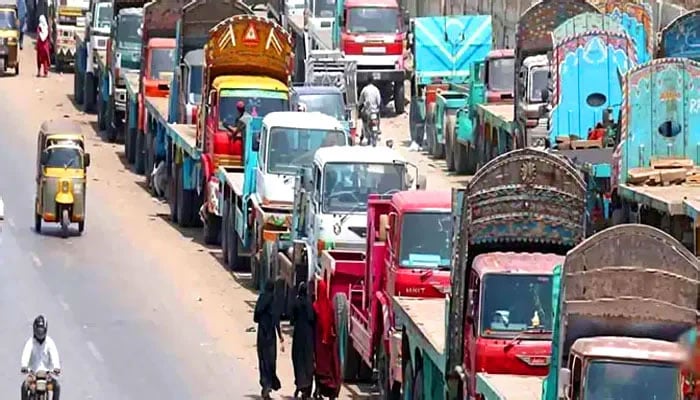
      The Pakistan Goods Transporters Association has raised serious concerns over the volatile and unpredictable daily adjustments in petroleum prices, stating that such frequent fluctuations make it impossible for the transport sector to continue operations smoothly. In a press conference held in Lahore, association officials, led by President Nabeel Mahmood Tariq, articulated a series of demands and grievances that have been mounting over recent months, warning that without immediate government intervention, the entire logistics and supply chain network could face severe disruption. Addressing the media alongside other senior office-bearers of the All Pakistan Goods Transporters Association, Nabeel Mahmood Tariq emphasized that the transportation industry is the backbone of the national economy, responsible for moving essential commodities, industrial raw materials, and consumer goods across the length and breadth of the country. However, he argued that the current pricing mechanism for petroleum products—which has seen almost daily revisions—has created an environment of extreme uncertainty for fleet operators. Unlike larger corporate entities, most truck owners and small transport companies operate on thin profit margins, and without a stable fuel pricing framework, they are unable to quote competitive rates to clients or plan their operational budgets effectively. Tariq pointed out that many transporters have already started grounding their vehicles, as each trip now carries the risk of financial loss if fuel prices rise unexpectedly mid-journey. Beyond fuel prices, the association president laid out a comprehensive list of demands aimed at reducing the financial burden on the sector. First and foremost, he called for an immediate end to unnecessary customs checking at various inter-provincial checkpoints. According to Tariq, these intrusive and repetitive inspections not only cause long delays—sometimes stretching into hours—but also open the door to harassment and bribery, which further inflate the cost of doing business. He urged the federal and provincial governments to streamline customs procedures and adopt a more efficient, technology-driven system that would expedite the movement of goods without compromising security or revenue collection. Another major point of contention raised by Tariq was the recent increase in toll taxes on highways and motorways. He demanded that this hike be rolled back completely, arguing that transporters are already struggling with rising maintenance costs, spare part prices, and tyre rates. The additional toll burden, he said, is simply unsustainable and forces many operators to take longer, less safe alternative routes, which ultimately hurts the overall efficiency of freight movement. Turning his attention to provincial policies, particularly in Punjab, Tariq called for the establishment of new, modern truck terminals across the province. He noted that existing truck stands and loading points are outdated, overcrowded, and lack basic amenities for drivers and helpers. New truck yards, equipped with proper parking, resting areas, workshops, and loading/unloading facilities, would not only improve working conditions but also reduce traffic congestion in urban centers. He also strongly condemned the 300 percent increase in token tax imposed on commercial vehicles in Punjab, labeling it as punitive and counterproductive. He demanded that this excessive tax hike be withdrawn immediately, asserting that it disproportionately affects small owner-operators who form the majority of the association’s membership. In a significant announcement, Nabeel Mahmood Tariq declared that the association fully supports the wheel-jam strike (hunger strike) called for August 8, which has been organized by various transport unions across the country to pressure the government into addressing these long-standing issues. He clarified that this is not a political move but a last-resort measure to draw attention to the existential crisis facing the transport industry. He warned that if the government fails to respond positively before that date, thousands of trucks, trailers, and tankers will park on the roads, effectively paralyzing the movement of food, medicine, fuel, and industrial goods. Such a strike, he cautioned, would have catastrophic consequences for an already fragile economy, leading to shortages, price hikes, and factory closures. Concluding his address, Tariq appealed to Prime Minister Shehbaz Sharif and the chief ministers of all provinces to personally intervene and hold urgent consultations with transport representatives. He reiterated that the industry is not asking for subsidies or charity, but merely for a predictable policy environment, fair taxation, and the elimination of corrupt practices at checkpoints. He expressed hope that the government would act wisely and avert a crisis that benefits no one except speculators and hoarders. The press conference ended with a unanimous resolution passed by the association leaders, vowing to continue their struggle peacefully but firmly until all their legitimate demands are met. The coming days, they warned, will be decisive for the future of Pakistan’s transport sector and, by extension, its entire supply chain.

  • |

    PSX rallies over 400 points in early trading as investor sentiment improves

    KARACHI: Buying activity returned to the Pakistan Stock Exchange (PSX) on Monday, with the benchmark KSE-100 Index gaining more than 400 points during the opening phase of trading as investors showed renewed interest in major sectors. At around 9:50am, the benchmark index was trading at 181,880.56 points, recording an increase of 450.54 points, or 0.25%, compared with the previous close. The positive momentum was supported by buying across several key sectors, including automobile assemblers, cement companies, commercial banks, oil and gas exploration firms, oil marketing companies (OMCs) and refineries. Several heavyweight stocks also contributed to the upward movement. HUBCO, ARL, OGDC, POL, PPL, PSO, HBL, MCB, MEBL and NBP were among the prominent index constituents trading in positive territory during the early session. The latest gains came after the stock market delivered a strong performance last week, when easing geopolitical concerns helped improve investor confidence. Developments surrounding diplomatic efforts between Iran and Oman regarding shipping activity through the strategically important Strait of Hormuz, coupled with expectations of a possible wider understanding between the United States and Iran, provided some relief to financial markets. The KSE-100 Index had climbed 5,335.89 points, or around 3%, during the previous week, closing at 181,430.02 points. Global markets provide additional support The positive trend at the PSX was also in line with broader gains across Asian equity markets. Regional stocks moved higher on Monday after Wall Street ended the previous session at record levels, supported by weaker-than-expected US employment data. The softer US jobs figures reduced expectations of an immediate increase in borrowing costs, encouraging investors to take on more risk. However, uncertainty surrounding diplomatic developments in the Gulf continued to influence energy markets. Oil prices edged higher as concerns persisted over the movement of ships through the Strait of Hormuz, one of the world’s most important routes for global energy supplies. Iran said on Sunday that discussions with Oman over arrangements for new shipping lanes through the Strait of Hormuz were nearing completion. However, Tehran maintained that the waterway would not fully return to normal operations until the United States met additional conditions. The uncertainty contributed to a rise in international crude prices. Brent crude futures increased 0.9% to $84.32 per barrel, while US West Texas Intermediate crude gained 0.7% to $78.74 per barrel. US inflation data in focus Investors are also closely watching the upcoming US consumer inflation data, which could influence expectations regarding the Federal Reserve’s monetary policy. The US July consumer price report, due on Wednesday, is expected to show a 0.1% increase in headline inflation and a 0.2% rise in core inflation, according to market expectations. A stronger-than-anticipated inflation reading could revive concerns that the Federal Reserve may consider raising interest rates in the coming months. Conversely, a softer reading could strengthen expectations of a more accommodative monetary policy. Market pricing currently indicates that expectations for a September rate move have weakened. The probability of such a move has fallen to roughly 44%, compared with about 67% a week earlier. The decline in expectations for higher interest rates supported US Treasury bonds on Friday and helped major Wall Street indices finish at record levels. Asian equities follow Wall Street Asian markets broadly followed the positive lead from the United States on Monday. Japan’s Nikkei 225 advanced around 0.6%, while South Korea’s benchmark index gained approximately 0.5%. Meanwhile, MSCI’s broadest index of Asia-Pacific shares excluding Japan rose about 0.3%. For Pakistan’s equity market, the combination of stronger global sentiment, improved geopolitical expectations and renewed buying in heavyweight stocks provided support at the start of Monday’s session.

  • |

    Thousands return home in Spain as new heatwave heightens wildfire threat

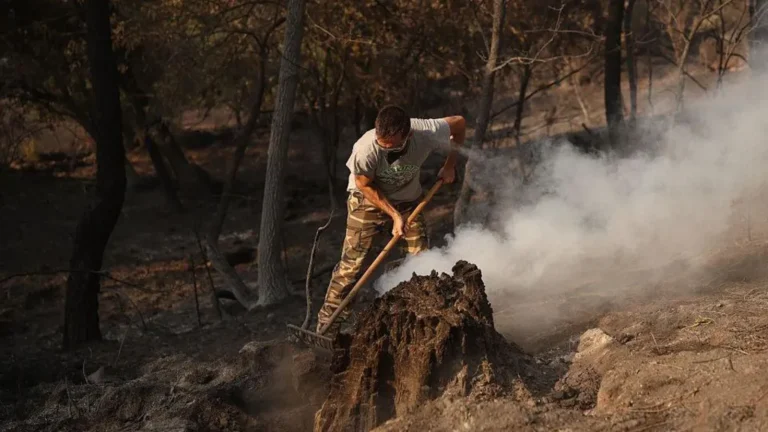
    Thousands of residents have been allowed to return to their homes after authorities eased evacuation orders in several parts of Spain affected by devastating wildfires. However, officials are warning that a new heatwave expected to hit the country could reignite existing fires and create fresh emergencies as firefighters continue battling dangerous conditions. Restrictions have been lifted in areas across Toledo, Madrid, Ávila and Castellón, allowing many displaced families to go back home after days of uncertainty. In the Madrid region alone, around 24,000 people have been permitted to return, while lockdown measures affecting another 20,000 residents have also been removed. Despite the progress, several fires remain active. One of the biggest concerns is the wildfire near Burgohondo, about 150 kilometers west of Madrid, which has already burned more than 43,000 hectares of land. Authorities say it is now considered the largest wildfire ever recorded in Spain. Across the country, more than 207,000 hectares have been destroyed by wildfires so far this year. Spanish Prime Minister Pedro Sánchez said the coming hours would be critical as firefighters work to bring the remaining blazes under control. He noted that conditions had improved but warned that rising temperatures, low humidity and strong winds could quickly reverse the progress made in recent days. Emergency crews remain on high alert as Spain prepares for its fourth major heatwave of the summer. Fire officials said the Burgohondo blaze had not spread overnight, but they remain concerned that extreme weather could cause new flare ups. Firefighters are focusing on securing a perimeter stretching about 180 kilometers to prevent the flames from spreading into nearby communities and forests. Among those returning home are residents of the towns of Navas del Rey and Chapinería, who had been evacuated earlier in the week. Many families have found damaged homes, destroyed property and lost livelihoods. Chapinería Mayor Lucía Moya said the community faces a long recovery, with many residents needing support to rebuild their lives after the disaster. Some evacuees are still unable to return. Around 300 people displaced from the nearby Tiétar Valley continue to stay in temporary accommodation provided by local authorities. Officials have pledged to maintain support services until it is safe for everyone to go home. While no deaths have been reported in the fires near Madrid or Castellón, authorities confirmed that a woman injured in an earlier wildfire in Almería has died in hospital. The Almería fires, which occurred earlier this month, claimed the lives of 14 people, including citizens of the United Kingdom, Belgium, the United States, France and Spain. Wildfires are also creating challenges elsewhere in Europe. In neighboring France, firefighters continue to monitor large blazes in the Gironde region, where several flare ups have occurred despite efforts to stabilize the fires. Authorities have warned that temperatures could reach 41 degrees Celsius, with dry winds increasing the risk of further outbreaks. Special protection measures have also been introduced around defense and aerospace facilities located in the affected area. Portugal and Greece are facing similar threats. Emergency crews in northern Portugal are working to contain an active wildfire near Valpaços while protecting nearby infrastructure, including a water treatment plant and a gas storage facility. In Greece, firefighters are responding to blazes on the island of Paros and in the southern mainland region of Trifylia. Scientists continue to warn that climate change is contributing to longer and more intense heatwaves across Europe. Rising temperatures, prolonged dry conditions and stronger winds have increased the frequency and severity of wildfires, making firefighting operations more difficult and placing greater pressure on communities across the continent. Authorities are urging residents in high risk areas to remain cautious as extreme weather conditions are expected to continue in the coming days.

Leave a Reply

Your email address will not be published. Required fields are marked *