टेक्नोलॉजी

  • |

    Snapchat cracks down on fully AI-made videos flooding Spotlight

    Snapchat is now drawing a clear line between videos made by humans and those made entirely by machines. The company is betting this move will make its Spotlight feed worth scrolling through again. On Friday, Snap confirmed a major change to its Spotlight recommendation system. Videos that are completely AI-generated will no longer be surfaced through recommendations. Creators can still post this type of content on the platform. However, it will only reach their existing followers going forward. This effectively cuts off the discovery boost that once made Spotlight appealing for fully automated content. Snap isn’t rejecting AI tools altogether, though. Videos edited or enhanced using Snapchat’s own built-in AI features will remain eligible for recommendations. These videos will also carry a visible label, letting viewers know AI played a role in the process. According to Snap, the real issue here comes down to authorship, not the technology itself. Content generated purely from a prompt, without any human involved in filming, performing, or editing, is what’s being pushed out of recommendations. This decision follows similar moves from other major platforms in recent months. YouTube recently revised its monetization policy to exclude videos built around generic, template-based content. That update came after reports last year revealed that several AI-driven creators had built massive followings and earned significant ad revenue through such content. LinkedIn has made changes of its own as well. The platform is now allowing users to report AI-generated posts. At the same time, it’s removing its built-in AI writing prompt that previously encouraged automated post creation. Substack has taken things a step further. The platform introduced a detection system designed to identify AI-generated articles. Speaking on the matter, CEO Chris Best warned that platforms which continue rewarding fake, synthetic content risk starting what he called a race to the bottom. As for Snap, some details remain unclear. The company has not explained exactly how it plans to distinguish fully AI-generated videos from AI-assisted ones at a larger scale. It also hasn’t confirmed whether this policy will eventually expand beyond just Spotlight recommendations into other parts of the app. For now, though, the move adds to a growing pattern across social media. Platforms increasingly appear to be prioritising authentic, human-made content over mass-produced material flooding user feeds every day.
  • |

    Google yanks Nano Banana from Earth after AI images spark chaos

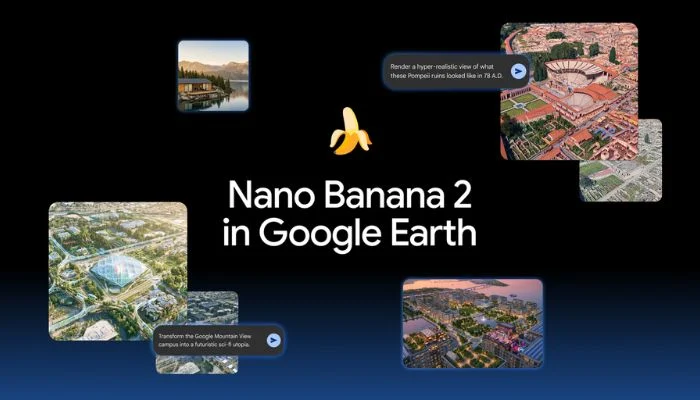
    It took less than a day for Google’s newest AI experiment to become a lesson in how fast image-based misinformation can spread. On Thursday, Google rolled out its Nano Banana 2 model directly inside Google Earth. The feature allowed users to type any prompt and get back a photorealistic image, layered right onto real satellite, aerial, and 3D map data. The intended uses were fairly harmless. People could visualize their dream home or picture how a location might change decades from now. Within just a few hours, users pushed the tool in a very different direction. People began generating fake disasters, staged terrorist attacks, and fabricated sinkholes. Others created images showing refugees or protest crowds in places where nothing of the sort had actually happened. One researcher used the tool to create a fake blast crater in Los Angeles. Another generated an image showing protesters marching right outside Google’s California headquarters. Since the tool used real Google Earth maps as its foundation, these fabricated images looked disturbingly convincing. At first, Google defended the feature. The company pointed to its SynthID watermarking system as a safeguard. It also noted that tools like Gemini or Google Lens could help users check whether an image had been AI-generated. That response did not satisfy critics. Many pointed out that most people encountering a screenshot online rarely take the time to verify it. Critics also argued that the fake images did not even need to stay inside Google Earth to cause harm. Screenshots alone were already spreading fast across social media platforms. By Friday, Google confirmed it was pulling the feature entirely while working on stronger safeguards. The company maintained that every generated image had carried a watermark. It also said none of the images had appeared within the shared, public version of the Earth experience. This incident has reignited larger concerns around generative AI tools and how easily they can be misused, even when protective measures are already built in. It also raises fresh questions about whether watermarking alone is enough to stop confusion once fabricated content starts spreading widely online. For now, Google says its focus is on rebuilding the feature with tighter controls in place. Whether that will be enough to prevent similar situations going forward still remains to be seen.

  • |

    AI errors hit report behind Australia’s under-16 ban

    A government-commissioned report that helped support Australia’s plan to restrict social media access for children under 16 has come under scrutiny after several inaccurate and apparently fabricated academic references were identified. The report, produced as part of a $3.48 million government-funded trial examining age-assurance technologies, was prepared by the Age Check Certification Scheme (ACCS). The organisation has acknowledged that ChatGPT was used to rewrite parts of the document after initially denying that artificial intelligence had been involved. An analysis of the report found six problematic citations in a chapter examining emerging technologies. Some of the digital object identifiers, or DOIs, reportedly directed readers to research papers that did not exist. Other references contained combinations of authors, journals and publication dates that could not be verified in academic records. In another case, a DOI reportedly led to a genuine research paper, but the paper did not support the claim attributed to it in the report. The controversy intensified after ACCS was questioned about the use of artificial intelligence. A spokesperson initially said no AI had been used in producing the report. The organisation later acknowledged that ChatGPT metadata was present in four links across two sections of the document. ACCS maintained that the metadata effectively disclosed the use of the tool and said the references had been manually checked. However, efforts to correct the disputed citations reportedly resulted in further inconsistencies. One example involved a research paper that an ACCS source said had been accessed in March 2025. According to the paper’s lead author, however, the research was not published until June 2025, raising additional questions about the accuracy of the report’s references. The report has attracted attention because it was used in the policy process surrounding Australia’s planned restrictions on social media for under-16s. Communications Minister Anika Wells had previously praised the report for identifying potential approaches to age verification. The minister’s department told a Senate inquiry that it had discussed the citation problems with ACCS. However, the department was reportedly informed about faulty links rather than allegations that some references had been fabricated. Australian National University academic Christian Downie warned that unreliable references can have serious consequences regardless of whether they were generated by AI or resulted from human error. He said inaccurate citations could contribute to poor policymaking and weaken public confidence in government-commissioned research. Independent Senator Fatima Payman also compared the controversy with a separate case involving Deloitte, which refunded part of a $440,000 government contract after problems were identified with AI-generated references.

  • |

    Apple offers 15% App Store fee, pushes for Epic settlement talks

    Apple is making two significant moves at once in its long-running legal battle with Epic Games. The tech giant has proposed a new commission structure while also pushing for both sides to return to the negotiating table. In a new court filing, Apple proposed capping commissions at 15% on purchases made through alternative payment systems in the US. The move follows a period during which Apple charged a 27% commission on those same transactions. That earlier rate had already landed Apple in trouble. Judge Yvonne Gonzalez Rogers ruled it violated a prior court order requiring Apple to let developers direct users toward outside payment options. Epic Games wasted no time responding to the new proposal. The company argued the revised fees still fall far outside what the Ninth Circuit has indicated would be acceptable. The timing of Apple’s filing is notable too. It landed the same day the Supreme Court rejected Apple’s request to pause lower-court proceedings while it separately reviews Gonzalez Rogers’ contempt finding against the company. That rejection means the fee-setting process will continue moving forward in the district court. This holds true regardless of how the higher court eventually rules on the separate contempt issue. Alongside the commission proposal, Apple filed a separate motion asking the court to order both companies into a settlement conference. The session would be overseen by Magistrate Judge Joseph C. Spero. According to the filing, Apple had already proposed this meeting directly to Epic’s legal team on August 11. Epic, however, declined to agree to the arrangement at that time. Despite Epic’s refusal, Apple maintains the court still has the authority to compel the conference. The company points to the fact that the Ninth Circuit itself had previously invited both parties to work toward an agreement on link-out commissions. Apple believes a confidential meeting could help resolve the dispute without further extending the ongoing remand proceedings. Notably, the filing does not include any actual settlement terms, it simply requests a court order mandating the conference take place. With both sides digging in on separate fronts, the long-running dispute between Apple and Epic shows no signs of reaching a resolution anytime soon.